
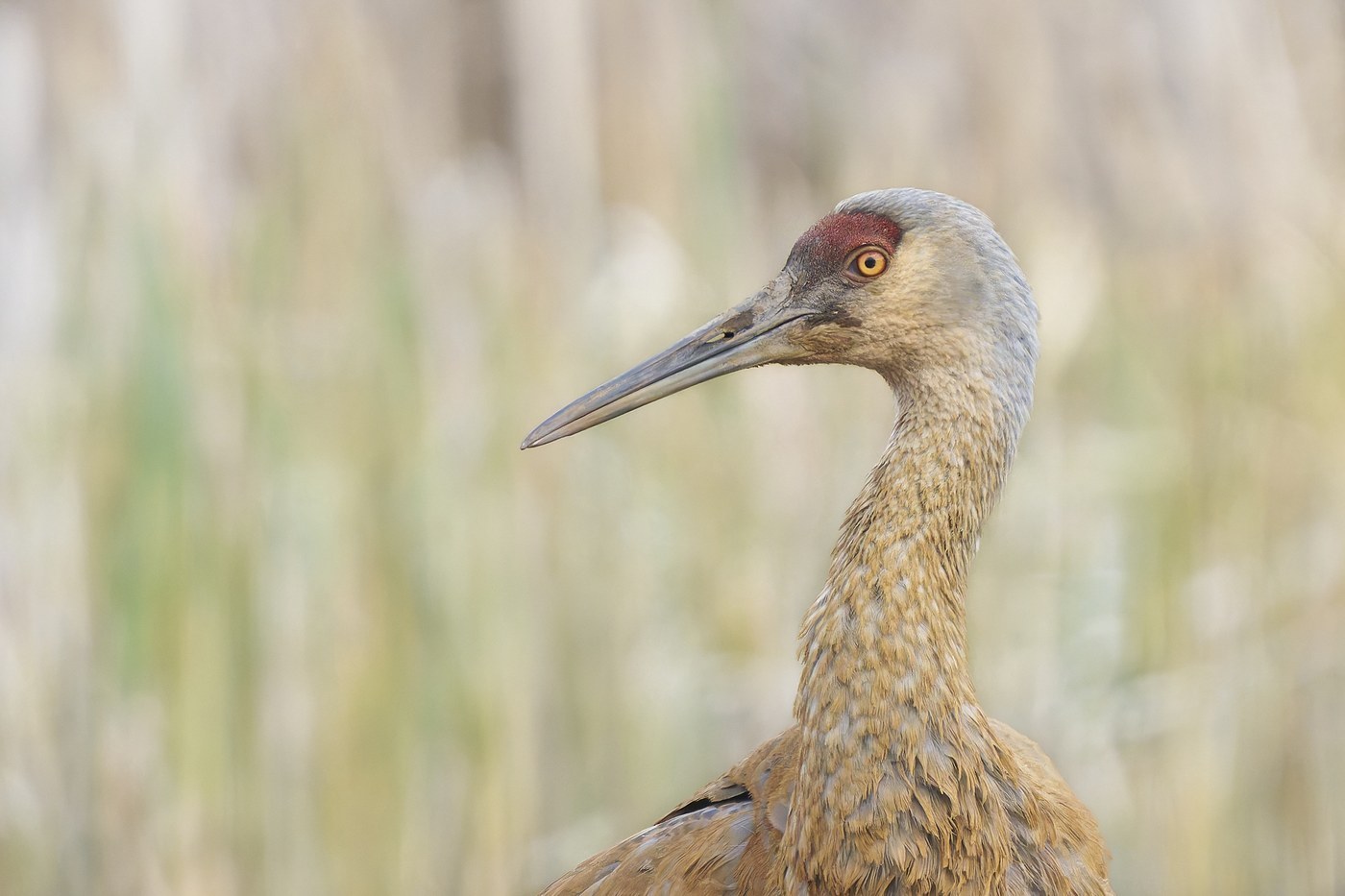
Sandhill Crane
Antigone canadensis
A tall North American crane, gray overall but often stained rusty-brown from preening with iron-rich mud, famous for its massive migratory staging flocks and rolling bugle call.
- Feather type
- Grey contour feathers and drooping, curved tertial bustle feathers
- Colours
- Grey overall, sometimes stained rusty-brown, with a bare red crown
- Bird size
- Very large crane, ~80-120 cm tall
Found a feather like this?
Identify any feather from a photo, free.
Overview
The Sandhill Crane is one of the most numerous crane species in the world, breeding across a broad swath of North America from the Arctic tundra to the northern United States, with some non-migratory populations in Florida and along the Gulf Coast. Its plumage, though naturally gray, is often stained a rusty red-brown because the bird preens iron-oxide-rich mud into its feathers. Massive migratory staging gatherings, especially along the Platte River in Nebraska, are among the great spectacles of North American bird migration.
Identifying the Feather
- Body feathers are grey overall but frequently show a rusty, oxidized-mud stain across the back and wings acquired through preening behavior, so found feathers can range from clean grey to distinctly rust-tinged.
- Tertial (inner secondary) feathers are notably elongated, curved, and drooping, forming the characteristic "bustle" that curls over the tail when the bird is standing - a classic crane feather feature.
- Flight feathers (primaries) are plain dark grey without barring.
- The bare red crown patch means no feathers occur on the top of the head, unlike the surrounding grey-feathered face and neck.
- Distinguish from the Whooping Crane by overall grey (rather than white) coloration and by lacking black wingtip feathers.
Plumage & Molt
Adults are grey overall with a bare red crown patch, whitish cheeks, and elongated, drooping tertial plumes forming a bustle over the tail; the grey can appear rust-stained from mud-preening behavior, especially during the breeding season. Sexes look alike. Juveniles (colts) have a feathered, cinnamon-brown head lacking the bare red crown, which develops in the first year, along with a more uniformly brownish overall plumage that grades into adult grey. Molt occurs after breeding, with some individuals undergoing a flightless period during wing molt.
Habitat & Range
Sandhill Cranes breed across a wide range from Siberia and Arctic Canada through the northern United States, with additional non-migratory populations in Florida, Mississippi, and Cuba. Most populations are strongly migratory, wintering in the southern United States and northern Mexico, and gather in enormous numbers at key staging areas such as Nebraska's Platte River during spring migration.
Behavior & Field Notes
This crane forages omnivorously on the ground, taking seeds, grains, tubers, and small invertebrates in wetlands, grasslands, and agricultural fields. It nests on the ground, typically in wetland vegetation, laying a small clutch attended by both parents. Its call is a loud, rolling, bugling rattle audible over long distances, produced with the help of an elongated windpipe that coils within the breastbone. Elaborate dancing displays involving leaping, wing-flapping, and bowing are used in courtship and social interaction throughout the year.
Frequently asked questions
Why do some Sandhill Crane feathers look rusty rather than grey?
Sandhill Cranes preen iron-oxide-rich mud into their feathers, staining naturally grey plumage a rusty red-brown color.
What is the crane 'bustle' feather feature?
It refers to the elongated, curved, drooping tertial feathers that curl over the tail, a distinctive feature shared by many crane species.
How can you tell a juvenile Sandhill Crane feather from an adult's?
Juveniles lack the bare red crown and have more uniformly brownish plumage compared to the grey adult plumage.
Is the Sandhill Crane migratory?
Most populations migrate long distances between northern breeding grounds and southern wintering areas, though some populations in Florida and the Gulf Coast are resident.
Sandhill Crane guides
In-depth guides for identifying and understanding Sandhill Crane.
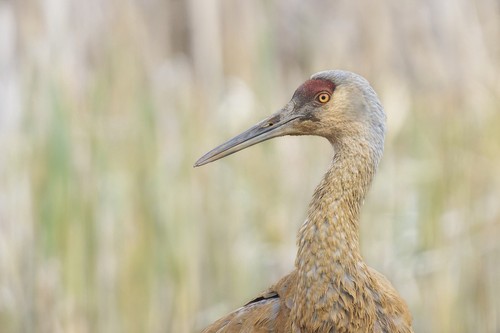
Sandhill Crane identified by the community
Real feathers identified with Feather Identifier.


Other feathers you may enjoy

Yellow-billed Spoonbill
White contour and flight feathers with fine breeding plumes on the back and breast
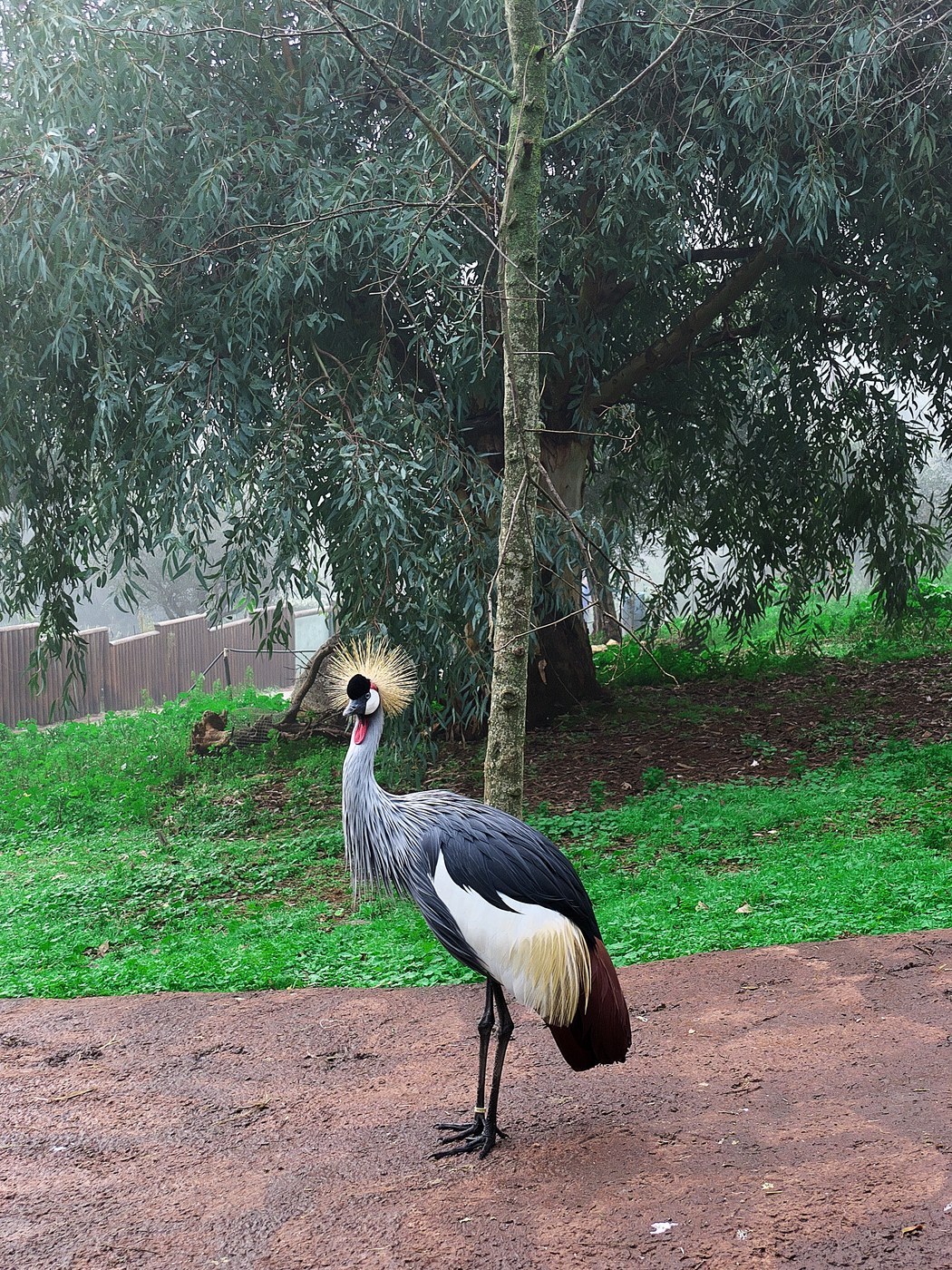
Grey Crowned Crane
Grey body feathers with white wing coverts, chestnut flight feathers, and stiff golden crown bristles
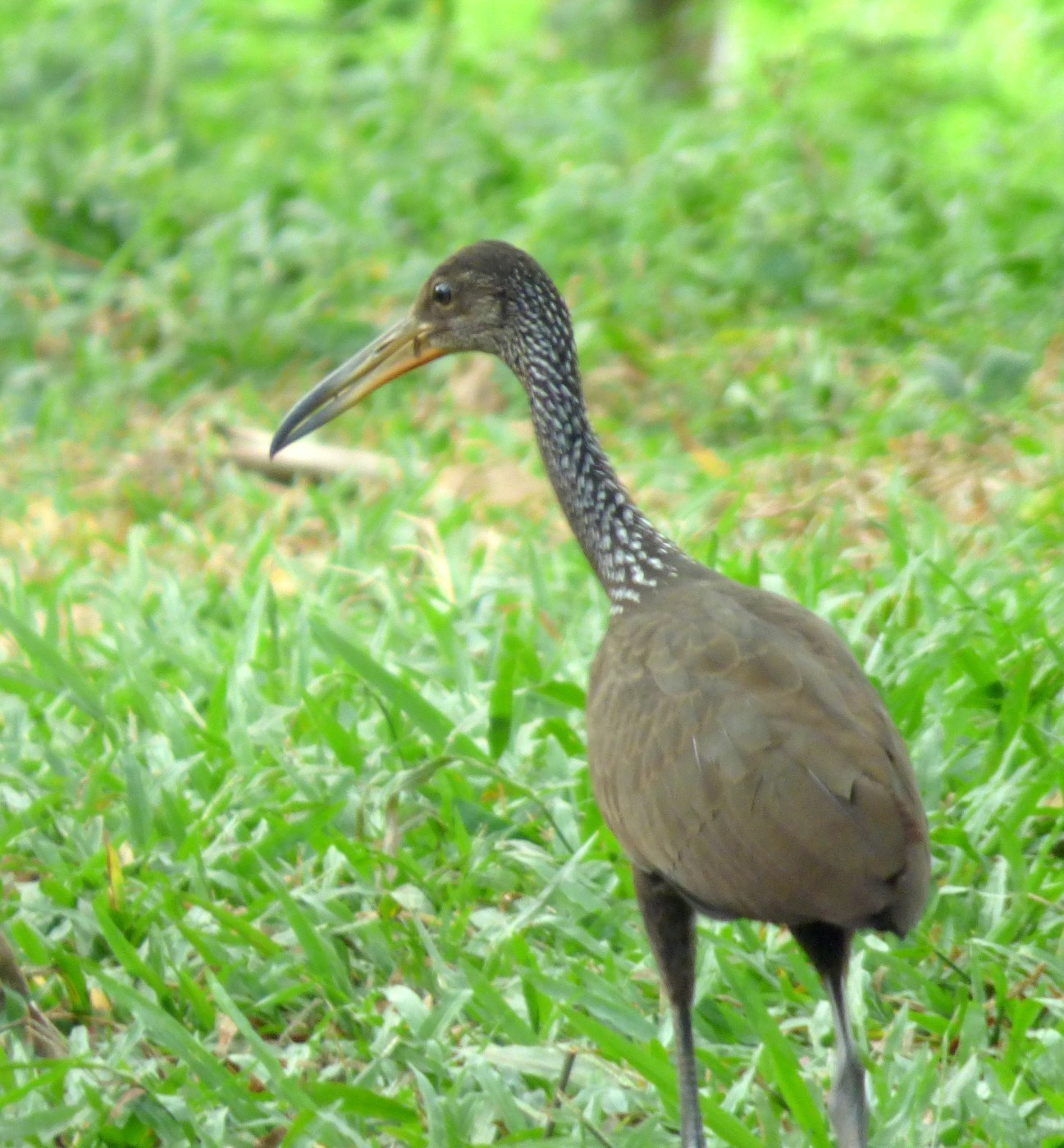
Limpkin
Brown contour feathers with white teardrop-shaped spots and streaks
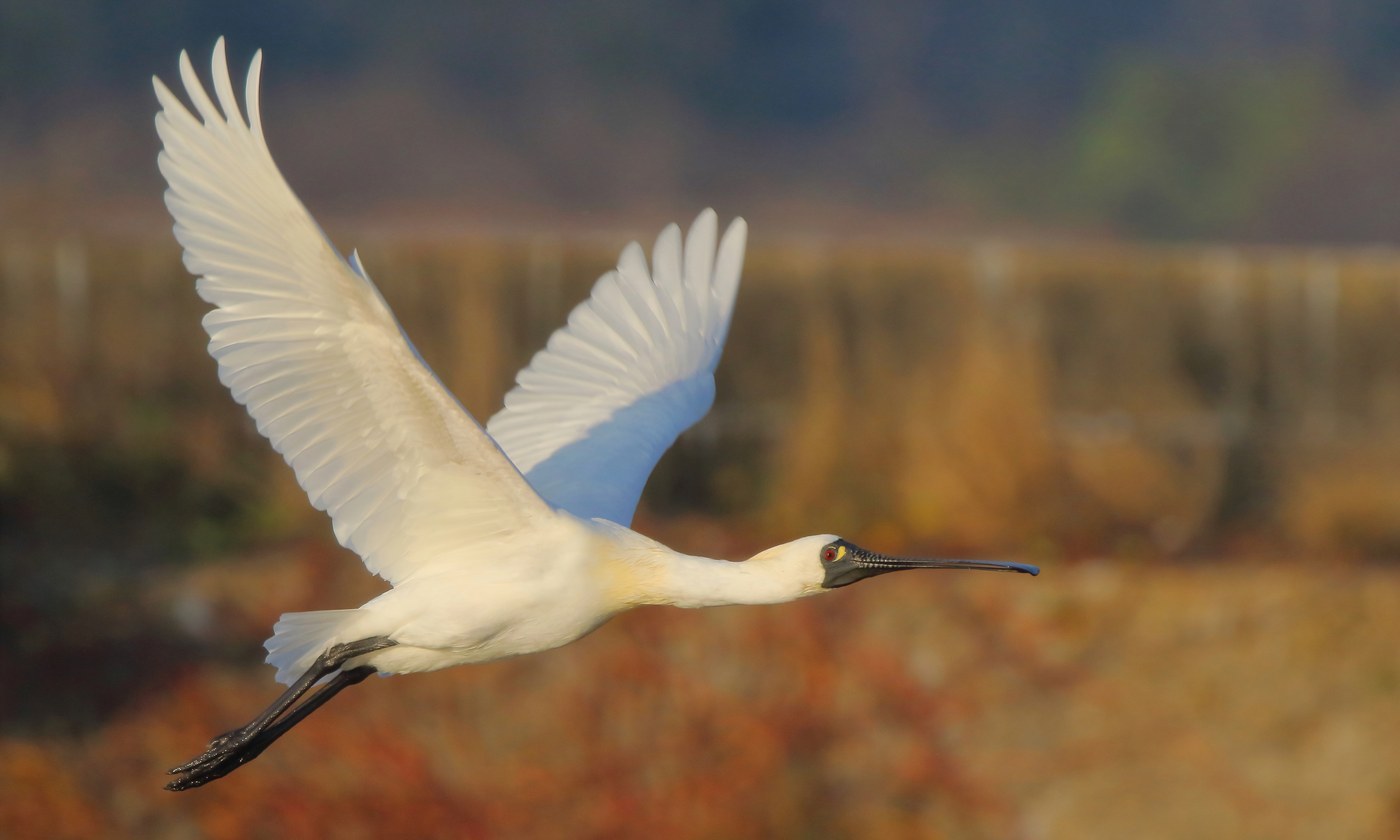
Black-faced Spoonbill
White contour and flight feathers with fine breeding crest and breast plumes
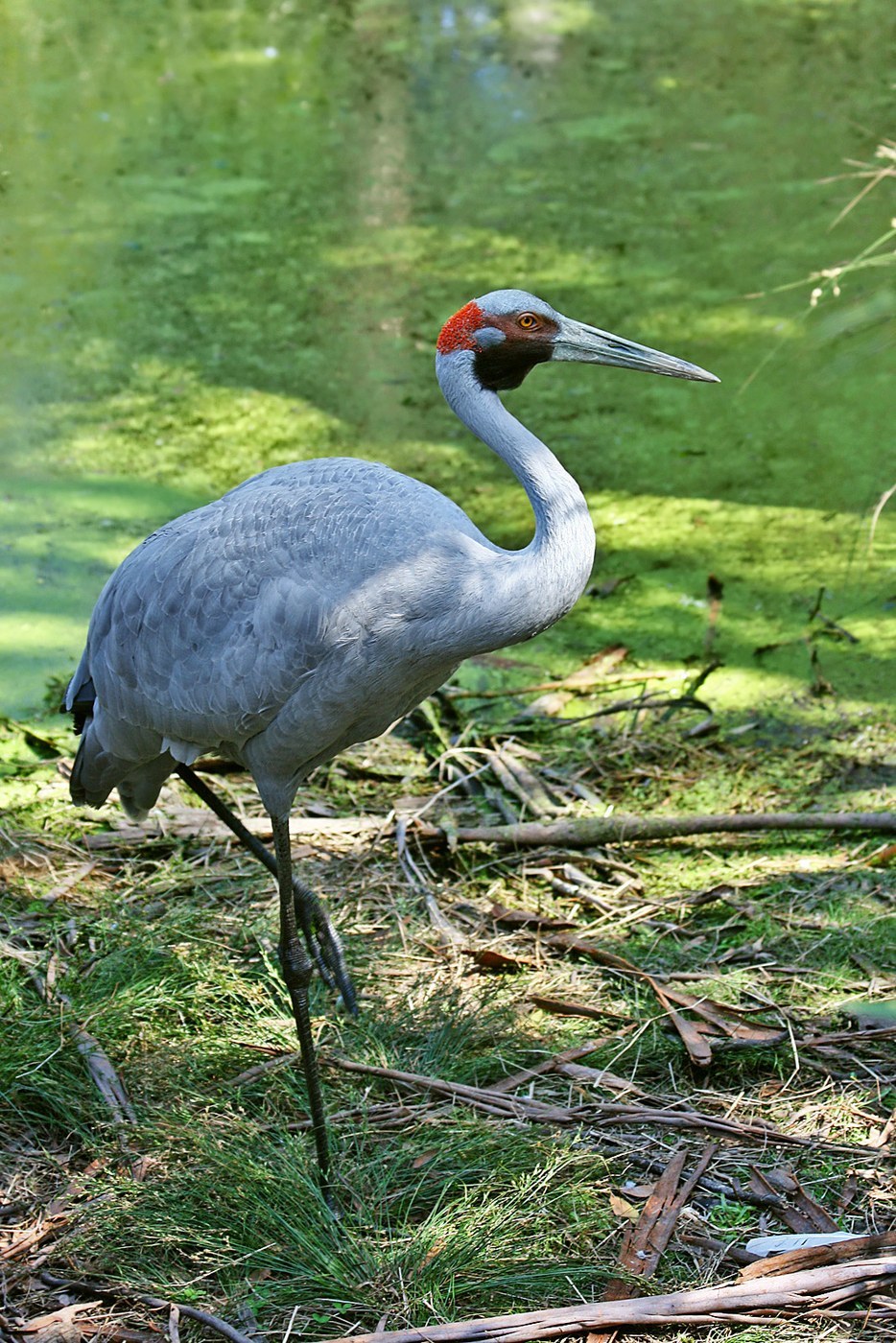
Brolga
Grey contour feathers with drooping bustle plumes
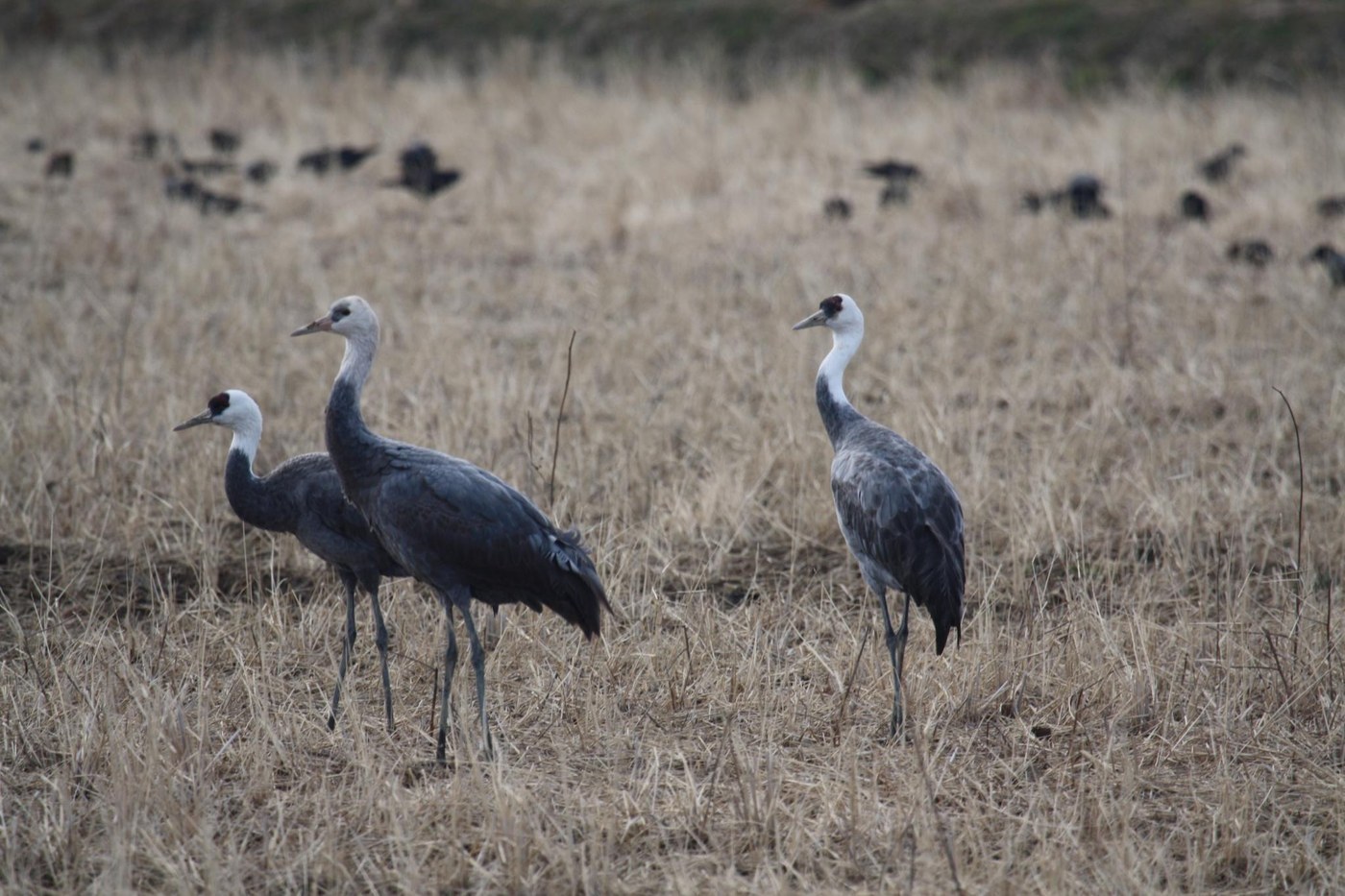
Hooded Crane
Dark slate-grey body feathers with a white head/upper neck 'hood' and black bustle plumes
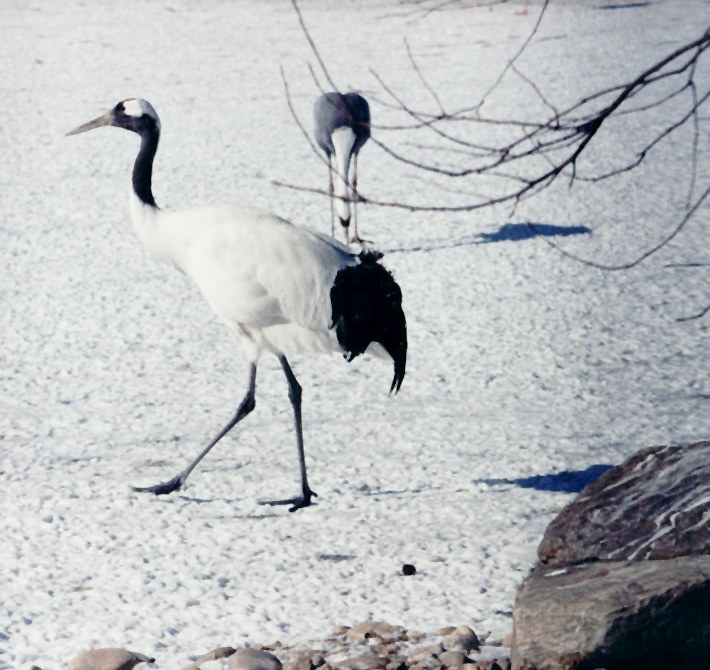
Red-crowned Crane
White contour feathers with black secondary/tertial bustle feathers and a bare red crown

Common Crane
Grey contour feathers with black head/neck feathers and drooping bustle plumes
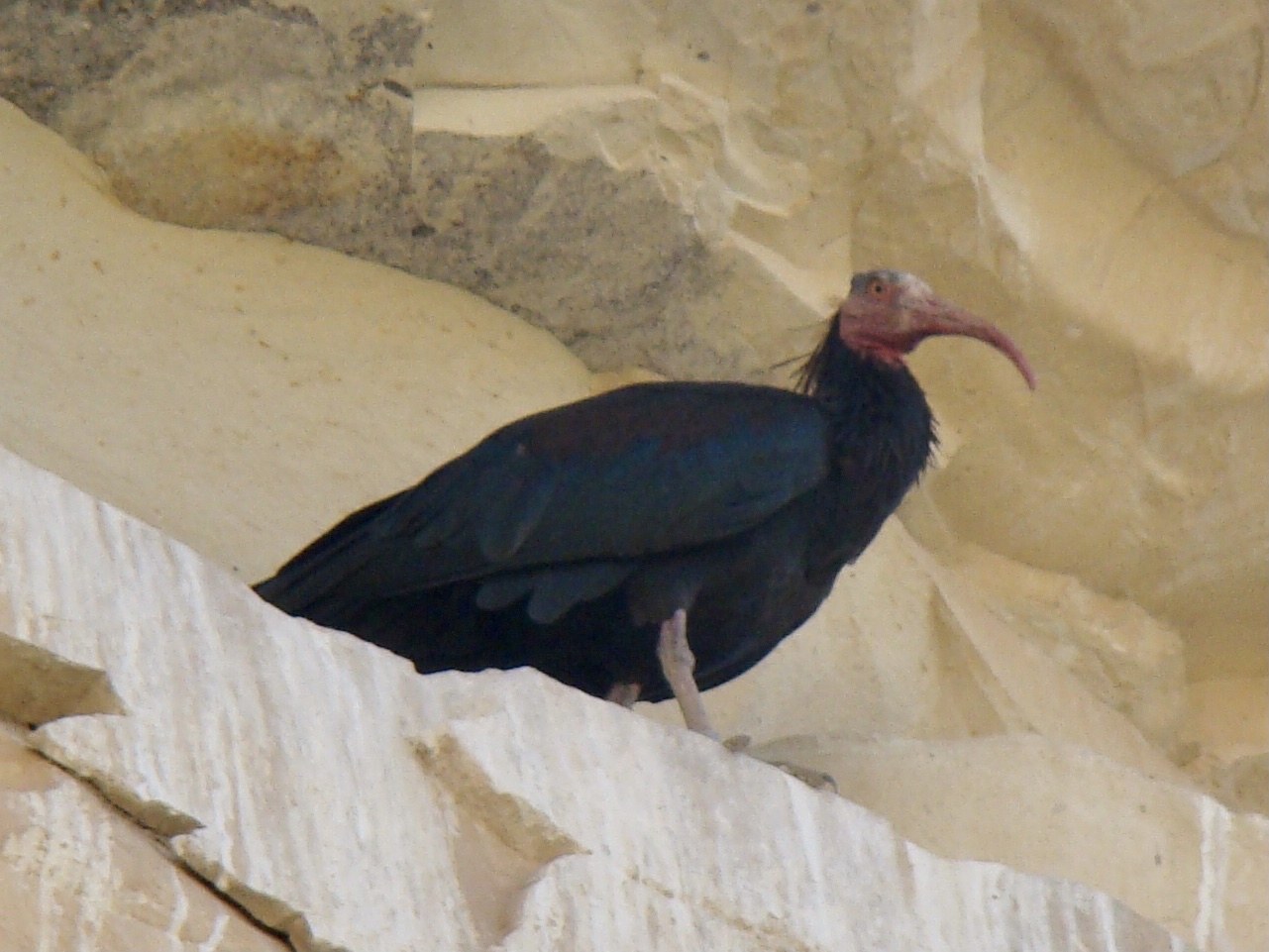
Northern Bald Ibis
Glossy black contour feathers with elongated nape plumes
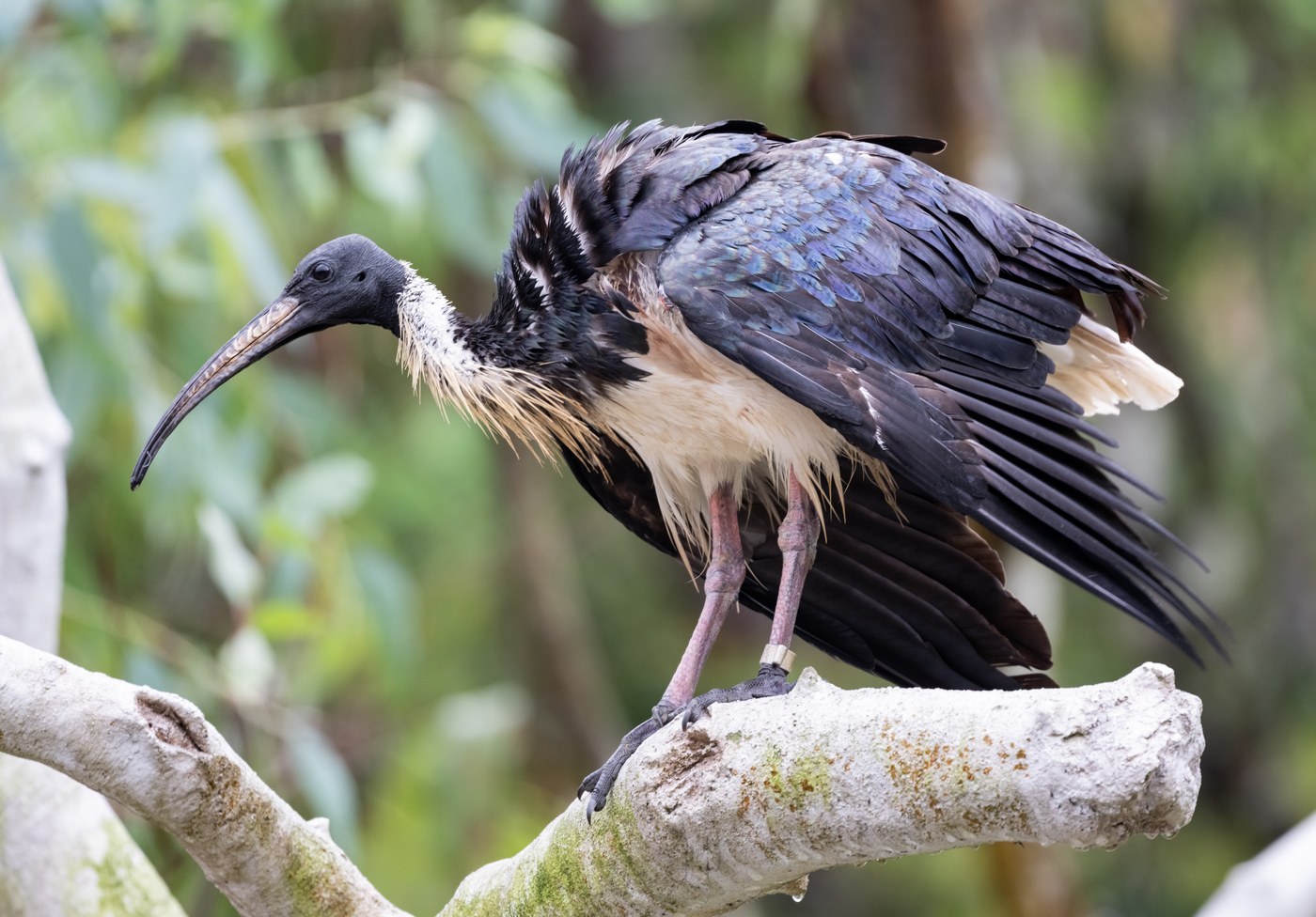
Straw-necked Ibis
Glossy contour feathers with unique straw-like neck plumes
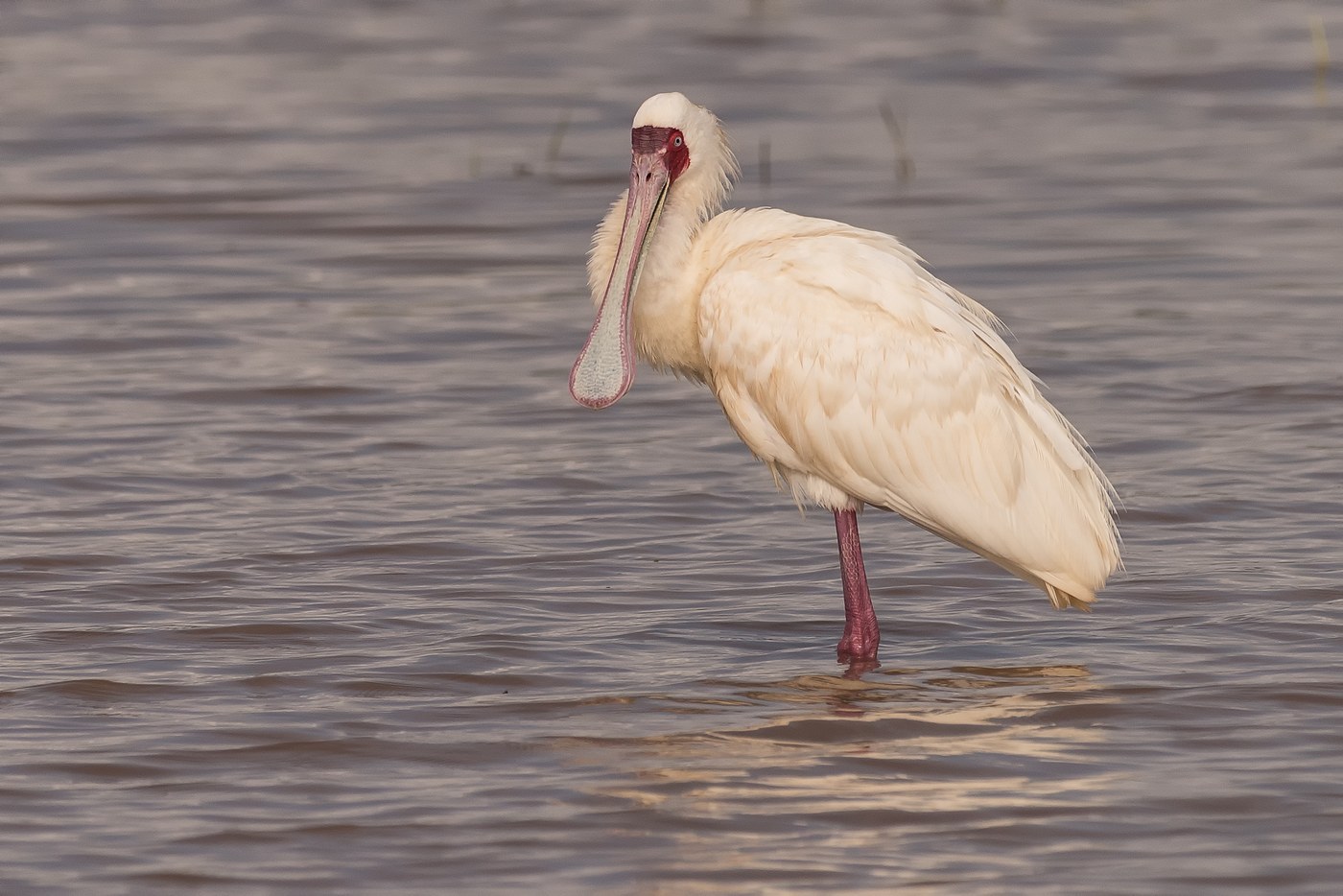
African Spoonbill
White contour and flight feathers, unmarked by black tips

Roseate Spoonbill
Pink and white contour and flight feathers with a carmine shoulder patch