
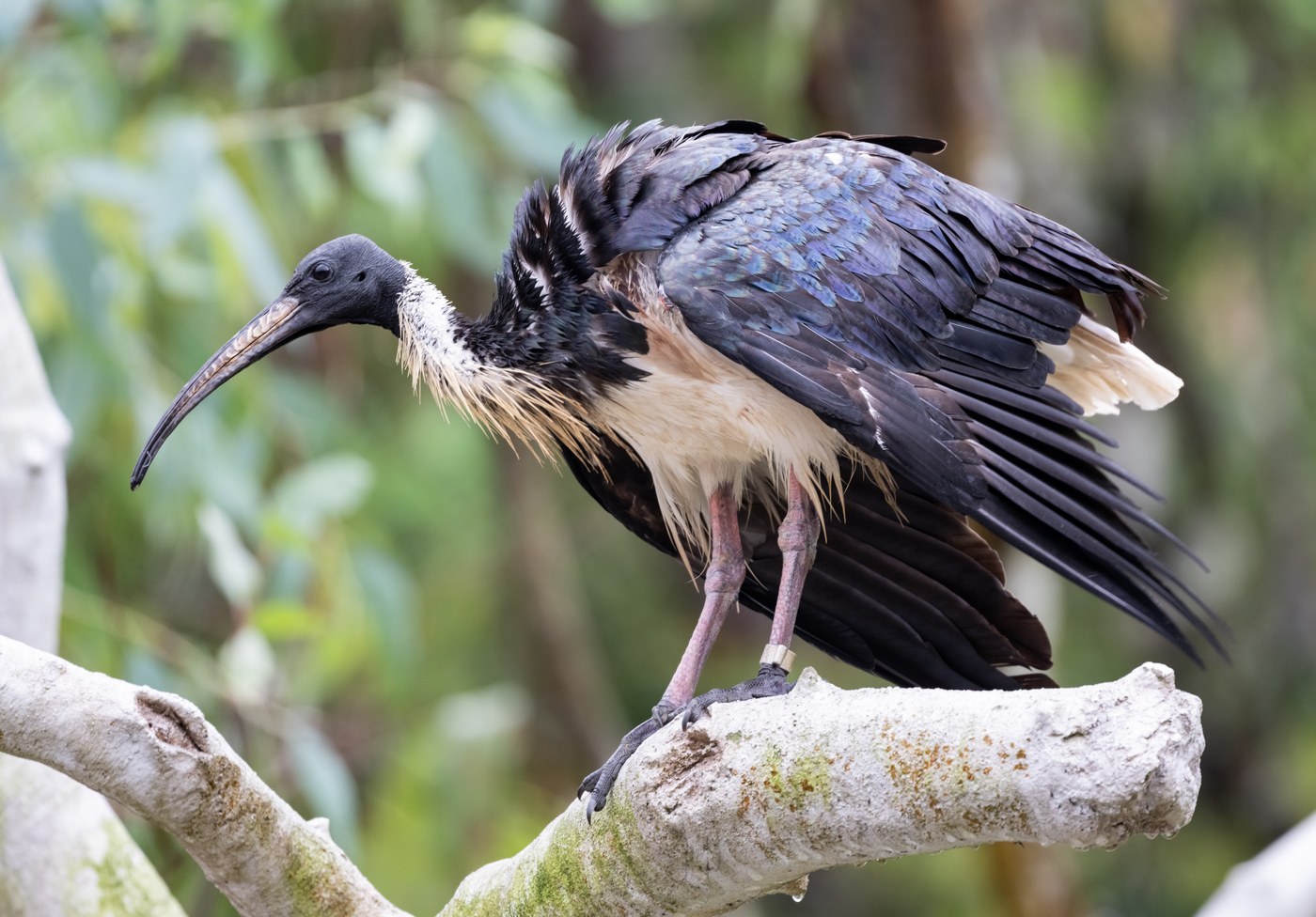
Straw-necked Ibis
Threskiornis spinicollis
A gregarious Australian ibis with an iridescent black back and odd straw-textured neck plumes, usually seen foraging in large nomadic flocks across open grassland.
- Feather type
- Glossy contour feathers with unique straw-like neck plumes
- Colours
- Iridescent black-green back and wings, white underparts and neck
- Bird size
- Large ibis, ~65-75 cm
Found a feather like this?
Identify any feather from a photo, free.
Overview
The Straw-necked Ibis is one of Australia's most recognizable wading birds, named for the stiff, straw-like feather plumes that project from its lower neck and breast. Unlike its close relative the Australian White Ibis, it favors dry grassland and pasture as much as wetlands, moving in huge, loosely coordinated flocks that track rainfall and insect outbreaks across the continent. Its bold black-and-white pattern and glossy sheen make it easy to pick out even at a distance.
Identifying the Feather
- Back and wing feathers are deep black with a strong green-to-bronze iridescent sheen that flashes in direct sun, similar in structure to other ibis contour feathers but darker overall.
- Underparts, neck, and thigh feathers are clean white, creating a strong two-tone contrast with the dark upperparts.
- The bird's namesake straw plumes are narrow, stiff-shafted feathers on the lower foreneck and upper breast that stick out at odd angles rather than lying flat like normal contour feathers - a texture not seen in other ibises.
- Flight feathers are glossy black with little pattern variation, so a found flight feather will look plain and dark rather than barred.
- Distinguish from the Australian White Ibis (mostly white body, bare black head/neck, no iridescent black back) and from glossy ibis (smaller, uniformly chestnut-and-green, no white underparts).
Plumage & Molt
Adults have a bare, dark grey-black head and upper neck, glossy black-green upperparts, and white underparts, with the diagnostic straw-colored breast plumes most developed in breeding adults. Both sexes look alike, though males average slightly larger. Juveniles are duller, with a browner cast to the upperparts and reduced or absent straw plumes, gradually acquiring full adult feathering over one to two years. Molt is not tightly seasonal since breeding is triggered by favorable water levels rather than a fixed calendar, so worn and fresh feathers can be seen in the same population at different times.
Habitat & Range
Straw-necked Ibis are found throughout mainland Australia and into New Guinea, favoring open grasslands, pastures, floodplains, and shallow wetlands rather than deep water. They are highly nomadic, moving in large flocks in response to rainfall, flooding, and insect abundance, and can appear suddenly in numbers far from their usual range during wet periods. Most populations are considered resident but locally irruptive rather than strictly migratory.
Behavior & Field Notes
This ibis forages mainly on the ground, walking through grass and shallow water to take insects such as grasshoppers and crickets, along with other small invertebrates. It nests colonially, often alongside other waterbirds, building stick platforms in trees, reedbeds, or low shrubs over water. Its call is a low, harsh grunting croak, given mostly at breeding colonies rather than in flight. Large foraging and roosting flocks are a hallmark of the species, and its close association with insect outbreaks in farmland has made it a familiar sight in rural Australia.
Frequently asked questions
What makes a Straw-necked Ibis feather different from other ibis feathers?
Its back and wing feathers show an unusually strong black-green iridescent gloss, and its lower neck bears distinctive stiff, straw-textured plumes not found on other ibis species.
Are male and female feathers different?
No, the sexes are essentially identical in plumage; males are only marginally larger in size.
Where would you likely find a shed feather?
In open grassland, pasture, or wetland edges across Australia and New Guinea, especially near breeding colonies or large foraging flocks.
How can you tell it apart from a glossy ibis feather?
Glossy ibis feathers are uniformly chestnut-and-green without any white, while Straw-necked Ibis feathers combine glossy black upperparts with white underparts and unique straw plumes.
Straw-necked Ibis guides
In-depth guides for identifying and understanding Straw-necked Ibis.
Other feathers you may enjoy

Yellow-billed Spoonbill
White contour and flight feathers with fine breeding plumes on the back and breast
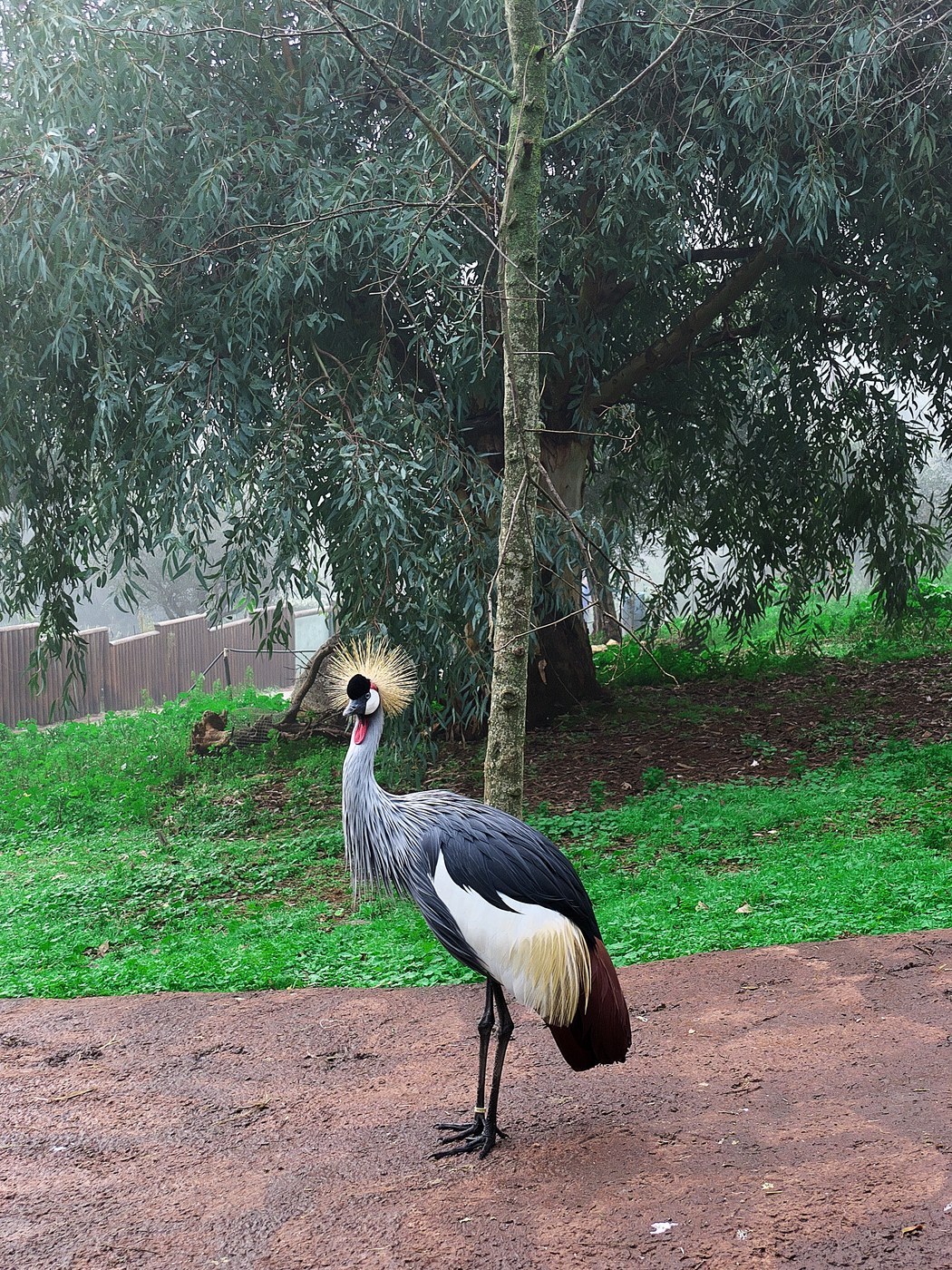
Grey Crowned Crane
Grey body feathers with white wing coverts, chestnut flight feathers, and stiff golden crown bristles
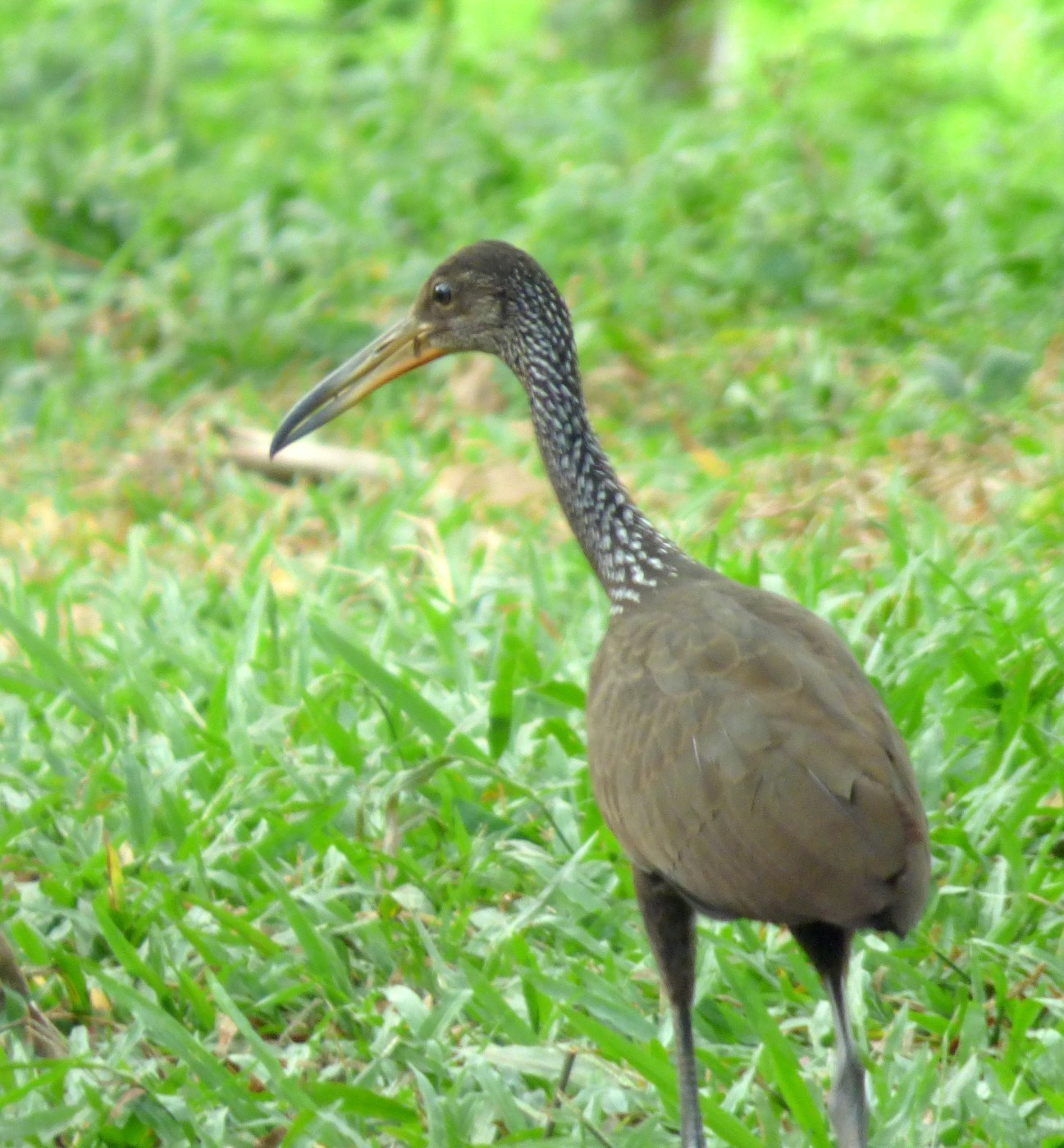
Limpkin
Brown contour feathers with white teardrop-shaped spots and streaks
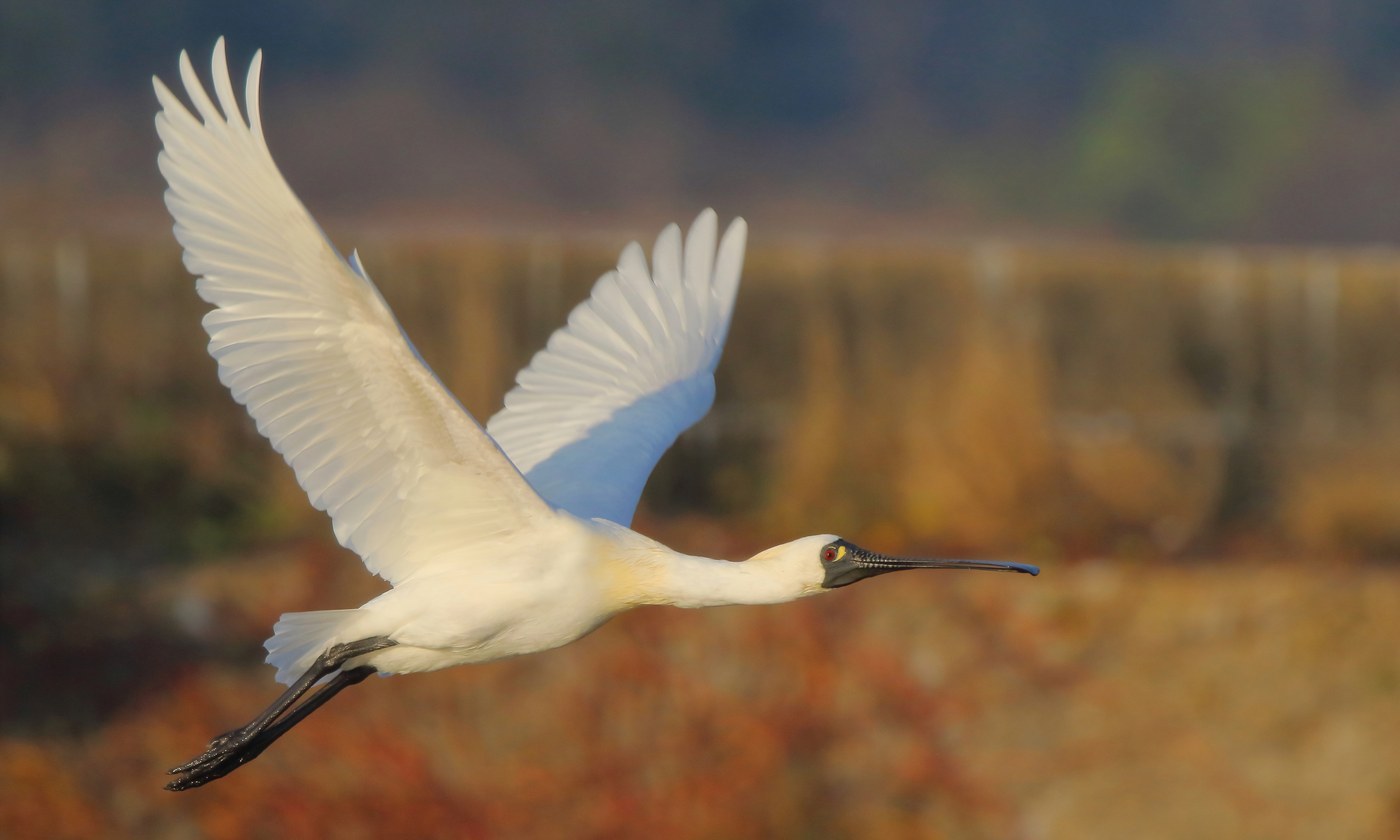
Black-faced Spoonbill
White contour and flight feathers with fine breeding crest and breast plumes
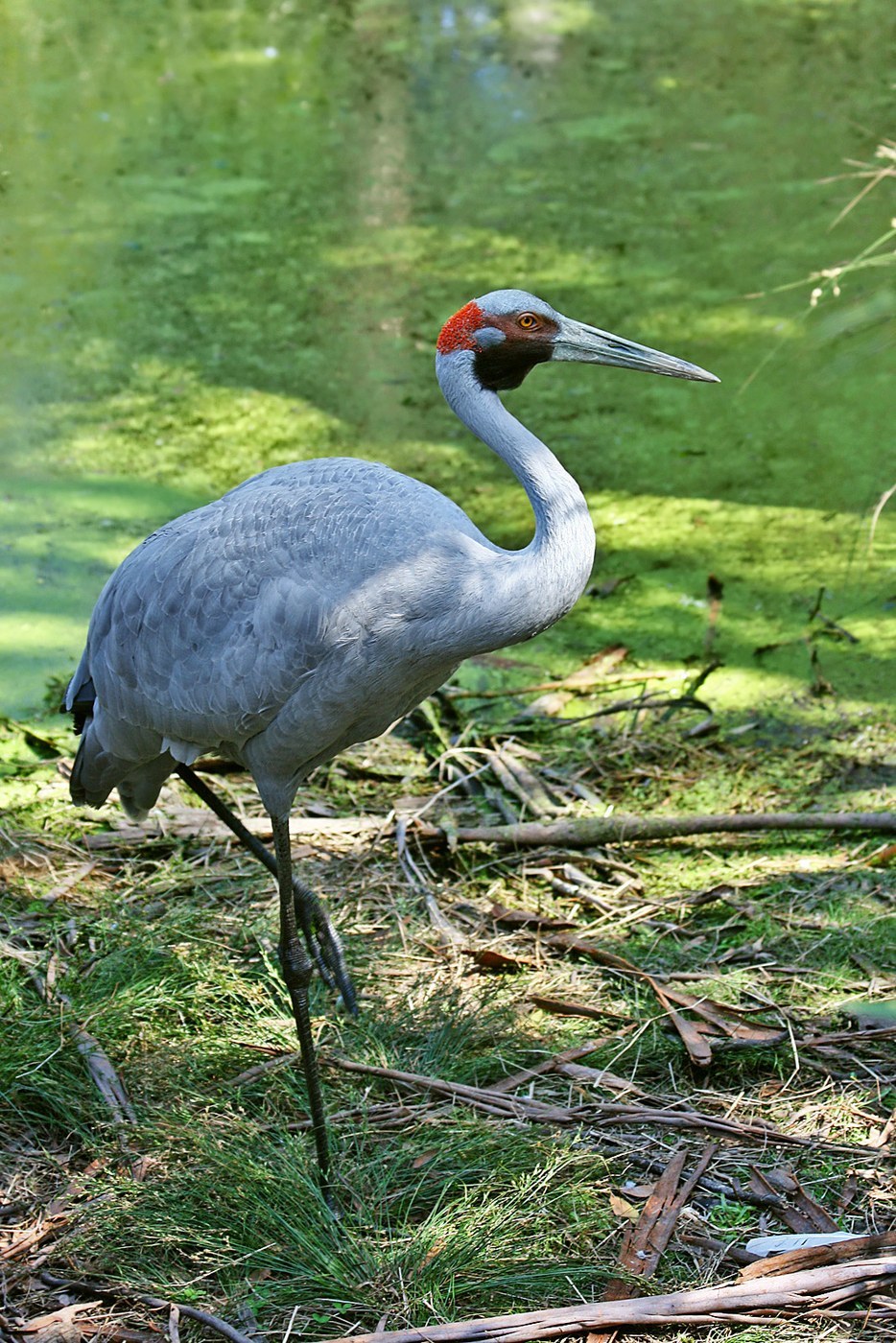
Brolga
Grey contour feathers with drooping bustle plumes
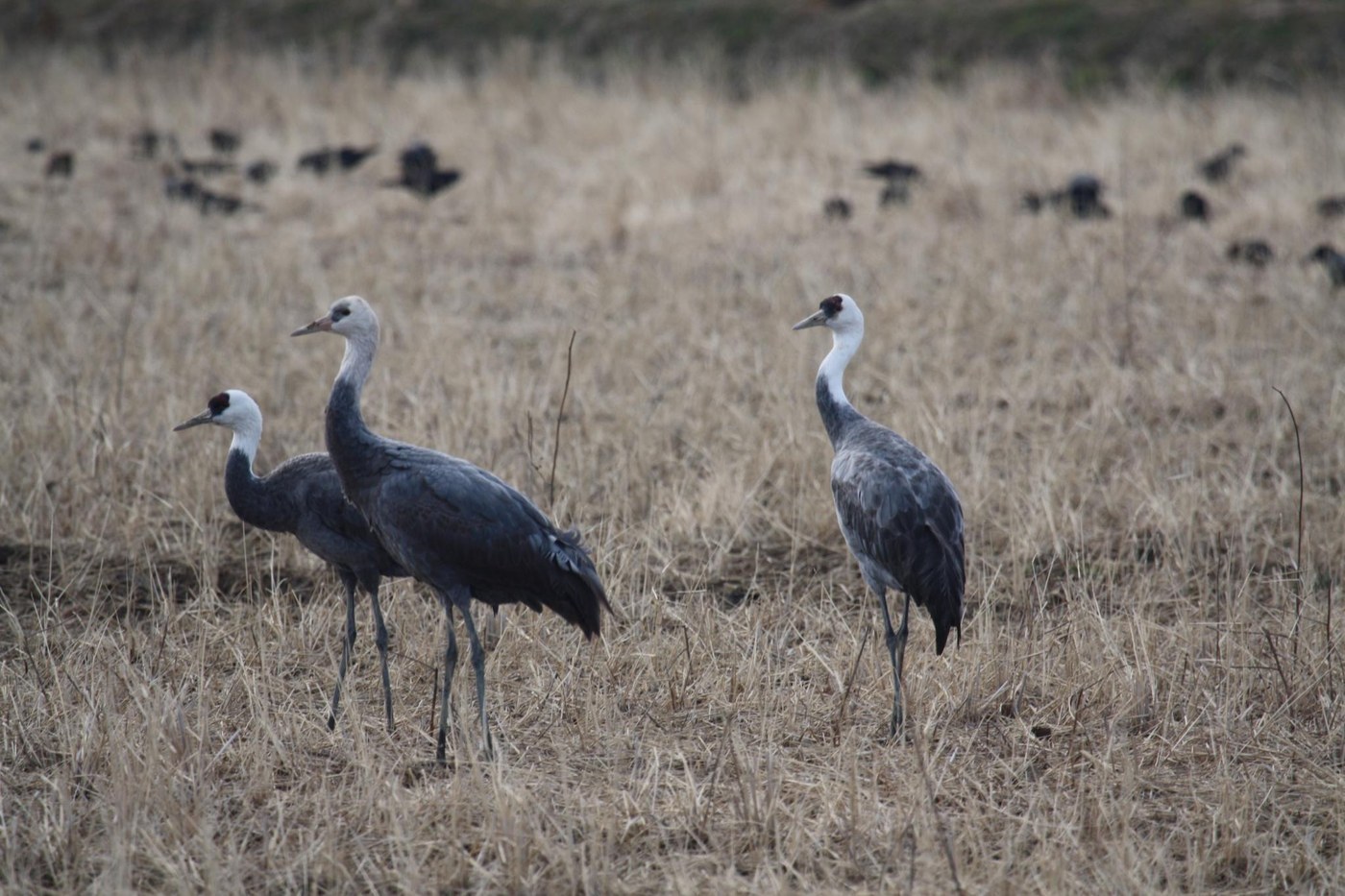
Hooded Crane
Dark slate-grey body feathers with a white head/upper neck 'hood' and black bustle plumes
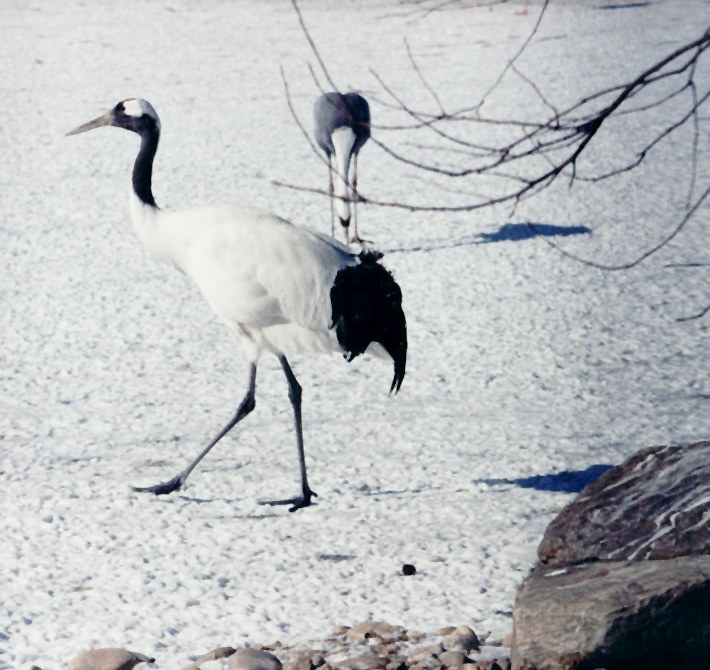
Red-crowned Crane
White contour feathers with black secondary/tertial bustle feathers and a bare red crown

Common Crane
Grey contour feathers with black head/neck feathers and drooping bustle plumes
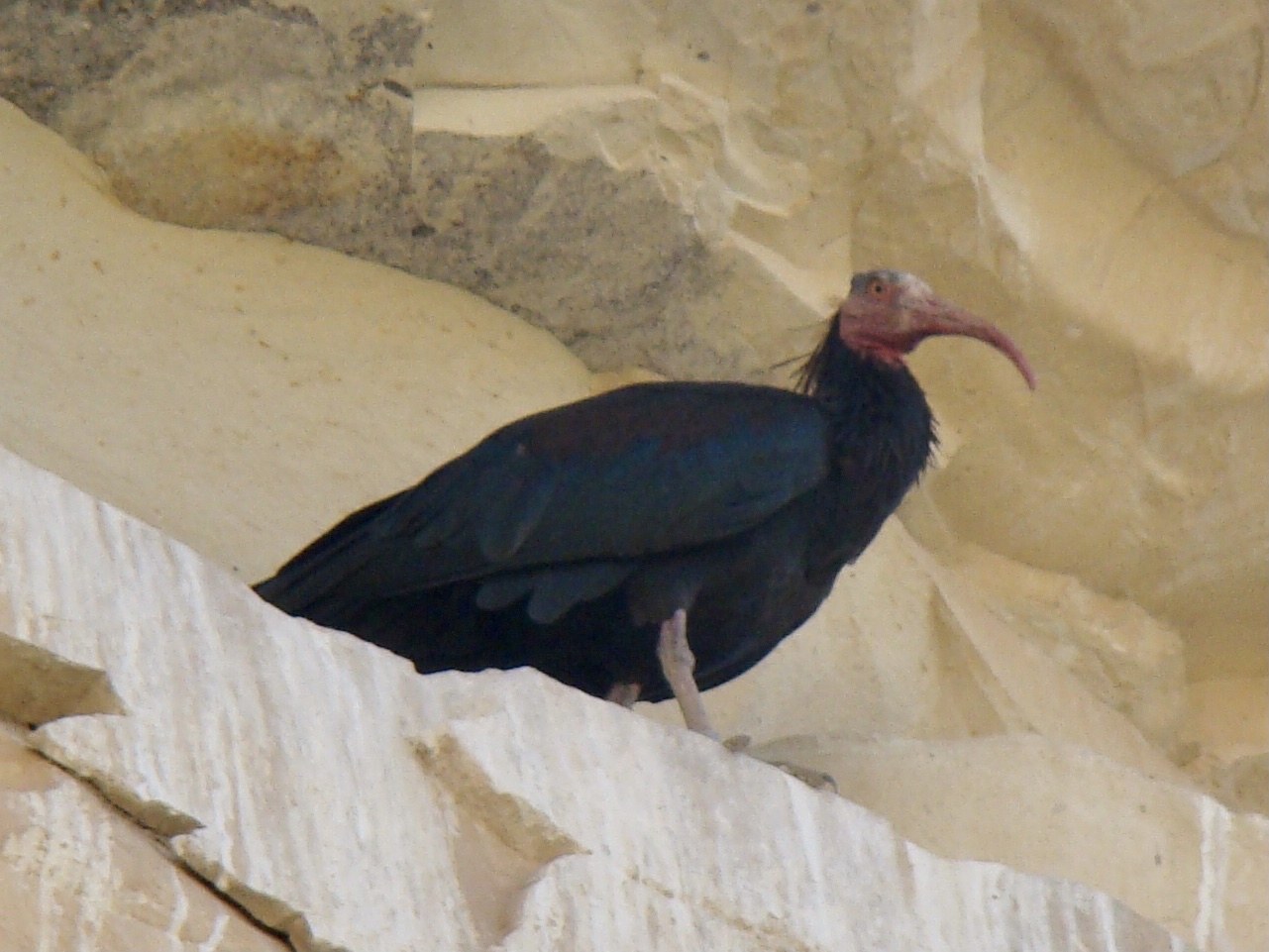
Northern Bald Ibis
Glossy black contour feathers with elongated nape plumes
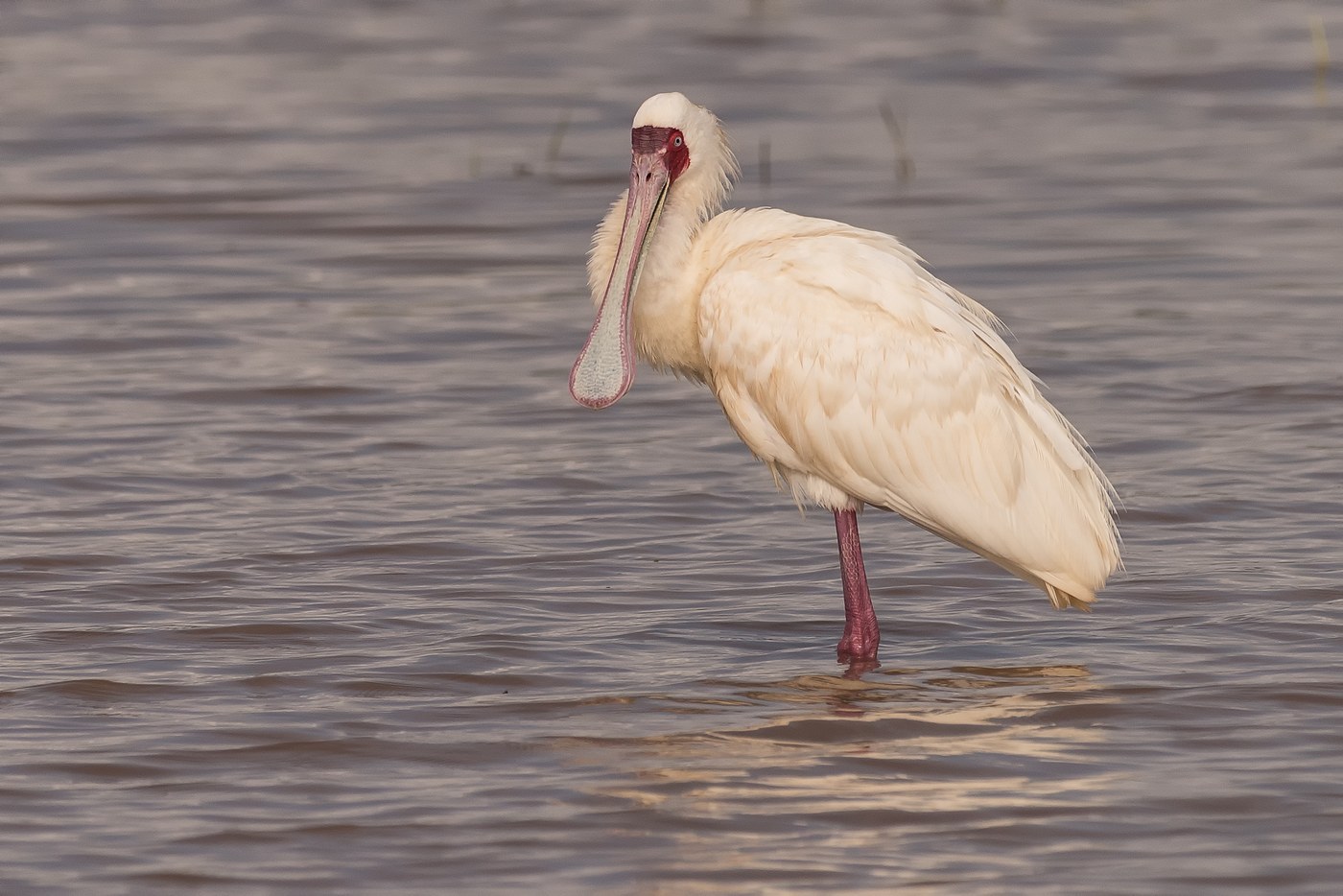
African Spoonbill
White contour and flight feathers, unmarked by black tips

Roseate Spoonbill
Pink and white contour and flight feathers with a carmine shoulder patch
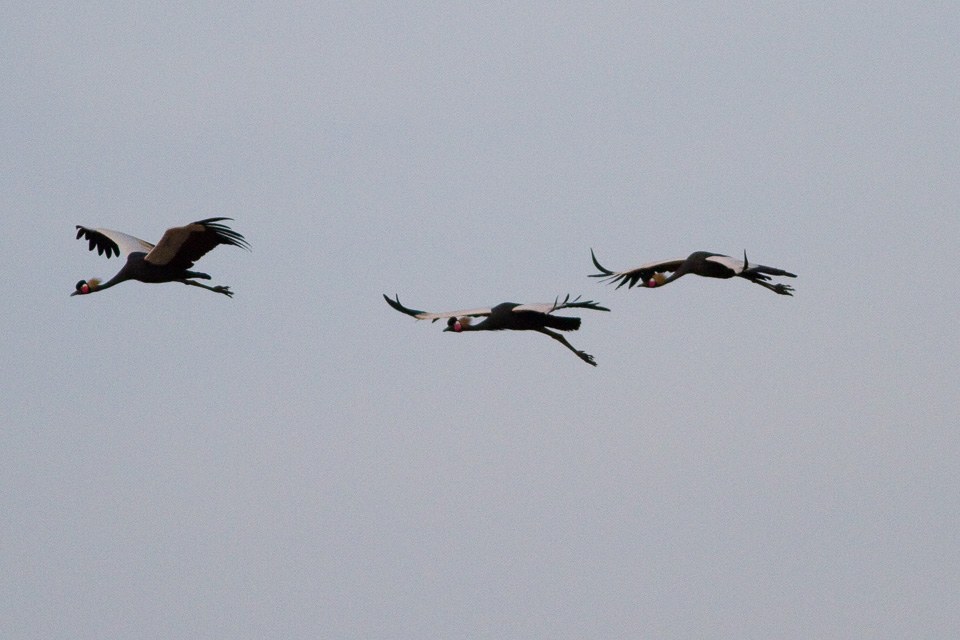
Black Crowned Crane
Dark grey-black body feathers with white wing coverts, chestnut flight feathers, and stiff golden crown bristles