
How to Identify Straw-necked Ibis Feathers
A field approach to identifying the iridescent black-and-white feathers of the Straw-necked Ibis and separating them from Australia's other ibis species.
Read the full Straw-necked Ibis encyclopedia entry →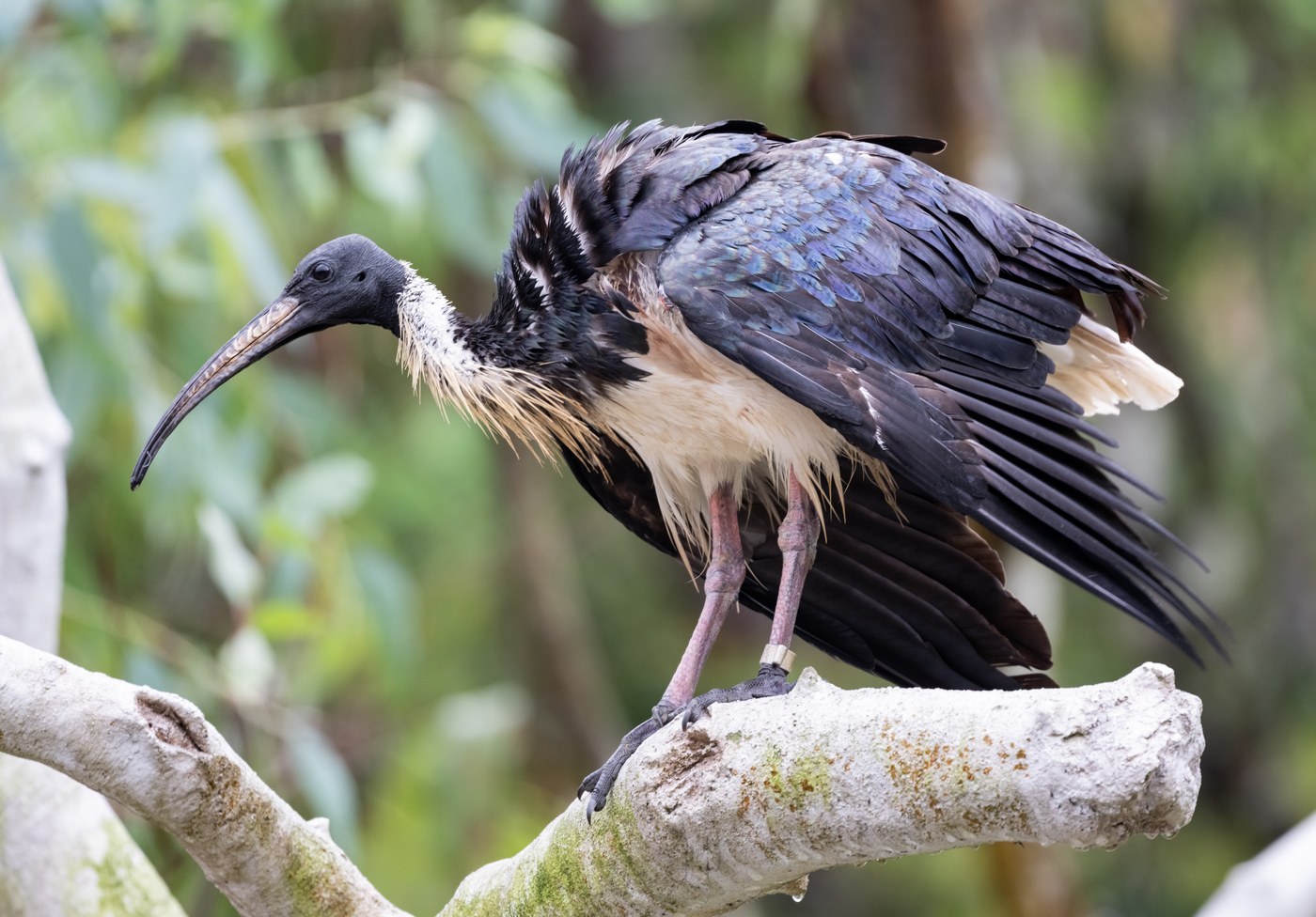
What Straw-necked Ibis Feathers Look Like
The Straw-necked Ibis is a large Australian wading bird whose plumage is a striking mix of glossy dark feathers and clean white body feathers.
- Wing and back feathers: deep black with a strong iridescent sheen of green, purple, and bronze that shifts with the light — this metallic quality is the single most distinctive feature.
- Body/underparts feathers: pure white, soft and fluffy, contrasting sharply with the dark wings.
- Neck feathers (breeding adults): a patch of stiff, elongated, straw-yellow plumes on the front of the neck, unlike anything on other ibis species — these give the bird its name.
- Head and upper neck: mostly bare dark skin rather than feathers, so feathers directly from the head area are uncommon finds.
- Flight feathers: long, dark, and strongly glossed, with a slightly stiff structure typical of large wading birds.
Step-by-Step: Is This Feather From a Straw-necked Ibis?
- Check for iridescence. Hold a dark feather at different angles — genuine green/purple/bronze shimmer on black is a strong indicator.
- Look for straw-like plumes. Stiff, narrow, yellowish feathers with a slightly frayed or hair-like tip are unique to this species' breeding neck patch.
- Compare white feathers. Plain white body feathers alone aren't diagnostic, but paired with iridescent black wing feathers found nearby, they build a strong case.
- Rule out solid dark ibis feathers. If the feather is uniformly bronze-green with no white areas at all, it more likely belongs to a Glossy Ibis.
- Consider size. Straw-necked Ibis feathers are large, consistent with a bird standing 65-75 cm tall.
Similar Species & How to Tell Them Apart
- Australian White Ibis: body feathers are also white, but the wings lack the strong iridescent sheen — black is confined mainly to the wingtips, and there are no straw-like neck plumes.
- Glossy Ibis: entirely dark chestnut-bronze-green with no white anywhere on the body, and noticeably smaller overall.
- Cattle Egret: superficially white like the ibis's body, but egret feathers are finer, softer, and lack any accompanying iridescent black feathers.
Where & When You'll Find Them
Straw-necked Ibis roam widely across Australian wetlands, floodplains, and grasslands, often far from water in search of insects. They are nomadic, following rainfall, and breed in large colonies whenever wetlands flood. Feathers, including the diagnostic straw-yellow neck plumes, are most likely to be found near breeding colonies during and just after the breeding season, which can occur at almost any time of year depending on local conditions.
Frequently asked questions
What is the most reliable feature to identify this species from a single feather?
The combination of iridescent green-purple-bronze sheen on black feathers alongside plain white body feathers from the same bird.
What are the straw-like neck plumes and when do they appear?
They are stiff, narrow yellowish feathers grown only by breeding adults on the front of the neck, so they're only found near active breeding colonies.
How do I tell this apart from the Australian White Ibis?
Straw-necked Ibis wings show strong iridescent sheen across the whole wing, while White Ibis has plain black confined mostly to the wingtips with no metallic shimmer.
Are Straw-necked Ibis feathers found year-round?
The species is nomadic and breeds opportunistically after rain, so feather availability follows local wetland conditions rather than a strict calendar season.