
How to Identify Sandhill Crane Feathers
A guide to the long gray body plumes and blackish flight feathers of the Sandhill Crane, including the rust-stained feathers this species is famous for.
Read the full Sandhill Crane encyclopedia entry →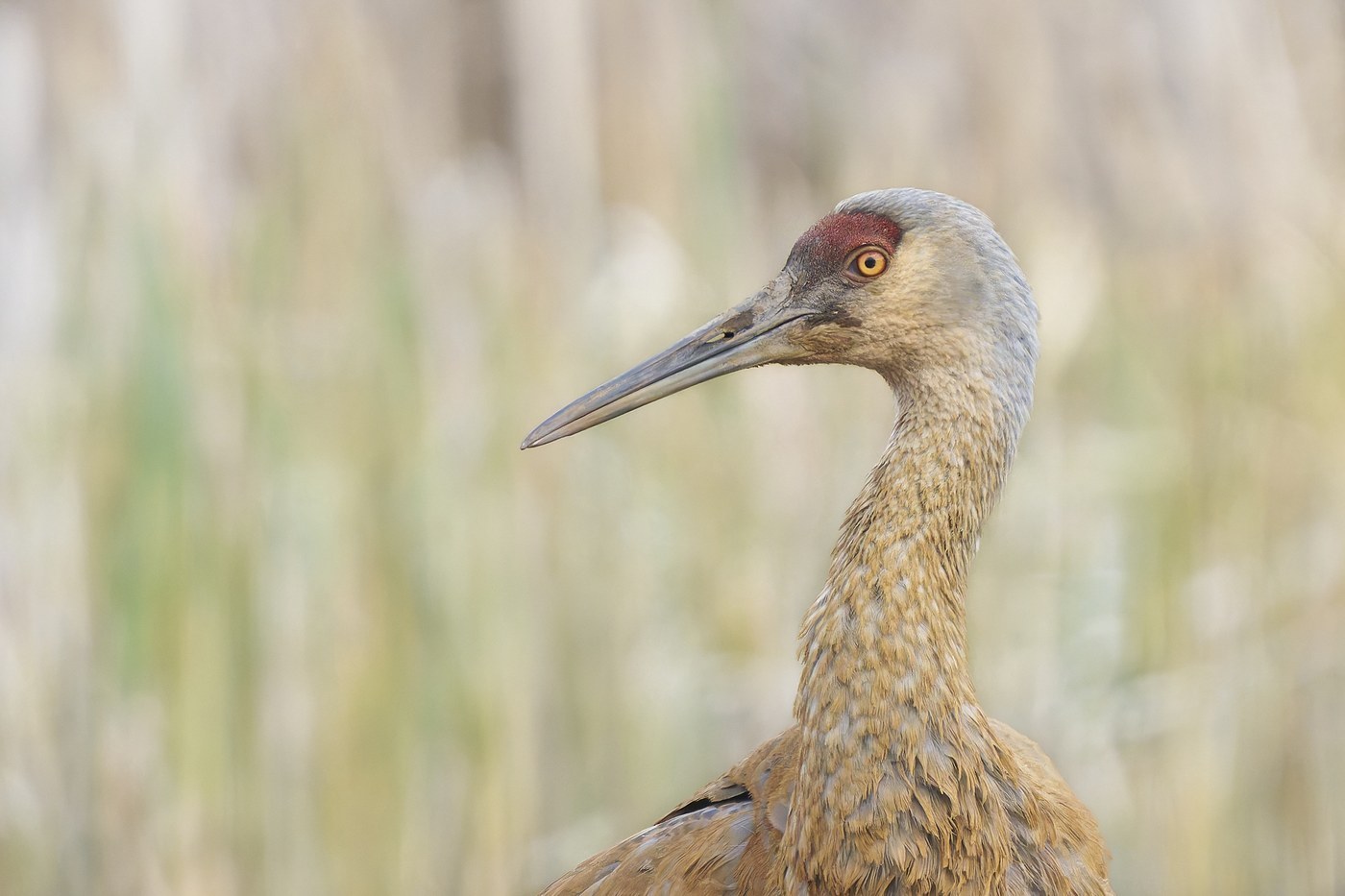
What Sandhill Crane's Feathers Look Like
Sandhill Crane is a very large bird, and its feathers are correspondingly big: body and covert feathers commonly run 15-25 cm, while flight feathers can exceed 30-40 cm. The bulk of the plumage is a soft, uniform ash-gray, with a smooth, almost powdery texture rather than sharp patterning — there's no streaking, barring, or spotting anywhere on a typical body feather. Primaries are noticeably darker, blackish-gray, with stiff, strong shafts befitting a bird built for long-distance soaring flight. The most famous diagnostic feature is rust-orange or ochre staining, especially on back, wing covert, and tertial feathers; cranes preen mud and vegetation onto their gray feathers, so a gray feather with a rusty-brown wash or streaks — especially concentrated toward the tip — is a strong species clue, though the amount of staining varies by individual and season. The elongated, drooping tertial feathers that form the crane's distinctive "bustle" over the tail are unusually long and curled, unlike the straighter feathers of herons.
Step-by-Step: Is This Feather From a Sandhill Crane?
- Check the size: body feathers well over 10 cm, with flight feathers reaching 30+ cm, point to a very large bird like a crane.
- Look for plain ash-gray coloring with no barring or streaking.
- Search for rust staining, especially patchy ochre wash on the back or wing covert feathers — a hallmark of this species' preening habit.
- Check the shaft and texture: crane feathers feel somewhat coarse and dense, not downy soft.
- Look for elongated, drooping shapes: if the feather is long and slightly curled, it may be one of the ornamental tertial "bustle" feathers.
- Confirm habitat: found near open grassland, wetland, or agricultural field, rather than dense forest.
Similar Species & How to Tell Them Apart
Great Blue Heron feathers overlap in gray color and large size but are typically bluer-gray, often show fine black streaking on the neck feathers and a shaggy plume texture, and never show rust staining from preening. Whooping Crane is essentially all white with black wingtips, so any all-white feather with black tips near crane habitat suggests that far rarer species rather than Sandhill. Great Egret and other large white waders have pure white plumage, easily separated by color alone. If the feather is uniformly gray without any rust and lacks the coarse texture, also consider Great Blue Heron before settling on Sandhill Crane.
Where & When You'll Find Them
Sandhill Cranes favor open wetlands, wet meadows, prairie potholes, and agricultural fields across much of North America (and parts of Siberia), gathering in spectacular numbers at traditional staging areas like Nebraska's Platte River during migration. Feathers are most likely to be found near these staging and roosting wetlands during spring (March-April) and fall (October-November) migration, when huge concentrations of birds molt and preen along riverbanks and sandbars. On the breeding grounds — marshes and bogs across the northern U.S., Canada, and Siberia — feathers turn up through summer as adults undergo wing molt while flightless for a period, and family groups leave body feathers around nest sites.
Frequently asked questions
Why do some Sandhill Crane feathers look rust-colored instead of gray?
Cranes deliberately preen iron-rich mud onto their gray feathers, staining them ochre to rust-orange, a well-documented behavior unique among common cranes.
How big are typical Sandhill Crane feathers?
Body feathers commonly measure 15-25 cm, and flight feathers can exceed 30-40 cm, reflecting the bird's large size and long wingspan.
Can I confuse this with Great Blue Heron?
It's possible since both are large and grayish, but heron feathers are bluer-gray, lack rust staining, and often show fine neck streaking that crane feathers don't have.
What are the long curled feathers over the tail?
Those are elongated tertial feathers forming the crane's distinctive drooping 'bustle,' longer and more curved than typical wing feathers.
When are the most feathers found near staging areas?
Spring and fall migration, particularly at major roosting rivers and wetlands, produce the heaviest concentration of shed feathers.
Sandhill Crane identified by the community
Recent Sandhill Crane feathers identified with Feather Identifier.


