
Hooded Crane
Grus monacha
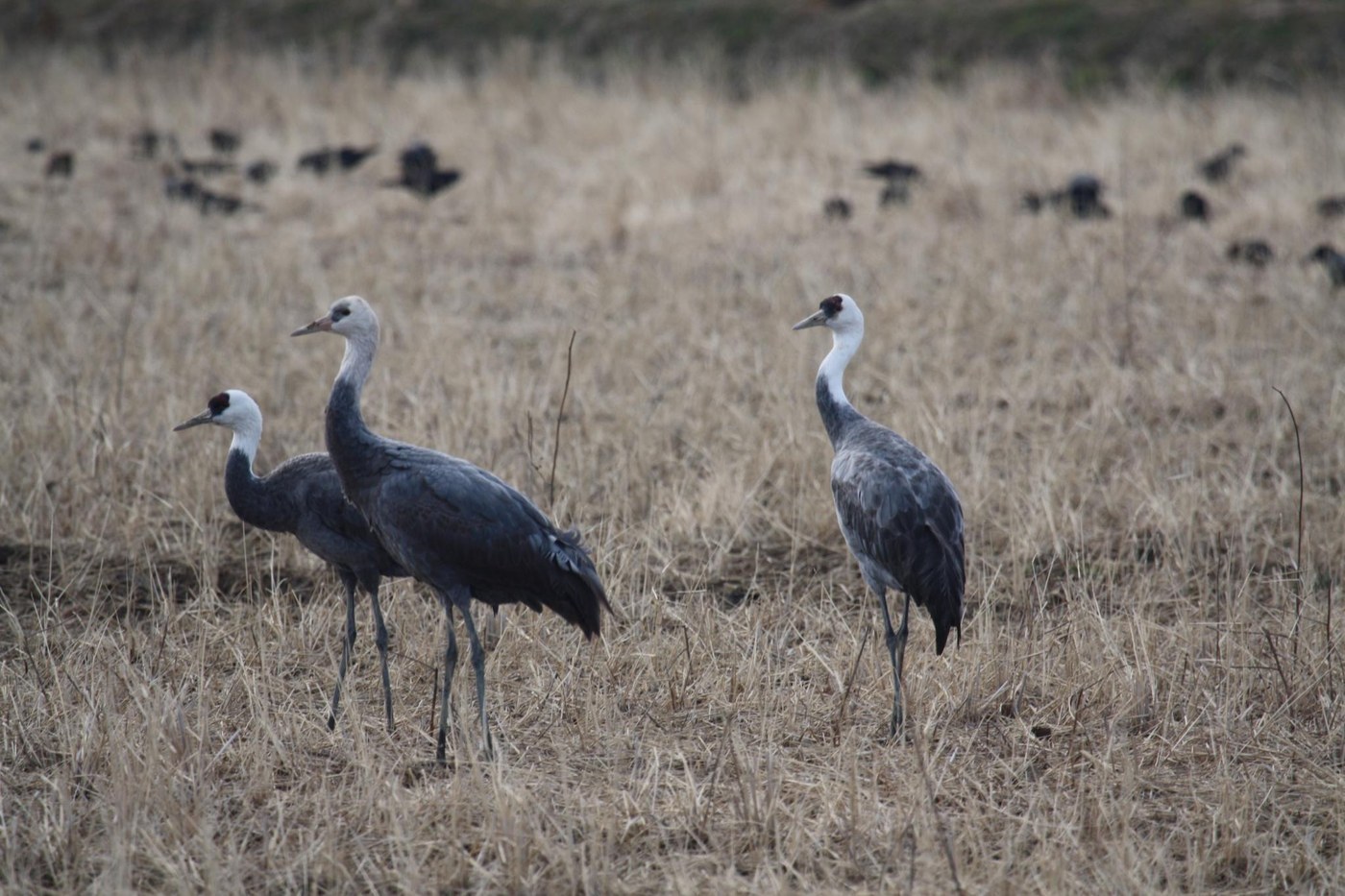
A small, dark East Asian crane with a white head and upper neck resembling a hood, contrasting sharply with its otherwise slate-grey to blackish body.
- Feather type
- Dark slate-grey body feathers with a white head/upper neck 'hood' and black bustle plumes
- Colours
- Dark slate-grey body with a white head and upper neck, and a red crown patch
- Bird size
- Small crane, ~100 cm tall
Found a feather like this?
Identify any feather from a photo, free.
Overview
The Hooded Crane is one of the smaller and less numerous crane species, breeding in remote wetlands and bogs of southeastern Russia and wintering primarily in Japan, with smaller numbers in China and the Korean Peninsula. Its name comes from the white feathering covering the head and upper neck, which contrasts sharply against the dark slate-grey to blackish body plumage, giving the impression of a hood pulled over the head.
Identifying the Feather
- Body feathers are dark slate-grey to blackish, notably darker overall than the paler grey of the Common Crane or Sarus Crane.
- Head and upper neck feathers are white, forming a distinct 'hood' that contrasts sharply with the dark body - a key identification feature for this species.
- Tertial (bustle) feathers are elongated, drooping, and dark grey to blackish, curling over the tail.
- The bare red crown patch sits within the white-feathered head area.
- Distinguish from the White-naped Crane, which has a grey (not blackish) body and a white stripe confined to the nape/hindneck rather than covering the whole head and upper neck.
Plumage & Molt
Adults have a dark slate-grey to blackish body, a white head and upper neck, and a bare red crown patch, along with elongated drooping dark tertial bustle feathers. Sexes look alike. Juveniles are duller brownish-grey overall, with reduced white on the head, gradually acquiring the full white hood and dark body contrast as they mature. Molt follows the short breeding season in remote Russian wetlands.
Habitat & Range
Hooded Cranes breed in remote wetlands, bogs, and forested marshes of southeastern Russia and possibly small areas of northeastern China, and winter mainly in Japan, particularly at a small number of key wintering sites, with additional smaller wintering populations in China and the Korean Peninsula. It is a fully migratory species with a relatively narrow migratory corridor and a small, concentrated wintering population.
Behavior & Field Notes
This crane forages in wetlands and adjacent farmland for grains, aquatic plants, and small invertebrates, often in flocks at wintering sites. It nests on the ground in remote, undisturbed marsh and bog habitat, laying a small clutch. Its call is a resonant trumpeting bugle, similar to other Grus cranes. Because a large proportion of the world population concentrates at just a few wintering sites in Japan, the species is particularly vulnerable to disturbance or disease outbreaks at those locations, making site protection a key conservation priority.
Frequently asked questions
How can you identify a Hooded Crane feather?
Look for dark slate-grey to blackish body feathers combined with white head/upper-neck feathers forming a distinct hood pattern.
How is it different from the White-naped Crane?
The Hooded Crane has a fully white head and upper neck against a dark blackish body, while the White-naped Crane has a grey body with white confined mainly to the nape and hindneck.
Is the Hooded Crane migratory?
Yes, it migrates between breeding wetlands in Russia and wintering grounds concentrated mainly in Japan.
Why is the Hooded Crane vulnerable?
A large share of its small world population concentrates at just a few wintering sites, making it sensitive to disturbance at those locations.
Hooded Crane guides
In-depth guides for identifying and understanding Hooded Crane.
Other feathers you may enjoy

Yellow-billed Spoonbill
White contour and flight feathers with fine breeding plumes on the back and breast
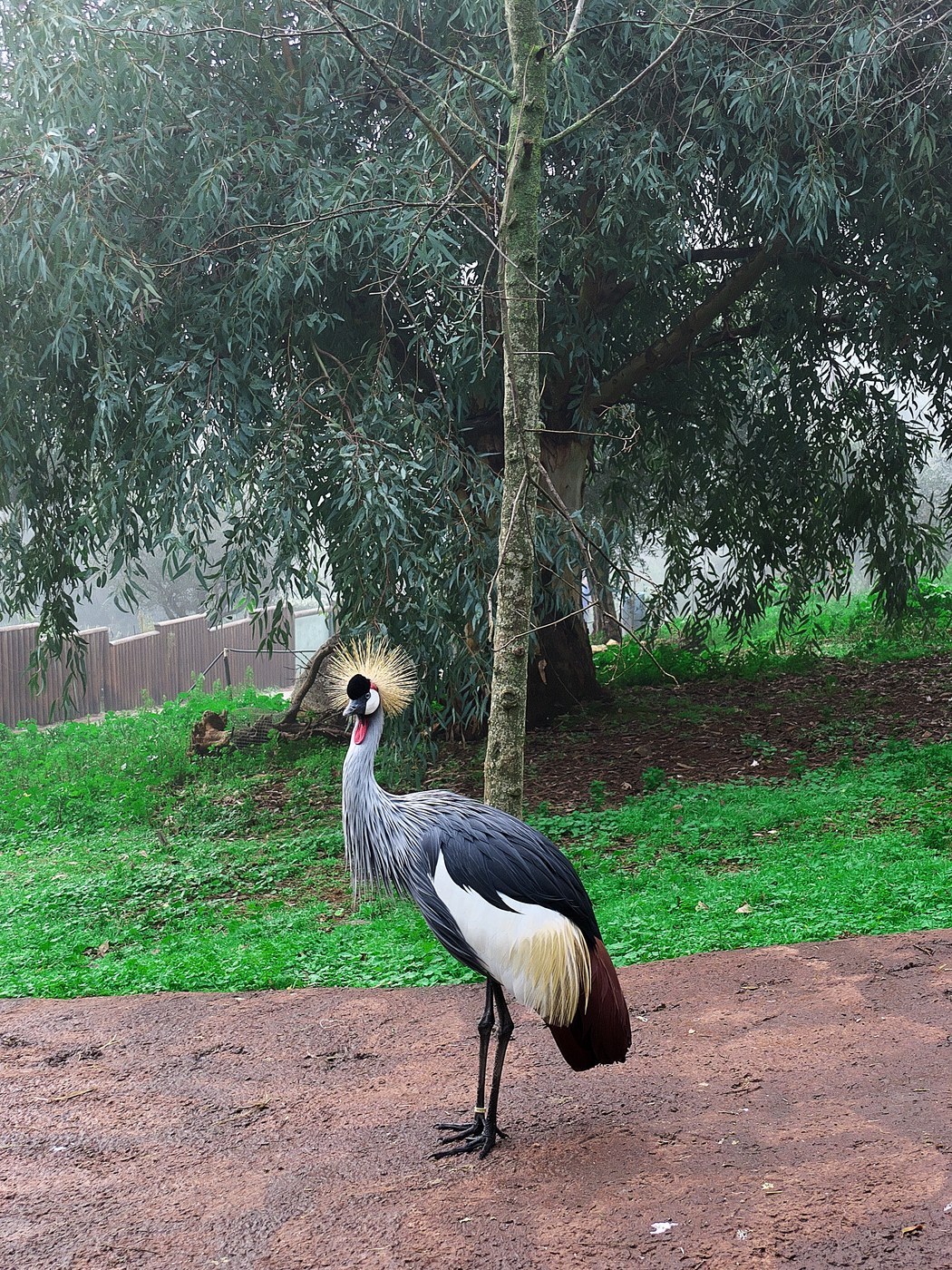
Grey Crowned Crane
Grey body feathers with white wing coverts, chestnut flight feathers, and stiff golden crown bristles
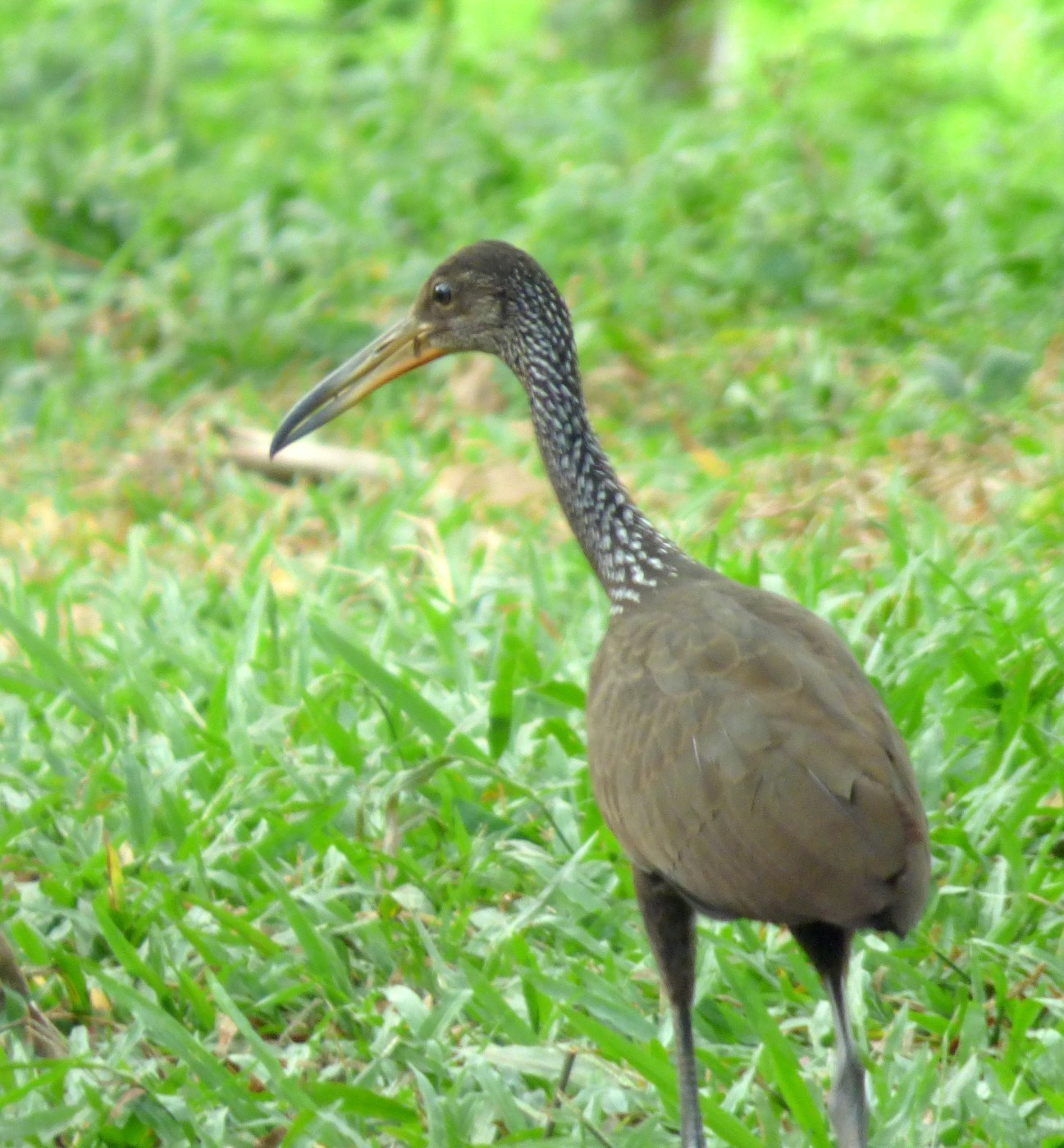
Limpkin
Brown contour feathers with white teardrop-shaped spots and streaks
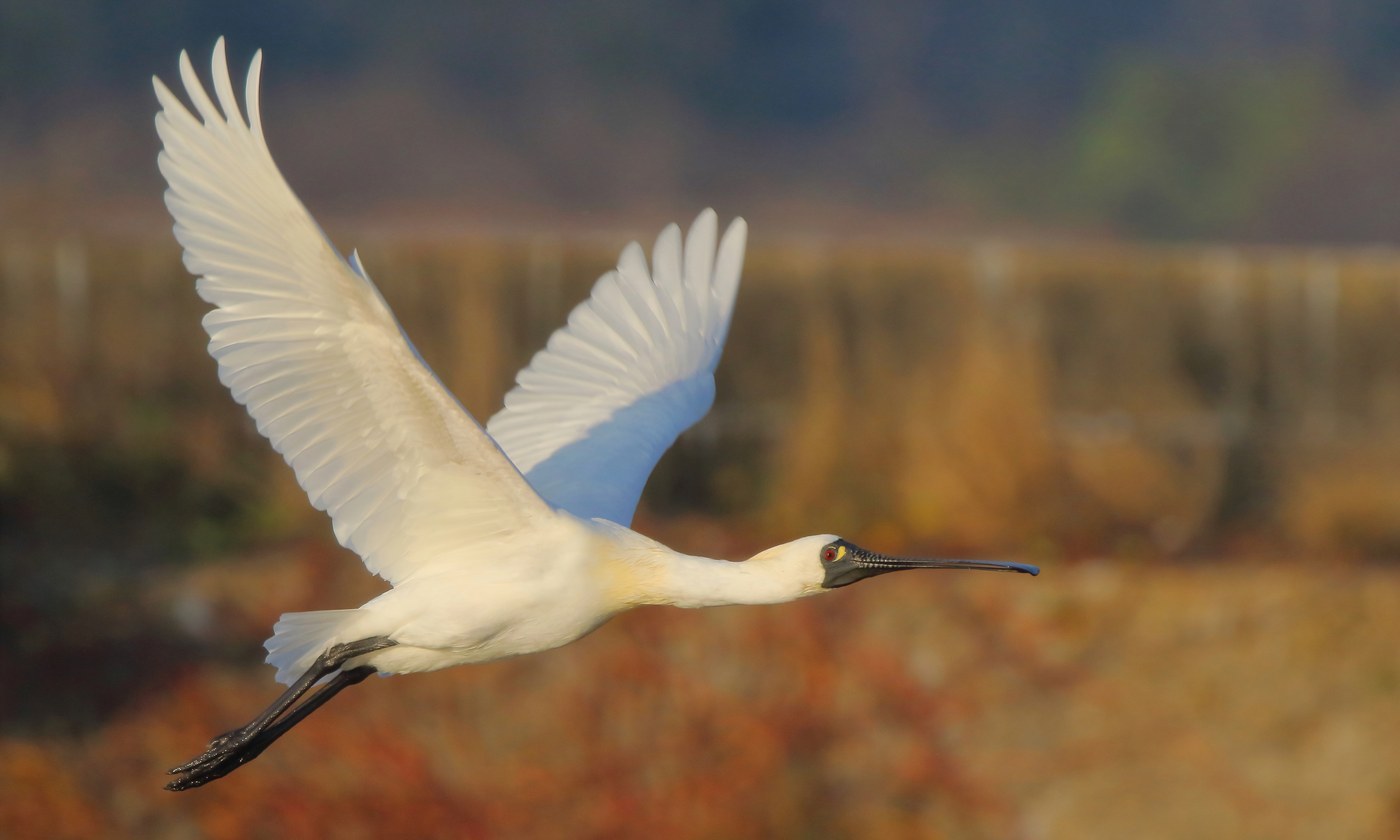
Black-faced Spoonbill
White contour and flight feathers with fine breeding crest and breast plumes
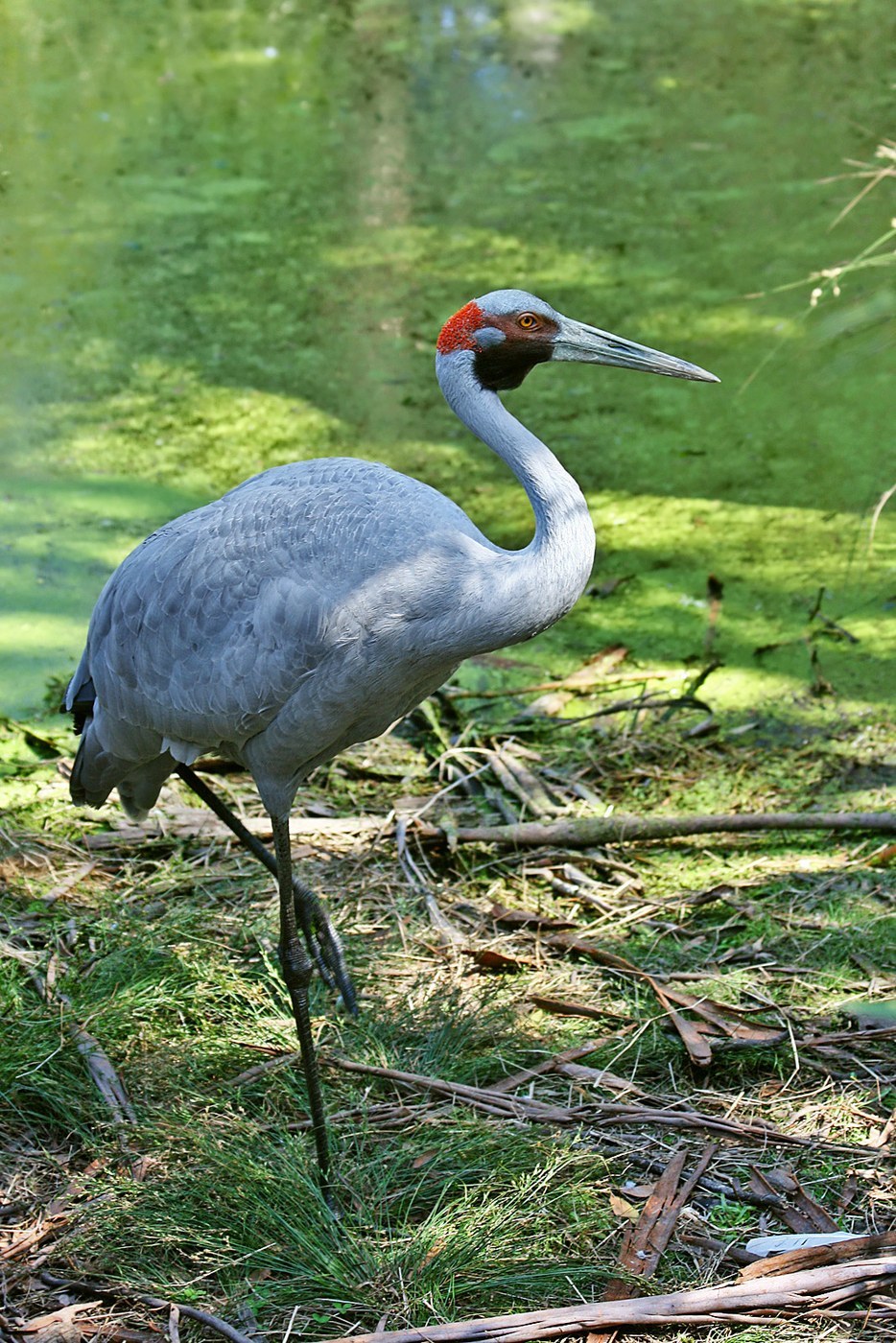
Brolga
Grey contour feathers with drooping bustle plumes
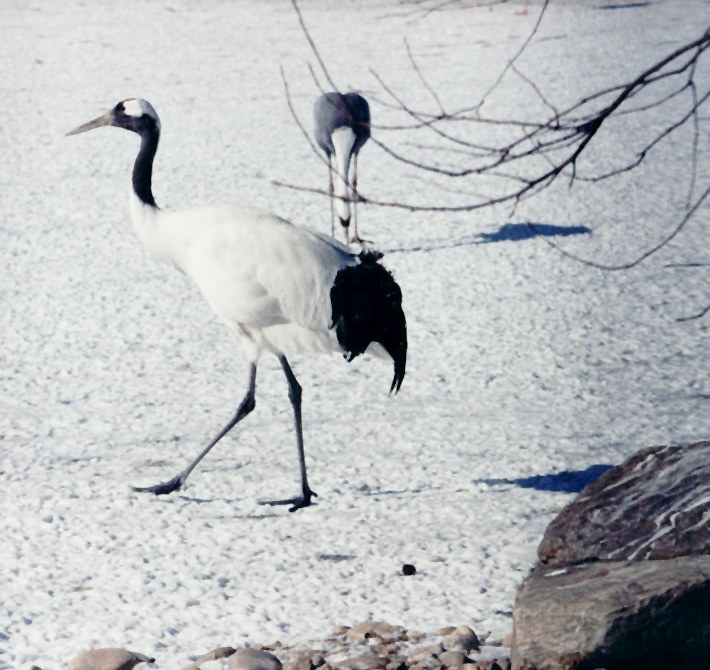
Red-crowned Crane
White contour feathers with black secondary/tertial bustle feathers and a bare red crown

Common Crane
Grey contour feathers with black head/neck feathers and drooping bustle plumes
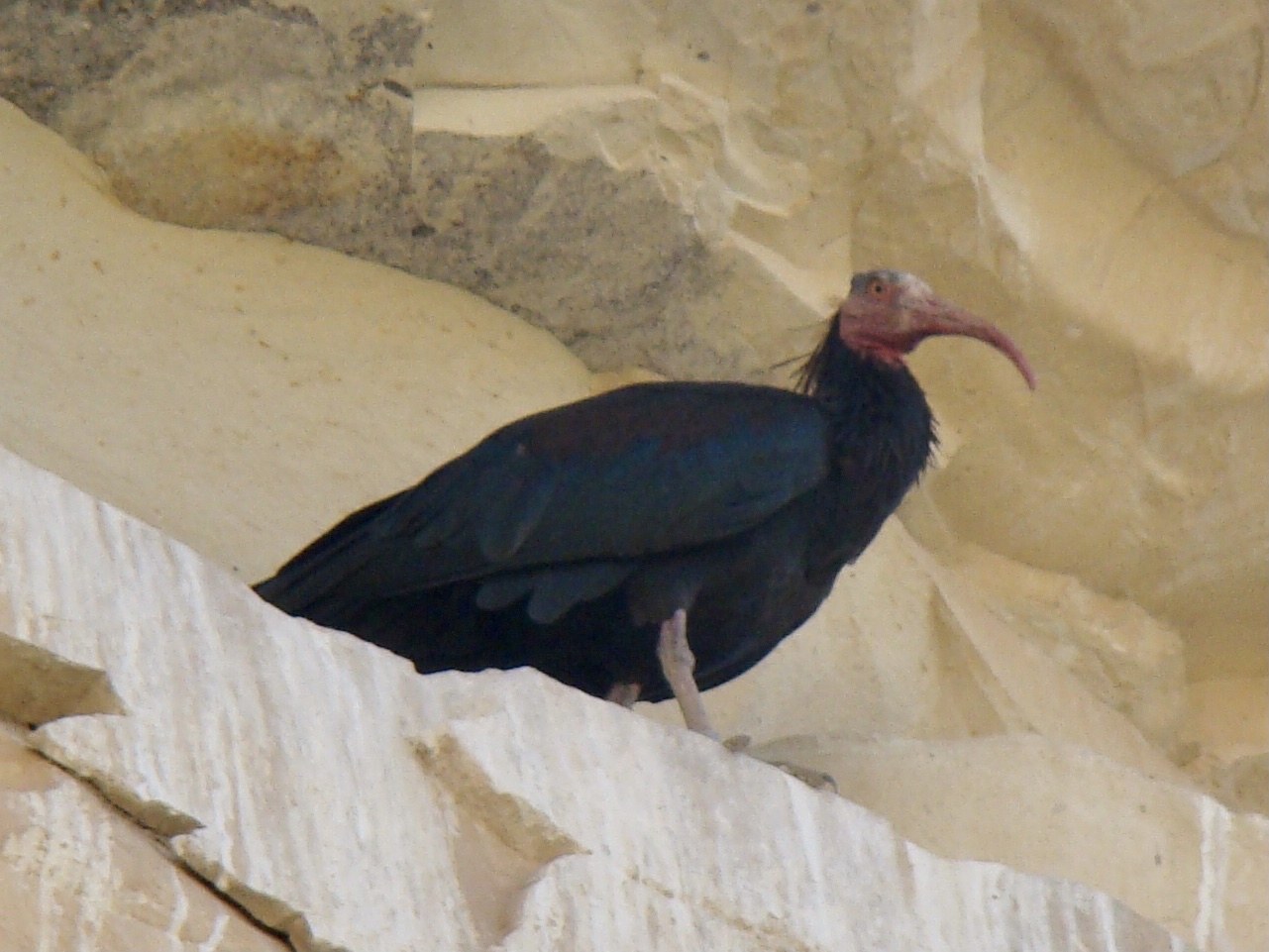
Northern Bald Ibis
Glossy black contour feathers with elongated nape plumes
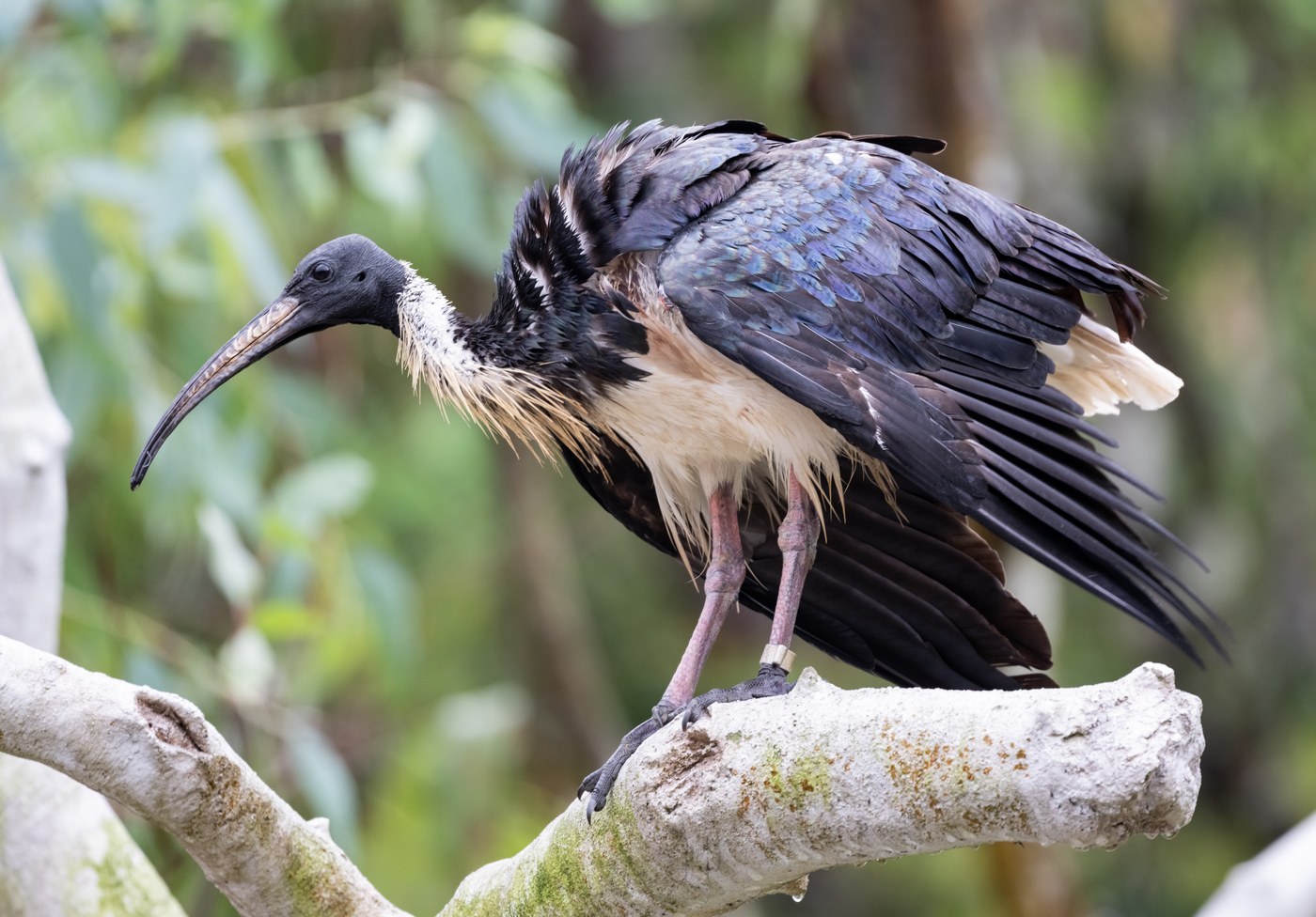
Straw-necked Ibis
Glossy contour feathers with unique straw-like neck plumes
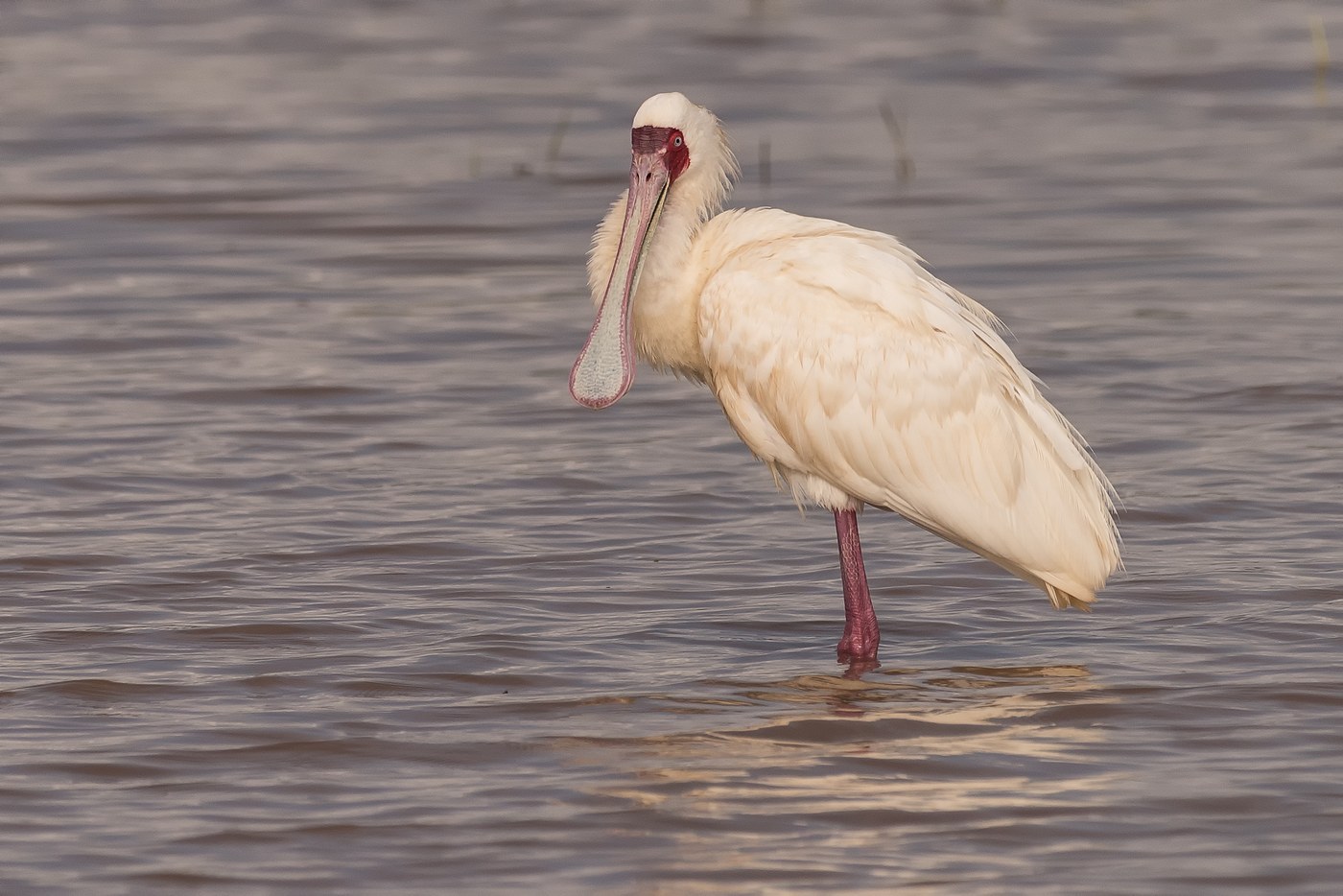
African Spoonbill
White contour and flight feathers, unmarked by black tips

Roseate Spoonbill
Pink and white contour and flight feathers with a carmine shoulder patch
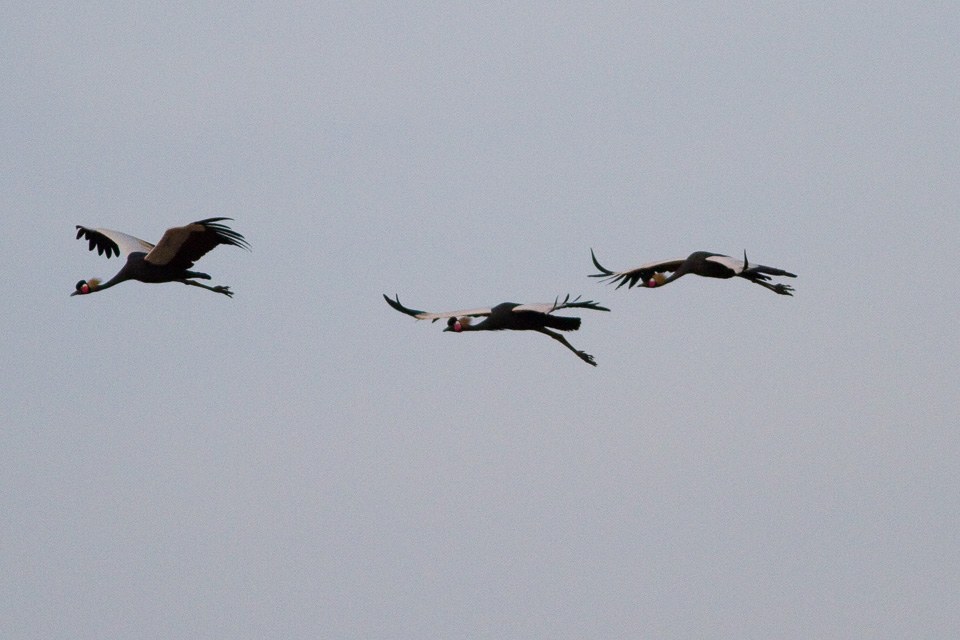
Black Crowned Crane
Dark grey-black body feathers with white wing coverts, chestnut flight feathers, and stiff golden crown bristles