
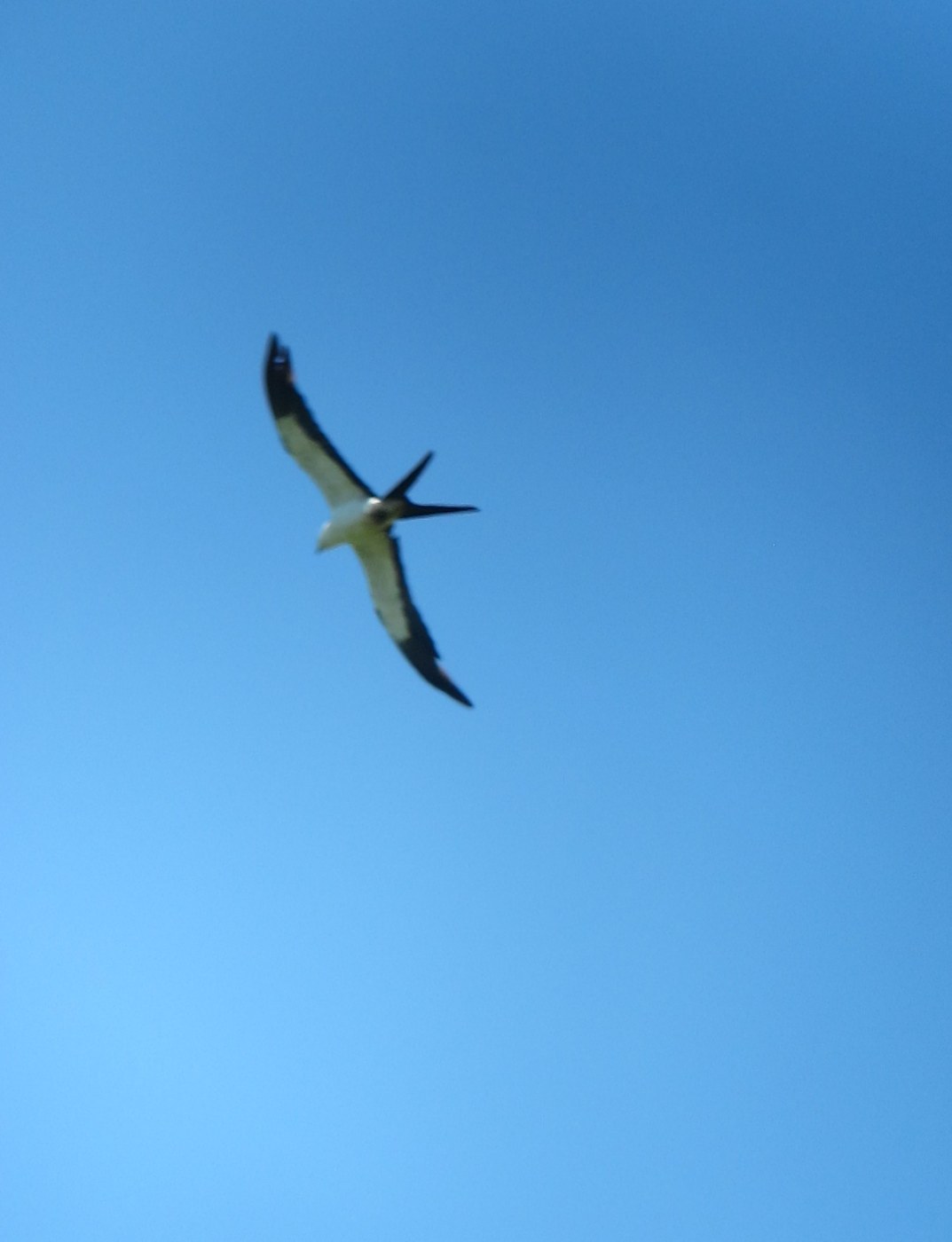
Swallow-tailed Kite
Elanoides forficatus
A graceful, boldly two-toned raptor with a deeply forked tail, whose sharp black-and-white feathers are unlike almost any other North American bird of prey.
- Feather type
- Long pointed flight feathers; deeply forked tail feathers; sleek contour feathers
- Colours
- Crisp white head/body contrasting with glossy black wings and tail (greenish-purple sheen in good light)
- Bird size
- Medium-large raptor, ~55-68 cm including long forked tail
Found a feather like this?
Identify any feather from a photo, free.
Overview
The Swallow-tailed Kite is one of the most distinctive raptors in the Americas, instantly recognized by its snow-white head and underparts set against jet-black wings and a long, scissor-like forked tail. It breeds in the southeastern United States and much of Central and South America, spending winters largely in South America.
Its flight style is buoyant and effortless, gliding on long angular wings while twisting its forked tail to steer, more like a giant swallow than a typical hawk.
Because the plumage contrast is so extreme and the tail shape so unusual, a single feather from this species is often identifiable at a glance, especially a tail feather with its long tapering shape.
Identifying the Feather
Shape and Size
Flight feathers are long, narrow, and pointed, suited to soaring on thermals and gliding low over canopy. Tail feathers are notably elongated and taper to a point, contributing to the deeply forked silhouette; outer tail feathers can reach 20+ cm.
Color and Pattern
- Body and head contour feathers: pure white, unmarked
- Wing and tail feathers: solid glossy black with iridescent green-purple highlights in sunlight
- Shafts: dark on black feathers, pale on white body feathers
- No barring or spotting anywhere in adult plumage
Distinguishing from Similar Species
The stark, unbarred black-and-white pattern with no streaking rules out nearly every other kite or hawk in its range; other American kites (Mississippi, White-tailed) show gray tones and lack the deep tail fork. The long forked black tail feather alone is essentially diagnostic in its range.
Plumage & Molt
Adults show a pure white head, neck, and underparts against black wings, back, and tail, with no seasonal color change. Sexes look alike. Juveniles resemble adults but with slightly less contrast and a shorter tail fork until fully grown.
Molt occurs primarily on the wintering grounds in South America, outside the breeding season, so birds arrive back in North America each spring in fresh plumage.
Habitat & Range
Breeds in bottomland hardwood forests, cypress swamps, and pine flatwoods near rivers and wetlands in the southeastern U.S., with a broader resident and breeding range through Central America and much of South America.
It is a long-distance Nearctic-Neotropical migrant, with North American breeders wintering mainly in Brazil and neighboring regions; southern populations may be largely resident.
Behavior & Field Notes
Swallow-tailed Kites forage almost entirely on the wing, snatching flying insects, tree frogs, lizards, and nestling birds directly from foliage without landing. They often eat prey while still flying.
They nest high in tall trees, and gather in large communal pre-migration roosts of hundreds of birds in late summer. Vocalizations are thin, high-pitched whistles, given infrequently.
A feather found on the ground under a tall pine or cypress near a river swamp, especially in the southeastern U.S. summer, is a good clue for this species.
Frequently asked questions
How can I tell a Swallow-tailed Kite feather from a crow or magpie feather?
Swallow-tailed Kite feathers are solid black or solid white with no mixing of the two on a single feather, and tail feathers are unusually long and pointed; crows are solid black but lack any pure white feathers, while magpies show white patches combined with iridescent black on the same feather, unlike this kite's separate white and black feather tracts.
Do both sexes look the same?
Yes, males and females are essentially identical in plumage, so feather color alone will not indicate sex.
Where would I most likely find one of these feathers?
Near river swamps, cypress stands, or pine flatwoods in the southeastern United States during the breeding season, or in Central and South American lowland forests where the species is resident or wintering.
Does the tail feather shape change with age?
Juveniles have a shorter, less deeply forked tail than adults, so a shorter black tail feather with white base may indicate a young bird.
Swallow-tailed Kite guides
In-depth guides for identifying and understanding Swallow-tailed Kite.
Other feathers you may enjoy

Australian Hobby
Long, narrow pointed flight feathers; slender tail feathers

California Condor
Massive flight feathers; long broad primaries; large tail feathers

Brown Falcon
Broad, rounded flight feathers; variable-toned contour feathers
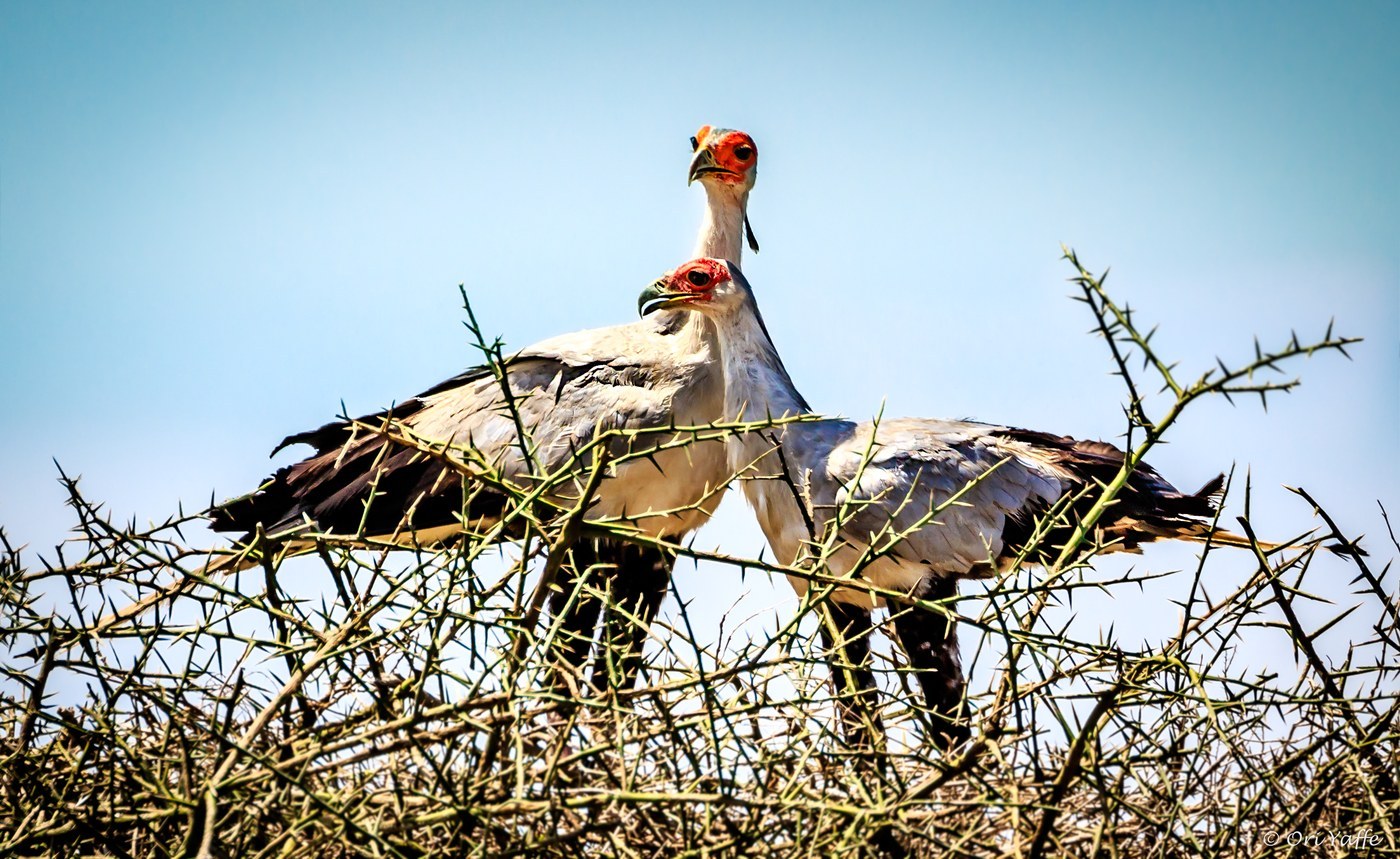
Secretarybird
Long crest feathers; broad flight feathers; elongated central tail feathers

Orange-breasted Falcon
Broad-based pointed flight feathers; bold breast and belly feathers
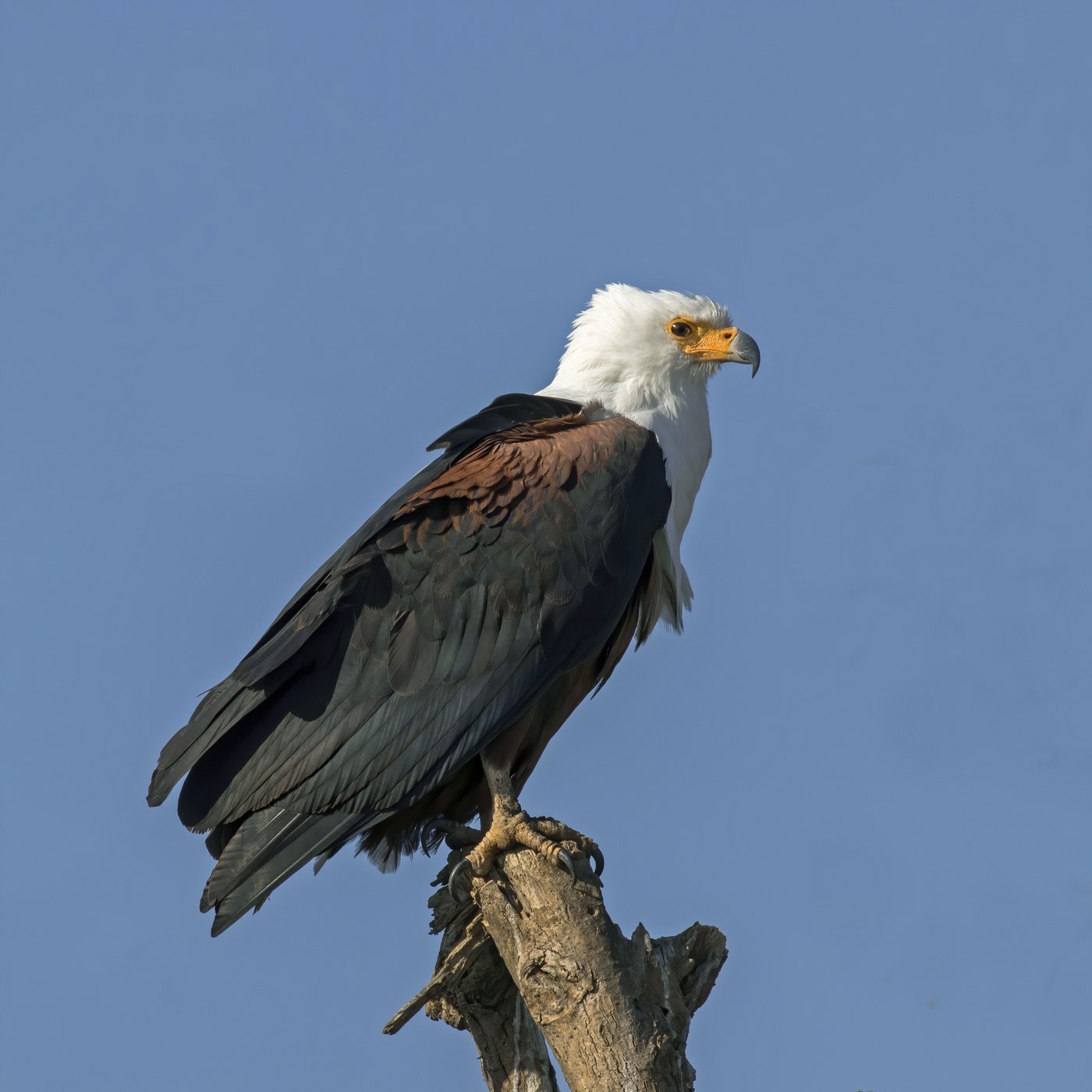
African Fish Eagle
Flight, tail, and body feathers

Amur Falcon
Slender pointed flight feathers; soft slate or orange-buff contour feathers
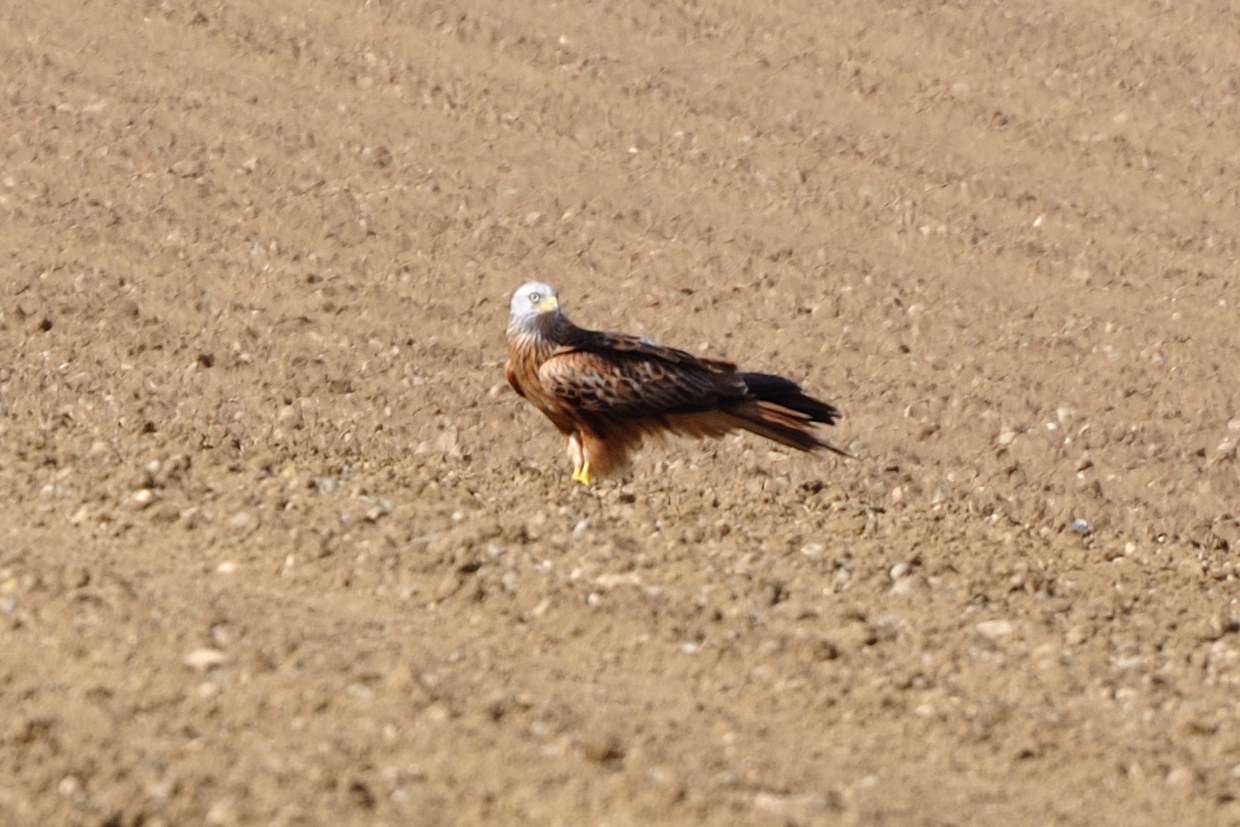
Red Kite
Flight (wing) and tail feathers
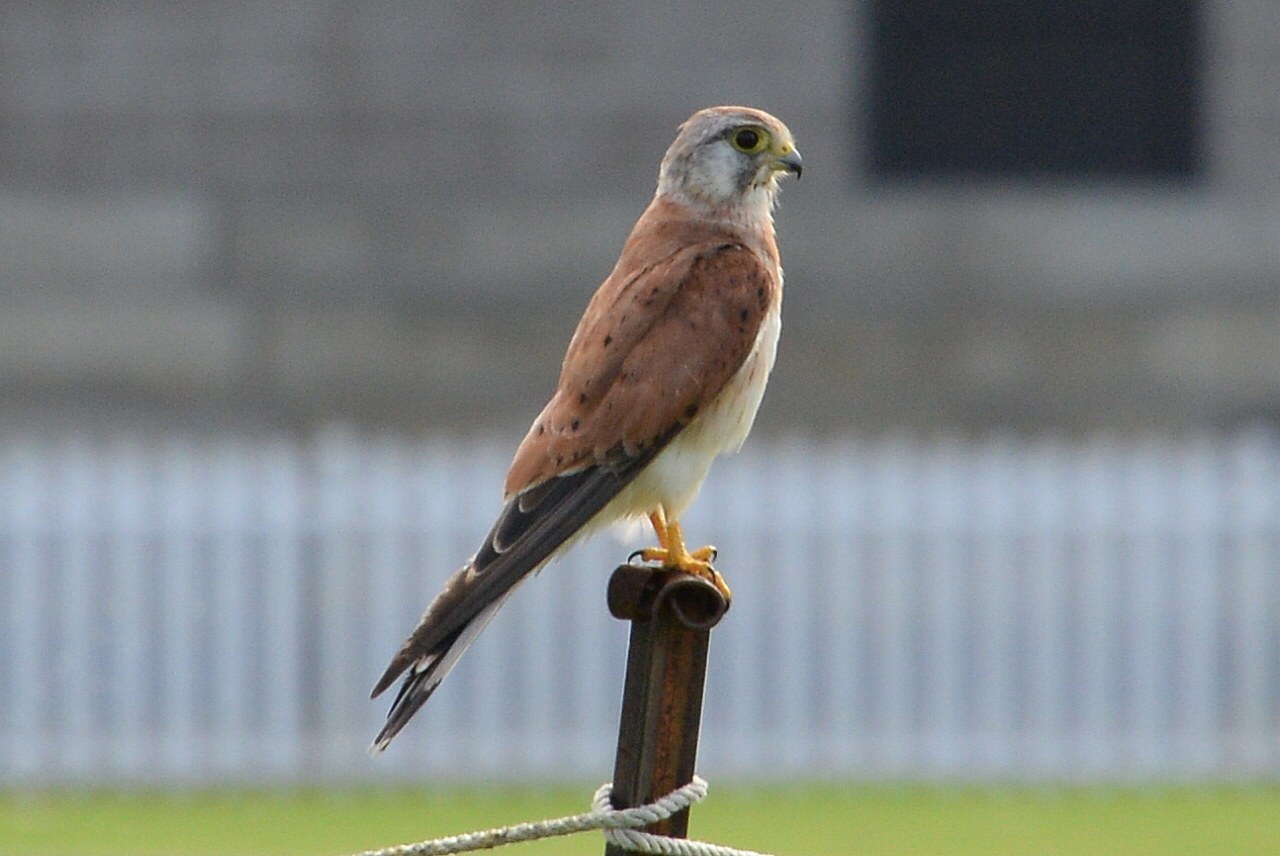
Nankeen Kestrel
Slim pointed flight feathers; lightly marked contour feathers

Andean Condor
Massive flight feathers; broad primaries and secondaries; sturdy tail feathers

Plumbeous Forest Falcon
Short rounded flight feathers; finely barred tail feathers

Sooty Falcon
Long pointed flight feathers; slim tail feathers