
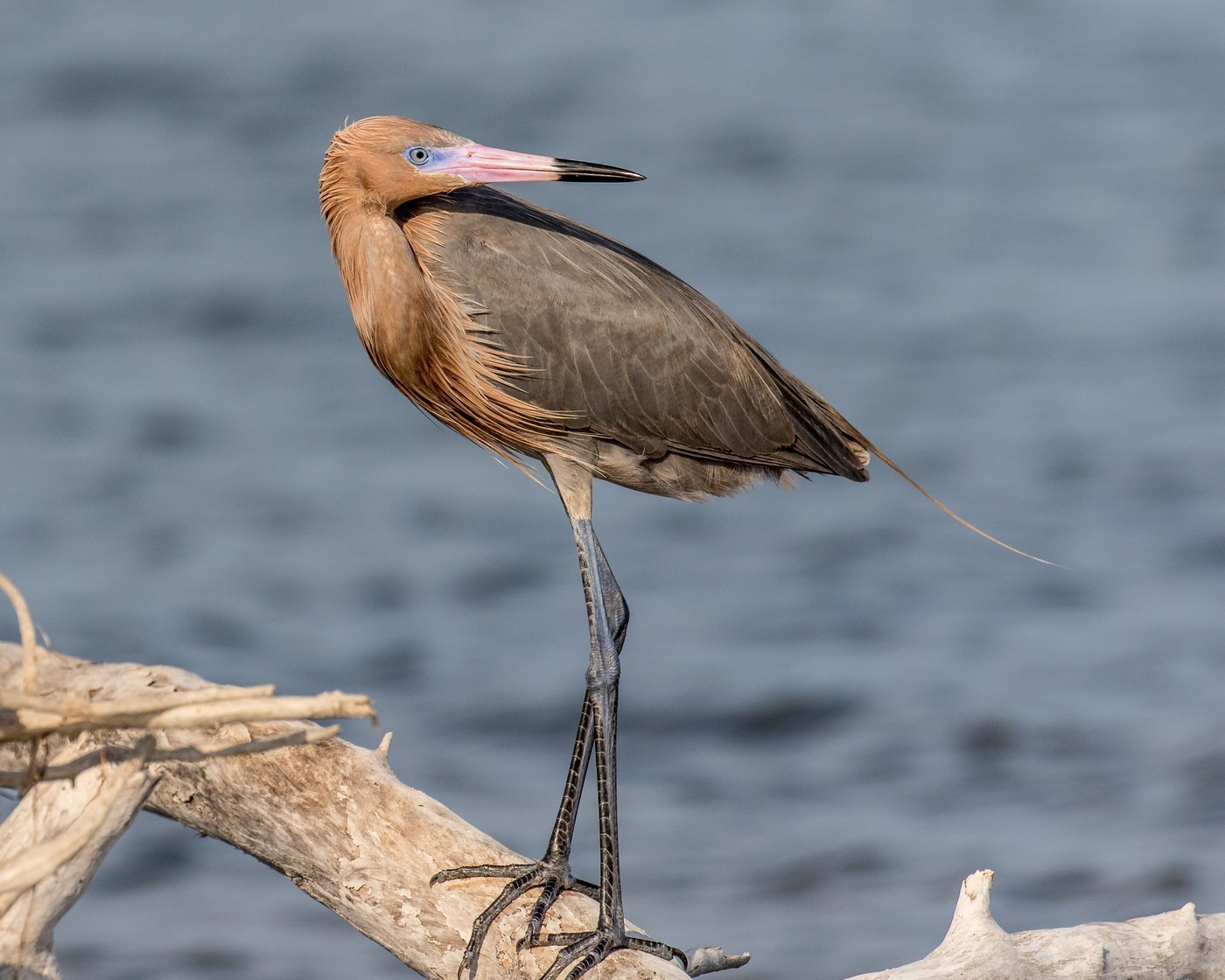
Reddish Egret
Egretta rufescens
A distinctive coastal heron known for its shaggy, reddish head and neck plumage and its animated, dancing foraging behavior.
- Feather type
- Shaggy, loose contour feathers on the neck and head
- Colours
- Reddish-brown, slate-gray, or white in the white morph
- Bird size
- Medium-large, ~68-82 cm tall
Found a feather like this?
Identify any feather from a photo, free.
Overview
Overview
The Reddish Egret is a medium to large heron restricted mainly to coastal saltwater habitats of the Americas. It occurs in two color forms, a dark morph with slate-gray body and reddish head and neck, and a less common white morph, both sharing the same shaggy plumage texture and energetic foraging style.
- Medium-large heron found almost exclusively along coasts
- Occurs in a dark (slate-gray with reddish head/neck) and a white morph
- Known for shaggy, loosely textured head and neck feathers
Identifying the Feather
Feather Identification
In the dark morph, Reddish Egret head and neck feathers are shaggy, loosely webbed, and reddish-brown to rust in color, contrasting with slate-gray body feathers; the effect is a distinctly disheveled look compared to the sleeker plumage of most herons. The white morph shows entirely white feathers similar in tone to other white egrets but often with a slightly looser, shaggier texture on the head and neck. The bill, when present, is pink at the base with a black tip, a helpful clue if soft parts are attached.
- Shaggy, loosely structured head/neck feathers are unusual among herons and a strong identifying feature
- Dark morph shows a two-toned reddish head/neck versus slate-gray body
- White morph feathers can resemble Snowy Egret or Little Blue Heron (white juvenile) feathers, but the shaggy texture and coastal location are useful clues
- Bicolored bill (pink base, black tip) helps confirm species if visible
Plumage & Molt
Plumage
Dark morph adults have a shaggy reddish-brown head and neck and a slate-gray body, with a bicolored bill (pink at the base, black at the tip) during the breeding season. White morph adults are entirely white but share the same shaggy feather texture and bill pattern. Juveniles of the dark morph are more uniformly grayish, lacking the reddish head and neck contrast of adults, while juvenile white morph birds resemble adults but with duller bare parts. Breeding adults of both morphs develop elongated, wispy plumes on the head, neck, and back. Molt is gradual, as in related egrets and herons.
Habitat & Range
Habitat & Range
The Reddish Egret is found along coastal areas of the Gulf of Mexico, the Caribbean, and parts of Mexico and Central America, with a more limited presence along nearby Pacific and Atlantic coastlines. It is strongly tied to shallow saltwater habitats such as tidal flats, coastal lagoons, and mangrove-lined shorelines, rarely venturing into freshwater habitats used by many other herons. Most populations are resident, with some local dispersal.
Behavior & Field Notes
Behavior & Field Notes
This species is well known for its highly active, almost theatrical foraging behavior, running, leaping, and spreading its wings to create shade or startle fish into moving, a technique sometimes called "canopy feeding." Its diet consists mainly of small fish found in shallow coastal waters. It nests colonially, often with other herons and egrets, building stick nests in mangroves, shrubs, or low trees. The voice is a low, guttural croak, similar to other Egretta herons. Its restless, energetic foraging style combined with its coastal habitat preference make it one of the more behaviorally distinctive herons.
Frequently asked questions
What are the two color forms of the Reddish Egret?
A dark morph with a slate-gray body and shaggy reddish-brown head and neck, and a less common all-white morph.
What makes Reddish Egret feathers texturally different from other herons?
The head and neck feathers are notably shaggy and loosely webbed, giving a disheveled appearance unlike the sleeker plumage of most herons.
Where does the Reddish Egret typically live?
It is largely restricted to coastal saltwater habitats such as tidal flats and lagoons around the Gulf of Mexico and Caribbean.
How does the Reddish Egret forage differently from other herons?
It uses very active techniques such as running, leaping, and wing-spreading to startle fish, rather than standing still like many herons.
Reddish Egret guides
In-depth guides for identifying and understanding Reddish Egret.
Other feathers you may enjoy

Yellow-billed Spoonbill
White contour and flight feathers with fine breeding plumes on the back and breast
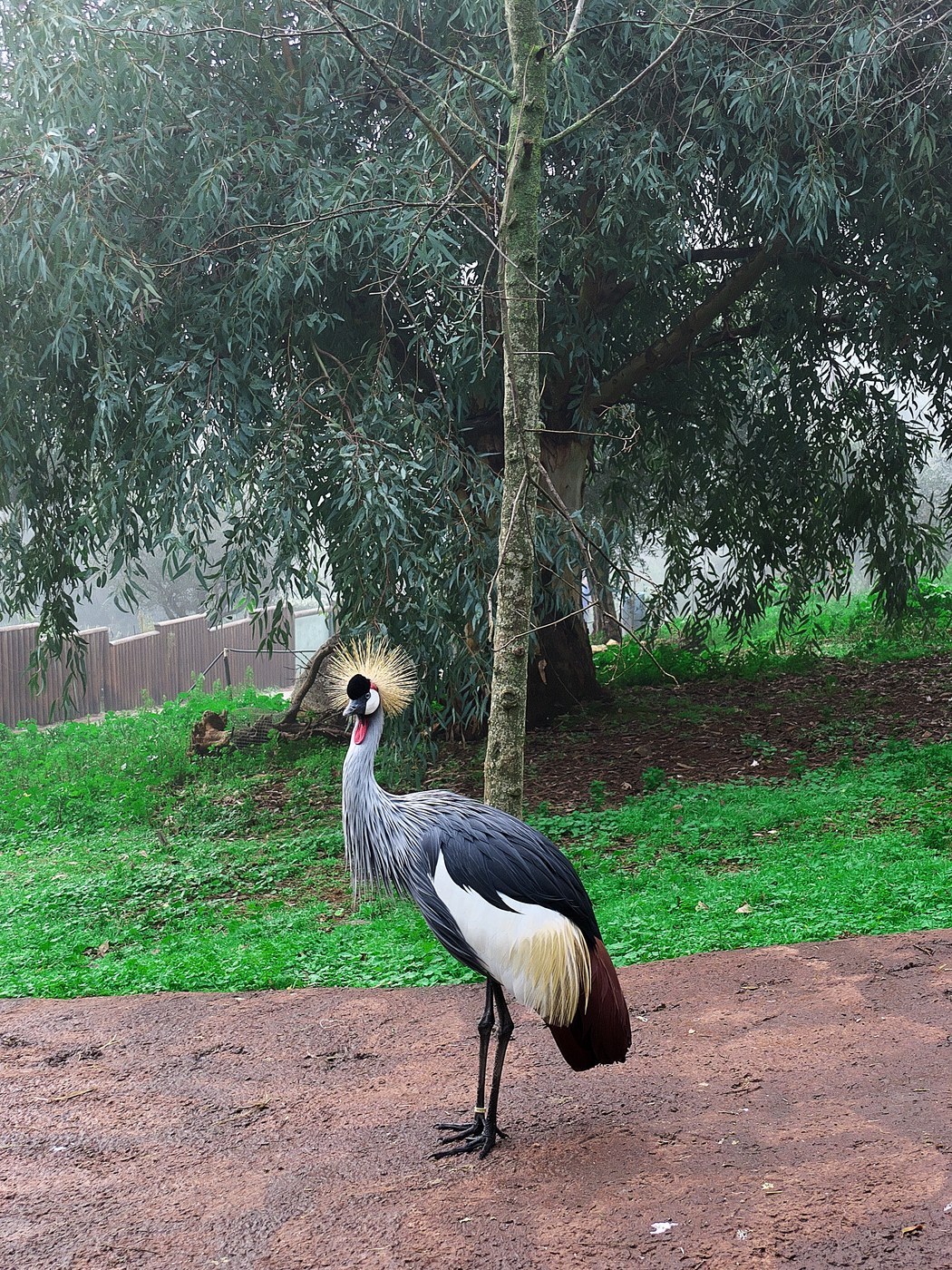
Grey Crowned Crane
Grey body feathers with white wing coverts, chestnut flight feathers, and stiff golden crown bristles
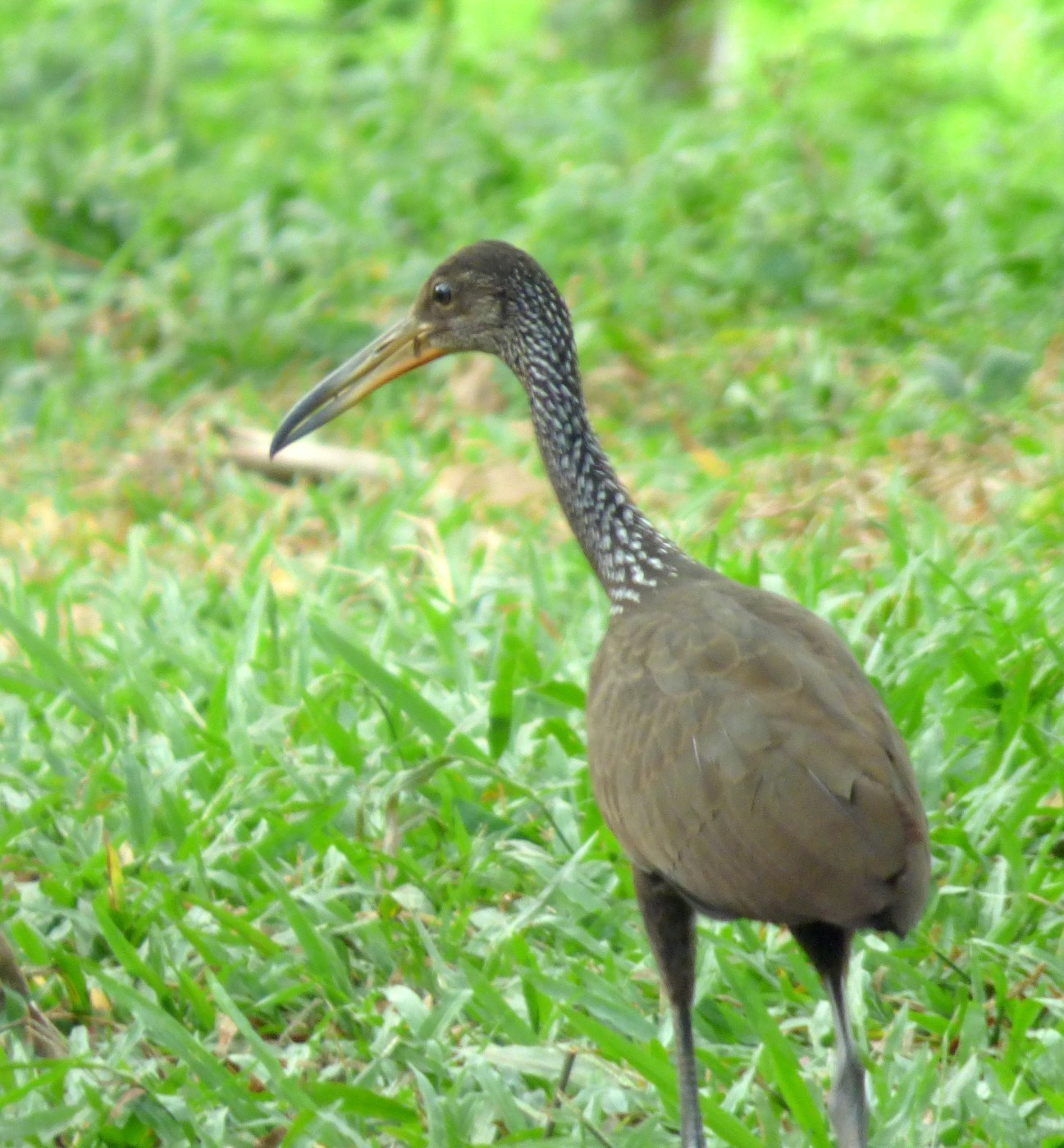
Limpkin
Brown contour feathers with white teardrop-shaped spots and streaks
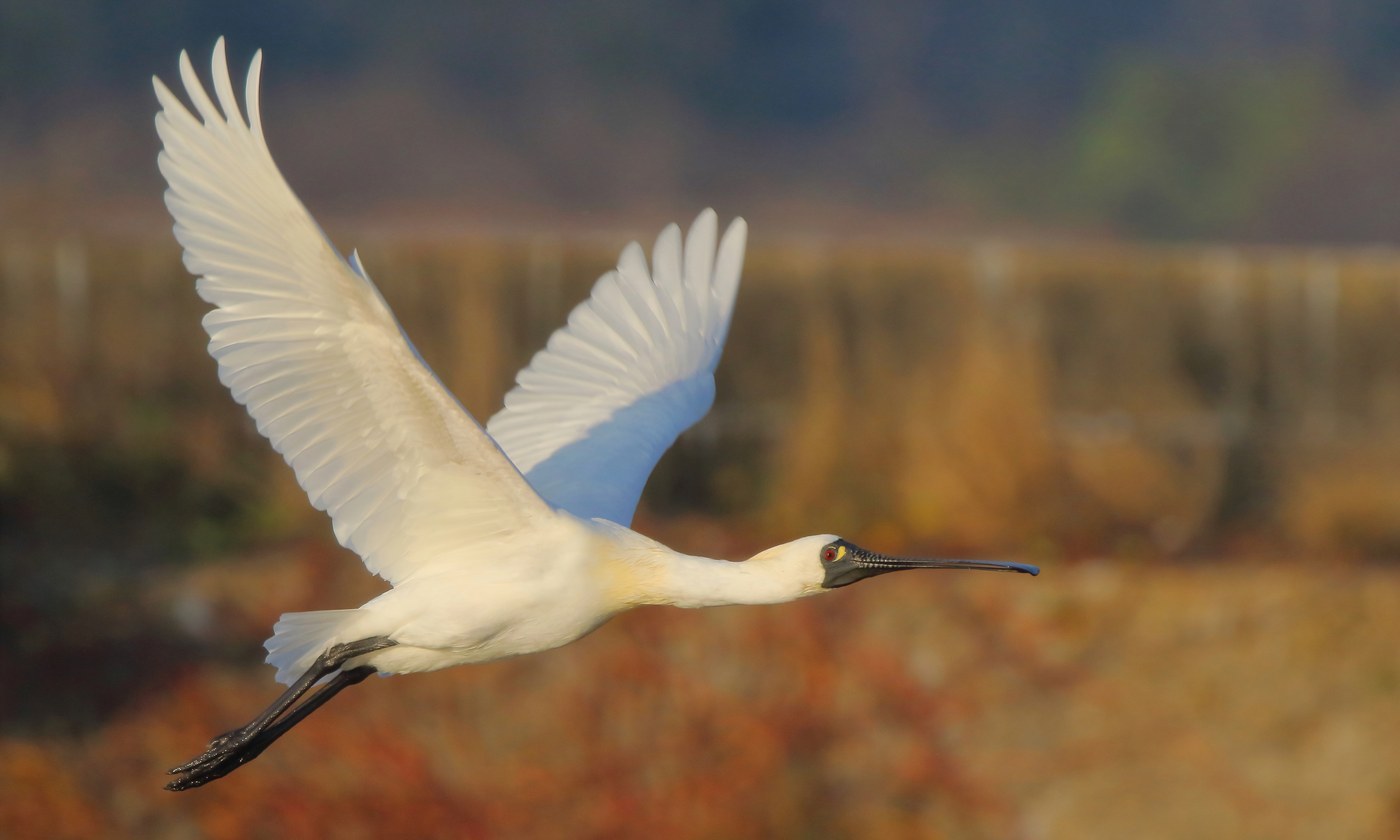
Black-faced Spoonbill
White contour and flight feathers with fine breeding crest and breast plumes
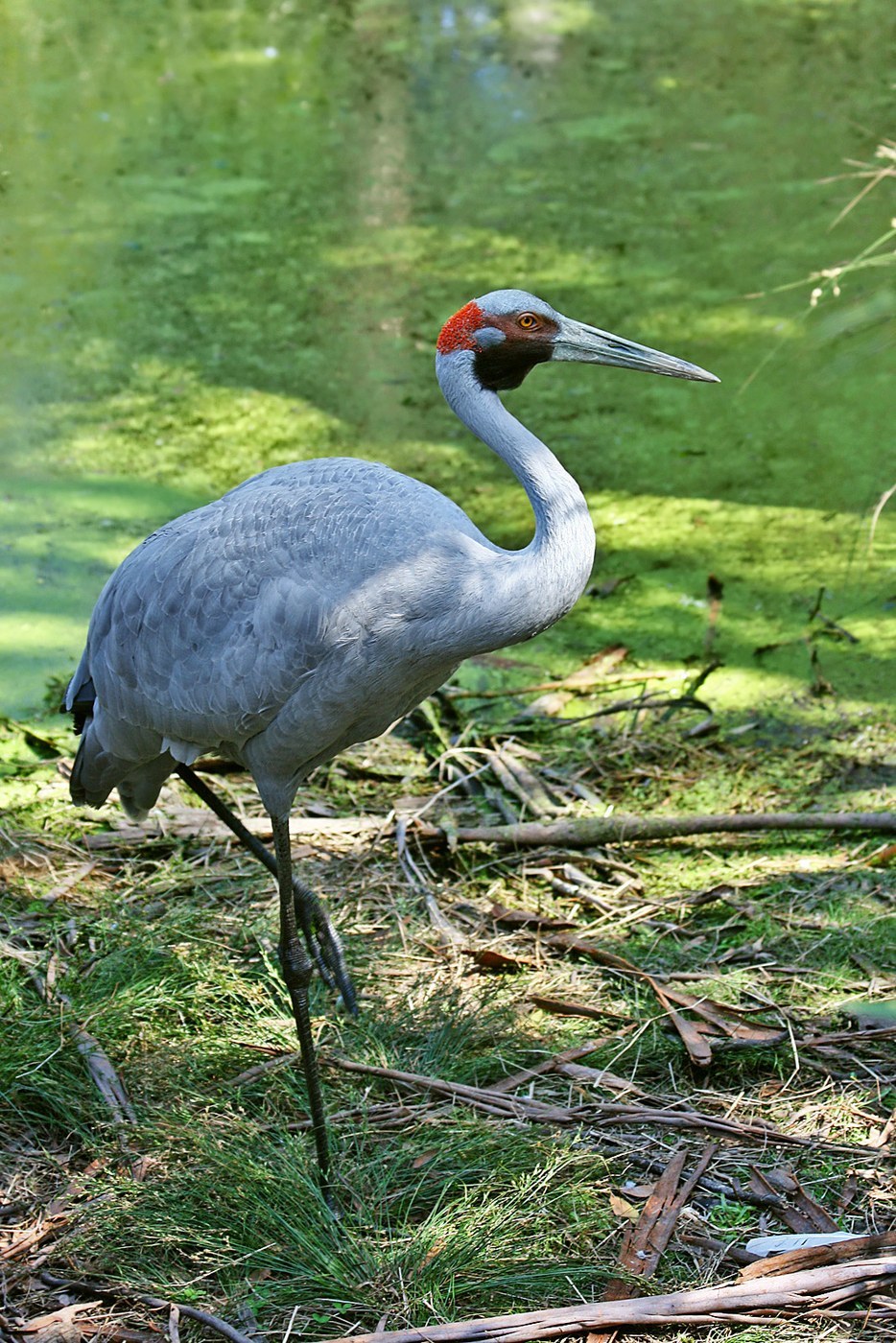
Brolga
Grey contour feathers with drooping bustle plumes
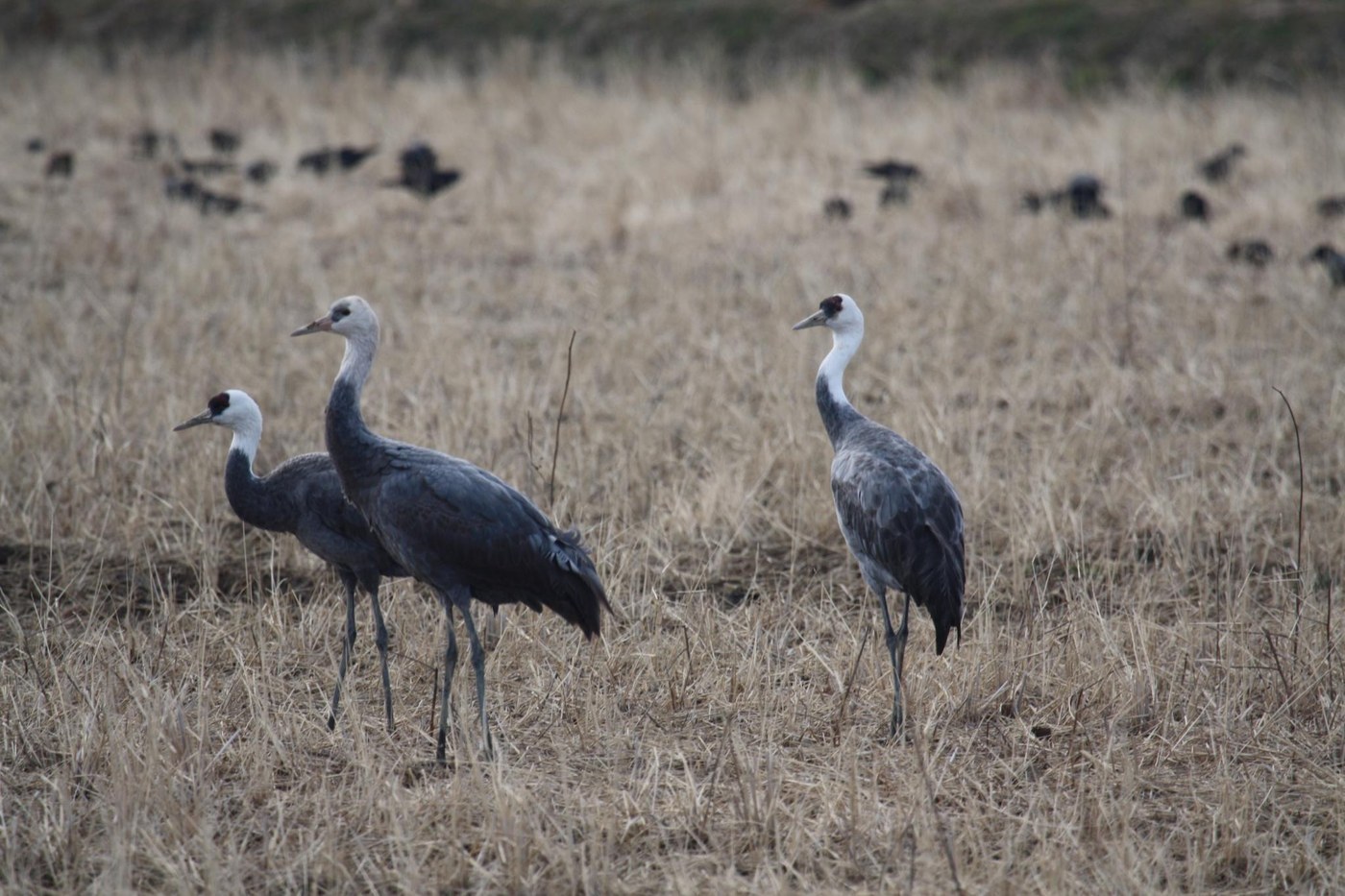
Hooded Crane
Dark slate-grey body feathers with a white head/upper neck 'hood' and black bustle plumes
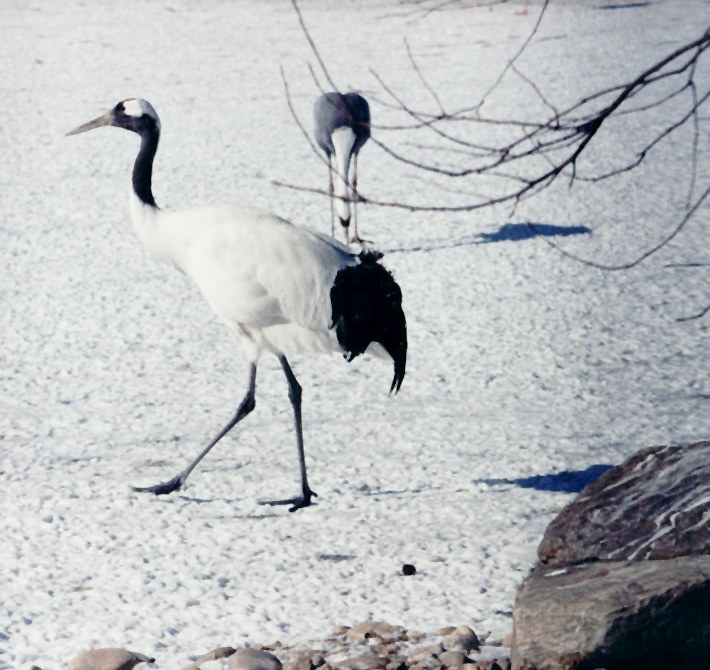
Red-crowned Crane
White contour feathers with black secondary/tertial bustle feathers and a bare red crown

Common Crane
Grey contour feathers with black head/neck feathers and drooping bustle plumes
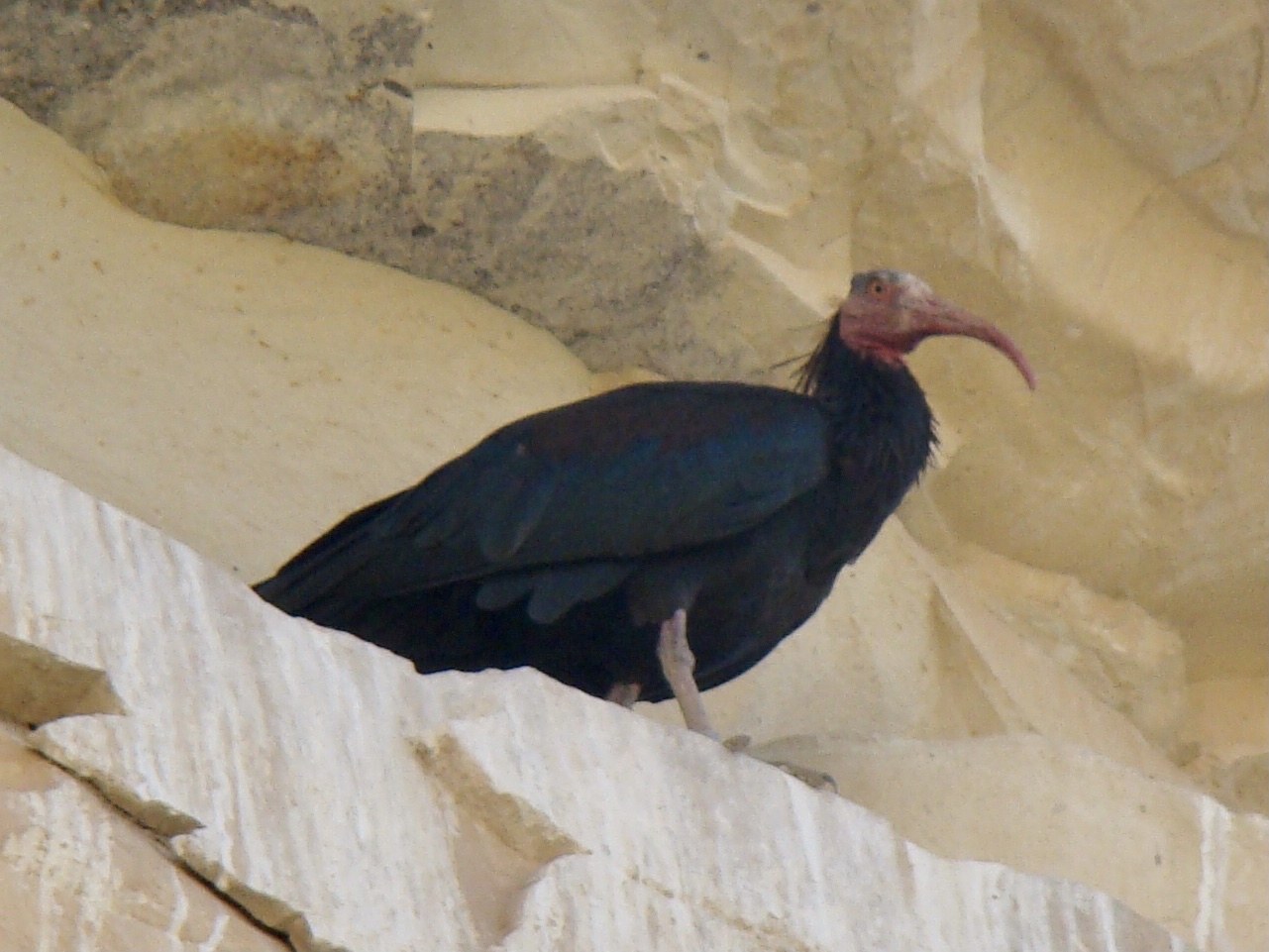
Northern Bald Ibis
Glossy black contour feathers with elongated nape plumes
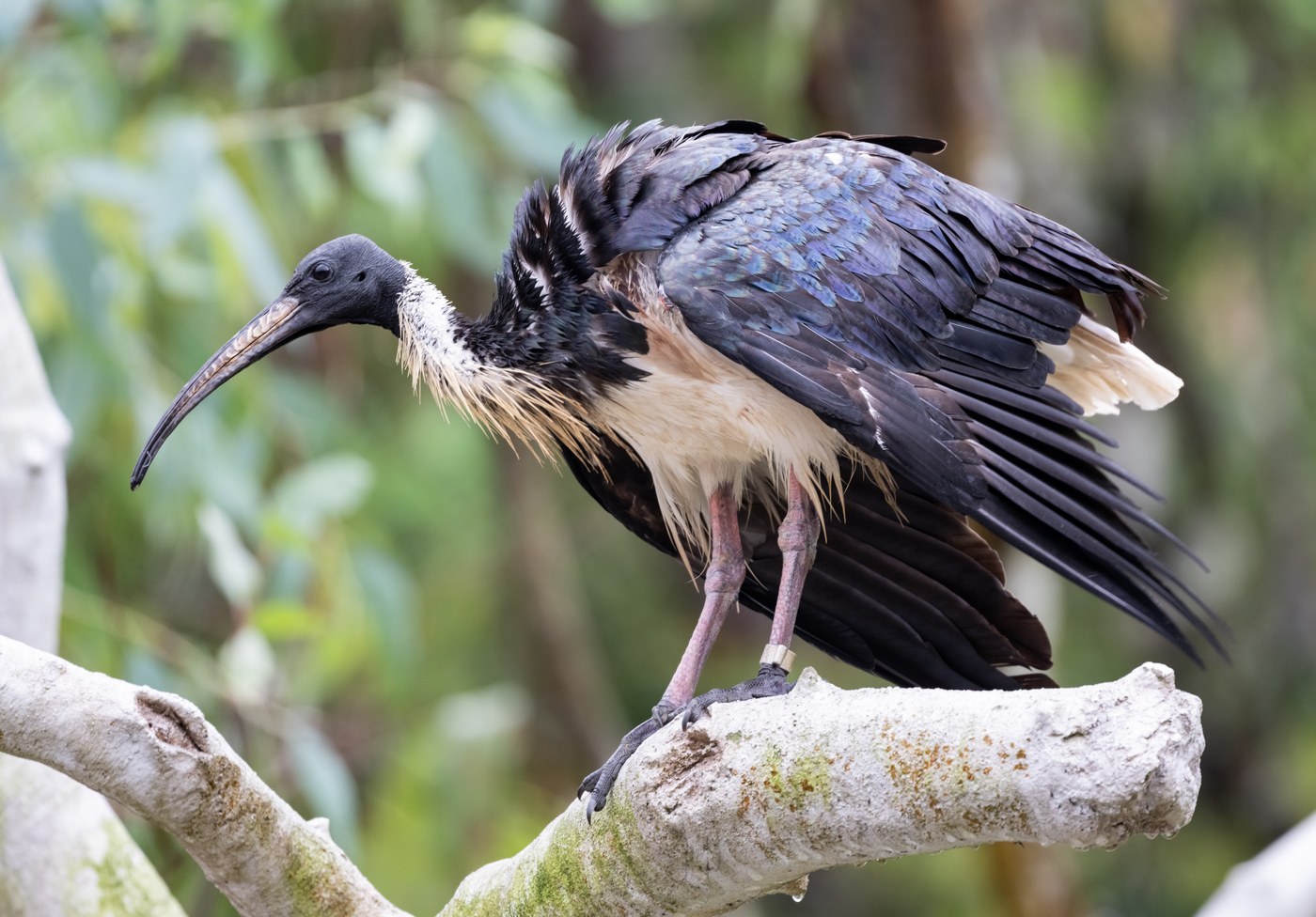
Straw-necked Ibis
Glossy contour feathers with unique straw-like neck plumes
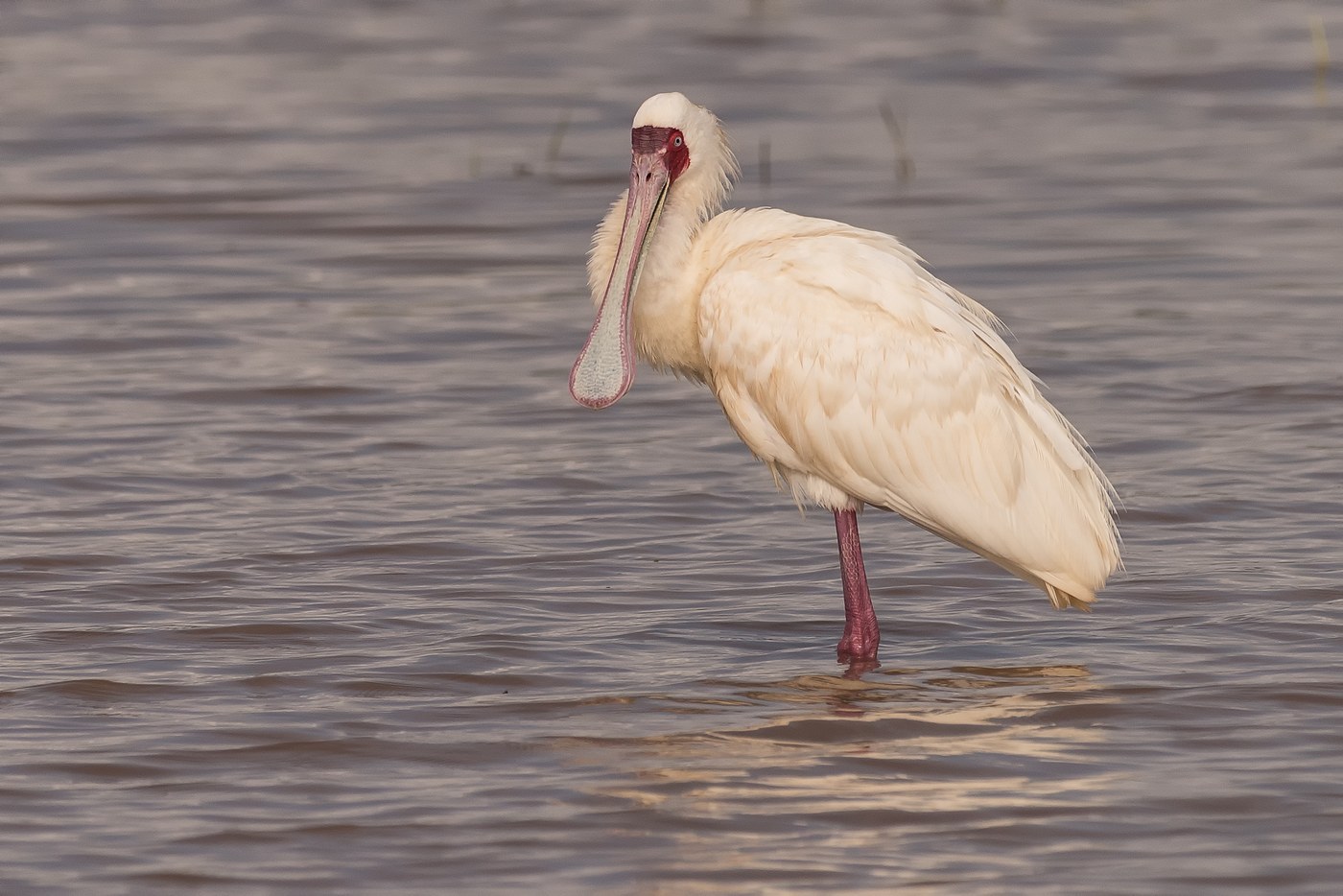
African Spoonbill
White contour and flight feathers, unmarked by black tips

Roseate Spoonbill
Pink and white contour and flight feathers with a carmine shoulder patch