
Oriental Turtle-Dove
Streptopelia orientalis
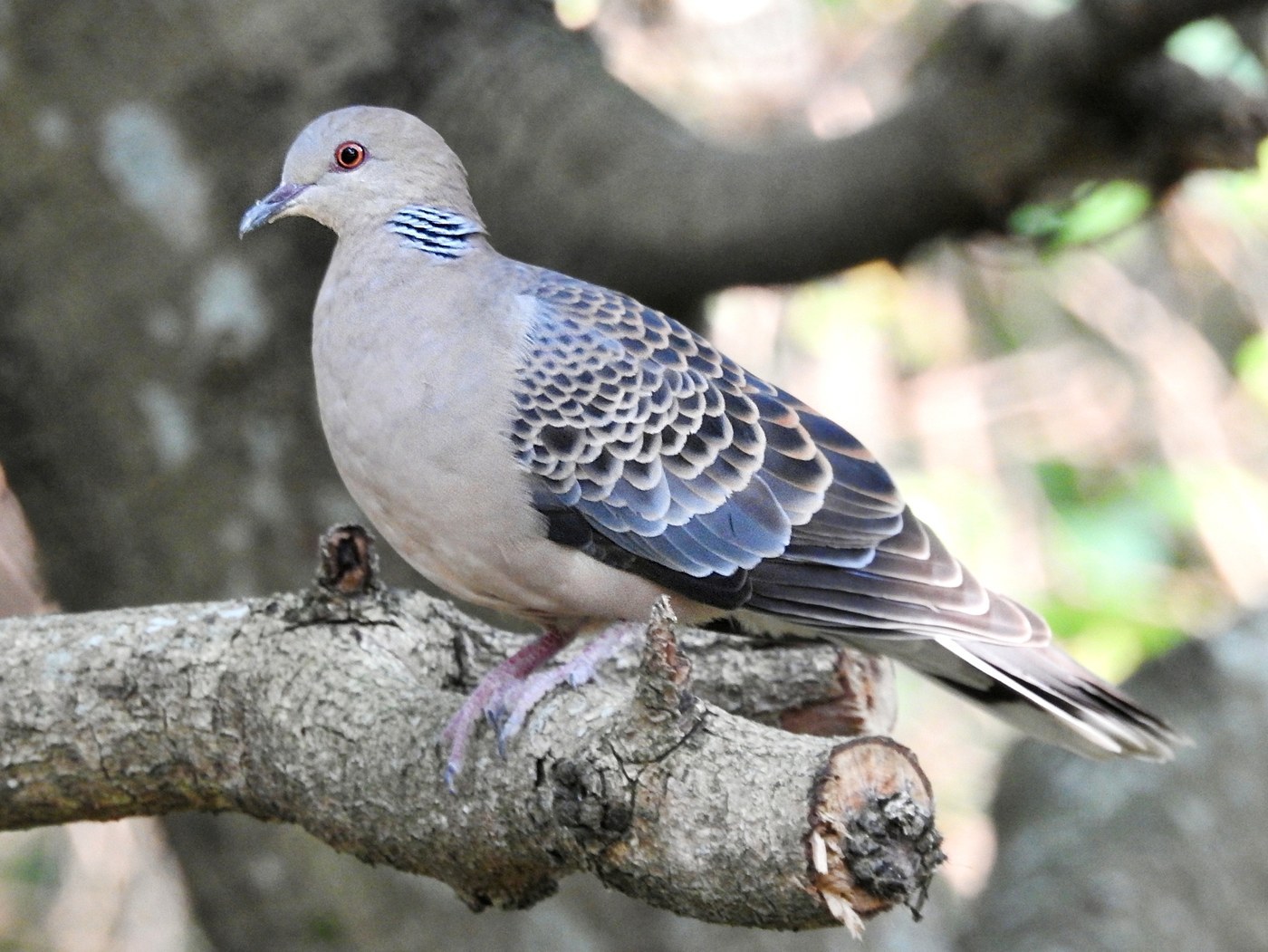
A large Asian turtle-dove with a distinctive scaled, rufous-and-black back pattern and a bold striped neck patch.
- Feather type
- Contour feathers with scaled patterning, patterned neck patch feathers
- Colours
- Rufous-and-black scaled upperparts with a blue-gray head and black-and-white striped neck patch
- Bird size
- Pigeon-sized, ~33-35 cm
Found a feather like this?
Identify any feather from a photo, free.
Overview
The Oriental Turtle-Dove is a robust dove native to a broad swath of Asia, from Siberia south to the Himalayas and Japan. It is larger and heavier-looking than the European Turtle Dove, with a more strongly scaled back pattern. The head is soft blue-gray, the breast a warm vinous-pink, and the neck bears a patch of black feathers broadly tipped in gray-white, giving a striped look. It occurs as a rare vagrant well outside its normal range.
Identifying the Feather
- Back and scapular feathers: each feather has a dark rufous-chestnut center and a black subterminal band, creating a strongly scaled or scalloped pattern
- Neck patch feathers: black with broad pale gray-white tips arranged in distinct parallel stripes on the side of the neck
- Tail feathers: dark with pale gray-blue tips visible from below in flight
- Underwing coverts: pale gray, contrasting with darker flight feathers
- Compare with the smaller, more delicately scaled European Turtle Dove, which shows a more contrasty black-and-white neck patch and a slimmer build
Plumage & Molt
Males and females are alike in plumage, though males may look marginally more richly colored during display. Juveniles lack the neck patch entirely and show buff-fringed body feathers, acquiring the striped neck patch as they mature over their first year. A complete post-breeding molt renews the scaled back pattern each cycle.
Habitat & Range
This species breeds across a wide belt of temperate and subtropical Asia, from southern Siberia through China, Korea, and Japan to the Himalayas. Northern populations are migratory, wintering in South and Southeast Asia, while southern populations tend to be resident. It favors open woodland, forest edge, parks, and farmland with scattered trees.
Behavior & Field Notes
Oriental Turtle-Doves forage on the ground for seeds and grain, often in pairs, and perch conspicuously in trees to call. The voice is a deep, rolling coo, distinct from the softer purr of related turtle doves. Nests are flimsy stick platforms built in trees or shrubs. Observers frequently note its habit of sitting motionless on a bare branch before dropping to feed on open ground below.
Frequently asked questions
What makes the back feathers of this dove distinctive?
Each back feather has a rich chestnut center edged in black, producing a strong scaled pattern that is bolder than in most other turtle doves.
How do juvenile feathers differ from adult feathers?
Juveniles lack the striped neck patch and show buff-fringed body feathers instead, with the neck stripes developing only after the first full molt.
Is there a color difference between the sexes?
No consistent plumage difference separates the sexes; males and females look essentially alike.
How does the neck patch compare to other Streptopelia doves?
It is broader and more strongly striped, with wider pale tips on the black feathers than the neater checkerboard patch of the Eurasian Collared-Dove or European Turtle Dove.
Oriental Turtle-Dove guides
In-depth guides for identifying and understanding Oriental Turtle-Dove.
Other feathers you may enjoy

Victoria Crowned Pigeon
Large lace-like fan crest plumes over dense body contour feathers

Plain Pigeon
Contour feathers, plain and uniformly toned, with a white wing patch

Zenaida Dove
Contour and flight feathers, faint iridescent sheen on neck

Pink Pigeon
Soft contour feathers with graduated tail

Nicobar Pigeon
Long, hackle-like elongated neck feathers with iridescent sheen
Wonga Pigeon
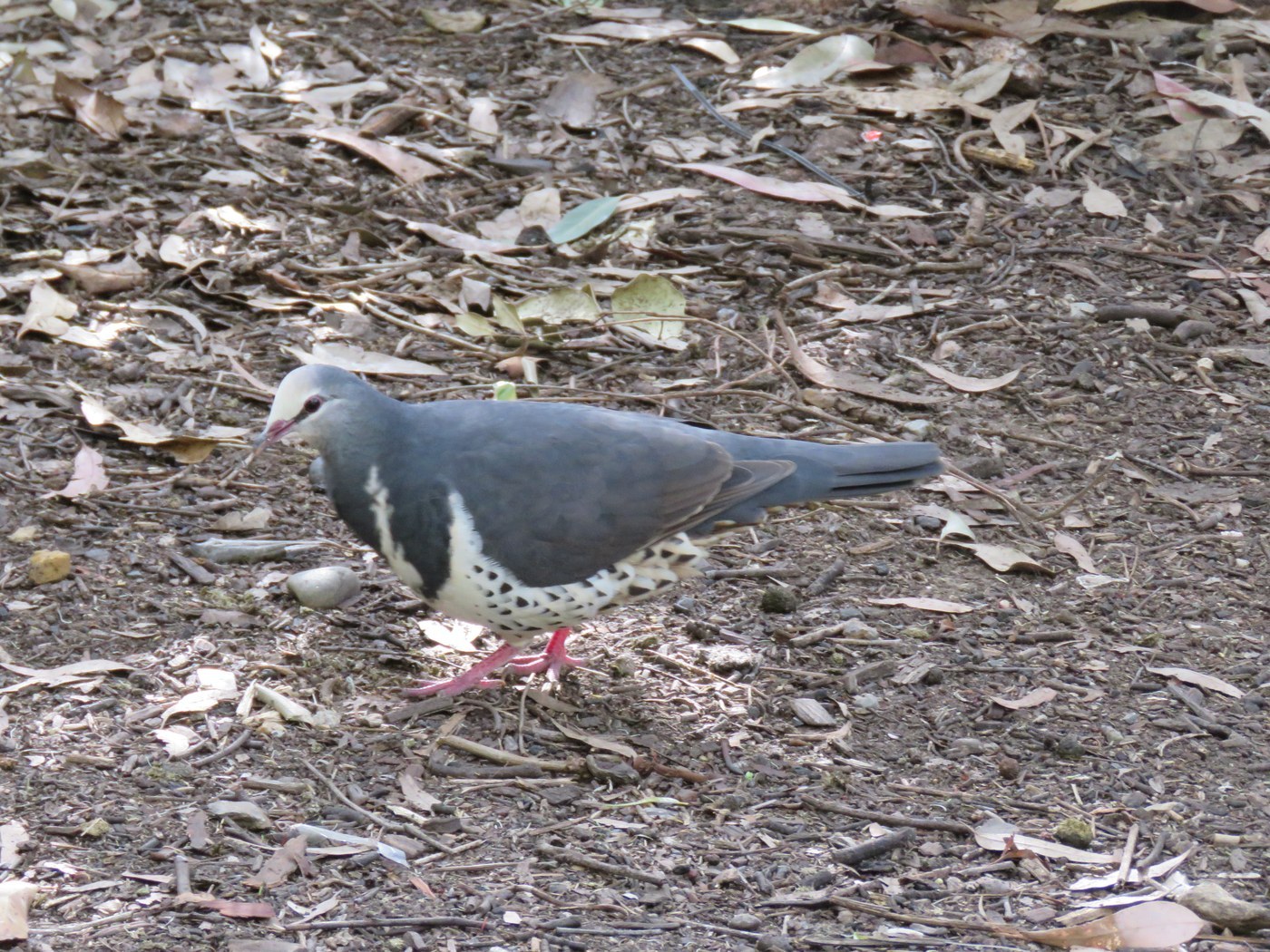
Dense, soft body contour feathers over a stocky frame

Squatter Pigeon
Dense, cryptic body contour feathers with a bold facial pattern

White-winged Dove
Broad, sturdy flight feathers with a bold white wing stripe

Western Crowned Pigeon
Rounded fan crest plumes over dense soft body feathers

Snow Pigeon
Dense insulating body contour feathers with a bold white rump and belly patch

Zebra Dove
Contour feathers with bold, extensive black-and-white barring

Scaly-naped Pigeon
Contour feathers with iridescent scaled nape pattern