

Squatter Pigeon
Geophaps scripta
The Squatter Pigeon is a ground-dwelling Australian pigeon with a bold black-and-white facial pattern, well camouflaged in grassy woodland aside from its striking head markings.
- Feather type
- Dense, cryptic body contour feathers with a bold facial pattern
- Colours
- Grey-brown body with a bold black-and-white facial mask and blue-grey wing patch
- Bird size
- Medium ground pigeon, ~26-31 cm
Found a feather like this?
Identify any feather from a photo, free.
Overview
The Squatter Pigeon is a terrestrial pigeon of open grassy woodland in eastern Australia, named for its habit of crouching motionless rather than flushing when approached. Its cryptic grey-brown body blends with dry grass and leaf litter, while its bold facial pattern stands out at closer range.
Identifying the Feather
The face shows a bold pattern of black-and-white stripes running through the eye and across the cheek, contrasting with an otherwise plain grey-brown body. The wing coverts show a bluish-grey patch that can be visible at rest and more obvious in flight. Body feathers are mottled grey-brown, providing camouflage against dry grassland. Tail feathers are grey-brown and squared. This bold facial stripe pattern combined with a blue-grey wing patch distinguishes it from other Australian ground pigeons.
Plumage & Molt
Sexes are similar, both showing the facial stripe pattern, though it may be marginally bolder in males. Juveniles show a duller, less contrasting facial pattern that sharpens with maturity. Molt is gradual, without pronounced seasonal plumage change.
Habitat & Range
Found in open grassy eucalypt woodland across parts of Queensland and northern New South Wales in eastern Australia. It is largely sedentary, remaining within suitable open woodland habitat, with populations having contracted in parts of its former range.
Behavior & Field Notes
Squatter Pigeons forage on the ground for seeds, walking through grass and often relying on remaining motionless and camouflaged rather than flying to avoid detection. They nest on the ground in a shallow scrape lined with grass. Their call is a soft, low cooing. Their ground-nesting habits and reliance on open grassy woodland make them vulnerable to habitat changes.
Frequently asked questions
What identifies Squatter Pigeon feathers?
A bold black-and-white striped facial pattern paired with a bluish-grey wing patch on an otherwise grey-brown body.
Why is it called the Squatter Pigeon?
It tends to crouch and remain still when approached rather than immediately flying off.
Where does it live?
In open grassy eucalypt woodland in Queensland and northern New South Wales.
Where does it nest?
On the ground in a shallow, grass-lined scrape rather than in a tree.
Squatter Pigeon guides
In-depth guides for identifying and understanding Squatter Pigeon.

Other feathers you may enjoy

Victoria Crowned Pigeon
Large lace-like fan crest plumes over dense body contour feathers

Plain Pigeon
Contour feathers, plain and uniformly toned, with a white wing patch

Zenaida Dove
Contour and flight feathers, faint iridescent sheen on neck

Pink Pigeon
Soft contour feathers with graduated tail

Nicobar Pigeon
Long, hackle-like elongated neck feathers with iridescent sheen
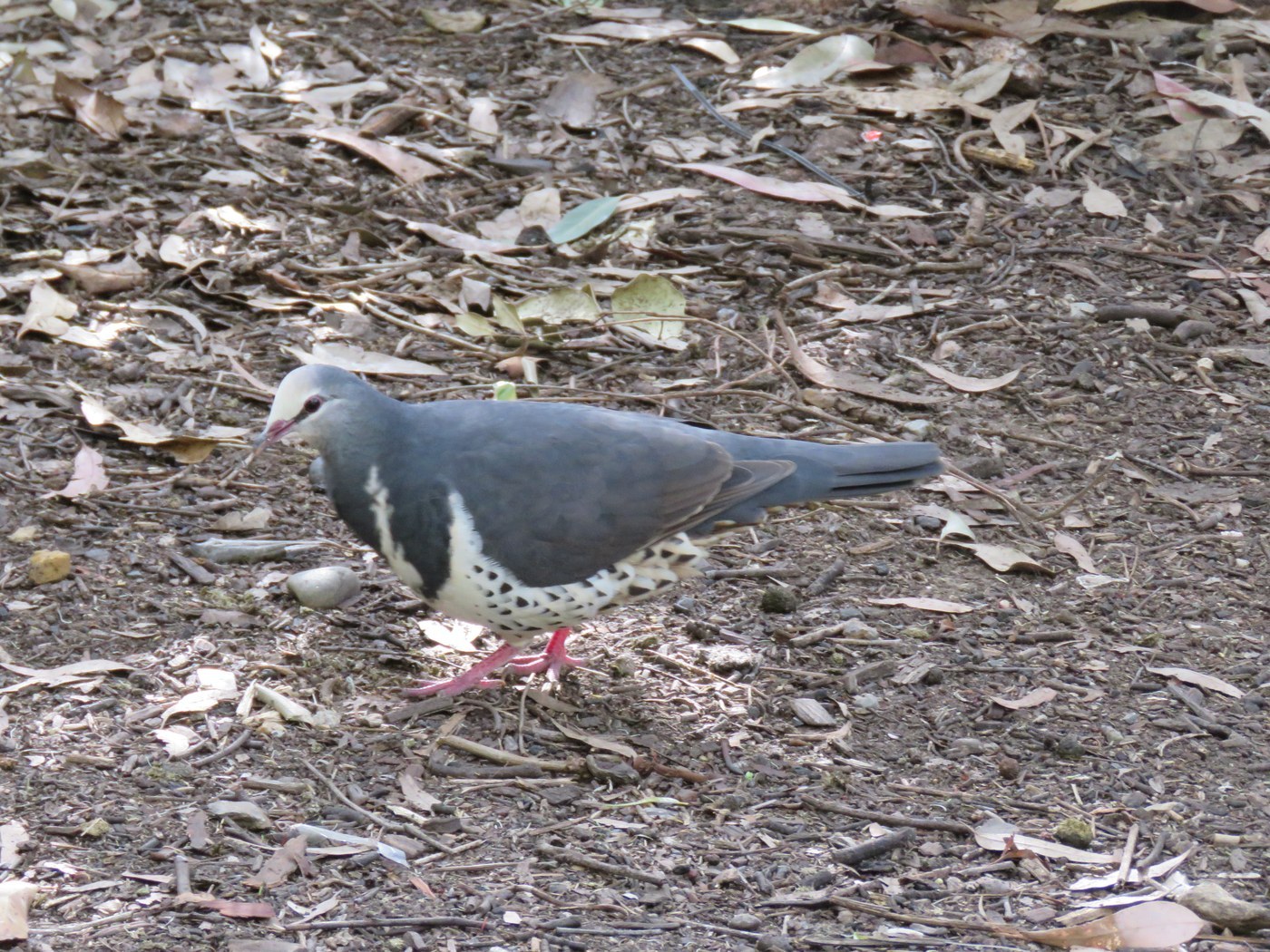
Wonga Pigeon
Dense, soft body contour feathers over a stocky frame

White-winged Dove
Broad, sturdy flight feathers with a bold white wing stripe

Western Crowned Pigeon
Rounded fan crest plumes over dense soft body feathers

Snow Pigeon
Dense insulating body contour feathers with a bold white rump and belly patch

Zebra Dove
Contour feathers with bold, extensive black-and-white barring

Scaly-naped Pigeon
Contour feathers with iridescent scaled nape pattern
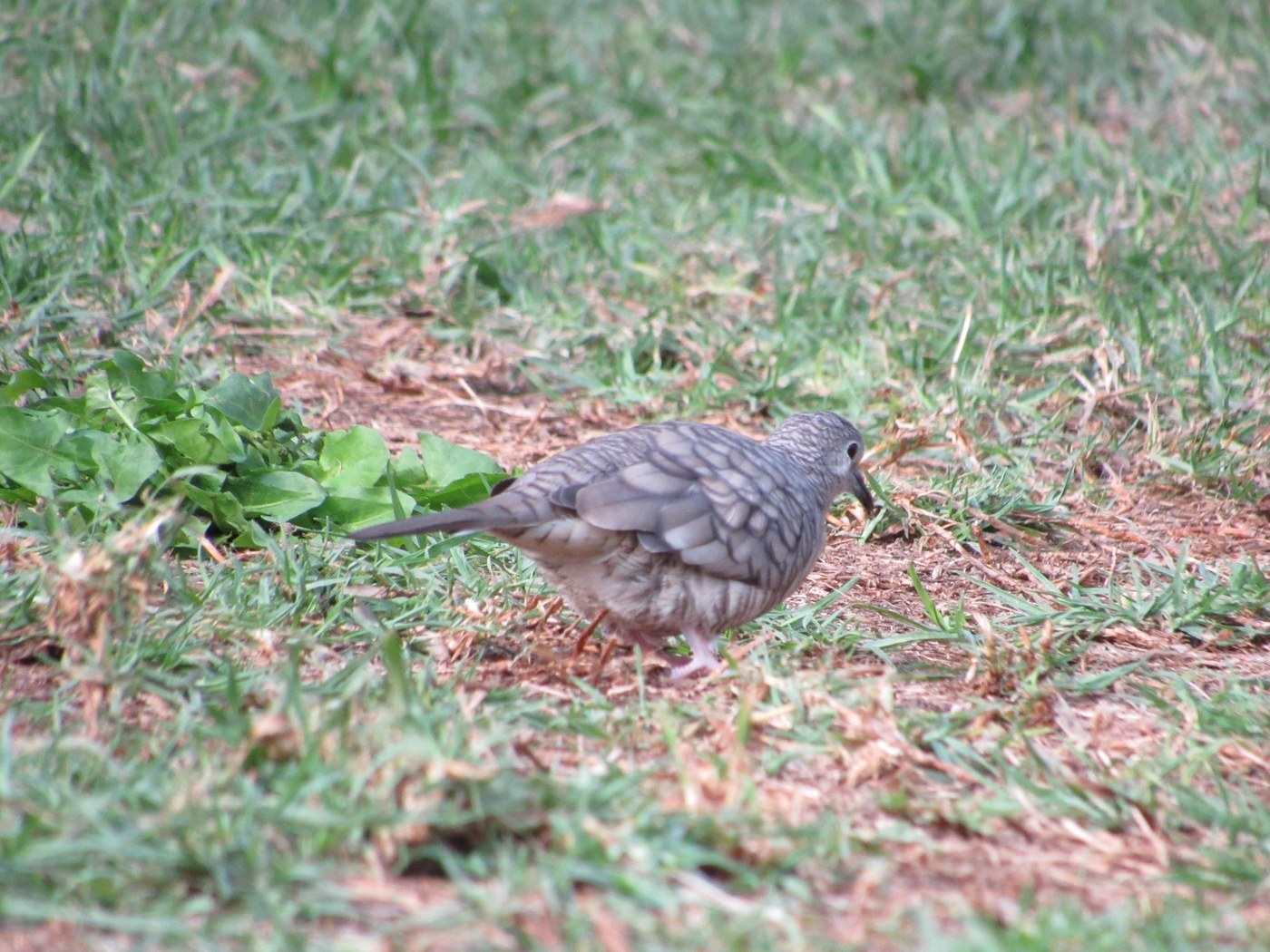
Scaled Dove
Contour feathers with dark scalloped edging