

Sunda Collared Dove
Streptopelia bitorquata
A Southeast Asian island dove closely resembling the familiar Eurasian Collared Dove, but slightly smaller and darker, with the same black-and-white half-collar across the back of the neck.
- Feather type
- Contour feathers with half-collar patch
- Colours
- Pinkish-grey with a black-and-white half-collar on the hindneck
- Bird size
- Medium dove, ~28-30 cm
Found a feather like this?
Identify any feather from a photo, free.
Overview
The Sunda Collared Dove is native to Java, Bali, and nearby islands of the Sunda region, where it occupies open and semi-open habitats similar to those favored by its close relative, the Eurasian Collared Dove. The two species look alike, and careful attention to overall tone and range is often needed to separate them.
Identifying the Feather
Body plumage is a soft pinkish-grey, slightly darker and warmer in tone than the paler Eurasian Collared Dove. A neat black half-collar edged in white crosses the back of the neck, the species' clearest field mark alongside its plainer wing and body feathers. The tail shows a pale grey terminal band on the outer feathers. Compare directly with the Eurasian Collared Dove, which tends to be paler and more washed-out overall; range is often the most reliable distinguishing factor, as the two species have limited overlap.
Plumage & Molt
Sexes appear similar, both showing the black-and-white half-collar, with males sometimes marginally deeper in overall body tone. Juveniles lack the collar initially, acquiring it gradually after their first molt. Seasonal plumage variation is minimal in this tropical resident.
Habitat & Range
Native to Java, Bali, and other islands of the Sunda region in Indonesia, inhabiting open woodland, scrub, agricultural land, and villages. It is a non-migratory resident throughout its range.
Behavior & Field Notes
Forages on the ground for seeds and grain, often near cultivated areas and human settlements. Its call is a soft, repeated cooing typical of collared doves. Nests are simple stick platforms built in trees or shrubs. It readily adapts to agricultural and semi-urban environments within its native island range.
Frequently asked questions
How can you identify a Sunda Collared Dove?
By its pinkish-grey plumage and the black-and-white half-collar across the back of the neck, similar to but slightly darker than the Eurasian Collared Dove.
Where is it found?
On Java, Bali, and other islands of the Sunda region in Indonesia, in open and cultivated habitats.
How is it distinguished from the Eurasian Collared Dove?
It tends to look slightly darker and warmer overall, and the two species have limited range overlap, which helps with identification.
Does it migrate?
No, it is a non-migratory resident throughout its native island range.
Sunda Collared Dove guides
In-depth guides for identifying and understanding Sunda Collared Dove.

Other feathers you may enjoy

Victoria Crowned Pigeon
Large lace-like fan crest plumes over dense body contour feathers

Plain Pigeon
Contour feathers, plain and uniformly toned, with a white wing patch

Zenaida Dove
Contour and flight feathers, faint iridescent sheen on neck

Pink Pigeon
Soft contour feathers with graduated tail

Nicobar Pigeon
Long, hackle-like elongated neck feathers with iridescent sheen
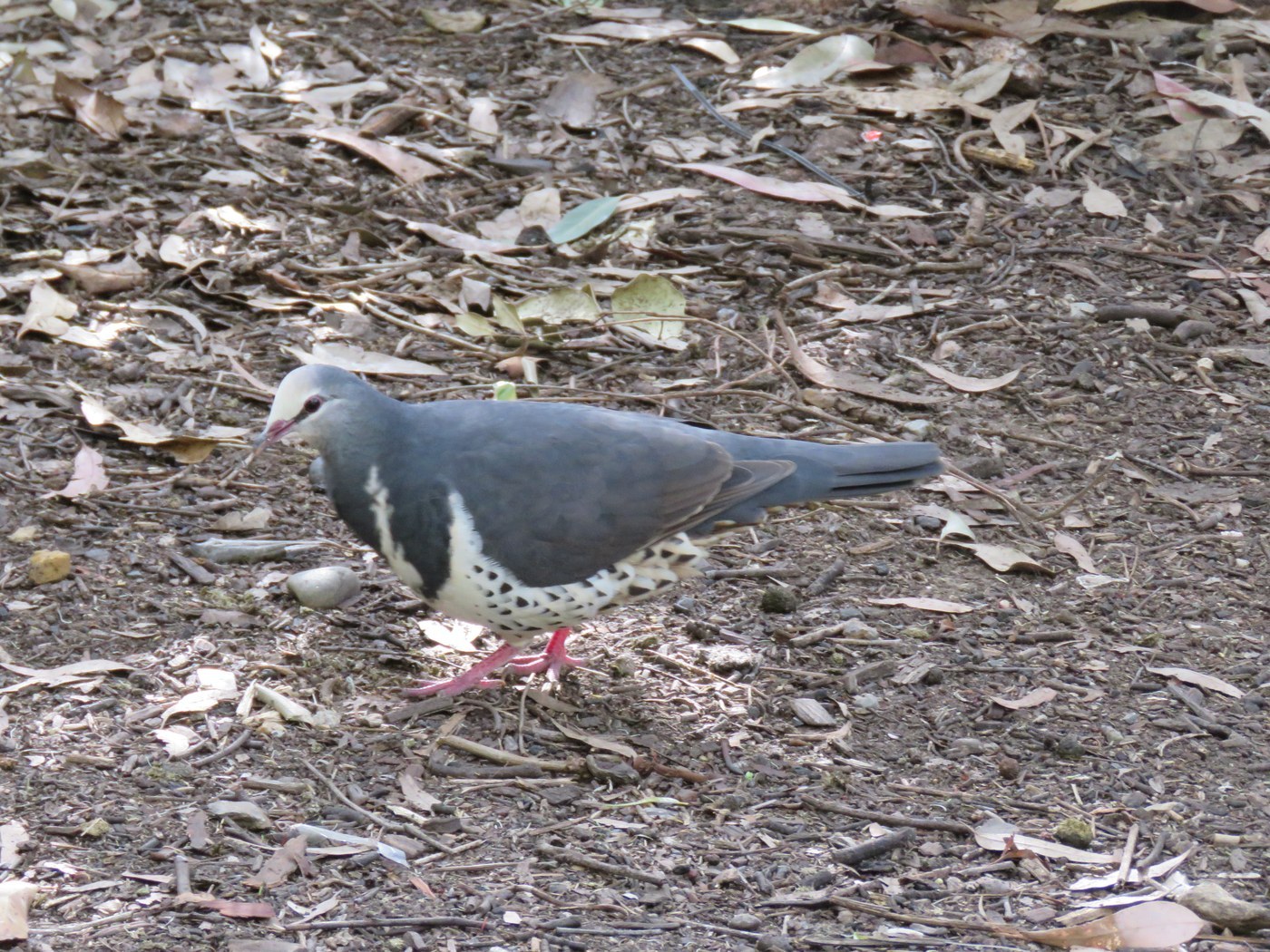
Wonga Pigeon
Dense, soft body contour feathers over a stocky frame

Squatter Pigeon
Dense, cryptic body contour feathers with a bold facial pattern

White-winged Dove
Broad, sturdy flight feathers with a bold white wing stripe

Western Crowned Pigeon
Rounded fan crest plumes over dense soft body feathers

Snow Pigeon
Dense insulating body contour feathers with a bold white rump and belly patch

Zebra Dove
Contour feathers with bold, extensive black-and-white barring

Scaly-naped Pigeon
Contour feathers with iridescent scaled nape pattern