
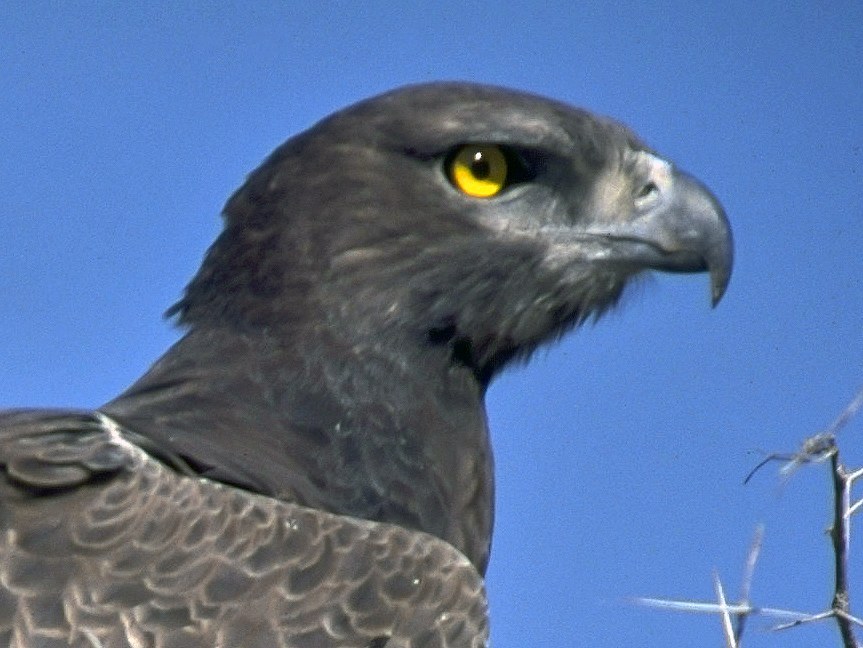
Martial Eagle
Polemaetus bellicosus
The Martial Eagle is Africa's largest eagle, with dark grey-brown upperparts, a white underside heavily spotted with brown-black, and immense broad wings built for powerful soaring over savanna.
- Feather type
- Very long broad fingered primaries; long broad tail; dense feathered legs to the toes
- Colours
- Dark grey-brown upperparts and hood; white underparts boldly spotted with blackish-brown
- Bird size
- Very large eagle, ~78-96 cm, wingspan to 2.6 m; among Africa's heaviest eagles
Found a feather like this?
Identify any feather from a photo, free.
Overview
Martial Eagle
The Martial Eagle is the largest eagle in Africa and one of the most powerful raptors on the continent, favoring open savanna, woodland edge, and semi-arid bushveld. Its combination of great size, boldly spotted underparts, and dark hood make it instantly recognizable even at a distance.
As an apex aerial predator, it takes prey up to the size of small antelope and monitor lizards, and its exceptionally broad, long wings reflect a build suited to soaring high over vast home ranges in search of prey.
Identifying the Feather
Identifying Martial Eagle Feathers
- Primaries: extremely long and broad with deep fingering, dark grey-brown above, paler and finely barred below.
- Secondaries: dark grey-brown, contributing to a dark trailing wing when seen in flight silhouette.
- Tail feathers: broad, dark grey-brown with narrow darker banding.
- Body/covert feathers: breast and belly feathers are white with heavy, discrete blackish-brown spots or teardrop markings, quite different from the plain dark hood and upperpart feathers.
- The heavily spotted white body feathers are diagnostic among African eagles; combined with sheer feather size (among the largest of any eagle), they are hard to confuse with other species.
Plumage & Molt
Plumage
Adults have a dark grey-brown head, throat, and upperparts forming a hooded look, contrasting with a white belly and underwing coverts marked with bold blackish spots. Juveniles are much paler, largely white below with little or no spotting, gaining the heavy spotting and darker hood gradually over several years to adult plumage. Sexes look alike, with females larger. As a very large raptor, its molt cycle is slow and can extend across more than one breeding season.
Habitat & Range
Habitat & Range
Found across sub-Saharan Africa in open and semi-open savanna, thornveld, and woodland edge, generally avoiding dense forest and true desert. It is largely resident, though individuals may range widely and immature birds can wander considerable distances from natal areas.
Behavior & Field Notes
Behavior & Field Notes
Martial Eagles hunt from high soaring flight or a concealed perch, taking a broad range of prey including game birds, monitor lizards, and small mammals. Nests are massive stick platforms built high in large trees, reused over many years. Generally silent outside the breeding season. A very large, heavily spotted white body feather found in African savanna habitat is a strong indicator of this species, given how few other regional raptors show that specific spotting pattern at this size.
Frequently asked questions
How large are Martial Eagle feathers compared to other eagles?
As Africa's largest eagle, its flight and tail feathers are correspondingly among the biggest of any eagle species, with primaries that are notably long and broad even by eagle standards.
What is the easiest way to recognize a Martial Eagle body feather?
White body feathers with bold, discrete blackish-brown spots are distinctive; few other African eagles combine this heavy spotting with such large feather size.
Do young Martial Eagles have spotted feathers like adults?
No, juveniles are largely plain white below with little spotting, and the bold spotted pattern develops gradually as the bird matures over several years.
What habitat is most associated with this species?
Open savanna, thornveld, and woodland edge across sub-Saharan Africa, generally away from dense forest or true desert.
Martial Eagle guides
In-depth guides for identifying and understanding Martial Eagle.
Other feathers you may enjoy

Australian Hobby
Long, narrow pointed flight feathers; slender tail feathers

California Condor
Massive flight feathers; long broad primaries; large tail feathers

Brown Falcon
Broad, rounded flight feathers; variable-toned contour feathers
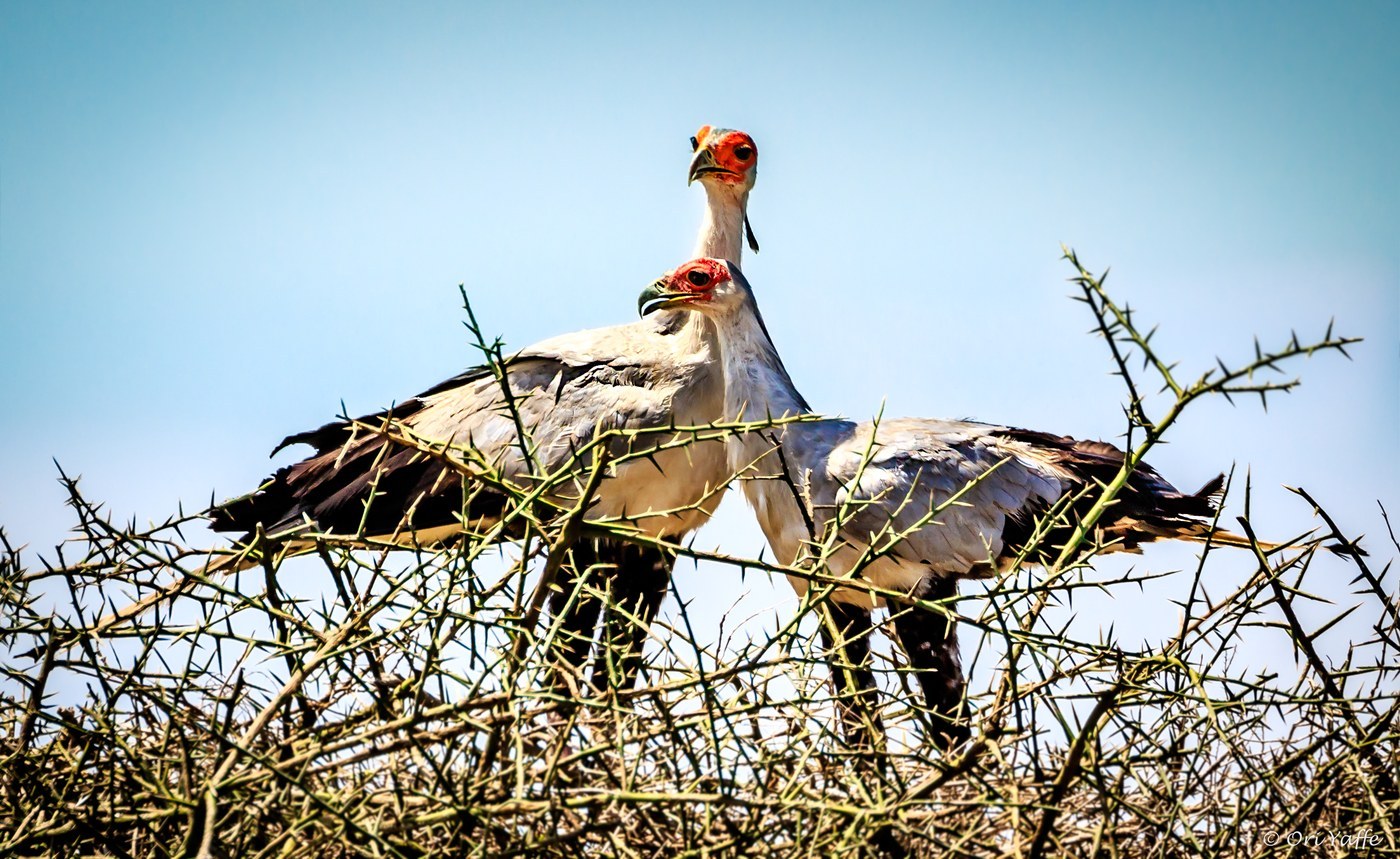
Secretarybird
Long crest feathers; broad flight feathers; elongated central tail feathers

Orange-breasted Falcon
Broad-based pointed flight feathers; bold breast and belly feathers
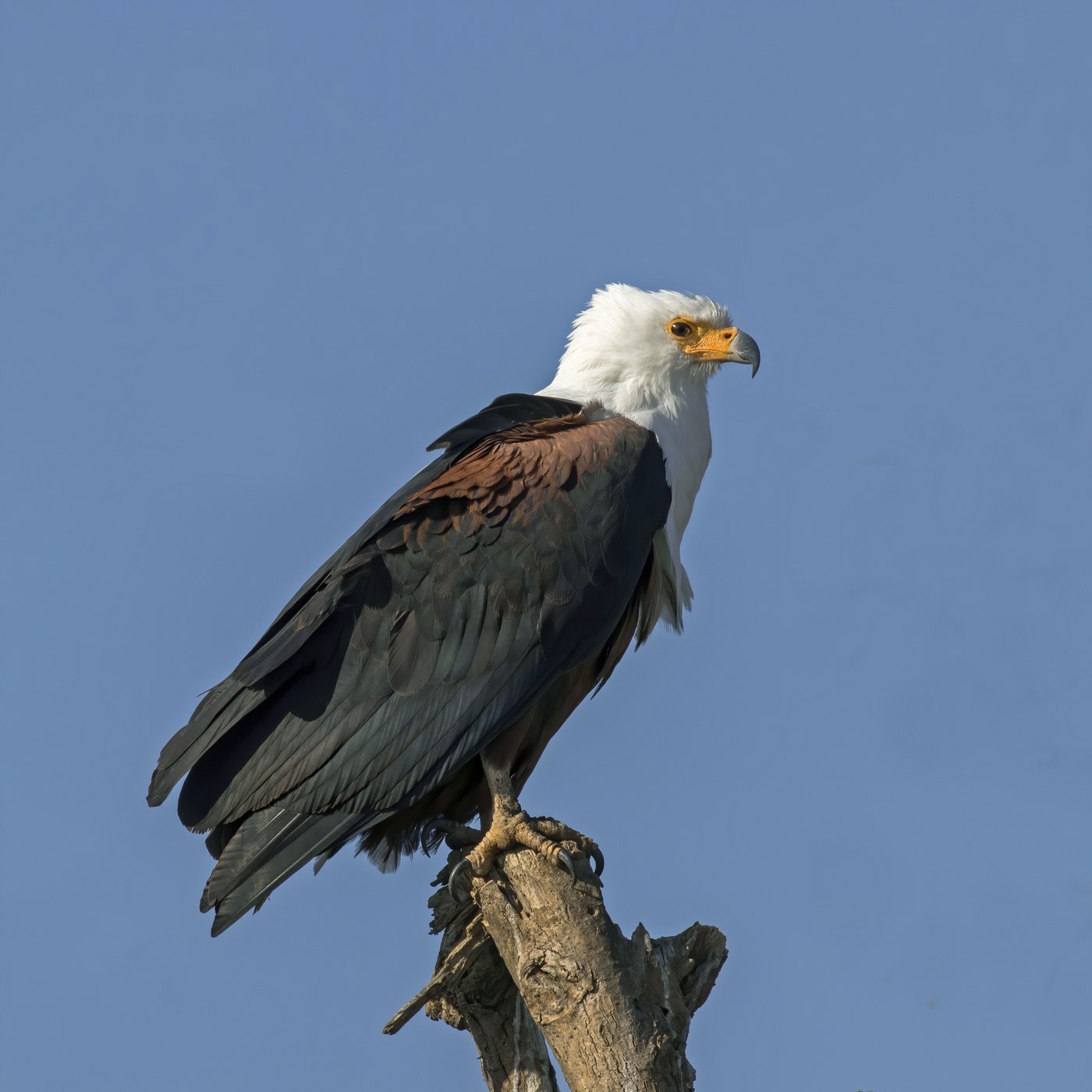
African Fish Eagle
Flight, tail, and body feathers

Amur Falcon
Slender pointed flight feathers; soft slate or orange-buff contour feathers
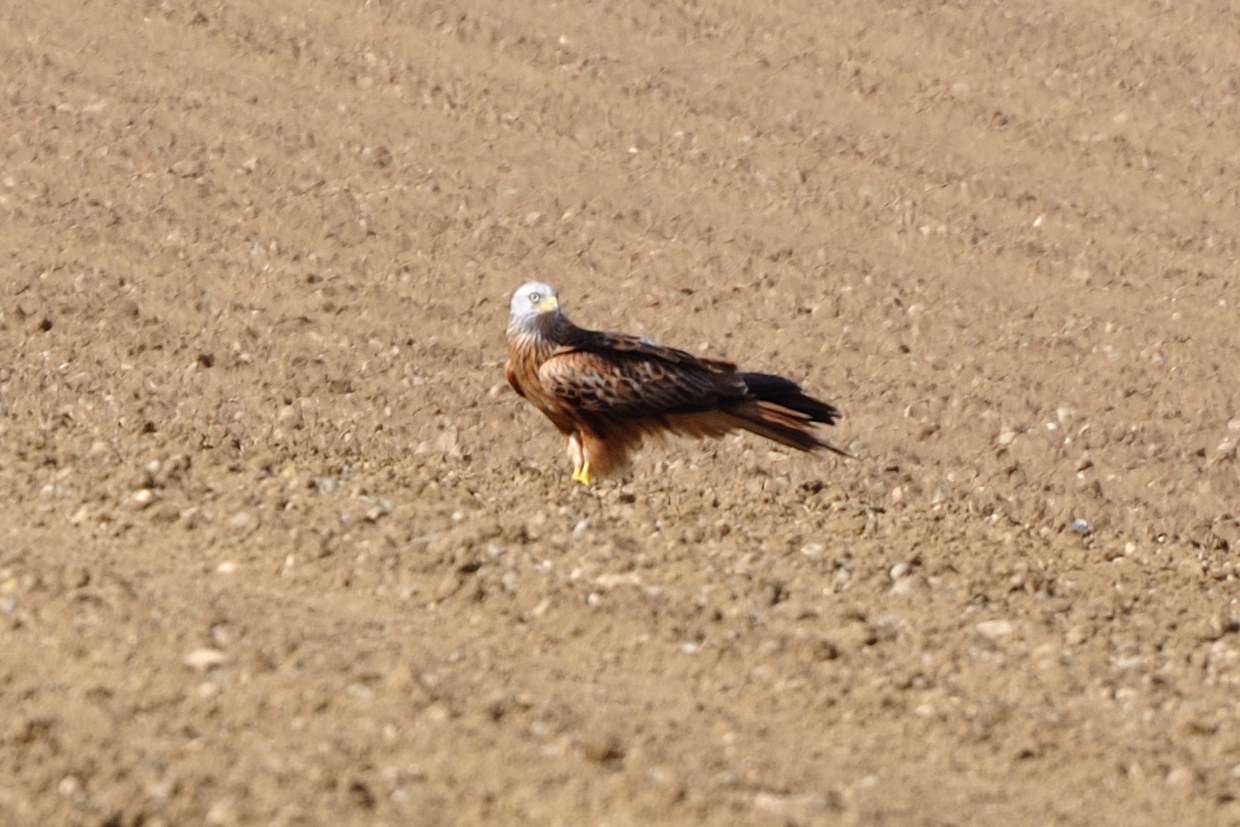
Red Kite
Flight (wing) and tail feathers
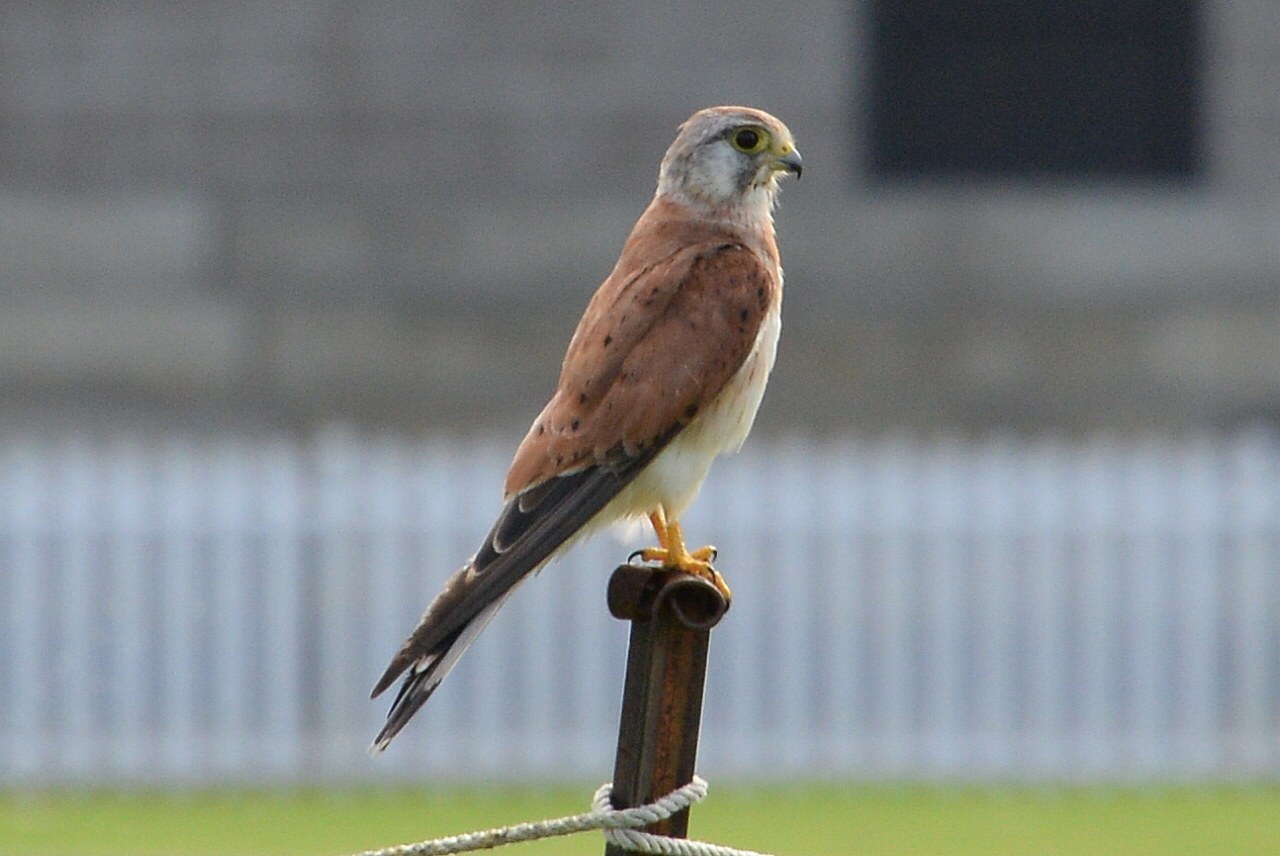
Nankeen Kestrel
Slim pointed flight feathers; lightly marked contour feathers

Andean Condor
Massive flight feathers; broad primaries and secondaries; sturdy tail feathers

Plumbeous Forest Falcon
Short rounded flight feathers; finely barred tail feathers

Sooty Falcon
Long pointed flight feathers; slim tail feathers