
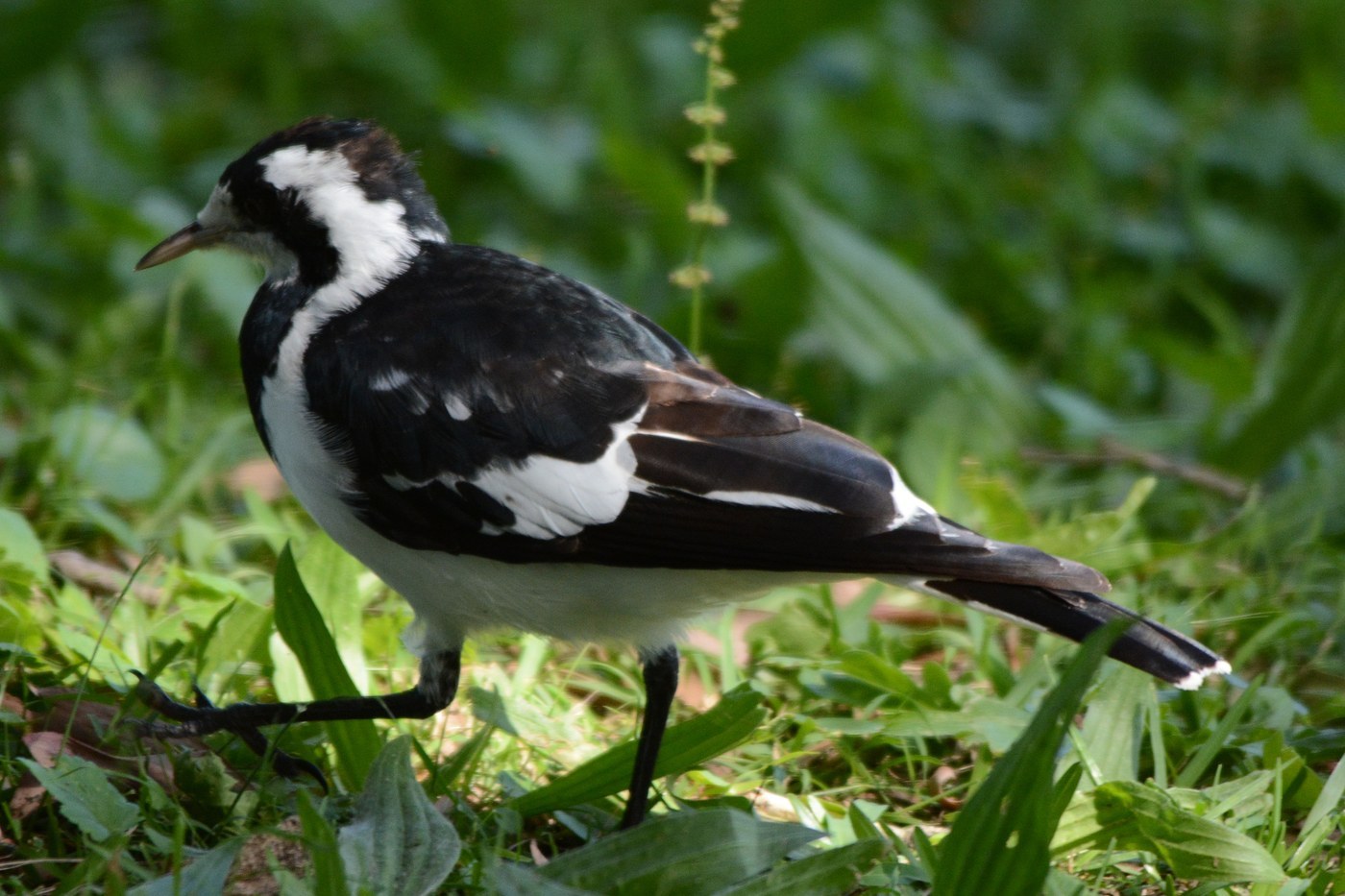
Magpie-lark
Grallina cyanoleuca
A common Australian black-and-white songbird, the Magpie-lark shows bold facial and body markings that differ between males and females, and is frequently seen foraging near water on open ground.
- Feather type
- Sturdy contour feathers; boldly patterned black-and-white wing and tail markings
- Colours
- Black-and-white overall, pattern varying between sexes
- Bird size
- Robin-to-jay-sized, ~26-30 cm
Found a feather like this?
Identify any feather from a photo, free.
Overview
The Magpie-lark is a familiar black-and-white songbird found across most of Australia, often near water or on open ground in farmland, parks, and wetland edges. Despite its common name, it is not closely related to true magpies or larks, but is easily recognized by its bold, contrasting plumage pattern, which differs between the sexes.
Identifying the Feather
Body plumage is boldly patterned in black and white, with the exact arrangement of black and white on the face and throat differing by sex. Males show a black crown, throat, and eye-stripe with a white eyebrow and forehead, while females have a white face and throat lacking the male's black markings. Wings and tail show contrasting black-and-white panels, most visible in flight. The bill is straight and pointed rather than hooked. This species' sex-based facial pattern difference, combined with overall smaller size compared to true magpies, is a reliable feature for separating individual feathers or field observations between the sexes and from other black-and-white Australian birds.
Plumage & Molt
This species shows clear sexual dimorphism in facial and throat pattern, with males showing more black on the face and throat and females showing more white. Juveniles resemble females initially, with pattern differences becoming clearer as birds mature. Molt is regular and does not produce major seasonal plumage changes.
Habitat & Range
Magpie-larks occupy open woodland, farmland, parks, and areas near wetlands, rivers, or other water sources across most of Australia. The species is generally sedentary, defending a territory year-round, though some local movement can occur in drier regions following rainfall or water availability.
Behavior & Field Notes
This species feeds on invertebrates and other small prey, often foraging by walking on open ground, including damp mud near water, a habit reflected in one of its common names. It builds a distinctive mud-lined bowl nest attached to a horizontal branch. Its call includes a loud, sharp, often duetted series of notes given by paired birds. Magpie-larks are frequently seen in pairs defending territory, sometimes reacting strongly to reflections or intruders.
Frequently asked questions
How do male and female Magpie-lark feathers differ?
Males show more black on the face and throat with a white eyebrow, while females have a mostly white face and throat lacking the male's black markings.
Is the Magpie-lark related to true magpies?
No, despite the name it is not closely related to true magpies or larks, though it shares a similar bold black-and-white pattern.
What kind of nest does it build?
A distinctive bowl-shaped nest made largely of mud, attached to a horizontal branch.
Where is it typically found foraging?
On open ground, often near water or on damp mud, searching for invertebrates.
Magpie-lark guides
In-depth guides for identifying and understanding Magpie-lark.
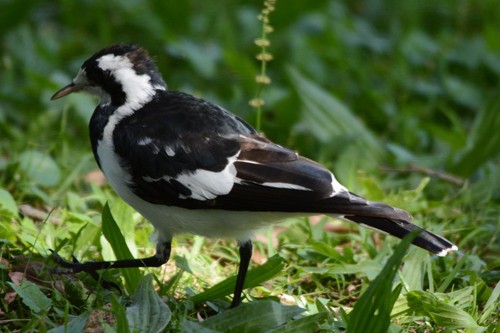
Magpie-lark identified by the community
Real feathers identified with Feather Identifier.


Other feathers you may enjoy

Yellow-breasted Bunting
Contour and flight feathers, chestnut-and-yellow breeding pattern
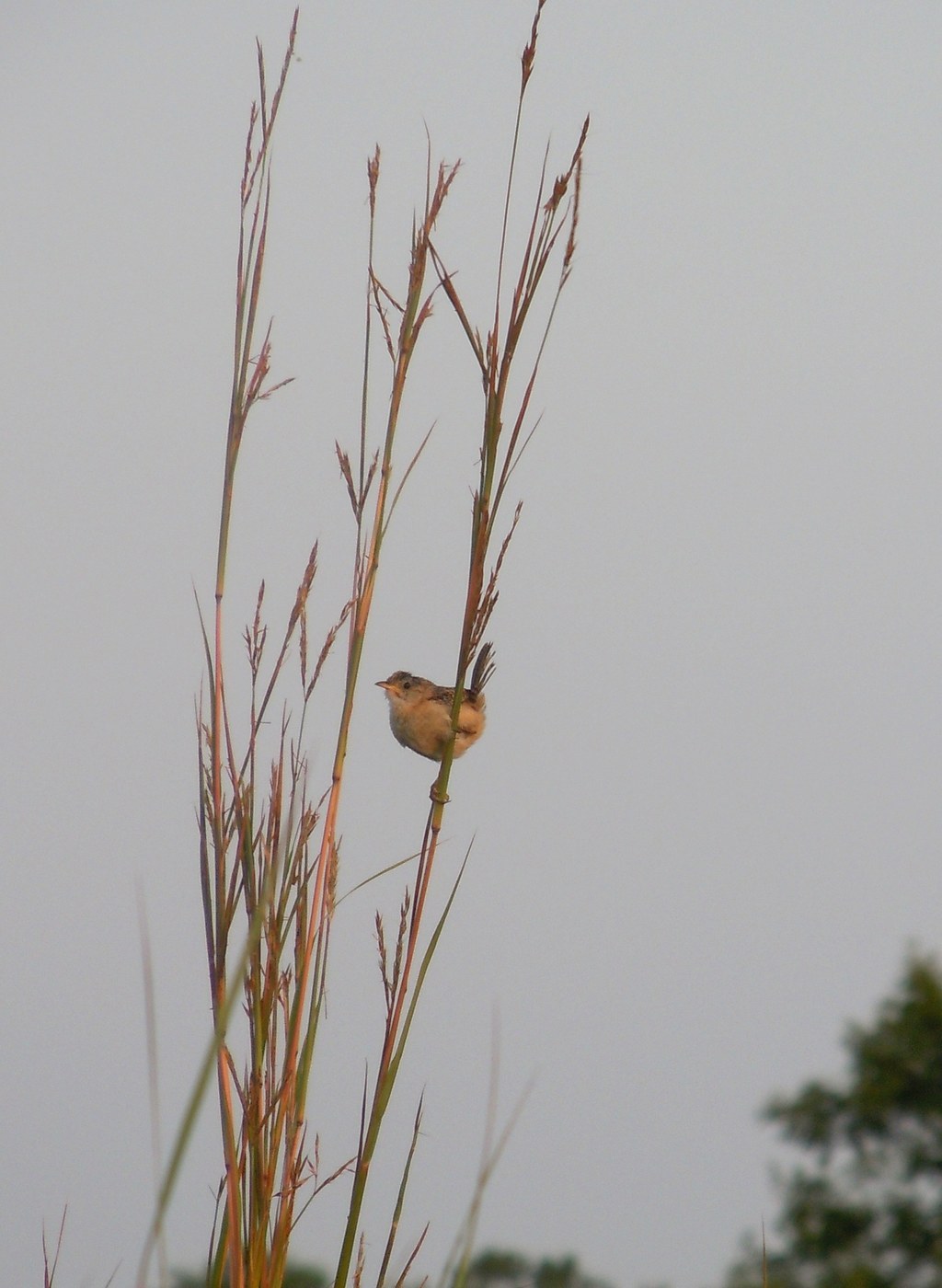
Sedge Wren
Tiny streaked crown and back feathers

Yellow-winged Cacique
Glossy black body feathers, yellow wing patch, shaggy crest

Yellow Warbler
Small contour and flight feathers
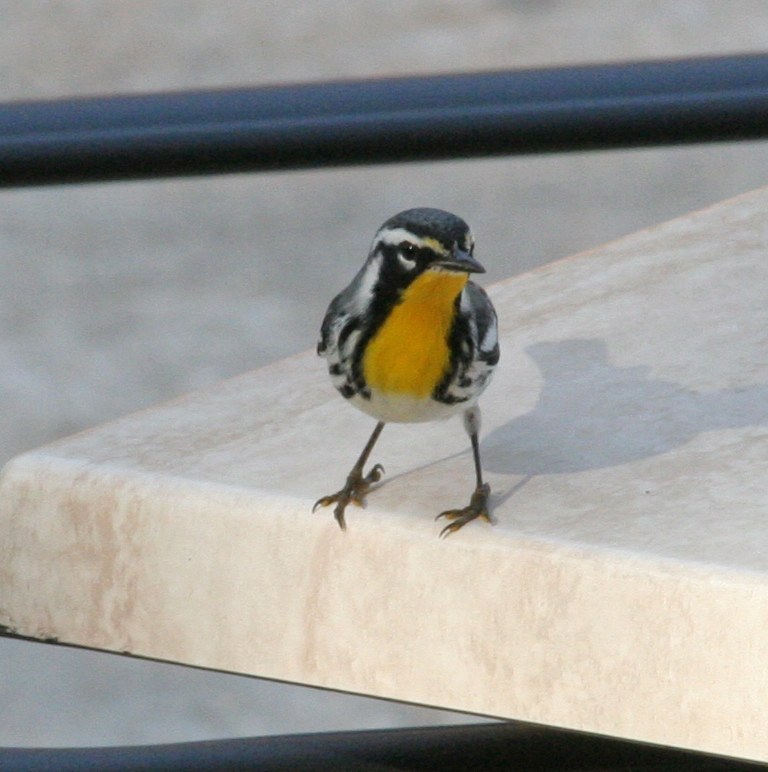
Yellow-throated Warbler
Small contour and flight feathers
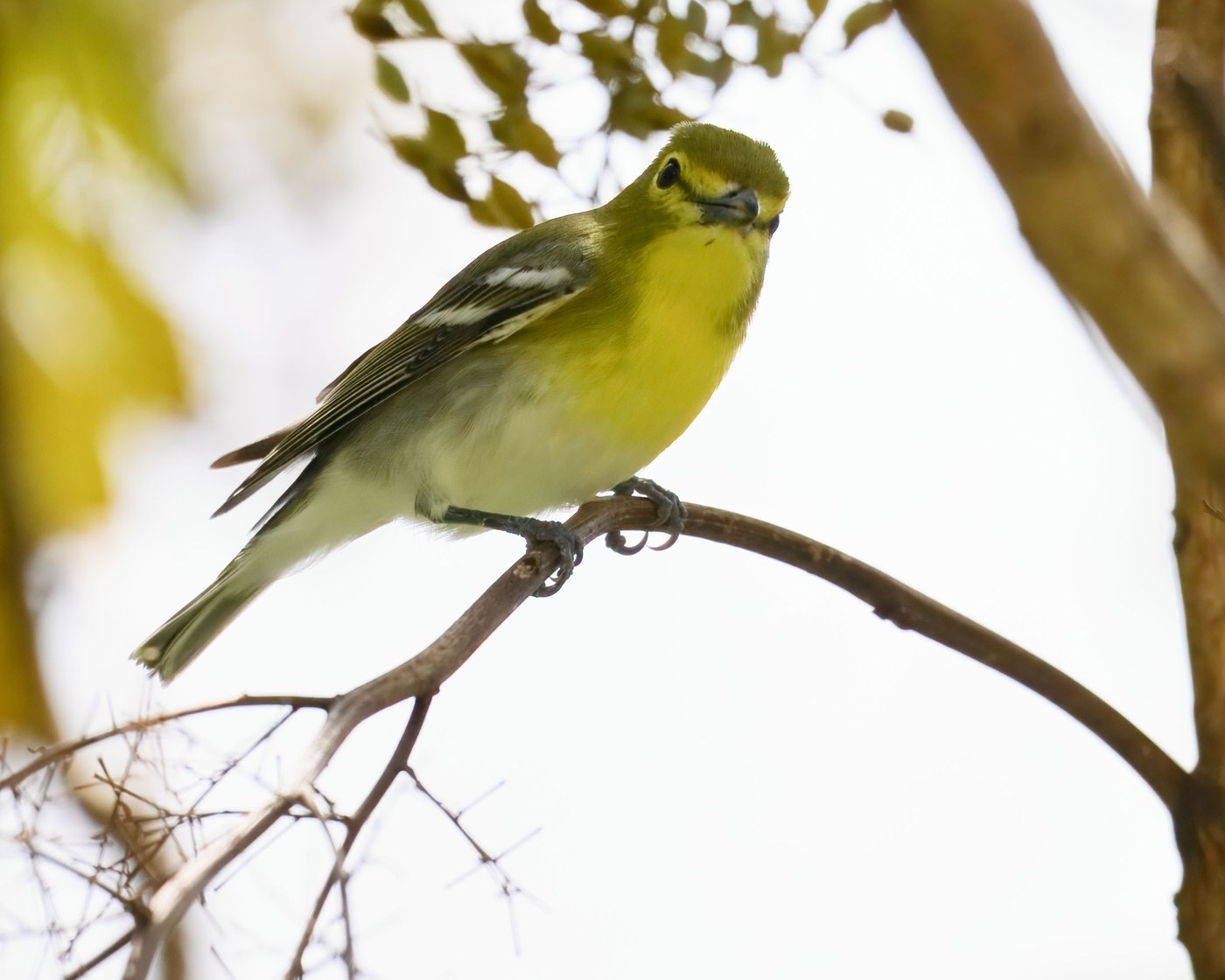
Yellow-throated Vireo
Bright yellow throat and spectacle feathers; olive-green back feathers; two white wing-bar feathers

Yellow-rumped Warbler
Small contour and flight feathers
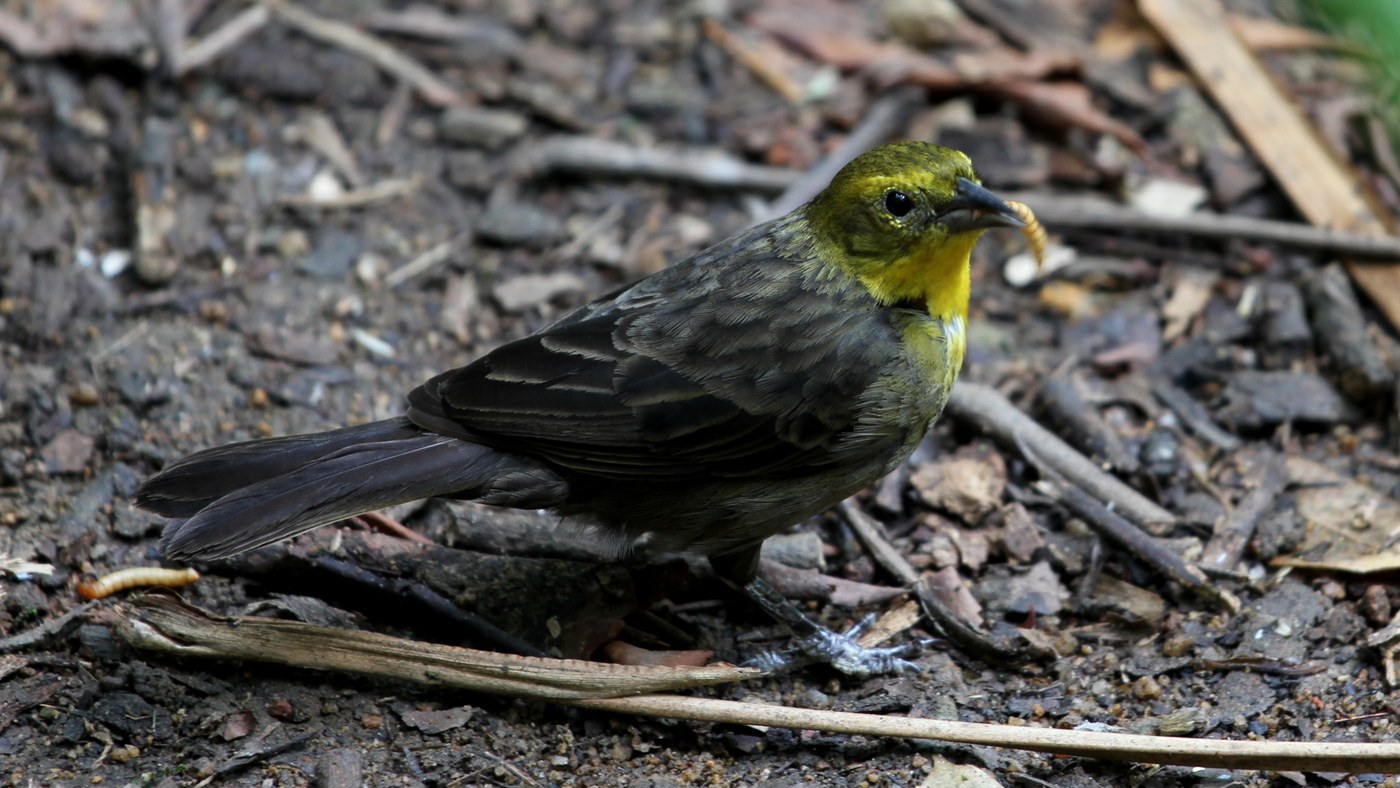
Yellow-hooded Blackbird
Contrasting hood and body feathers
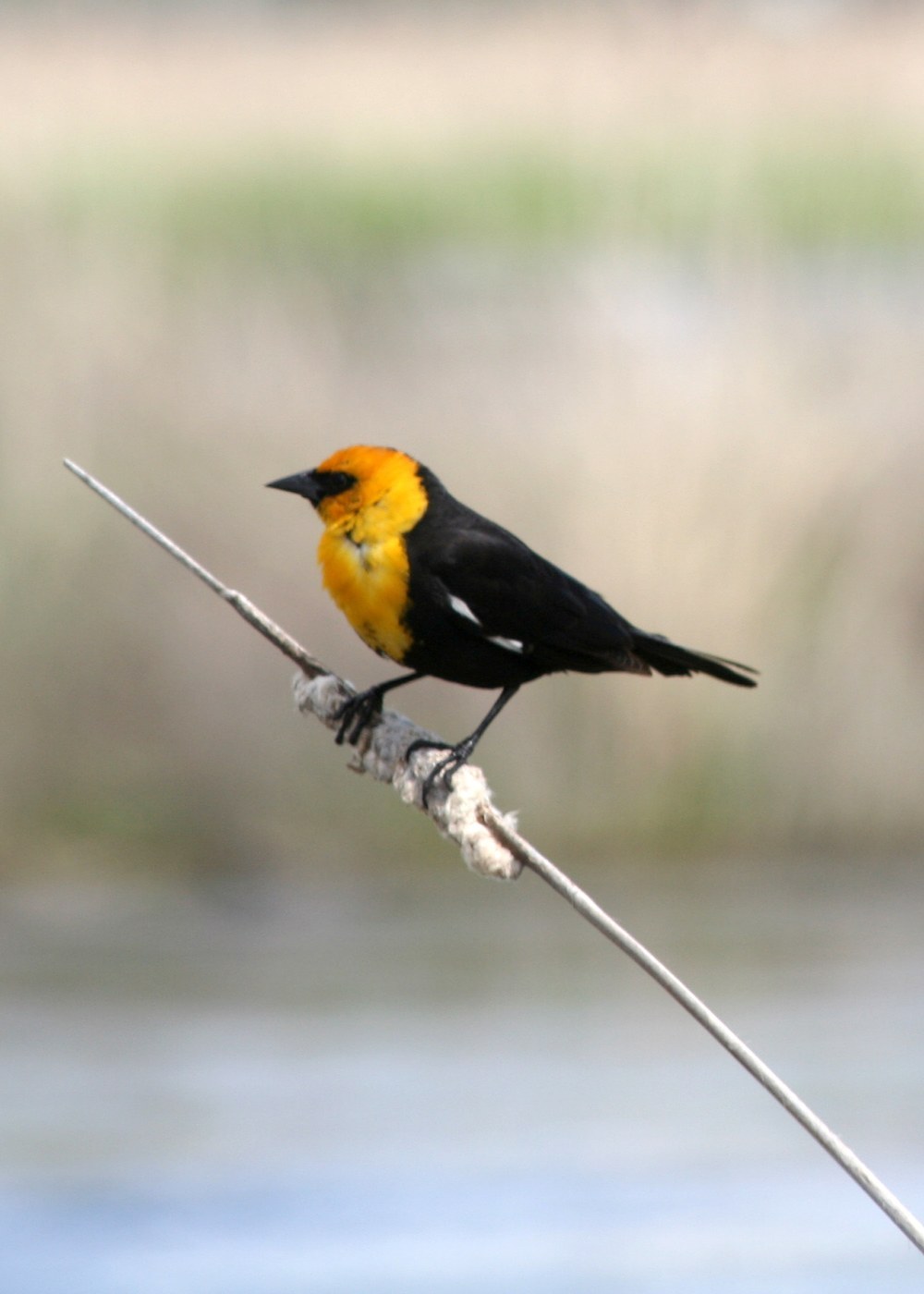
Yellow-headed Blackbird
Glossy black body plumage with a bright yellow head and breast

Yellow-eyed Junco
Contour and flight feathers

Yellow-fronted Canary
Small, smooth body plumage

Yellow-breasted Greenfinch
Compact, smooth body plumage