
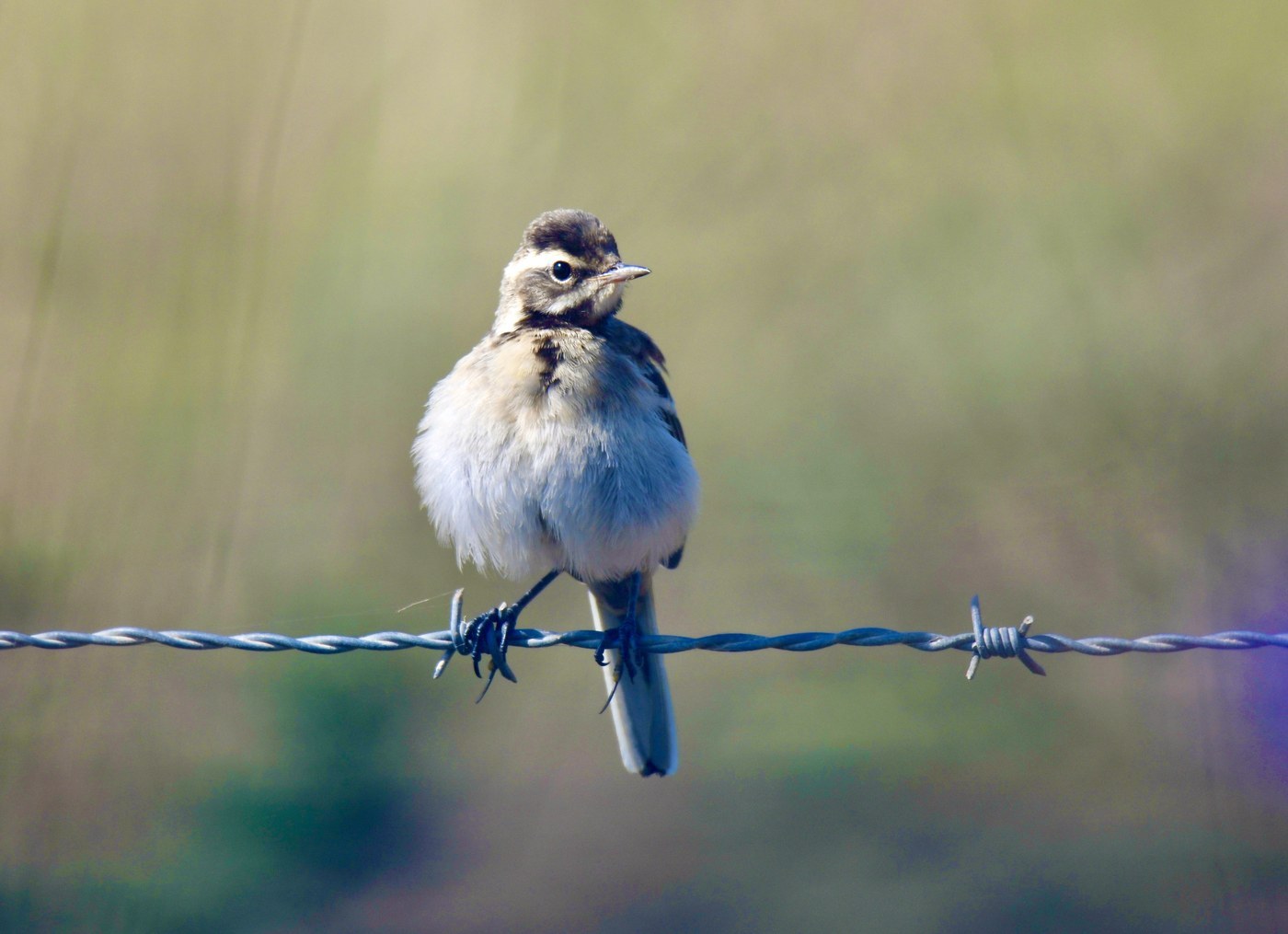
Yellow Wagtail
Motacilla flava
The Yellow Wagtail is a slender summer-visiting songbird whose plumage is yellow from throat to undertail, set against an olive-green back, distinguishing its feathers from the more grey-toned wagtails.
- Feather type
- Long tail feathers (shorter than Grey Wagtail's); slim pointed wings
- Colours
- Olive-green to yellowish-green back, bright yellow underparts throughout
- Bird size
- Slim, ~16-17 cm
Found a feather like this?
Identify any feather from a photo, free.
Overview
The Yellow Wagtail is a migratory songbird of damp grassland and farmland, often seen following grazing livestock to catch disturbed insects.
Its plumage is dominated by yellow underparts and an olive-green back, without the strong grey or black-and-white contrast seen in its relatives.
It is a summer visitor to much of Europe, wintering in sub-Saharan Africa, so feathers are typically only found during the warmer months in its breeding range.
Identifying the Feather
Size & Shape
- Tail is proportionally shorter than the Grey Wagtail's, though still long for a songbird of this size.
- Wings are slim and pointed, suited to long migratory flights.
Color & Pattern
- Back and crown feathers: olive-green to greenish-yellow, without the blue-grey tone of Grey Wagtail.
- Underparts are bright yellow from chin to undertail in adult males; females and juveniles are paler yellow, sometimes washed with buff.
- Head pattern varies somewhat, but British birds typically show a yellow eyebrow.
- Wing feathers are dark brown with pale buff-yellow edging forming wing-bars.
Similar Species
- Distinguished from Grey Wagtail by the olive-green (not grey) back and shorter tail; distinguished from Yellowhammer by slimmer build and lack of chestnut rump.
Plumage & Molt
Overall Plumage
Olive-green upperparts and bright yellow underparts throughout, with a variable head pattern.
Sex & Age Differences
Males are brighter yellow below with a cleaner head pattern; females and juveniles are paler, sometimes with a buff or whitish throat and less saturated yellow.
Molt
A complete molt occurs on or near the African wintering grounds after migration; a partial pre-breeding molt sharpens plumage before the return journey north.
Habitat & Range
Habitat
Damp grassland, water meadows, arable farmland, and pastures, often near grazing animals.
Range
Breeds across much of Europe and western Asia; a long-distance migrant wintering in sub-Saharan Africa.
Movements
Fully migratory; present in breeding areas only from spring to early autumn.
Behavior & Field Notes
Behavior
Forages actively on the ground, often running around the feet of grazing livestock to catch flushed insects.
Diet
Feeds on flies and other invertebrates disturbed by grazing animals or farm machinery.
Nesting
Builds a grass-lined nest on the ground, hidden in vegetation in a grassy field.
Voice
A thin, sweeping 'tsweep' flight call, distinct from other wagtails.
Field Notes
Feathers showing yellow underparts paired with an olive-green (not grey) back, found in damp grassland or farmland in summer, point to this species.
Frequently asked questions
How can I tell a Yellow Wagtail feather from a Grey Wagtail feather?
Yellow Wagtail has an olive-green back, while Grey Wagtail has a blue-grey back; both share yellow underparts.
Is the Yellow Wagtail present year-round?
No, it is a summer migrant, present in its breeding range only from spring to early autumn, wintering in Africa.
What habitat is most associated with Yellow Wagtail feathers?
Damp grassland, water meadows, and farmland, especially where livestock graze.
Do males and females differ in color?
Yes, males show brighter, cleaner yellow underparts; females and juveniles are paler and sometimes buffier.
Yellow Wagtail guides
In-depth guides for identifying and understanding Yellow Wagtail.
Other feathers you may enjoy

Yellow-breasted Bunting
Contour and flight feathers, chestnut-and-yellow breeding pattern

Sedge Wren
Tiny streaked crown and back feathers

Yellow-winged Cacique
Glossy black body feathers, yellow wing patch, shaggy crest

Yellow Warbler
Small contour and flight feathers

Yellow-throated Warbler
Small contour and flight feathers

Yellow-throated Vireo
Bright yellow throat and spectacle feathers; olive-green back feathers; two white wing-bar feathers

Yellow-rumped Warbler
Small contour and flight feathers

Yellow-hooded Blackbird
Contrasting hood and body feathers

Yellow-headed Blackbird
Glossy black body plumage with a bright yellow head and breast

Yellow-eyed Junco
Contour and flight feathers

Yellow-fronted Canary
Small, smooth body plumage

Yellow-breasted Greenfinch
Compact, smooth body plumage