
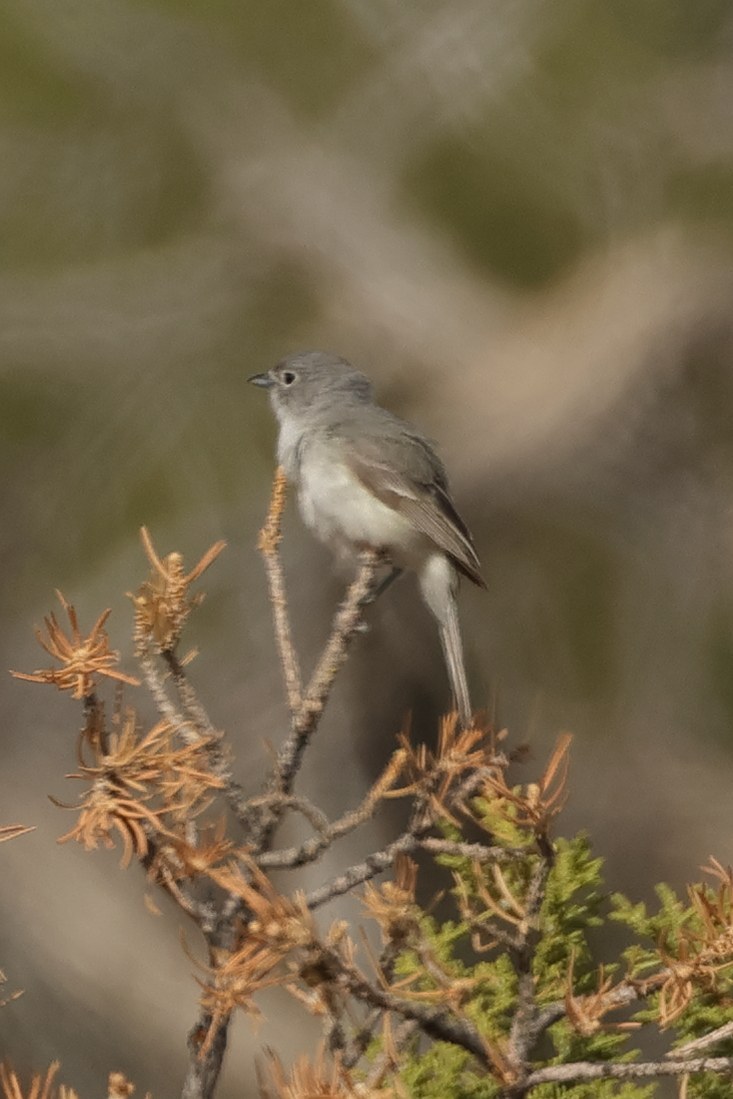
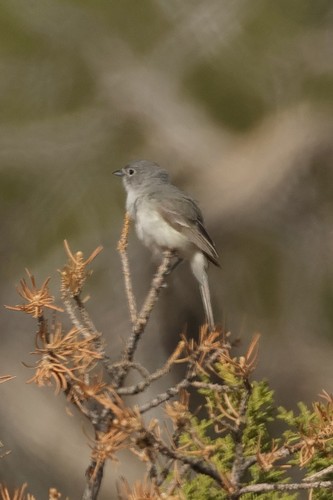
Gray Vireo
Vireo vicinior
The Gray Vireo is a plain, long-tailed vireo of arid pinyon-juniper and chaparral habitat, often detected by its habit of flicking its tail while foraging.
- Feather type
- Plain gray back feathers; faint white eyering feathers; single thin white wing-bar feather
- Colours
- Plain gray overall, faint white eyering, whitish underparts, minimal wing barring
- Bird size
- Small vireo, ~13-14 cm
Found a feather like this?
Identify any feather from a photo, free.
Overview
Overview
The Gray Vireo inhabits arid pinyon-juniper woodland, chaparral, and desert scrub across the southwestern United States and northern Mexico, tolerating drier and more open habitat than most other vireos. Its overall plain gray plumage and long, frequently flicked tail help distinguish it from other vireos sharing similar habitat.
Because it shows minimal patterning, feathers are best identified by their overall gray tone and the near absence of bold facial or wing markings.
Identifying the Feather
Recognizing the Feathers
- Back & head feathers: plain gray, essentially unmarked
- Face feathers: faint, indistinct white eyering
- Underpart feathers: whitish to pale gray
- Wing feathers: dark with at most a single thin, faint white wing bar, sometimes nearly absent
- Tail feathers: relatively long for a vireo
The overall plain gray tone with minimal to no wing barring and only a faint eyering separates this species from the more boldly marked Blue-headed, Cassin's, and Plumbeous Vireos.
Plumage & Molt
Plumage
Sexes are alike, both showing plain gray upperparts, whitish underparts, and minimal facial or wing markings. Immatures are similar to adults. There is no strong seasonal plumage change, with a single complete molt after breeding.
Habitat & Range
Habitat & Range
This vireo breeds in arid pinyon-juniper woodland, chaparral, and desert scrub across the southwestern United States and into northern Mexico. It winters mainly in Mexico, in similarly arid scrub and thorn woodland habitat.
Behavior & Field Notes
Behavior & Field Notes
Gray Vireos forage actively in sparse, arid vegetation, often flicking or cocking the tail while gleaning insects, a habit distinct from many other vireos. Nests are cup-shaped and suspended from a low shrub or small tree branch. Its song is a series of short, varied phrases, somewhat resembling other vireos but delivered in its characteristic arid scrub setting.
Frequently asked questions
What makes Gray Vireo feathers distinctive?
An overall plain gray tone with minimal to no wing barring and only a faint eyering, lacking the bold spectacles or contrasting head color seen in many other vireos.
What habitat is this species associated with?
Arid pinyon-juniper woodland, chaparral, and desert scrub across the southwestern United States and northern Mexico.
What behavior helps identify this species in the field?
It frequently flicks or cocks its relatively long tail while foraging, a habit less pronounced in many related vireos.
Does this species show wing bars?
At most a single thin, faint wing bar, and sometimes essentially none, unlike the bolder double wing bars of several related vireos.
Gray Vireo guides
In-depth guides for identifying and understanding Gray Vireo.
Other feathers you may enjoy

Yellow-breasted Bunting
Contour and flight feathers, chestnut-and-yellow breeding pattern
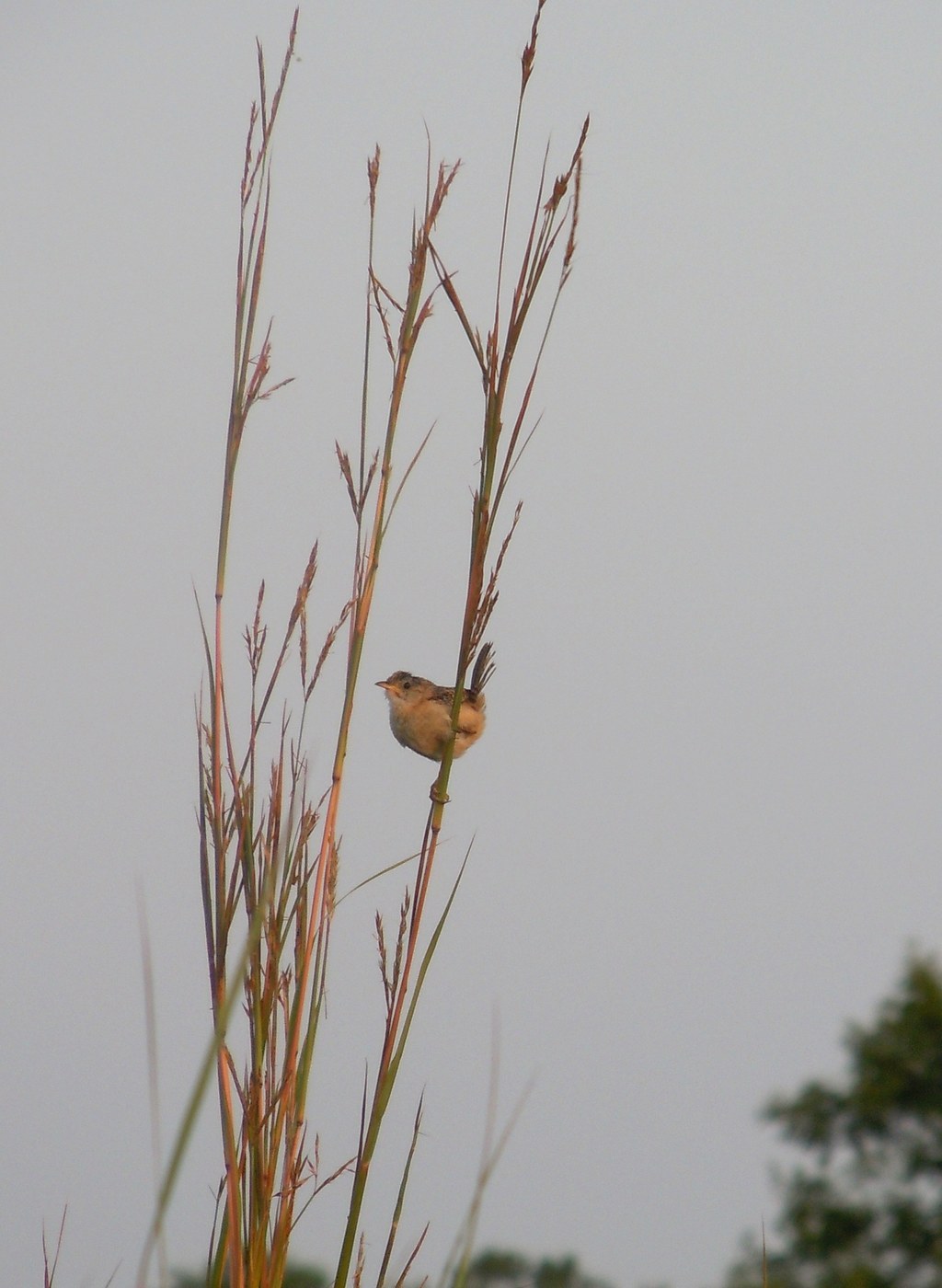
Sedge Wren
Tiny streaked crown and back feathers

Yellow-winged Cacique
Glossy black body feathers, yellow wing patch, shaggy crest

Yellow Warbler
Small contour and flight feathers
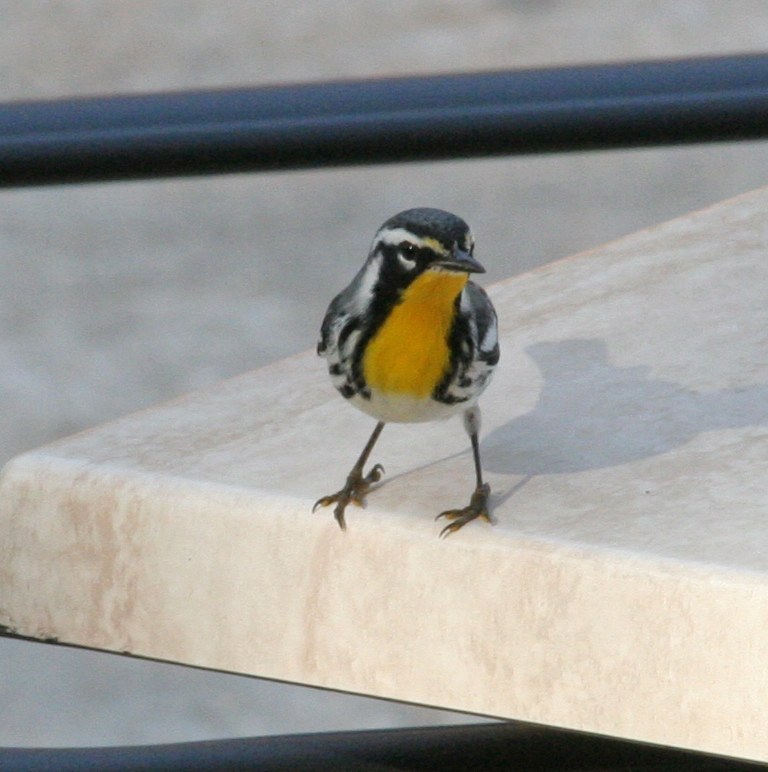
Yellow-throated Warbler
Small contour and flight feathers
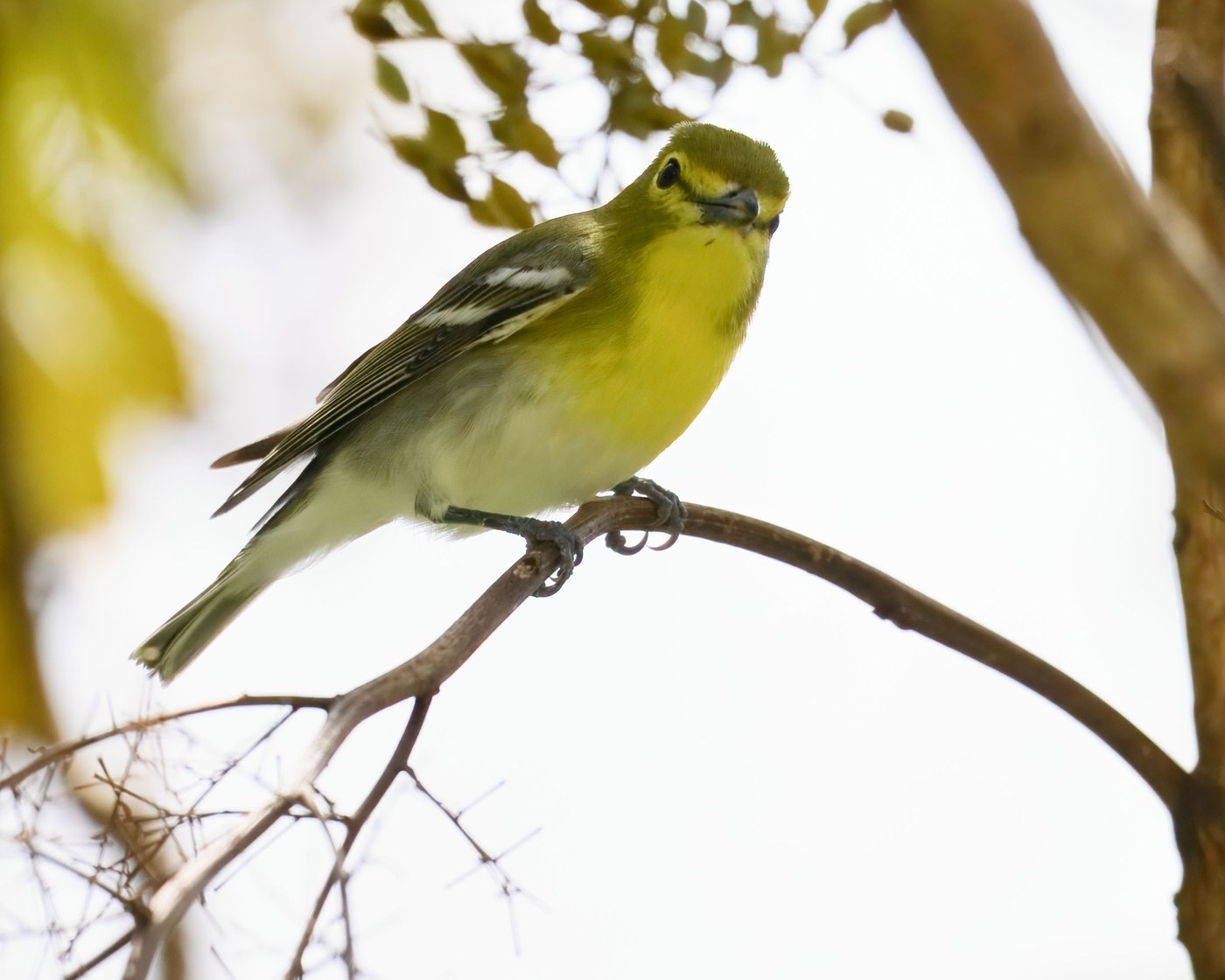
Yellow-throated Vireo
Bright yellow throat and spectacle feathers; olive-green back feathers; two white wing-bar feathers

Yellow-rumped Warbler
Small contour and flight feathers
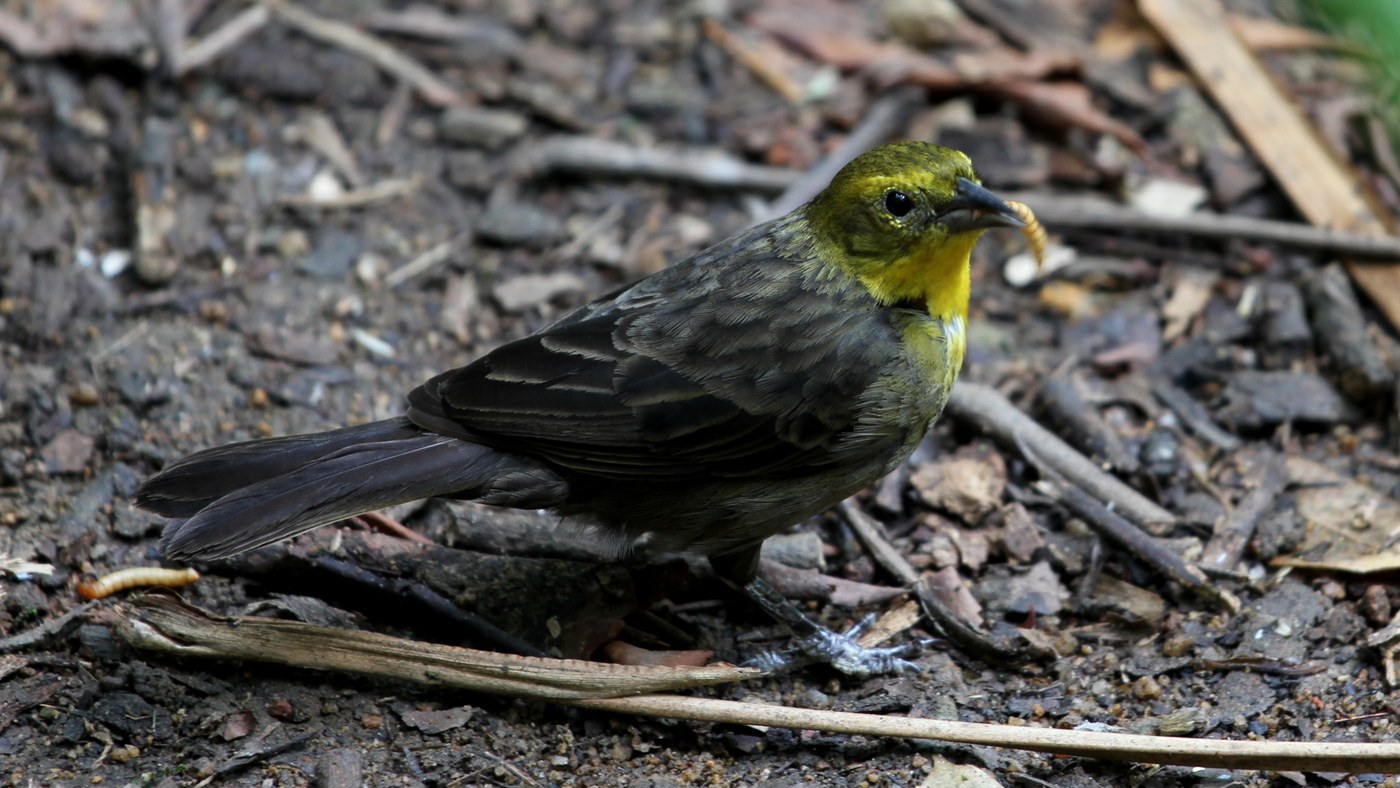
Yellow-hooded Blackbird
Contrasting hood and body feathers
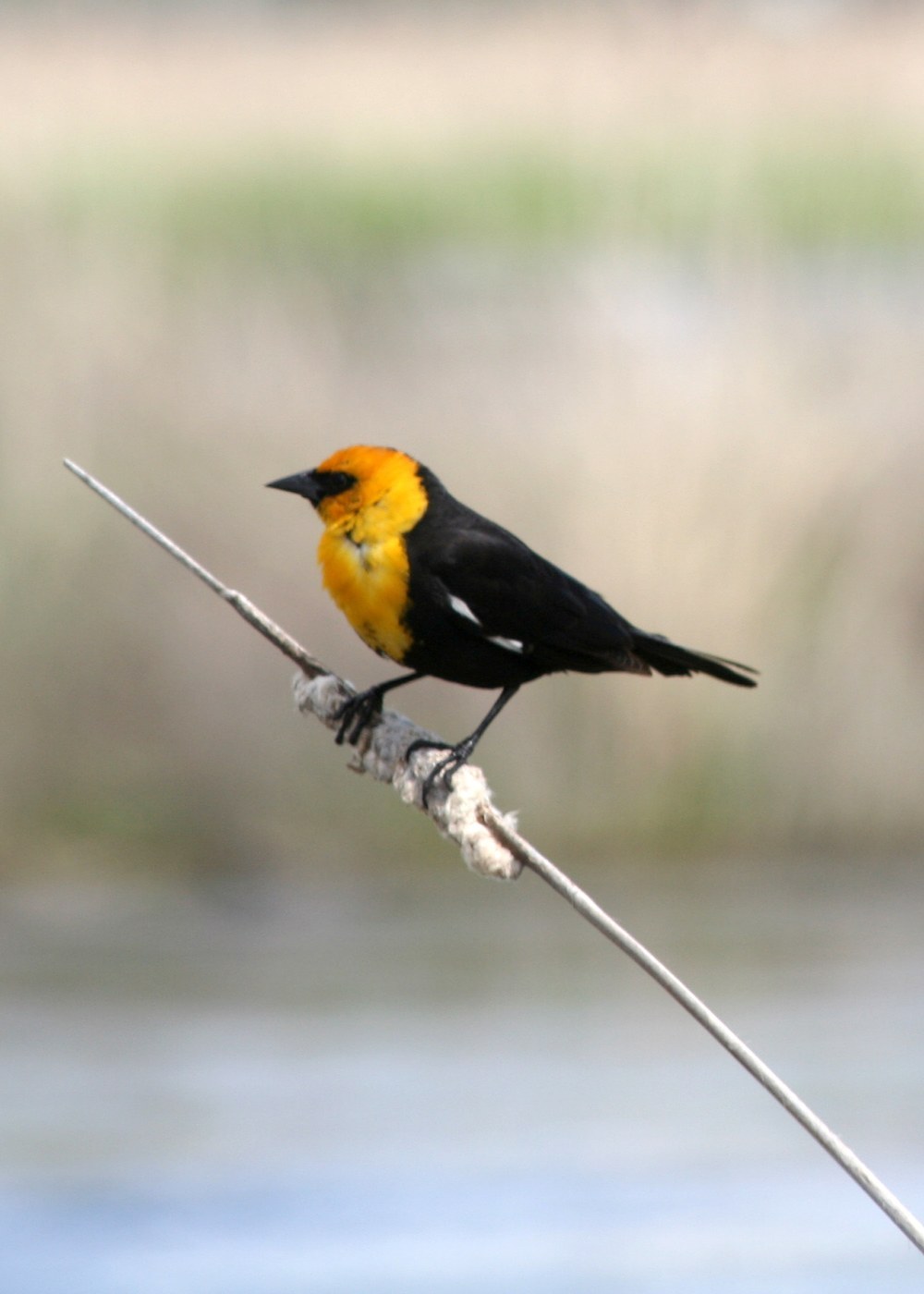
Yellow-headed Blackbird
Glossy black body plumage with a bright yellow head and breast

Yellow-eyed Junco
Contour and flight feathers

Yellow-fronted Canary
Small, smooth body plumage

Yellow-breasted Greenfinch
Compact, smooth body plumage