
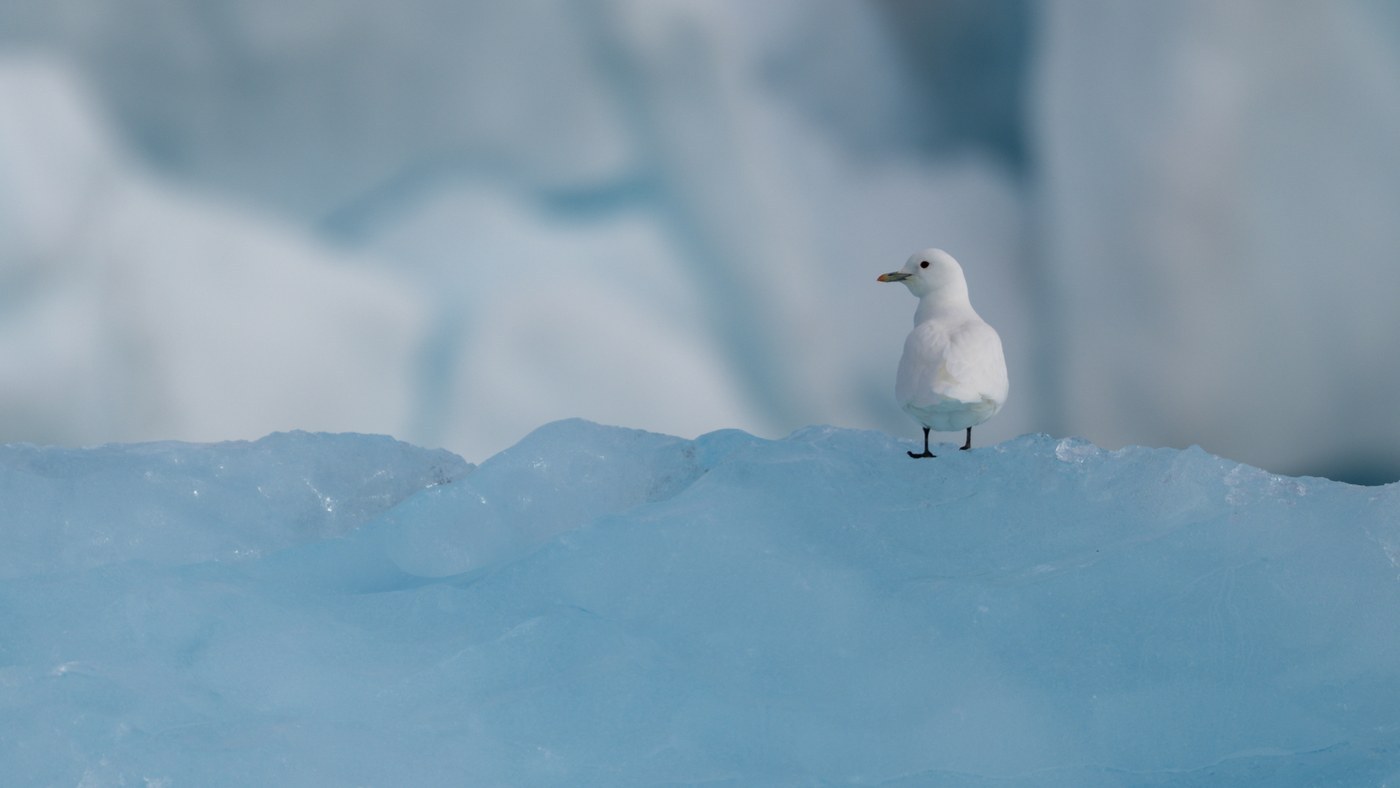
Ivory Gull
Pagophila eburnea
A pure white, high Arctic gull closely tied to pack ice, whose all-white adult plumage and short black legs make it unmistakable among northern seabirds.
- Feather type
- Body and flight feathers
- Colours
- Entirely white, sometimes with fine black speckling in immatures
- Bird size
- Medium gull, ~43 cm
Found a feather like this?
Identify any feather from a photo, free.
Overview
Overview
The Ivory Gull is a distinctive, entirely white-plumaged gull of the high Arctic, closely associated with pack ice and polar waters where it forages near the ice edge, often scavenging around seal kills left by polar bears. Adults are unmistakable, being wholly white with black legs and a stubby, dark-and-yellow bill, unlike any other gull sharing its range. Juveniles differ by showing fine dusky speckling on the face and scattered dark spots on the wingtips and tail, but retain the same overall white base color.
Because of its dependence on sea ice habitat and its far northern range, the Ivory Gull is rarely encountered outside the Arctic, and any sighting at more temperate latitudes is considered notable.
Identifying the Feather
Feather Identification
- Wing feathers: In adults, flight feathers are pure white with no markings whatsoever; in juveniles and immatures, the primaries and tail feathers show small blackish spots or tips, most concentrated near the ends of the feathers.
- Size and shape: Feathers are moderately broad and rounded at the tip, consistent with a stocky, pigeon-like flight silhouette rather than the long, pointed wings of more aerial gulls.
- Body feathers: Entirely white in adults with a dense, insulating structure suited to extreme cold; immature body feathers may show light gray or dusky flecking, especially around the face.
- Compared to similar species: No other gull in the Ivory Gull's range shows a wholly white adult plumage; leucistic or albino individuals of other gull species could superficially resemble it but would lack the short black legs and stubby bill shape.
Plumage & Molt
Plumage Details
Adults are entirely white year-round, with black legs and a bill that is grayish at the base and yellow at the tip. There is no seasonal plumage change in adults. Juveniles and first-year birds show a dusky, sooty wash on the face around the bill and eye, along with small blackish spots scattered across the wingtips, wing coverts, and tail tip, a pattern that gradually diminishes as the bird molts into the immaculate white adult plumage over one to two years.
Habitat & Range
Habitat & Range
Ivory Gulls breed in a limited number of colonies on cliffs and gravel patches in the high Arctic, including parts of Greenland, Svalbard, and the Canadian and Russian Arctic islands. They are closely tied to pack ice throughout the year, foraging along ice edges, leads, and polynyas, and rarely venture far south of the pack ice except during occasional irruptions or storm-driven displacement. The species is considered vulnerable in parts of its range due to its strong dependence on stable sea ice conditions.
Behavior & Field Notes
Behavior & Field Notes
Ivory Gulls forage along the edges of pack ice and open leads, taking fish and marine invertebrates, and are well known for scavenging at seal or whale carcasses, including remains left by polar bears, a behavior that ties them closely to the Arctic marine food web. They nest in small, loose colonies on cliff ledges or flat gravel areas, often near other Arctic seabirds. Calls include a variety of harsh, tern-like notes given at colonies and feeding aggregations. Because of its remote range, this species is infrequently observed by most birdwatchers, and any far white gull encountered outside the high Arctic warrants careful documentation.
Frequently asked questions
Why is the Ivory Gull almost never confused with other gulls?
Adults are entirely white with no gray or dark markings anywhere in the plumage, a combination not shared by any other gull species within its Arctic range.
Do young Ivory Gulls look different from adults?
Yes, juveniles show a dusky wash on the face and small dark spots on the wingtips and tail, features that fade as the bird matures into the fully white adult plumage.
What habitat is this species most associated with?
It is strongly tied to Arctic pack ice, foraging along ice edges and leads and rarely straying far from ice-influenced polar waters.
Is the Ivory Gull's population considered stable?
Portions of its range have shown vulnerability linked to changes in sea ice extent, though it is generally treated as a species of conservation concern rather than an immediate crisis in standard assessments.
Ivory Gull guides
In-depth guides for identifying and understanding Ivory Gull.
Other feathers you may enjoy

Western Gull
Body, flight, and tail feathers
Glaucous Gull
Body, flight, and tail feathers

American Herring Gull
Body, flight, and tail feathers

Great Black-backed Gull
Body, flight, and tail feathers

Common Gull
Body, flight, and tail feathers
Iceland Gull
Body, flight, and tail feathers

Ring-billed Gull
Body, flight, and tail feathers

Glaucous-winged Gull
Body, flight, and tail feathers

Herring Gull
Body, flight, and tail feathers

Lesser Black-backed Gull
Body, flight, and tail feathers

California Gull
Body, flight, and tail feathers
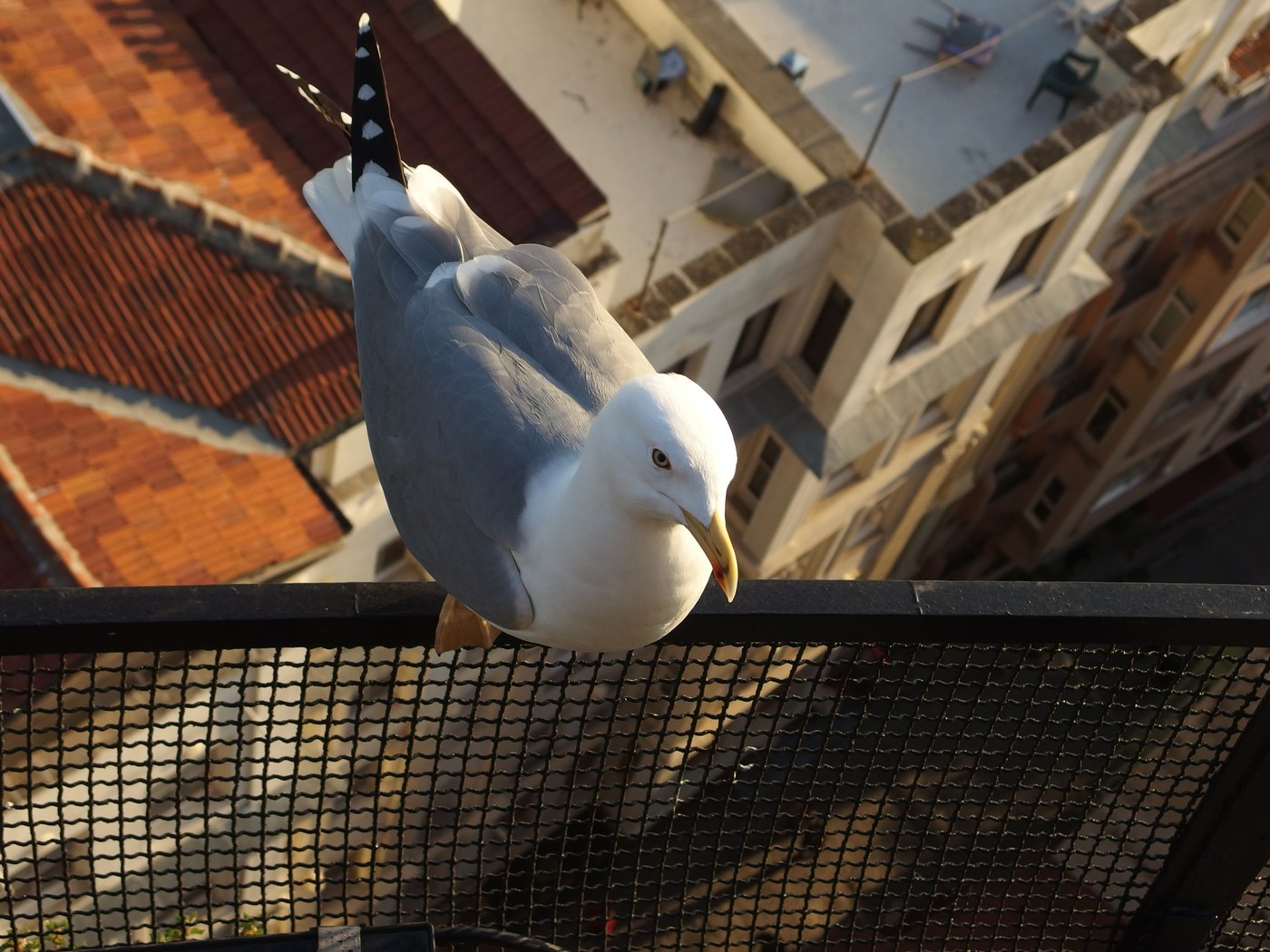
Yellow-legged Gull
Body, wing covert, and flight feathers