
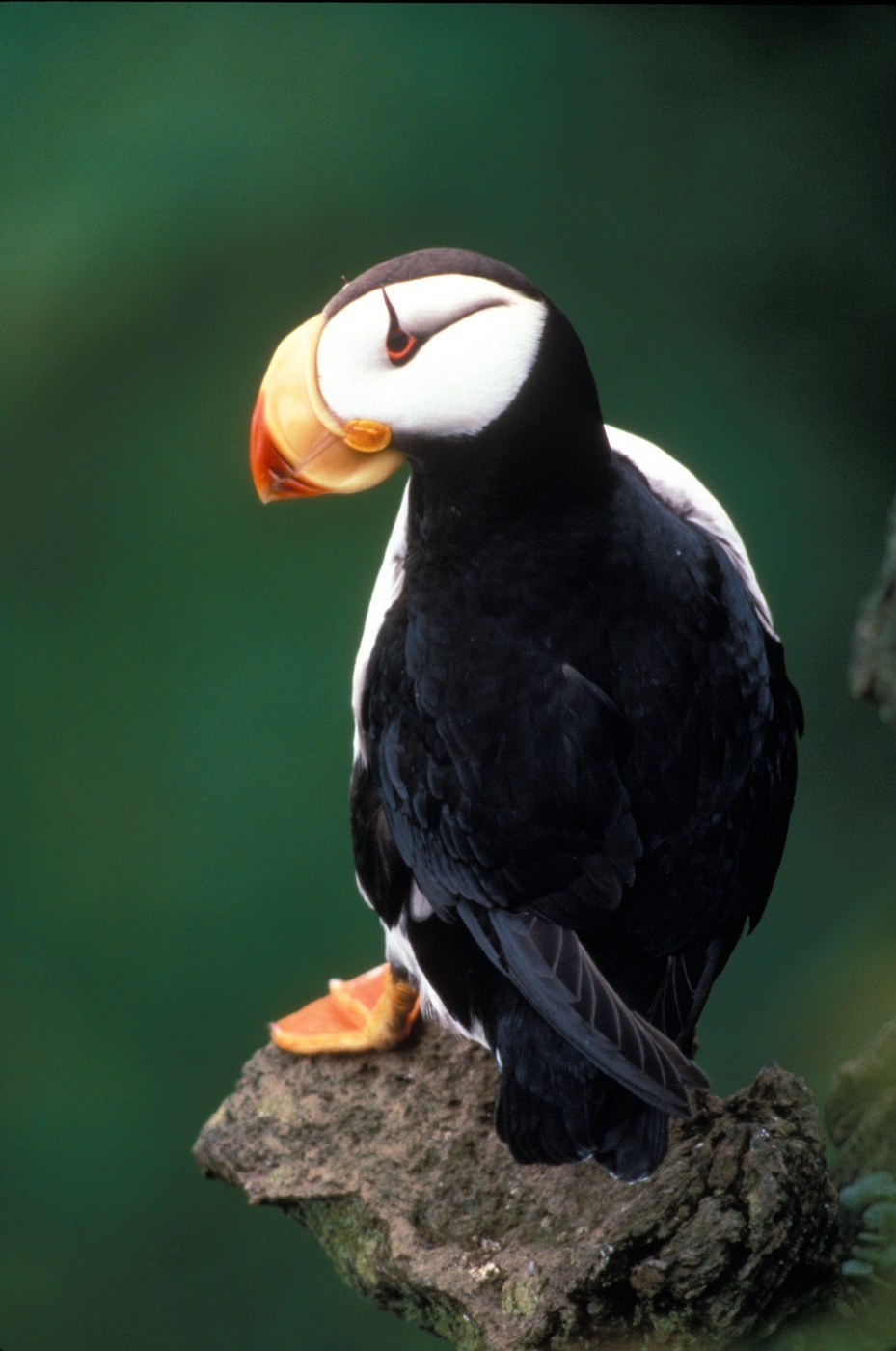
Horned Puffin
Fratercula corniculata
The North Pacific counterpart to the Atlantic Puffin, similarly patterned in black and white but named for the small fleshy "horn" of skin above each eye in breeding adults.
- Feather type
- Contour, flight, and short tail feathers
- Colours
- Black upperparts, white underparts and face
- Bird size
- Small, dove-sized, ~35-38 cm
Found a feather like this?
Identify any feather from a photo, free.
Overview
The Horned Puffin fills a North Pacific niche much like that of the Atlantic Puffin, breeding on rocky coasts and islands from Alaska to eastern Russia. Its body plumage closely resembles its Atlantic relative, though it is somewhat larger and shows a distinctive fleshy eye ornament in the breeding season.
Identifying the Feather
- Upperparts are glossy black and underparts clean white, essentially matching the Atlantic Puffin's pattern but on a slightly larger body
- The white face is more sharply demarcated and often shows a more triangular shape than in the Atlantic Puffin
- Flight feathers are short, broad, and rounded, suited to whirring flight and wing-propelled swimming
- Tail feathers are short and squared, contributing to a stocky, compact profile
- Feathers are dense and somewhat stiff, typical of diving auks
Plumage & Molt
- Breeding and non-breeding adults share the same black-and-white body plumage, with seasonal change concentrated in the bill and the fleshy horn above the eye rather than the body feathers
- Non-breeding adults show a duskier face and a less prominent bill
- Juveniles are duller, with a smaller bill and grayer face, lacking the eye ornament
- Sexes are alike in plumage
- A complete molt after breeding renews body and flight feathers, with a flightless period at sea
Habitat & Range
Horned Puffins breed on sea cliffs, rocky slopes, and offshore islands around the North Pacific, including coastal Alaska, the Aleutian Islands, and the Russian Far East, nesting in rock crevices and burrows. Outside the breeding season they range widely over the open North Pacific, wintering far from shore.
Behavior & Field Notes
This puffin pursues small schooling fish underwater using wing-propelled swimming, much like its Atlantic relative, and can carry several fish at once in its bill to provision a chick. It nests in crevices among boulders or in burrows on grassy slopes, often in mixed colonies with other auks. Its calls are low, growling notes given at the colony, with the bird largely silent while at sea.
Frequently asked questions
How does a Horned Puffin feather compare to an Atlantic Puffin feather?
The two species share a very similar black-and-white body plumage, so feathers can look nearly identical; the Horned Puffin is somewhat larger overall, and its range in the North Pacific versus the Atlantic Puffin's North Atlantic range is often the best clue.
What is the 'horn' referred to in this puffin's name?
It is a small fleshy projection of skin above each eye that develops in breeding adults, not a feathered structure, and is shed after the breeding season.
Do Horned Puffins fly well?
They have short, rounded wings adapted more for underwater swimming than efficient flight, resulting in a fast, whirring wingbeat rather than graceful soaring.
Horned Puffin guides
In-depth guides for identifying and understanding Horned Puffin.
Other feathers you may enjoy

Western Gull
Body, flight, and tail feathers
Glaucous Gull
Body, flight, and tail feathers

American Herring Gull
Body, flight, and tail feathers

Great Black-backed Gull
Body, flight, and tail feathers

Common Gull
Body, flight, and tail feathers
Iceland Gull
Body, flight, and tail feathers

Ring-billed Gull
Body, flight, and tail feathers

Glaucous-winged Gull
Body, flight, and tail feathers

Herring Gull
Body, flight, and tail feathers

Lesser Black-backed Gull
Body, flight, and tail feathers

California Gull
Body, flight, and tail feathers
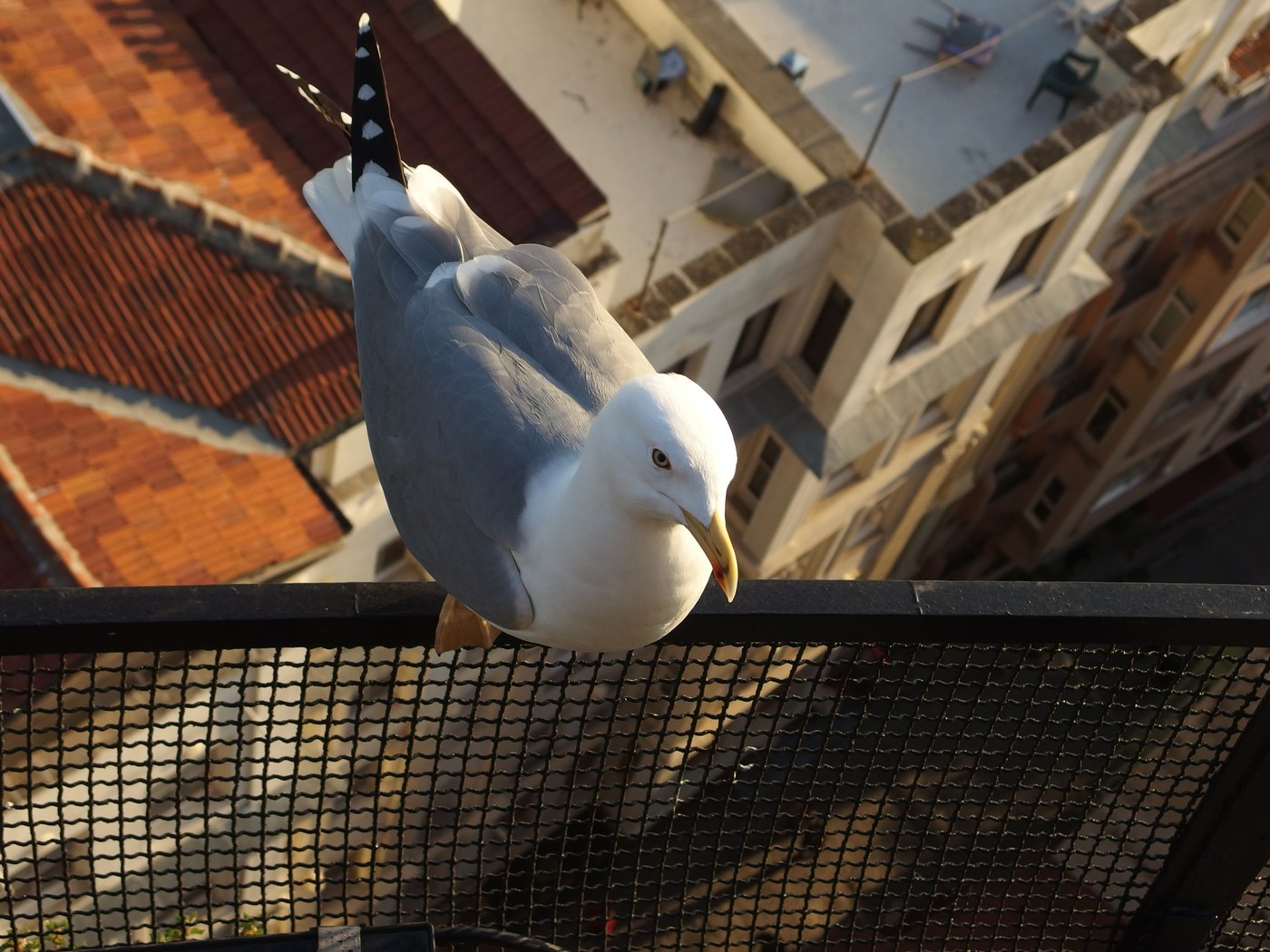
Yellow-legged Gull
Body, wing covert, and flight feathers