
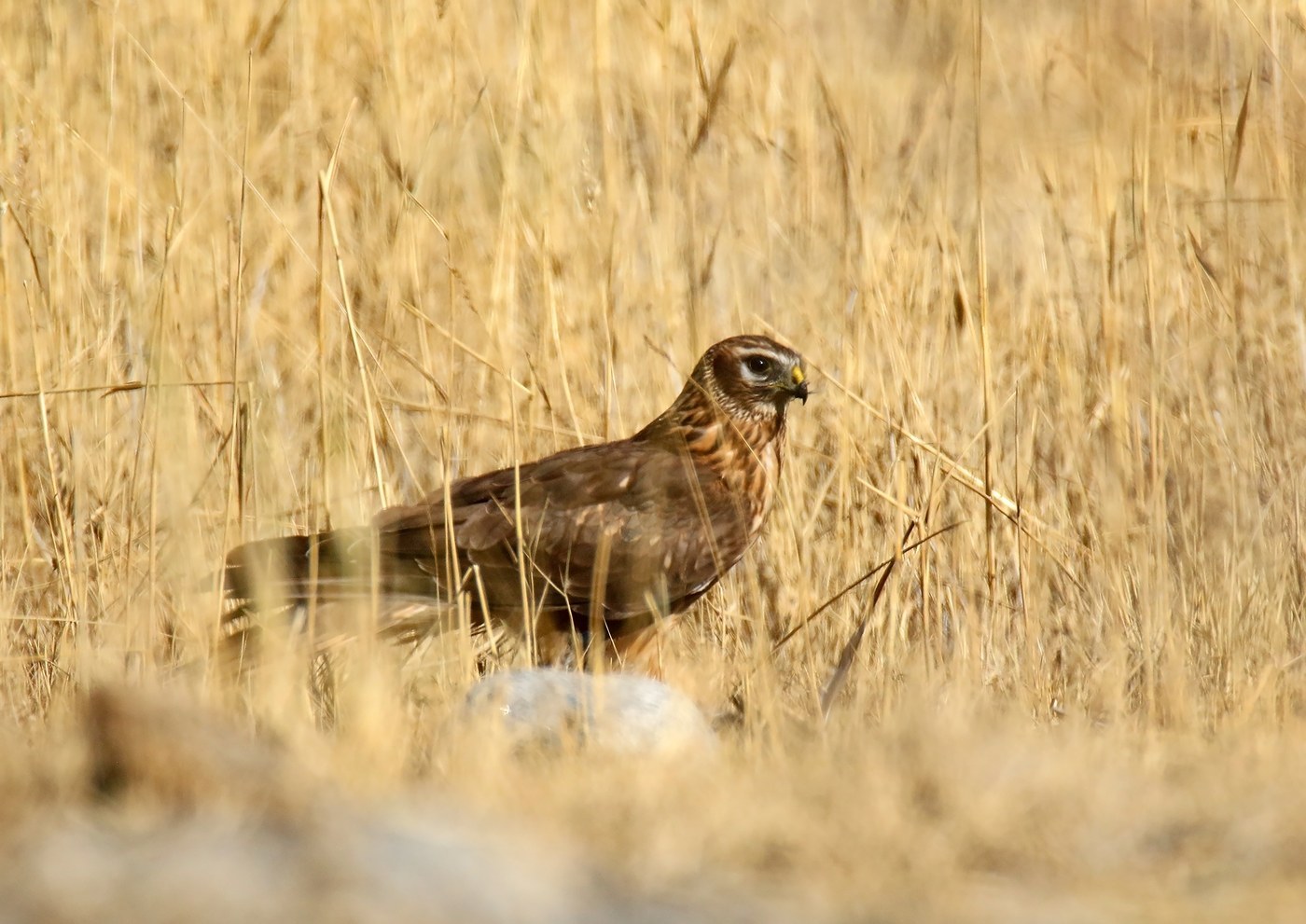
Hen Harrier
Circus cyaneus
The Hen Harrier is a slim Old World raptor known for pale grey males nicknamed 'grey ghosts,' brown streaked females and juveniles often called 'ringtails,' and a bold white rump patch shared by all ages, hunting low over moorland and open country.
- Feather type
- Long narrow wings held in a shallow V; long narrow evenly banded tail; owl-like facial disc feathers
- Colours
- Pale grey upperparts and white underparts with black wingtips in males; brown streaked upperparts and buffy streaked underparts in females and juveniles; white rump patch in all plumages
- Bird size
- Medium-sized raptor, ~44-52 cm, wingspan around 1.0-1.2 m
Found a feather like this?
Identify any feather from a photo, free.
Overview
Hen Harrier
The Hen Harrier is a slender, long-winged raptor of moorland, grassland, and farmland across much of Europe and Asia, closely related to and until relatively recently considered the same species as the North American Northern Harrier. Its striking sexual dimorphism, with pale grey males and warm brown females, has earned the male the nickname 'grey ghost.'
Like other harriers, it hunts low over open ground with wings held in a shallow V, relying on a combination of keen eyesight and an owl-like facial disc that helps it detect prey by sound in dense vegetation.
Identifying the Feather
Identifying Hen Harrier Feathers
- Primaries/secondaries: pale grey with black wingtips in males; brown, more heavily barred in females and juveniles.
- Tail feathers: long and narrow, with several evenly spaced dark bands; females and juveniles are often called 'ringtails' for this banded tail pattern.
- Rump feathers: a conspicuous white patch above the tail base in both sexes and juveniles, a key identification feature.
- Facial disc feathers: short, stiff feathers forming an owl-like disc around the face.
- Body feathers: males are pale grey above, white below; females and juveniles are brown above with buffy, streaked underparts.
- The white rump patch combined with a narrow, evenly banded tail helps separate this species from the darker, less strongly tail-banded Western Marsh Harrier.
Plumage & Molt
Plumage
Adult males are pale grey above with black wingtips and white underparts. Females and juveniles are brown above with buffy, streaked underparts and a strongly banded tail, earning them the nickname 'ringtail.' All ages and sexes share a bold white rump patch. Juveniles closely resemble adult females, with males gaining grey plumage over roughly two years.
Habitat & Range
Habitat & Range
Breeds across open moorland, grassland, and marsh in Europe and Asia, also using agricultural land, especially in winter. Northern and montane populations are migratory, moving to lower elevations or further south for winter, while some populations in milder regions are resident.
Behavior & Field Notes
Behavior & Field Notes
Hen Harriers hunt low over open ground, using a slow, quartering flight to detect small mammals and birds by sight and sound. They nest on the ground in dense vegetation, often in moorland or marsh. Calls include sharp, repeated notes given near the nest, especially during aerial displays. A pale grey feather with black tips, or a brown feather with strong even tail banding and a white rump patch, found on open moorland or grassland is consistent with this species.
Frequently asked questions
Why is the male Hen Harrier called the 'grey ghost'?
Its pale, almost silvery grey plumage combined with its habit of gliding silently low over moorland has earned it this evocative nickname among birdwatchers.
What does 'ringtail' refer to in this species?
It is a nickname for females and juveniles, whose tail feathers show several bold, even dark bands, giving a ringed appearance distinct from the plainer grey tail of adult males.
How can I distinguish this species from Western Marsh Harrier by feathers?
Hen Harrier feathers are generally paler with a bold white rump patch and a more evenly, narrowly banded tail, whereas Western Marsh Harrier females and juveniles are darker overall with a largely unbarred tail and a pale crown patch instead.
What habitat is this species associated with?
Open moorland, grassland, marsh, and agricultural land across Europe and Asia, where it hunts low over the ground.
Hen Harrier guides
In-depth guides for identifying and understanding Hen Harrier.
Other feathers you may enjoy

Australian Hobby
Long, narrow pointed flight feathers; slender tail feathers

California Condor
Massive flight feathers; long broad primaries; large tail feathers

Brown Falcon
Broad, rounded flight feathers; variable-toned contour feathers
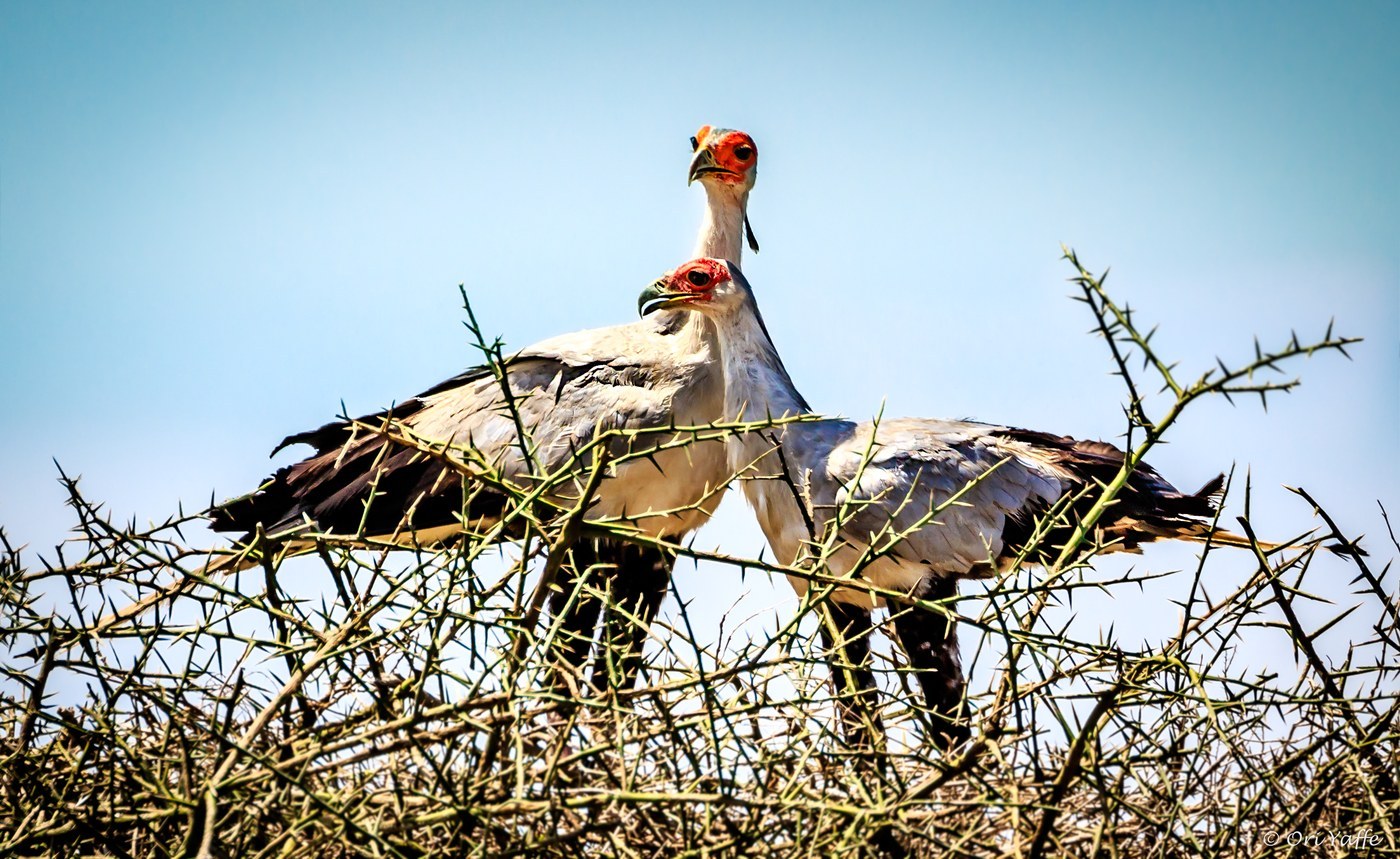
Secretarybird
Long crest feathers; broad flight feathers; elongated central tail feathers

Orange-breasted Falcon
Broad-based pointed flight feathers; bold breast and belly feathers
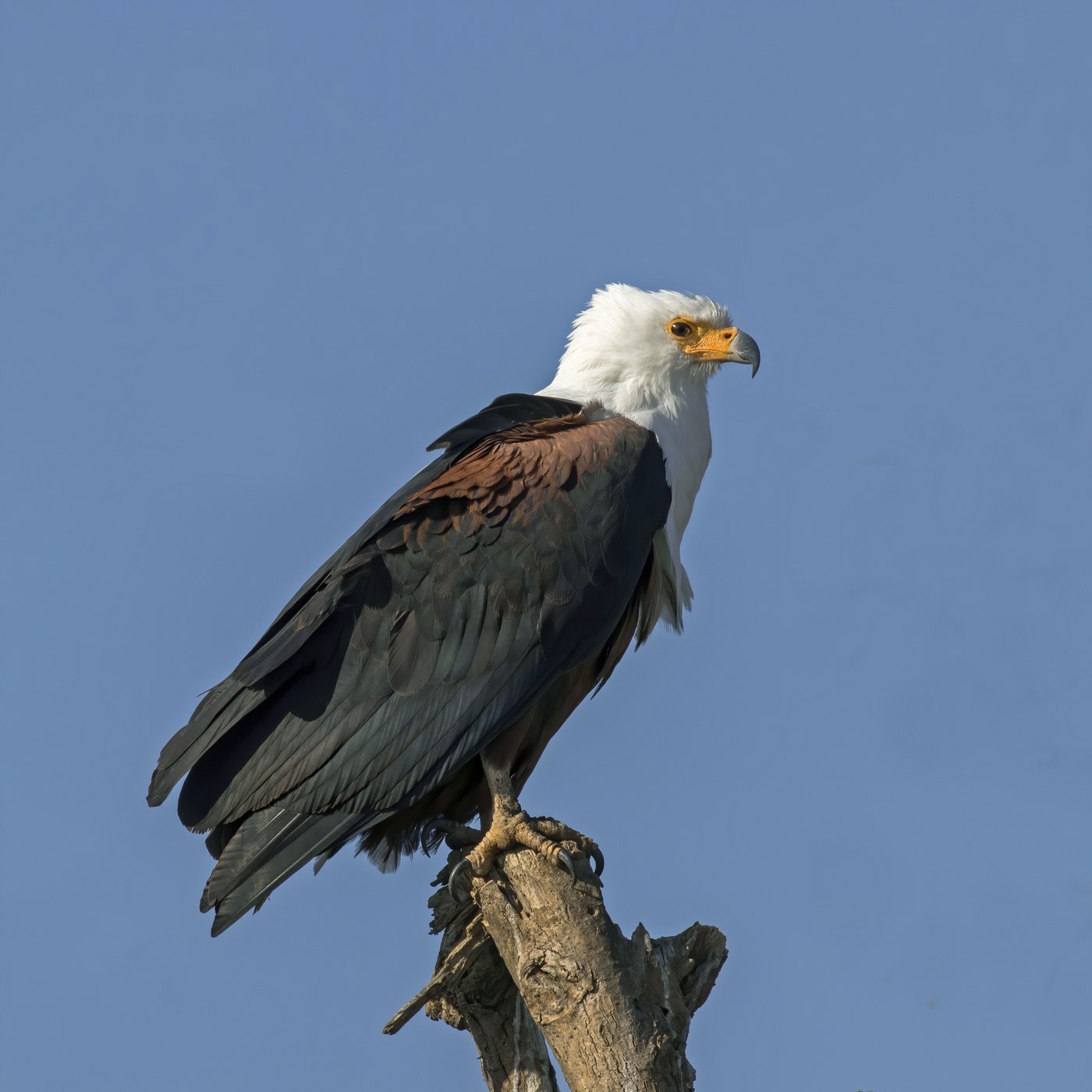
African Fish Eagle
Flight, tail, and body feathers

Amur Falcon
Slender pointed flight feathers; soft slate or orange-buff contour feathers
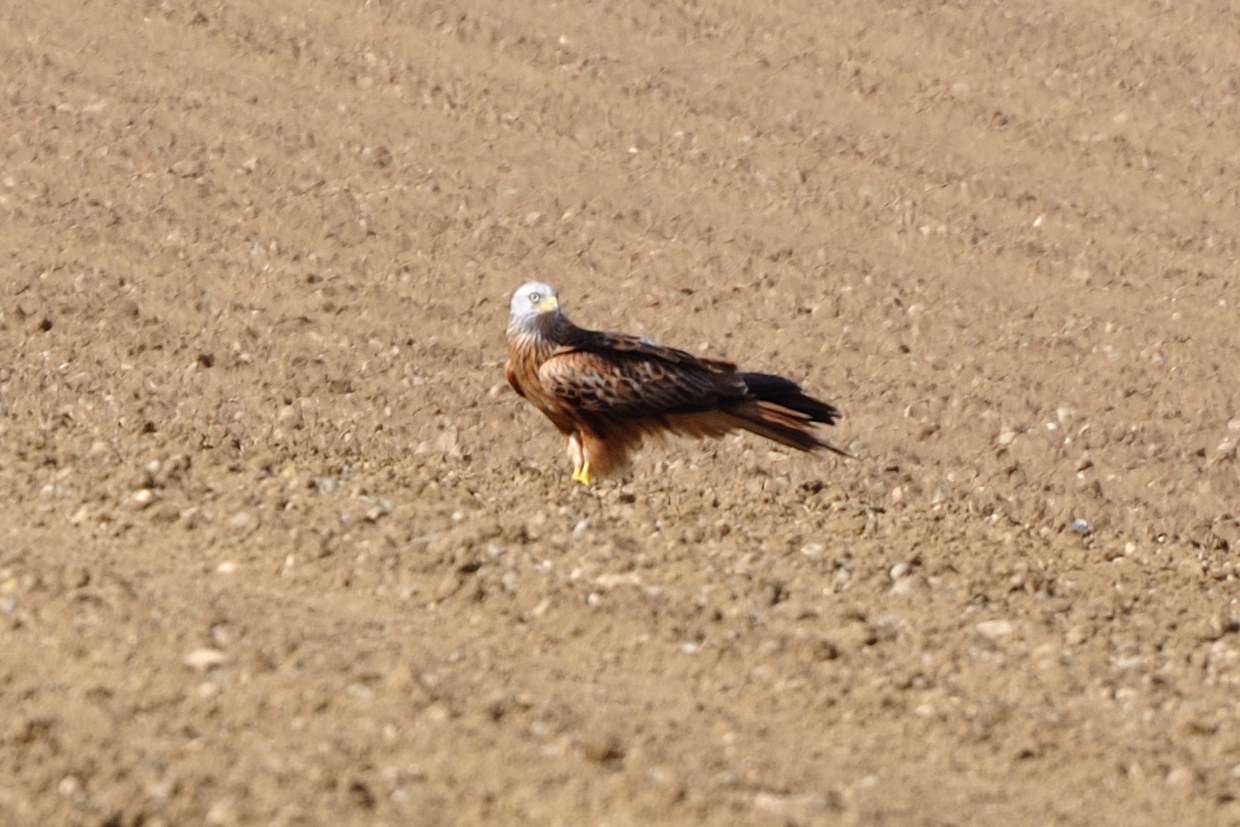
Red Kite
Flight (wing) and tail feathers
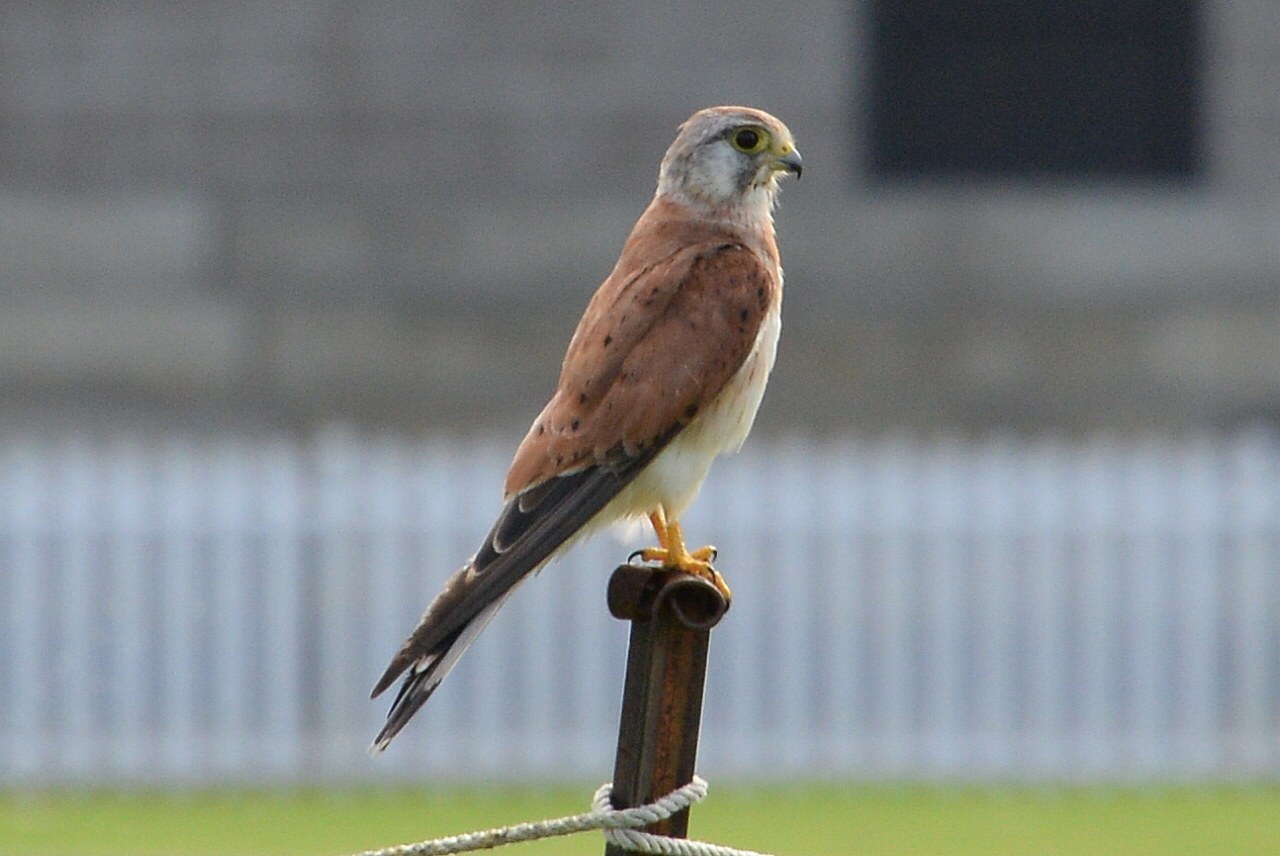
Nankeen Kestrel
Slim pointed flight feathers; lightly marked contour feathers

Andean Condor
Massive flight feathers; broad primaries and secondaries; sturdy tail feathers

Plumbeous Forest Falcon
Short rounded flight feathers; finely barred tail feathers

Sooty Falcon
Long pointed flight feathers; slim tail feathers