
How to Identify Hen Harrier Feathers
How to identify the pale grey male or streaky brown female Hen Harrier by feather, using the species' diagnostic white rump patch and long, slim wing shape.
Read the full Hen Harrier encyclopedia entry →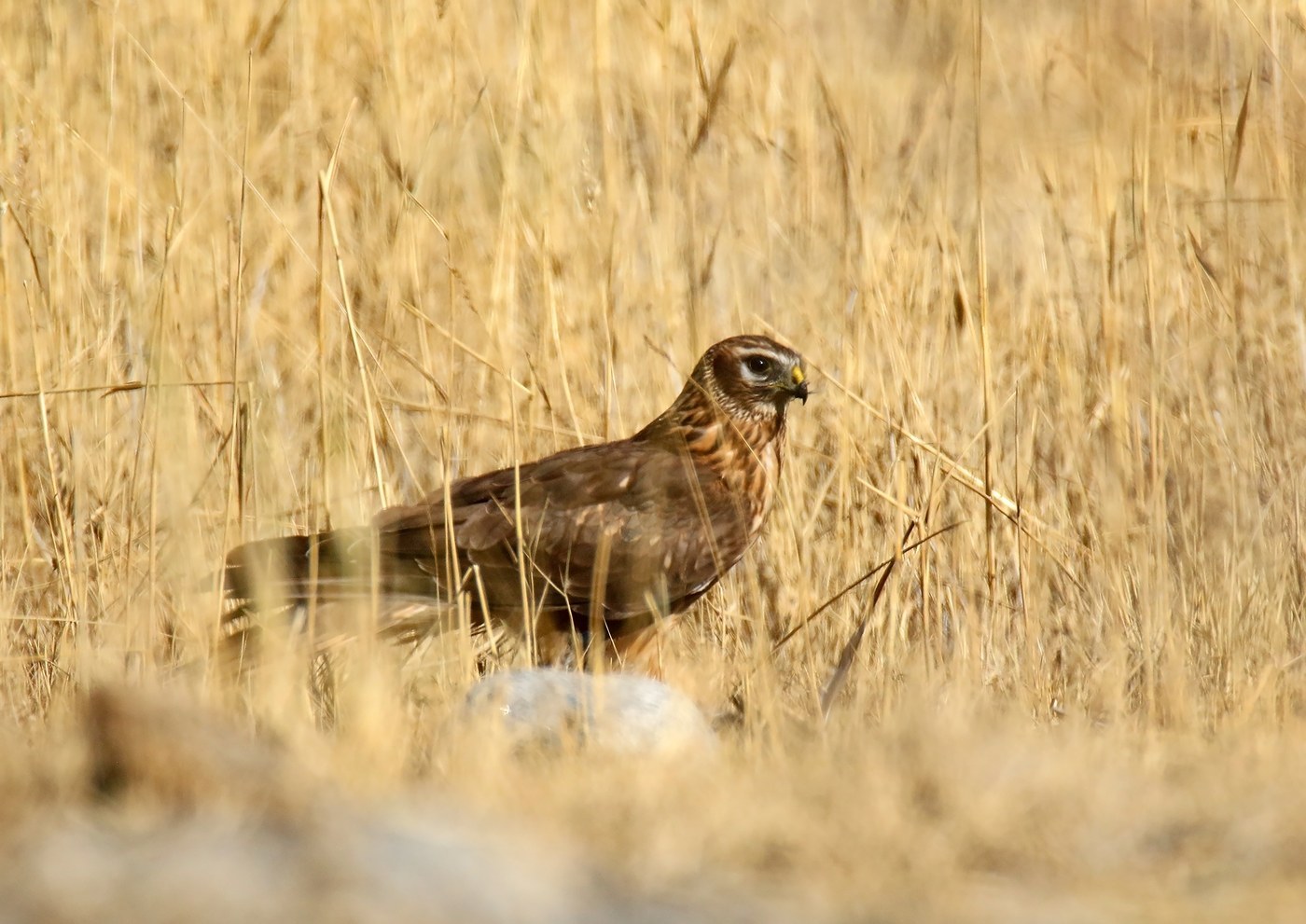
What Hen Harrier Feathers Look Like
The Hen Harrier (called Northern Harrier in North America) is a slim, low-flying raptor of open country, and one feature works regardless of the bird's age or sex.
- Male body/flight feathers: pale grey overall with contrasting black wingtips.
- Female/juvenile ("ringtail") body feathers: streaky brown overall, providing camouflage in grassland and marsh habitat.
- Rump feathers (both sexes/ages): a bold white patch at the base of the tail — the single most reliable diagnostic feature for this species regardless of plumage type.
- Wing shape context: long, slim wings built for low, buoyant flight over open ground, with an owl-like facial disc that helps the bird hunt by sound as well as sight.
- Tail feathers: grey (males) or brown-barred (females/juveniles), moderately long.
Step-by-Step: Is This Feather From a Hen Harrier?
- Look for the white rump patch feathers first. If you find an otherwise plain grey or brown feather from the base of the tail that's crisp white, that's the strongest and most age/sex-independent clue.
- Sort by overall color. Pale grey feathers with black tips suggest a male; streaky brown feathers suggest a female or juvenile — both are normal for this single species.
- Consider the wing feather proportions. Long and relatively narrow flight feathers fit a bird built for sustained low-altitude quartering flight over fields and marshes.
- Rule out buzzards/hawks. Harrier feathers tend to be more elongated and slender than the broader-winged feathers of Buteo hawks.
- Note the habitat. Open moorland, grassland, farmland, and marsh edges across Europe, Asia, and North America (as Northern Harrier) fit this species' hunting range.
Similar Species & How to Tell Them Apart
- Pallid Harrier: very similar grey male plumage, but with subtly different wingtip patterning (fewer dark "fingers" at the wingtip) — difficult to separate from a single feather without expert wingtip-formula comparison.
- Montagu's Harrier: also similar, with additional dark barring ("boa") on the underwing in males that Hen Harrier lacks; again, best judged from a full wing rather than one feather.
- Buteo hawks (e.g., Common Buzzard): broader-winged with shorter, stockier flight feathers, lacking the harrier's slim, elongated shape and white rump patch.
Where & When You'll Find Them
Hen Harriers breed on open moorland, rough grassland, and marshes across much of Europe and Asia (and as Northern Harrier across North America), nesting on the ground rather than in trees. They undertake varying degrees of migration depending on the population, with molt occurring through the summer breeding season; feathers are most often found in open country — moorland, grassland, and marsh edges — where the birds spend their time hunting low over the ground.
Frequently asked questions
What's the most reliable feather clue for a Hen Harrier, regardless of sex or age?
The white rump patch at the base of the tail — this shows up in males, females, and juveniles alike, making it the single most dependable diagnostic feature.
Why do Hen Harrier feathers vary so much in color?
Males are pale grey with black wingtips while females and juveniles are streaky brown — quite different-looking plumages within the same species, which is why the white rump is the more reliable universal clue.
How do I tell a Hen Harrier feather from a Pallid or Montagu's Harrier feather?
These closely related species differ mainly in subtle wingtip patterning best judged from a full spread wing rather than a single feather, making species-level separation genuinely difficult from an isolated feather.
What habitat is most likely to yield a Hen Harrier feather?
Open moorland, rough grassland, farmland, or marsh edges, where the species does its characteristic low, quartering hunting flights.