
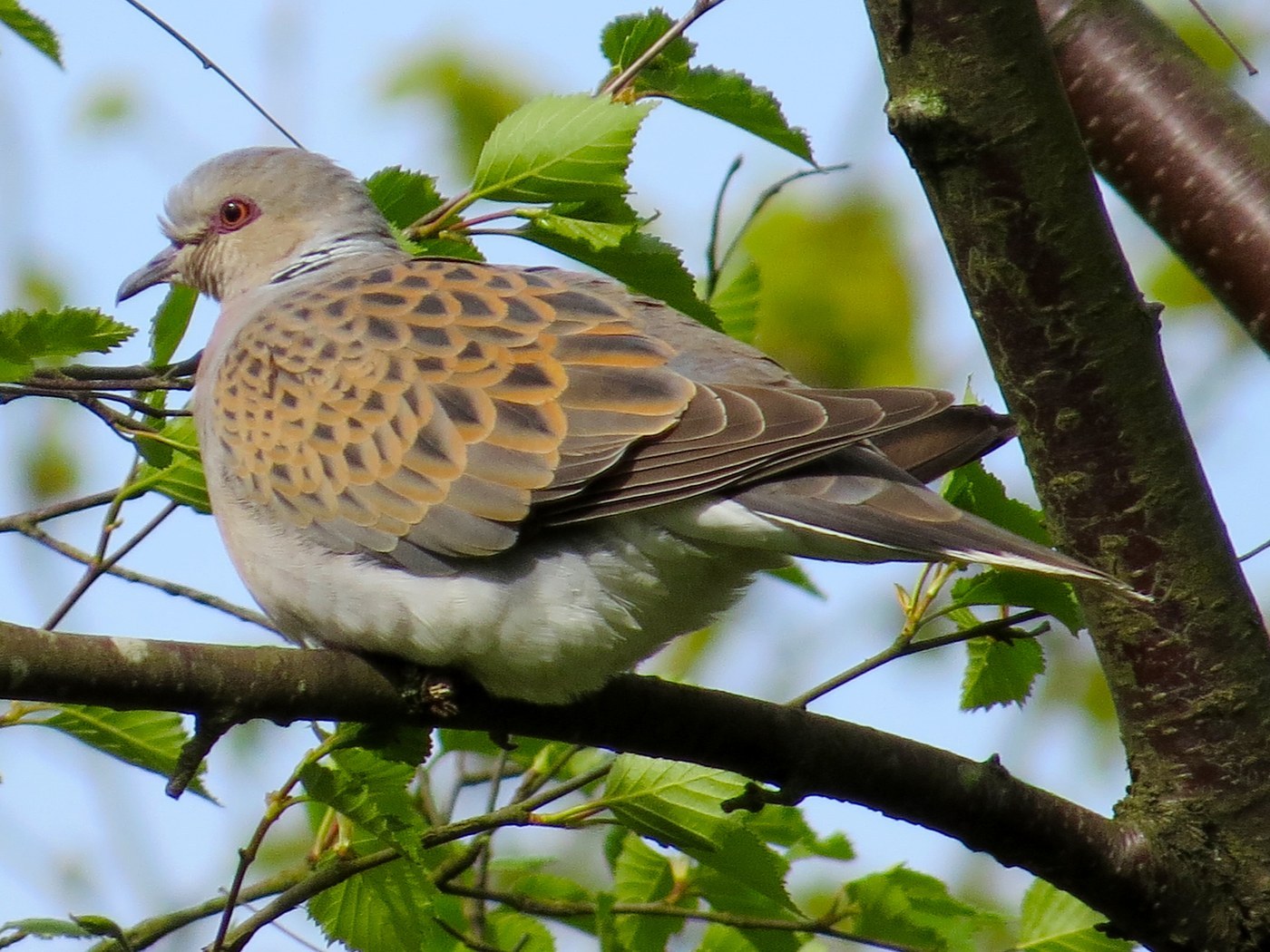
European Turtle Dove
Streptopelia turtur
A small, warmly colored migratory dove with a tortoiseshell-patterned wing and a neat black-and-white striped neck patch found in no other common European dove.
- Feather type
- Chestnut-and-black scalloped scapular feathers; small, neat wing feathers with a striped black-and-white neck patch
- Colours
- Warm chestnut-orange wing coverts with black centers, blue-grey head, black-and-white striped neck patch
- Bird size
- Small dove, ~26-28 cm
Found a feather like this?
Identify any feather from a photo, free.
Overview
The European Turtle Dove is a small, delicately patterned dove and a long-distance migrant, spending winters in sub-Saharan Africa before returning to breed in European farmland and scrub. It is notably smaller and more richly colored than the more familiar Collared Dove.
Its populations have declined significantly across much of its European range due to habitat and food source changes, making a confirmed feather find of some conservation interest.
The wing feathers are the most distinctive feature: chestnut-orange coverts with bold black centers create a scalloped or tortoiseshell-like pattern unlike any other dove in the region, paired with a small, neat black-and-white striped patch on the side of the neck.
Identifying the Feather
Wing covert feathers
- Warm chestnut-orange with a bold black center to each feather, producing a distinctive scalloped or tortoiseshell pattern across the closed wing.
Neck feathers
- A small patch of feathers on the side of the neck shows crisp black-and-white striping, a pattern unique among common European doves.
Head and body feathers
- Head feathers are soft blue-grey; underparts are pale pinkish-buff, fading to white on the belly.
Size
- Feathers are notably smaller and more delicate than those of Wood Pigeon, Stock Dove, or Rock Dove, matching the Turtle Dove's smaller overall size.
Confusion species
Collared Dove feathers are plainer sandy-grey without the chestnut-and-black scalloping, and lack the striped neck patch; the combination of tortoiseshell wing pattern and striped neck feather is diagnostic for Turtle Dove.
Plumage & Molt
Adults have a blue-grey head, chestnut-orange wing coverts boldly marked with black centers, a pinkish-buff breast fading to white on the belly, and a small black-and-white striped patch on the neck.
Males and females look similar. Juveniles lack the striped neck patch and show a plainer, more uniformly scaled wing pattern until their first molt.
Turtle Doves molt after breeding and again on or after arrival at African wintering grounds, related to their long-distance migratory strategy.
Habitat & Range
Turtle Doves favor farmland with hedgerows, scrub, and open woodland edges, requiring both suitable nesting cover and abundant seed food sources. They are long-distance migrants, wintering in sub-Saharan Africa and returning to breed in Europe during the warmer months.
The species has declined markedly in parts of its range in recent decades, linked to changes in farmland habitat and food availability along its migratory route.
Behavior & Field Notes
Turtle Doves feed mainly on small seeds from wild plants and, where available, spilled grain, foraging on open ground near cover. They are typically shy and quick to take flight.
Their voice is a distinctive soft, purring 'turr-turr' song, the origin of the bird's common name. They build a flimsy stick nest low in a shrub or hedge.
A small dove feather with chestnut-and-black scalloped wing markings and a striped neck patch, found in farmland hedgerow habitat during the warmer months, is characteristic of this migratory species.
Frequently asked questions
What is the most distinctive Turtle Dove feather?
A wing covert feather showing chestnut-orange color with a bold black center, creating a scalloped or tortoiseshell pattern unique among common European doves.
Does the Turtle Dove have a striped neck patch?
Yes, adults show a small patch of crisp black-and-white striped feathers on the side of the neck, a feature not shared by Collared Dove or the larger pigeons.
How does a Turtle Dove feather compare in size to a Wood Pigeon feather?
It is considerably smaller and more delicate, matching the Turtle Dove's smaller overall body size.
When are Turtle Dove feathers most likely to be found in Europe?
During the breeding season in warmer months, since the species migrates to sub-Saharan Africa for the winter.
Could a Turtle Dove feather be confused with a Collared Dove feather?
Collared Dove feathers are plainer sandy-grey without chestnut-and-black scalloping and lack the striped neck patch, making the two reasonably easy to separate.
European Turtle Dove guides
In-depth guides for identifying and understanding European Turtle Dove.

Other feathers you may enjoy

Victoria Crowned Pigeon
Large lace-like fan crest plumes over dense body contour feathers

Plain Pigeon
Contour feathers, plain and uniformly toned, with a white wing patch

Zenaida Dove
Contour and flight feathers, faint iridescent sheen on neck

Pink Pigeon
Soft contour feathers with graduated tail

Nicobar Pigeon
Long, hackle-like elongated neck feathers with iridescent sheen
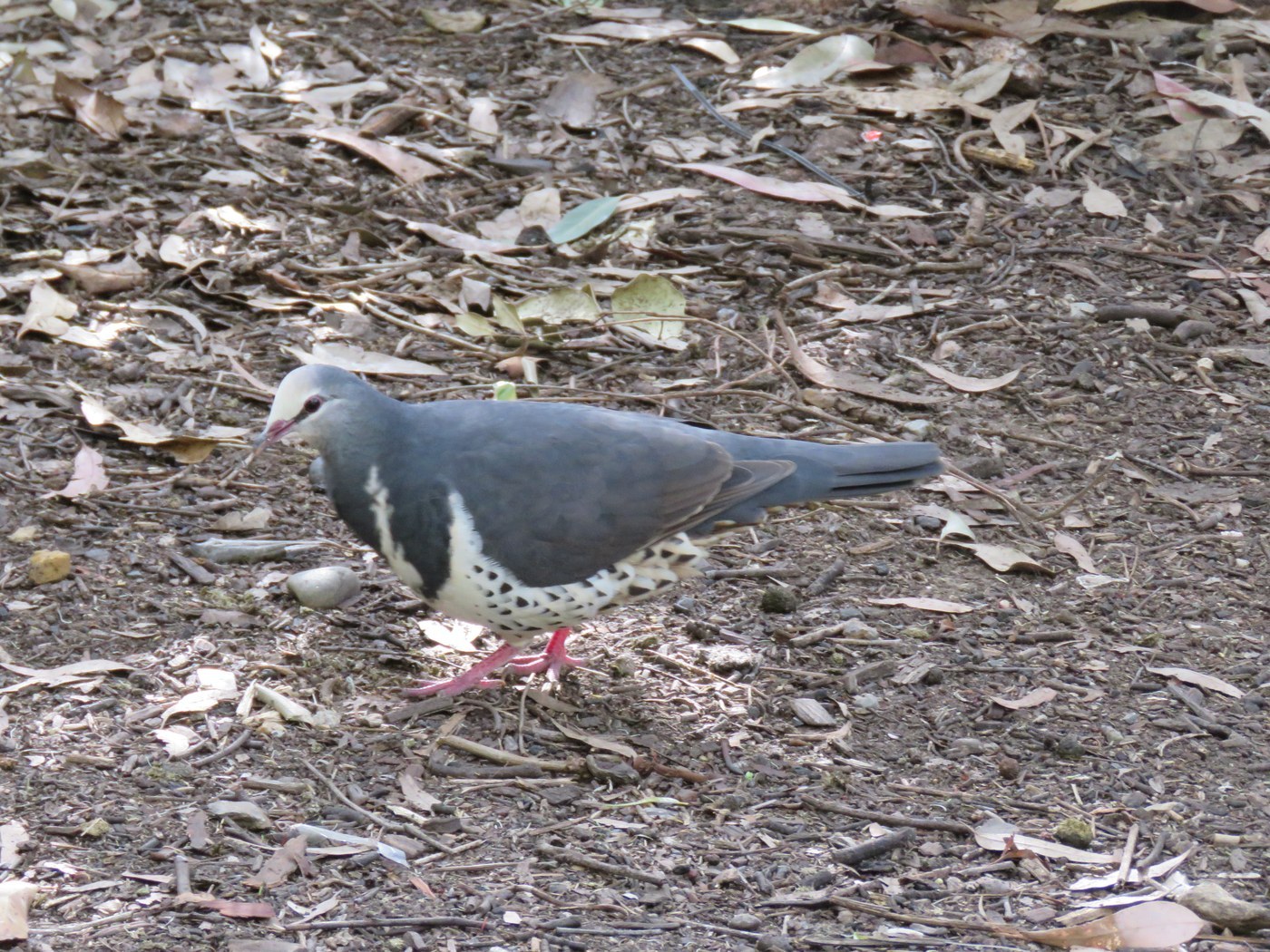
Wonga Pigeon
Dense, soft body contour feathers over a stocky frame

Squatter Pigeon
Dense, cryptic body contour feathers with a bold facial pattern

White-winged Dove
Broad, sturdy flight feathers with a bold white wing stripe

Western Crowned Pigeon
Rounded fan crest plumes over dense soft body feathers

Snow Pigeon
Dense insulating body contour feathers with a bold white rump and belly patch

Zebra Dove
Contour feathers with bold, extensive black-and-white barring

Scaly-naped Pigeon
Contour feathers with iridescent scaled nape pattern