
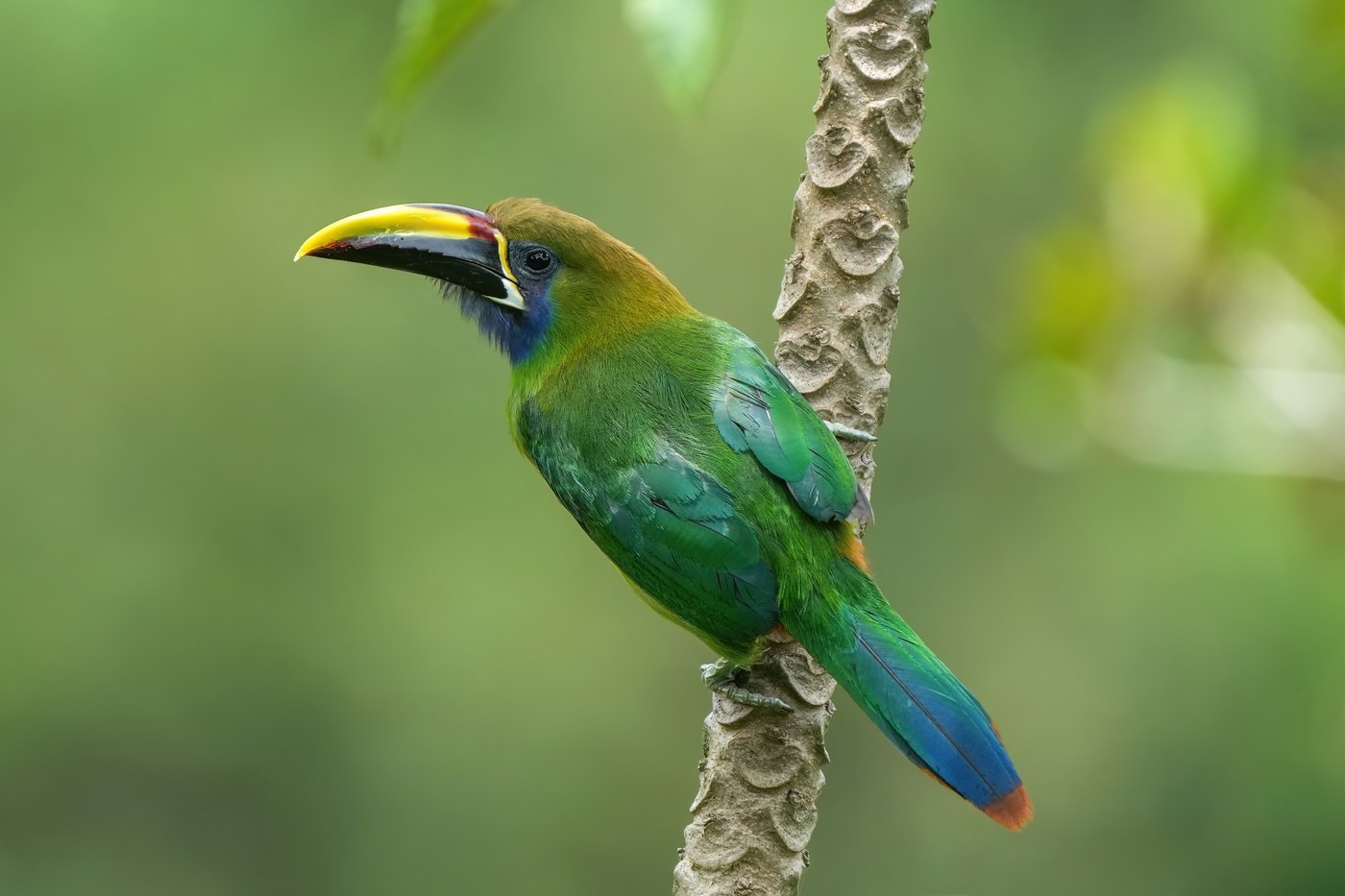
Emerald Toucanet
Aulacorhynchus prasinus
The Emerald Toucanet is a small, mostly green toucan of Middle American and Andean cloud forests, its color allowing it to blend remarkably well into the foliage. Regional populations vary somewhat in throat color and bill pattern.
- Feather type
- Dense contour feathers, short rounded wings
- Colours
- Overall emerald green with a chestnut-maroon tail tip; some populations show a blue-tinged throat
- Bird size
- Jay-sized, ~30-35 cm
Found a feather like this?
Identify any feather from a photo, free.
Overview
Overview
The Emerald Toucanet is a compact, green-plumaged toucan found across a broad swath of montane forest from Mexico south through Central America and into parts of the northern Andes. Unlike the boldly patterned lowland toucans, it relies on cryptic green plumage suited to a shaded, leafy environment.
- Overall green plumage is unusual among toucans and aids camouflage
- Widespread across montane cloud forest habitats
- Regional populations vary in throat color and bill tone, reflecting past treatment as multiple species
Identifying the Feather
Feather Identification
Most body feathers are a rich emerald green, with a slight blue wash on the throat in some populations. The tail is tipped in chestnut or maroon-brown, providing the clearest contrast against the otherwise green plumage.
- Body: uniform emerald green, feathers with a soft sheen rather than strong iridescence
- Throat: whitish to pale blue depending on population
- Tail tip: chestnut to rufous-brown, a useful field mark on shed tail feathers
- Bill: bicolored, dark above and yellow to pale below in most populations
The uniform green body plumage combined with a chestnut tail tip helps separate this species from other similarly sized green toucanets in overlapping ranges.
Plumage & Molt
Plumage Notes
Sexes look alike in plumage, both showing the same green body and chestnut tail tip. Juveniles are duller and greener overall, lacking the crisper throat contrast of adults, with a shorter, less vividly colored bill.
- Sexes are not distinguishable by plumage color
- Juveniles show muted tones and a plainer throat
- No sharp seasonal plumage change; molt is gradual
Habitat & Range
Habitat & Range
Occupies humid montane and cloud forest from Mexico through Central America and into the northern Andes, generally at higher elevations than the large lowland toucans.
- Non-migratory resident within its elevational range
- Prefers dense, humid forest with abundant epiphytes and fruiting trees
- Some populations shift short distances altitudinally with the seasons
Behavior & Field Notes
Behavior & Field Notes
Emerald Toucanets forage in pairs or small groups, taking fruit along with occasional small animal prey found while moving through the canopy and mid-story.
- Voice: a repeated, croaking or grunting call, softer than that of large toucans
- Nesting: natural tree cavities or old woodpecker holes in montane forest trees
- Field notes: the all-green body plumage combined with a chestnut tail tip is the quickest way to confirm this species over other cloud-forest toucans
Frequently asked questions
Why is this toucan mostly green?
Its plumage matches the shaded, leafy environment of humid montane cloud forest, unlike the boldly patterned lowland toucans.
What is the best feather clue for this species?
Uniform emerald-green body plumage paired with a chestnut or maroon-tipped tail is the most reliable combination.
Do throat colors vary across its range?
Yes, some regional populations show a blue-washed throat while others are paler, reflecting past classification as separate species.
Where would you encounter this species?
In humid montane and cloud forest from Mexico through Central America and into parts of the northern Andes.
Emerald Toucanet guides
In-depth guides for identifying and understanding Emerald Toucanet.
Other feathers you may enjoy

Common Cuckoo
Flight and body feathers
Common Kingfisher
Body (contour) and wing feathers
White-throated Toucan
Short rounded contour feathers, short broad wings
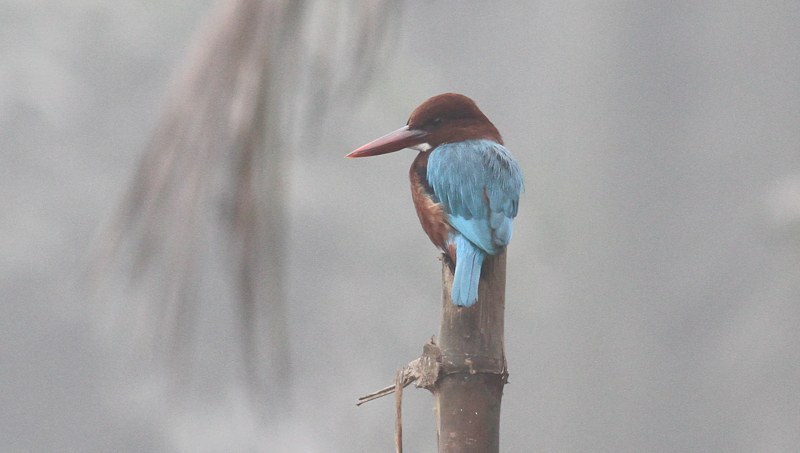
White-throated Kingfisher
Dense contour feathers; broad rounded wings

White-throated Bee-eater
Sleek, aerodynamic contour feathers; elongated central tail streamers
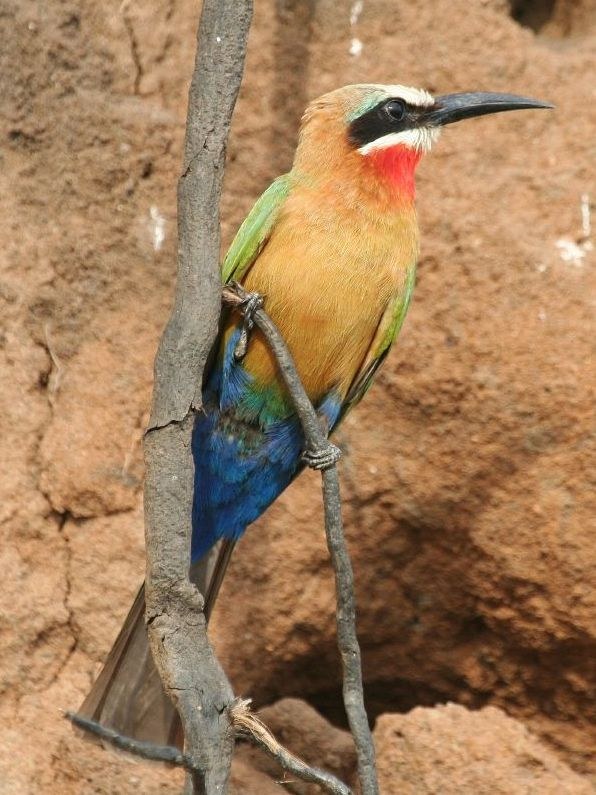
White-fronted Bee-eater
Sleek contour feathers; short tail with slight point

Southern Yellow-billed Hornbill
Slender contour feathers, moderate flight feathers
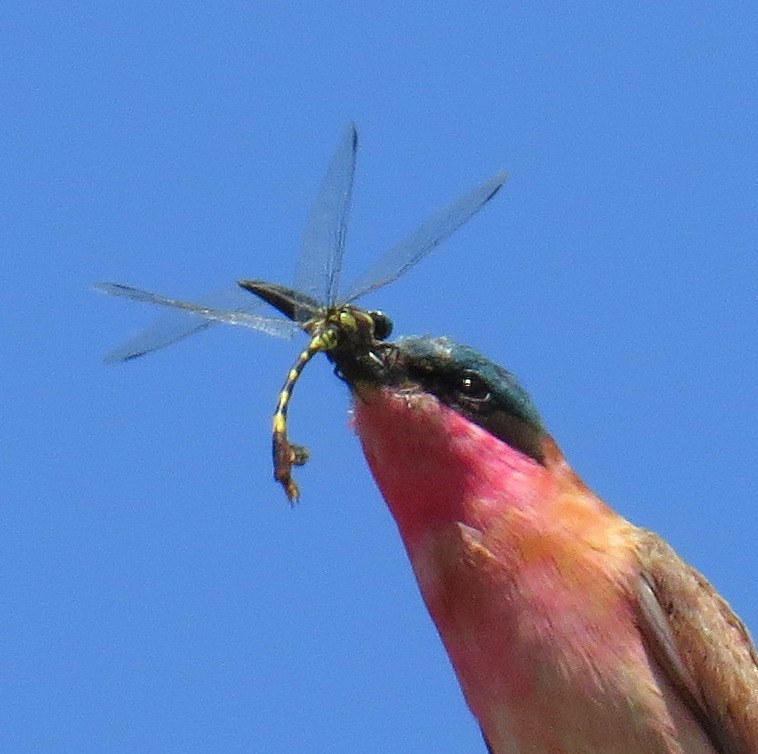
Southern Carmine Bee-eater
Sleek, pointed contour feathers; elongated central tail streamers
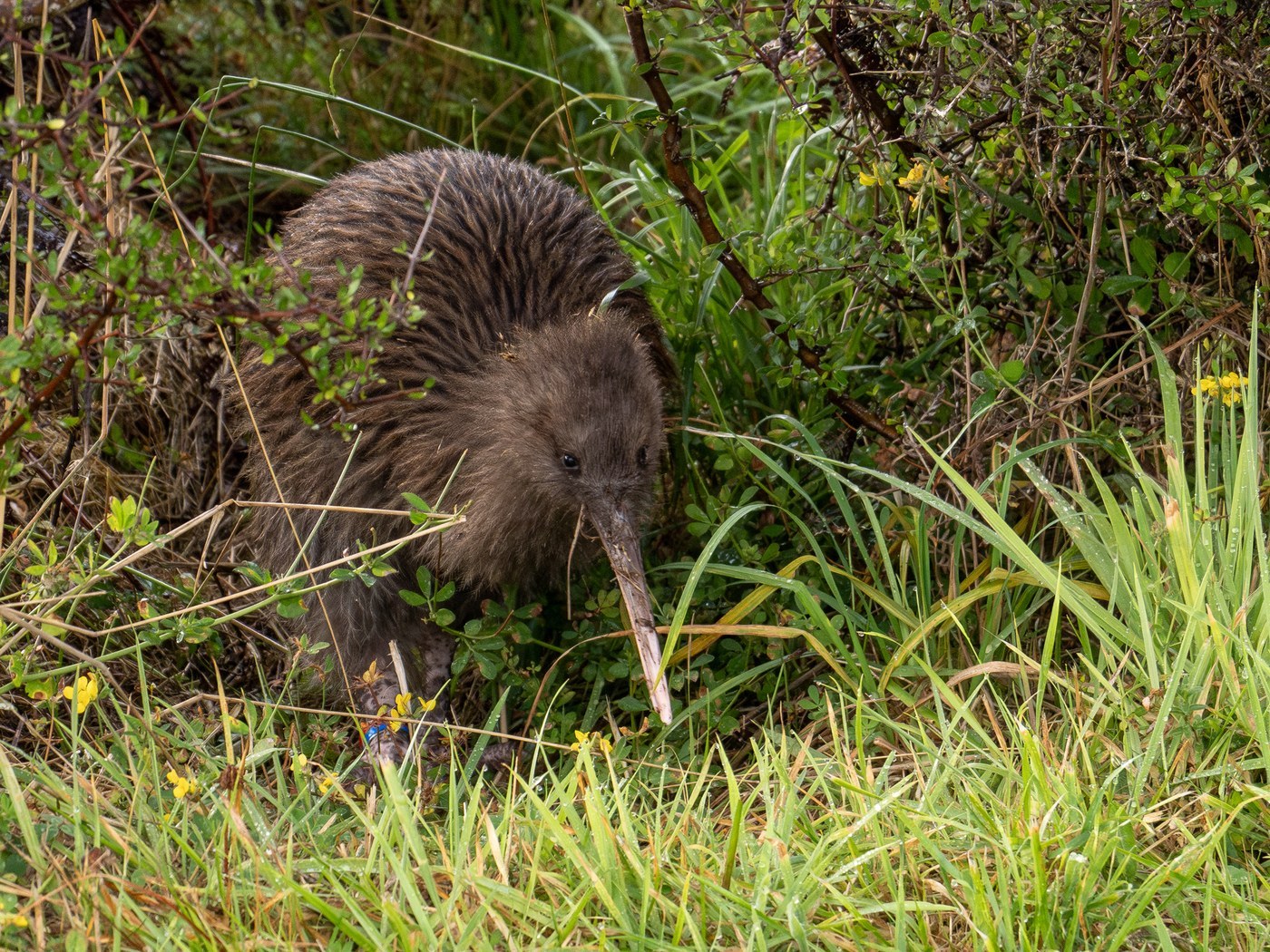
Southern Brown Kiwi
Shaggy, hair-like plumage with loose barbs lacking barbules; flightless, vestigial wings hidden beneath body feathers

Somali Ostrich
Loose, soft plumes lacking interlocking barbules

Wreathed Hornbill
Dense contour feathers, broad flight feathers

Woodland Kingfisher
Firm contour feathers; broad wing feathers