

White-throated Bee-eater
Merops albicollis
A slender, streamlined bee-eater of Africa's Sahel belt, green-bodied with a crisp white throat and forehead and long wispy tail streamers that trail behind it in flight.
- Feather type
- Sleek, aerodynamic contour feathers; elongated central tail streamers
- Colours
- Green body with black mask, white throat and forehead
- Bird size
- Between a sparrow and robin, ~19-21 cm plus tail streamers
Found a feather like this?
Identify any feather from a photo, free.
Overview
The White-throated Bee-eater is a graceful, aerial insectivore of Africa's semi-arid Sahel and savanna woodlands, easily recognized by its slender build, crisp facial pattern, and long central tail streamers that flutter behind it in flight.
Like other bee-eaters, it hunts flying insects on the wing, sallying from an exposed perch and returning to beat captured prey against the branch before swallowing it, a habit shared across the bee-eater family.
Identifying the Feather
- Body is bright green above with paler green-buff underparts
- Head pattern shows a black mask through the eye, a white forehead band, and a clean white throat bordered below by a black band
- Tail has elongated wire-thin central streamers extending well beyond the rest of the tail, longer and thinner than those of most other bee-eaters
- Wings are green with darker flight feathers, pointed and swept-back in flight silhouette
- Distinguished from the similar Green Bee-eater by its black-and-white throat pattern and longer, finer tail streamers
Plumage & Molt
Adults of both sexes look broadly similar, green overall with the distinctive black-masked, white-throated head pattern, though males typically show slightly longer tail streamers than females. Juveniles are duller green, lacking the crisp white throat and black facial markings, and lack the elongated tail streamers until after their first molt. There is little seasonal plumage change beyond wear reducing the vividness of the green tones.
Habitat & Range
This species breeds in the Sahel belt of Africa and migrates seasonally into more equatorial savanna and woodland edge habitats, often near rivers or open country with scattered trees for perching. It is a partial migrant, tracking rainfall and insect abundance across its range rather than undertaking a fixed long-distance migration.
Behavior & Field Notes
White-throated Bee-eaters hunt flying insects, especially bees and wasps, sallying from perches in graceful aerial pursuits and returning to a perch to subdue prey before eating it. They nest colonially, excavating tunnel burrows in sandy banks or flat ground. Calls are soft, rolling, and musical, often given in flight as loose flocks move between feeding areas.
Frequently asked questions
What does a White-throated Bee-eater feather look like?
Body feathers are bright green with a black eye mask and a crisp white throat and forehead; the tail has long, thin central streamers longer than those of most related bee-eaters.
How is the White-throated Bee-eater different from the Green Bee-eater?
It has a bolder black-and-white throat pattern and notably longer, finer tail streamers, while the Green Bee-eater is more uniformly green-faced.
Where does the White-throated Bee-eater live?
It is found in the Sahel and adjacent savanna woodlands of Africa, moving seasonally in response to rainfall and insect availability.
How do bee-eaters like this species catch food?
They sally out from a perch to catch flying insects in the air, then return to beat the prey against the perch before swallowing it.
White-throated Bee-eater guides
In-depth guides for identifying and understanding White-throated Bee-eater.

Other feathers you may enjoy

Common Cuckoo
Flight and body feathers
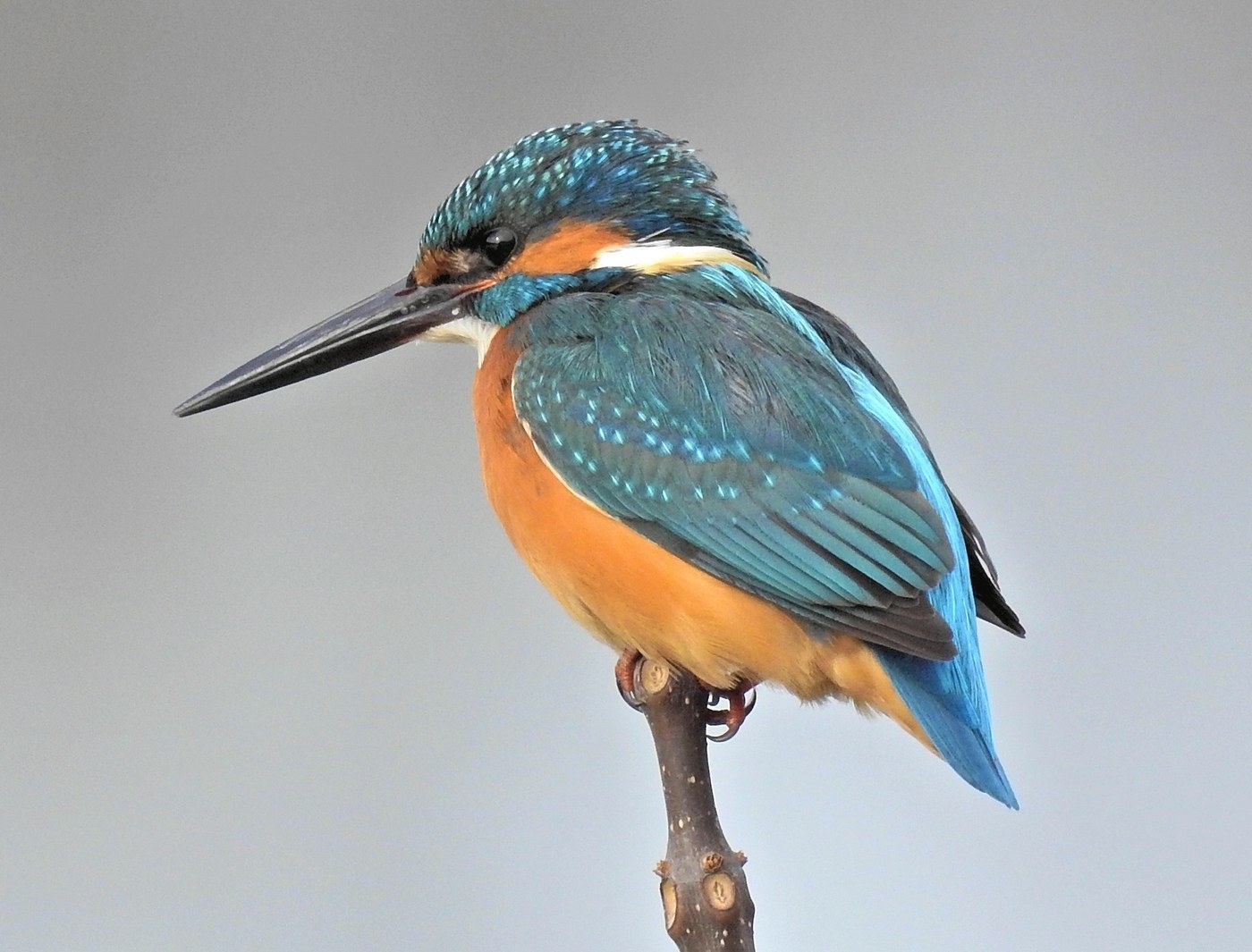
Common Kingfisher
Body (contour) and wing feathers
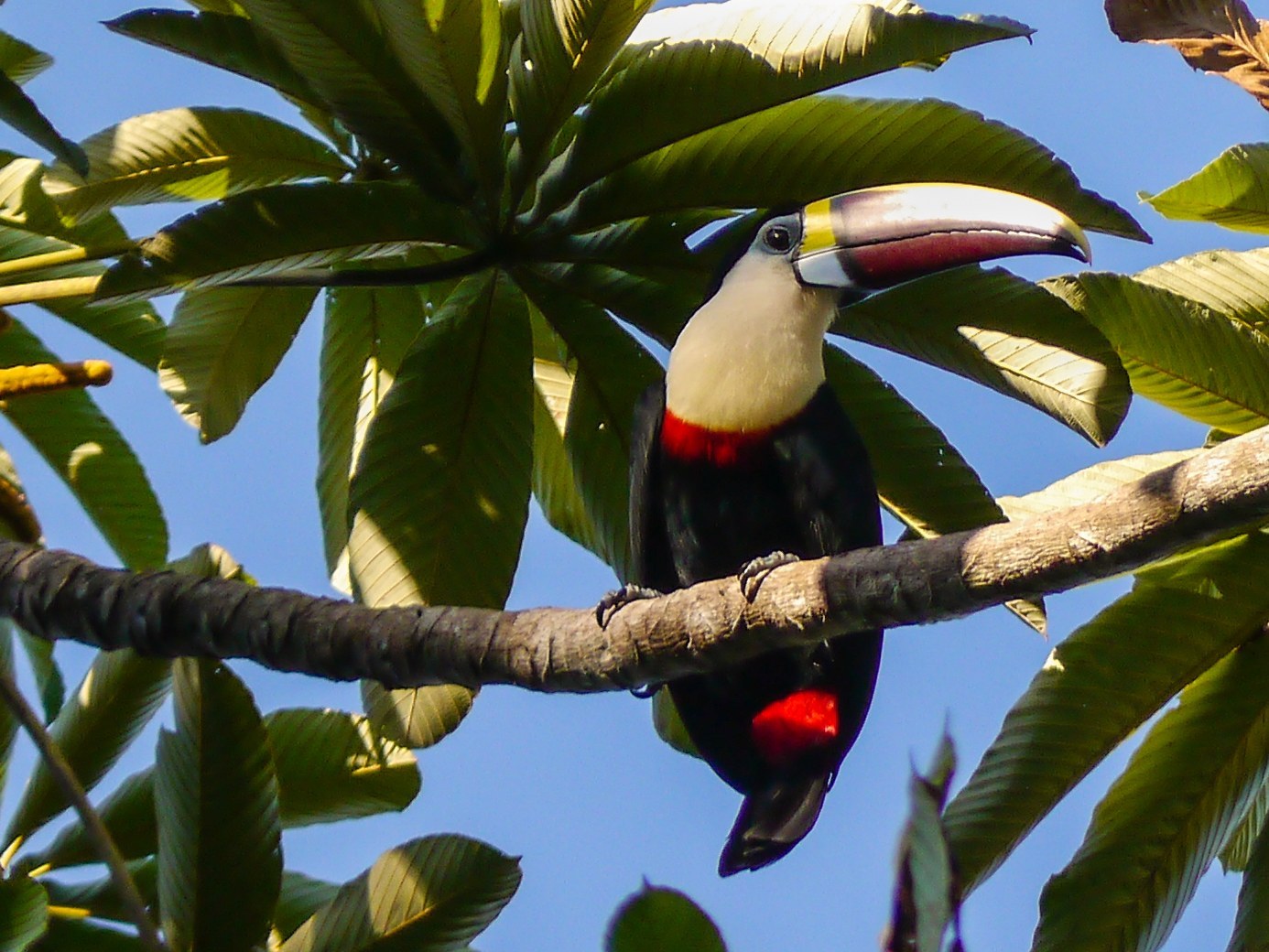
White-throated Toucan
Short rounded contour feathers, short broad wings
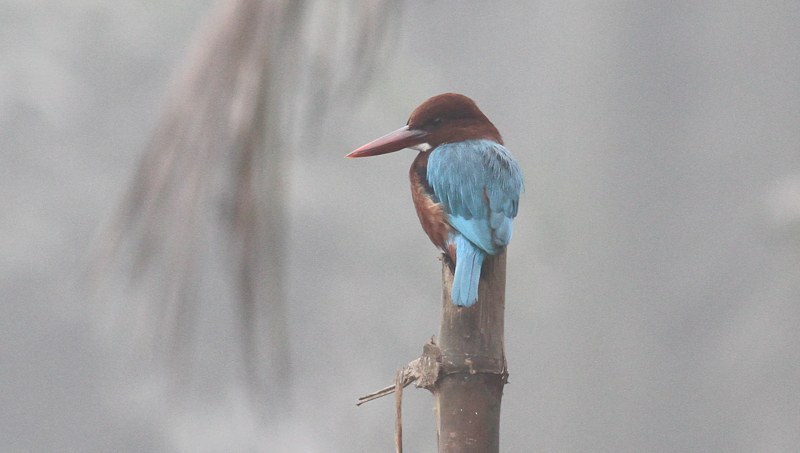
White-throated Kingfisher
Dense contour feathers; broad rounded wings
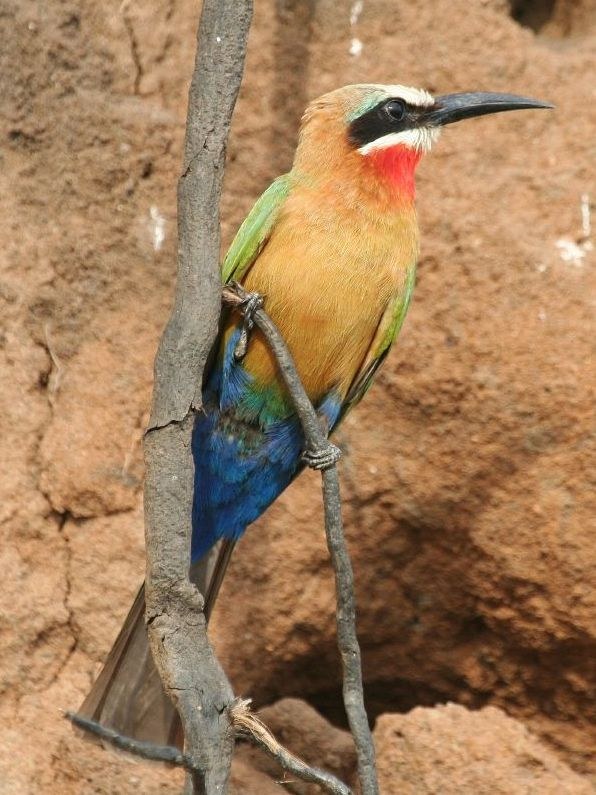
White-fronted Bee-eater
Sleek contour feathers; short tail with slight point

Southern Yellow-billed Hornbill
Slender contour feathers, moderate flight feathers
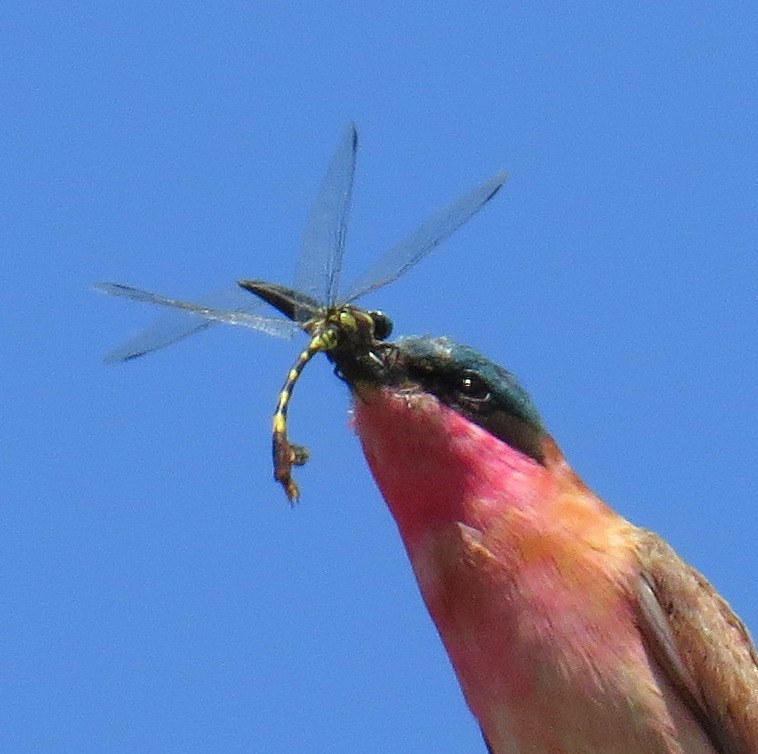
Southern Carmine Bee-eater
Sleek, pointed contour feathers; elongated central tail streamers
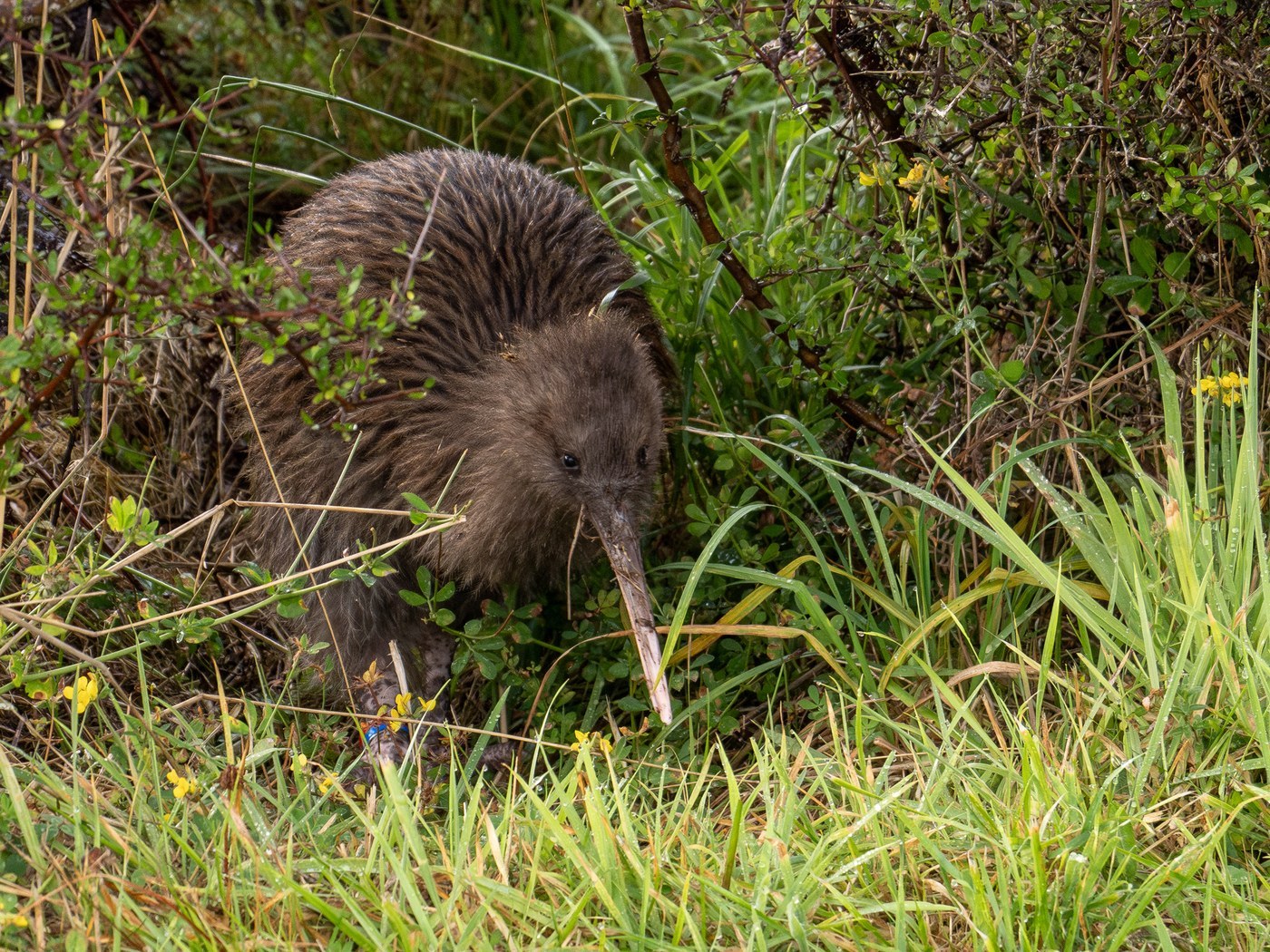
Southern Brown Kiwi
Shaggy, hair-like plumage with loose barbs lacking barbules; flightless, vestigial wings hidden beneath body feathers

Somali Ostrich
Loose, soft plumes lacking interlocking barbules

Wreathed Hornbill
Dense contour feathers, broad flight feathers

Woodland Kingfisher
Firm contour feathers; broad wing feathers

Russet-crowned Motmot
Dense contour feathers with elongated, racket-tipped central tail feathers