
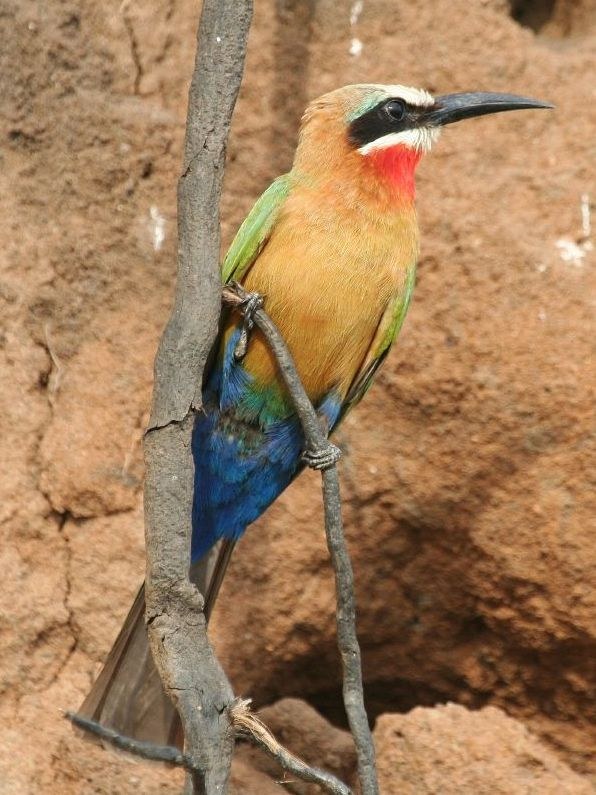
White-fronted Bee-eater
Merops bullockoides
A social African bee-eater notable for its crimson throat and white forehead, nesting in dense colonies along riverbanks.
- Feather type
- Sleek contour feathers; short tail with slight point
- Colours
- Green upperparts, red throat, white forehead, black eye-mask
- Bird size
- Robin-sized, ~22-24 cm
Found a feather like this?
Identify any feather from a photo, free.
Overview
Overview
The White-fronted Bee-eater is a colonial-nesting species found along rivers in eastern and southern Africa, known for its complex social structure involving cooperative breeding and helper birds. It is one of the more social bee-eaters, often seen in large colonies along exposed sandbanks.
- Forms extensive breeding colonies in riverbanks
- Exhibits cooperative breeding with helper individuals
- Named for its white forehead patch
Identifying the Feather
Feather Identification
White-fronted Bee-eater feathers combine green, red, and white tones.
- Forehead: white feathers forming a bright frontal patch
- Throat: deep crimson-red, bordered by a black band
- Upperparts: green, extending across the back and wings
- Underparts: pale buff to whitish, washed pinkish on the belly in some individuals
The white forehead combined with a red throat is distinctive and separates this species from other African bee-eaters that typically show yellow throats.
Plumage & Molt
Plumage Details
Sexes are alike, both showing the white forehead and red throat pattern. Juveniles are duller, with a paler throat lacking the full red coloration and a less defined white forehead. A single annual molt maintains adult plumage.
Habitat & Range
Habitat & Range
Found in eastern and southern Africa along rivers with exposed sandy or earthen banks suitable for colonial nesting, as well as adjacent open woodland and savanna for foraging. Populations are largely resident, with some local dispersal.
Behavior & Field Notes
Behavior & Field Notes
This bee-eater forages for flying insects in short sallies from perches near the colony, often working cooperatively with related family members that help raise young. Nesting burrows are dug into steep riverbanks, sometimes in colonies of hundreds of pairs. Calls include a range of chattering and burry notes exchanged within the colony. The white forehead and red throat are the clearest field marks for this species.
Frequently asked questions
What is distinctive about the White-fronted Bee-eater's social behavior?
It breeds cooperatively, with related helper birds assisting parents in raising young within large riverbank colonies.
How can you identify this species by its head pattern?
Look for a bright white forehead patch combined with a deep crimson-red throat bordered by black.
Where does the White-fronted Bee-eater nest?
In burrows excavated into steep sandy or earthen riverbanks, often within large colonies.
How does its throat color differ from other African bee-eaters?
Most African bee-eaters show yellow throats, while this species has a distinctive red throat instead.
White-fronted Bee-eater guides
In-depth guides for identifying and understanding White-fronted Bee-eater.
Other feathers you may enjoy

Common Cuckoo
Flight and body feathers
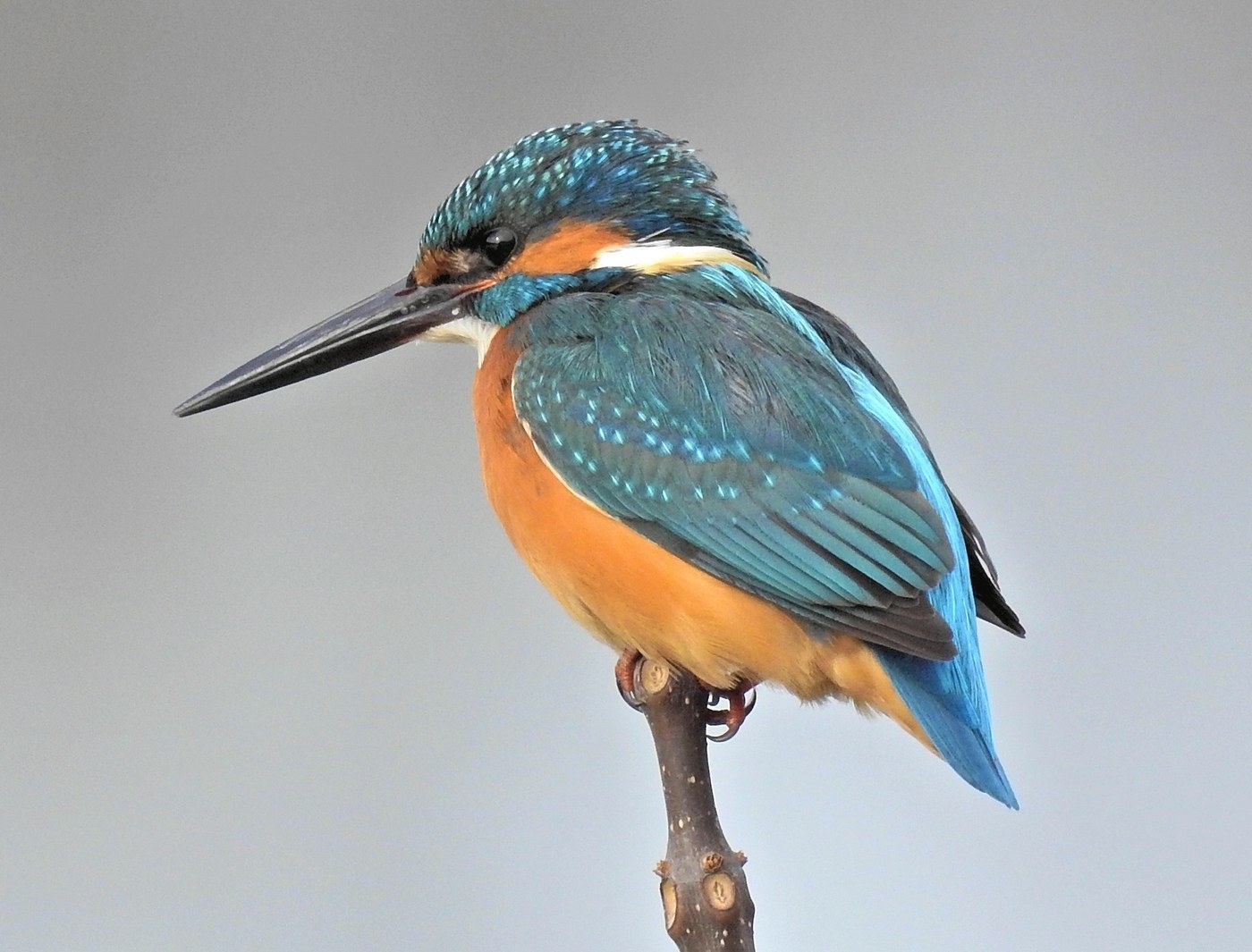
Common Kingfisher
Body (contour) and wing feathers
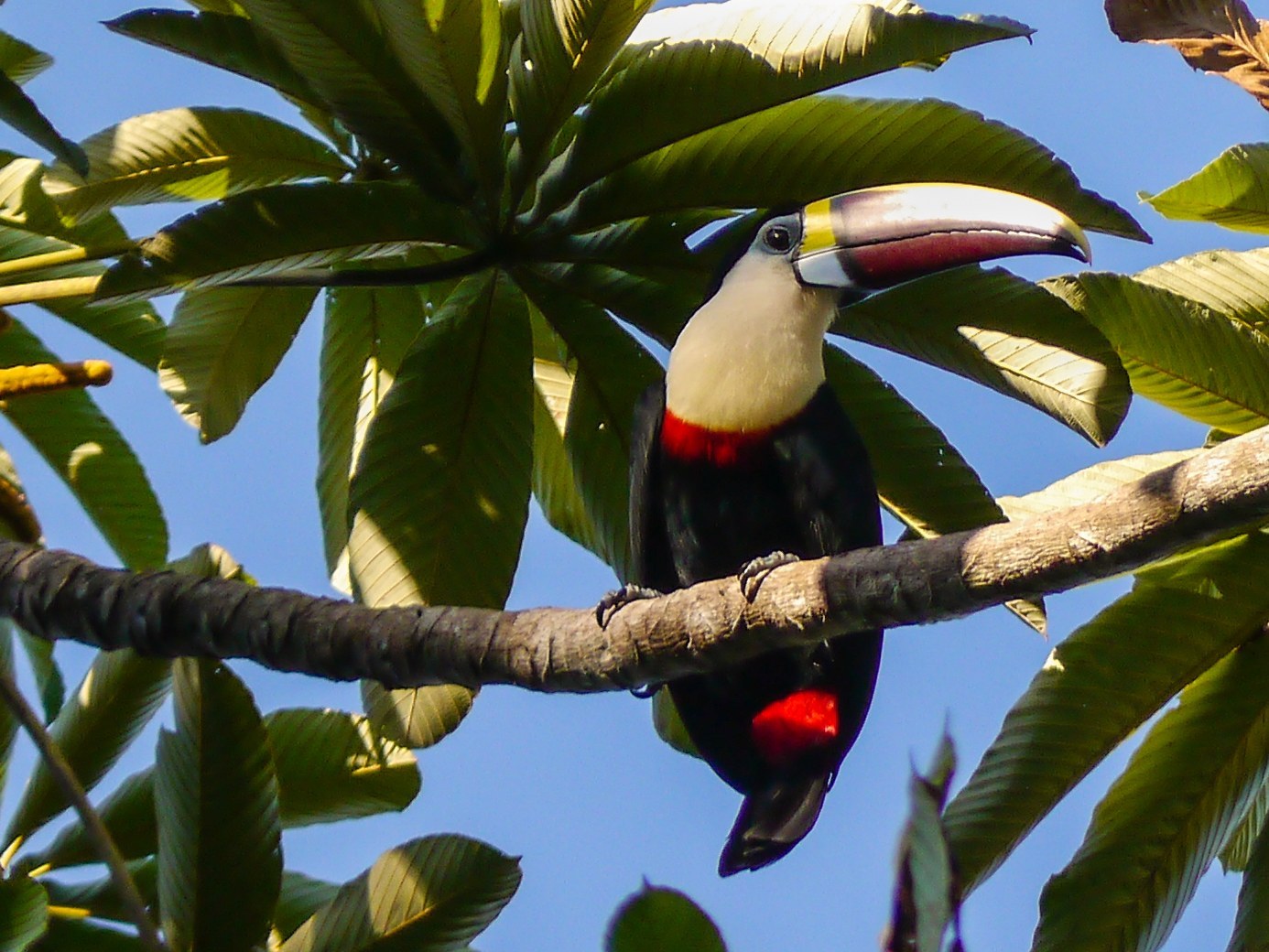
White-throated Toucan
Short rounded contour feathers, short broad wings
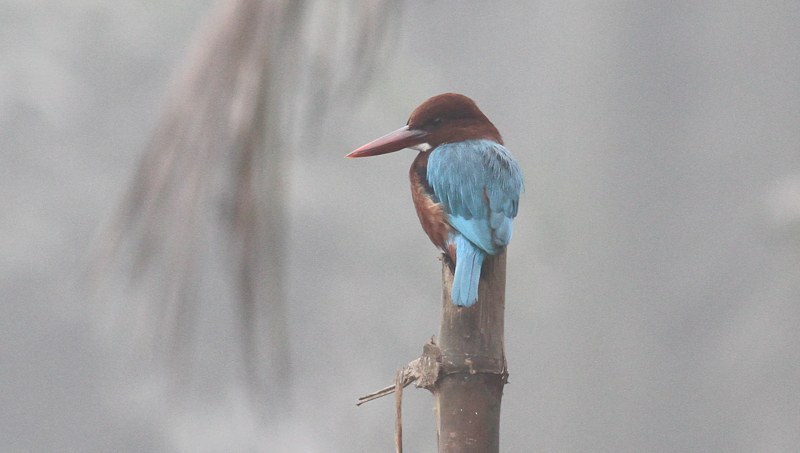
White-throated Kingfisher
Dense contour feathers; broad rounded wings

White-throated Bee-eater
Sleek, aerodynamic contour feathers; elongated central tail streamers

Southern Yellow-billed Hornbill
Slender contour feathers, moderate flight feathers
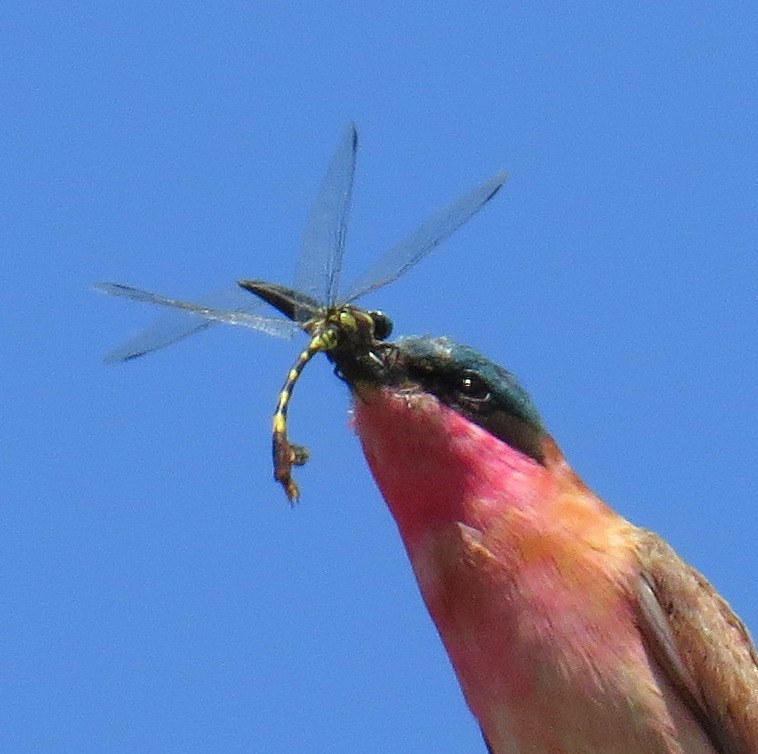
Southern Carmine Bee-eater
Sleek, pointed contour feathers; elongated central tail streamers
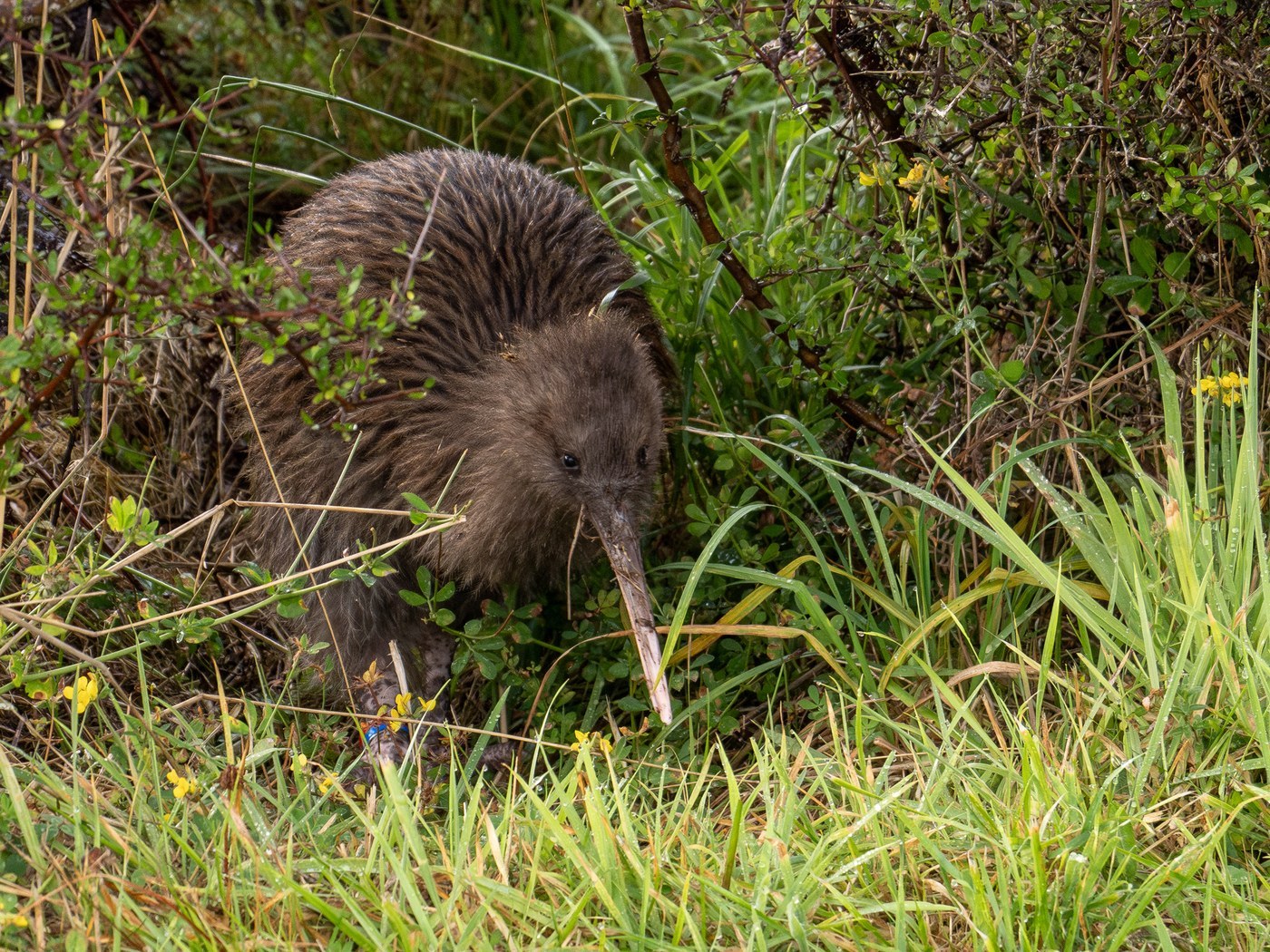
Southern Brown Kiwi
Shaggy, hair-like plumage with loose barbs lacking barbules; flightless, vestigial wings hidden beneath body feathers

Somali Ostrich
Loose, soft plumes lacking interlocking barbules

Wreathed Hornbill
Dense contour feathers, broad flight feathers

Woodland Kingfisher
Firm contour feathers; broad wing feathers

Russet-crowned Motmot
Dense contour feathers with elongated, racket-tipped central tail feathers