

Common Wood Pigeon
Columba palumbus
Europe's largest common pigeon, easily identified by its soft blue-grey feathers, a bold white wing bar, and white neck patches absent in smaller relatives.
- Feather type
- Broad, rounded blue-grey wing feathers with a white bar; soft pinkish breast feathers
- Colours
- Blue-grey overall with white neck and wing patches and a pinkish-buff breast
- Bird size
- Large pigeon, ~40-42 cm
Found a feather like this?
Identify any feather from a photo, free.
Overview
The Common Wood Pigeon is the largest and most familiar pigeon across much of Europe, equally at home in deep woodland and busy city parks. Its bulky build and soft, muted coloring make it instantly recognizable in flight or at rest.
Widespread and abundant, the species has adapted extremely well to human landscapes, often forming large flocks in farmland during the non-breeding season.
A Wood Pigeon feather is generally larger and softer than those of other common pigeons and doves, and the bold white bar across the wing along with white patches on the sides of the neck (in adults) make it one of the easier pigeon feathers to place correctly.
Identifying the Feather
Wing feathers
- Broad, rounded flight feathers in soft blue-grey, with a bold white bar crossing the wing, visible even on isolated covert feathers.
Neck and body feathers
- Adult neck feathers show a distinctive white patch on each side, with iridescent green-purple sheen on the surrounding feathers.
- Breast feathers are soft pinkish-buff, fading to grey on the belly.
Size
- Larger overall than Stock Dove or Rock Dove feathers, reflecting the Wood Pigeon's greater bulk.
Confusion species
Stock Dove and Rock Dove feathers lack the bold white wing bar and white neck patch; a large blue-grey pigeon feather with a clear white band is best attributed to Wood Pigeon.
Plumage & Molt
Adults are blue-grey overall with a pinkish-buff breast, a white patch on each side of the neck bordered by iridescent green, and a bold white bar across the folded wing. The tail is grey with a dark terminal band.
Males and females look alike. Juveniles lack the white neck patches and iridescence, appearing plainer grey until their first molt.
Wood Pigeons molt completely after breeding, usually across summer and into autumn.
Habitat & Range
Wood Pigeons occupy woodland, farmland, parks, gardens, and increasingly urban areas, feeding on a wide variety of seeds, grain, and green plant material. They are highly adaptable and abundant across much of their range.
The species is resident across most of Europe, with some northern and eastern populations moving south or forming large winter flocks in farmland.
Behavior & Field Notes
Wood Pigeons feed mainly on seeds, grain, buds, and leaves, often gathering in large flocks in agricultural fields outside the breeding season. Their flight is strong and direct, with audible wing-clapping during display flights.
They build a flimsy stick nest in trees or shrubs and give a soft, rhythmic cooing song of five notes, often rendered as 'my toe bleeds, Betty'.
A large, soft blue-grey feather with a bold white bar, found in woodland, parks, or farmland, is a reliable sign of Wood Pigeon.
Frequently asked questions
How do I tell a Wood Pigeon feather from a Stock Dove feather?
Wood Pigeon feathers are larger and show a bold white wing bar and, on neck feathers, a white patch — features absent in the plainer Stock Dove.
What color are Wood Pigeon feathers?
Mostly soft blue-grey, with a pinkish-buff wash on breast feathers and white markings on the wing and neck.
Do juvenile Wood Pigeons have white neck patches?
No, juveniles lack the white neck patch and iridescence, developing these features after their first molt.
Is the white wing bar present on all Wood Pigeon feathers?
It is most visible on the covert feathers crossing the closed wing; flight feathers themselves are plain grey without the bar.
Where are Wood Pigeon feathers commonly found?
In woodland, farmland, parks, and gardens across much of Europe, reflecting the bird's broad habitat tolerance.
Common Wood Pigeon guides
In-depth guides for identifying and understanding Common Wood Pigeon.

Common Wood Pigeon identified by the community
Real feathers identified with Feather Identifier.


Other feathers you may enjoy

Victoria Crowned Pigeon
Large lace-like fan crest plumes over dense body contour feathers

Plain Pigeon
Contour feathers, plain and uniformly toned, with a white wing patch

Zenaida Dove
Contour and flight feathers, faint iridescent sheen on neck

Pink Pigeon
Soft contour feathers with graduated tail

Nicobar Pigeon
Long, hackle-like elongated neck feathers with iridescent sheen
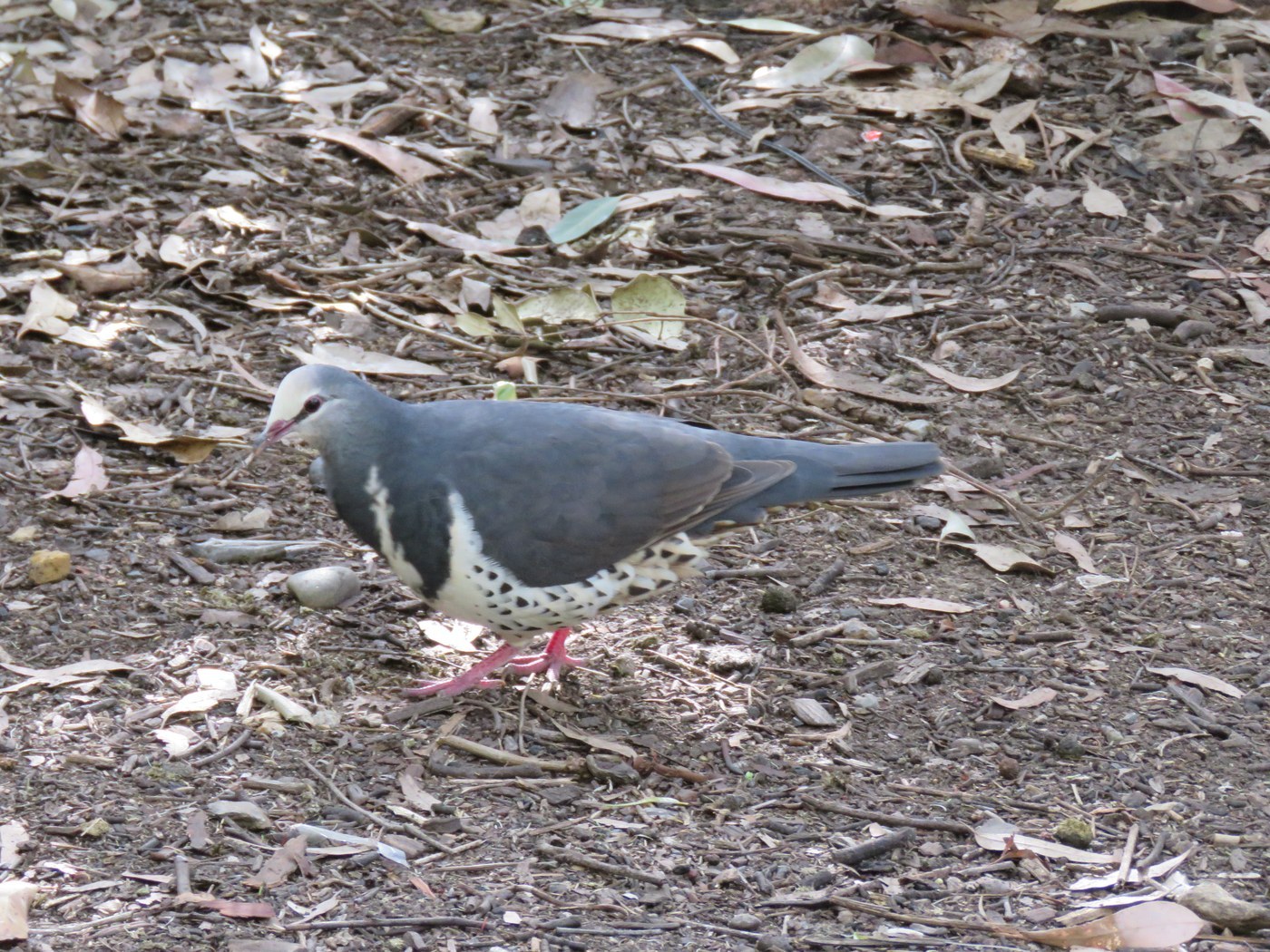
Wonga Pigeon
Dense, soft body contour feathers over a stocky frame

Squatter Pigeon
Dense, cryptic body contour feathers with a bold facial pattern

White-winged Dove
Broad, sturdy flight feathers with a bold white wing stripe

Western Crowned Pigeon
Rounded fan crest plumes over dense soft body feathers

Snow Pigeon
Dense insulating body contour feathers with a bold white rump and belly patch

Zebra Dove
Contour feathers with bold, extensive black-and-white barring

Scaly-naped Pigeon
Contour feathers with iridescent scaled nape pattern