

Common Pheasant
Phasianus colchicus
A large, long-tailed game bird, with males displaying iridescent copper and gold plumage, a glossy green head, and bright red facial wattles, often set off by a white neck ring in some populations. Females are far more subdued, cloaked in cryptic mottled brown for camouflage while nesting.
- Feather type
- Long, stiff, glossy contour feathers with very long, graduated tail feathers
- Colours
- Male iridescent copper-gold and green with red facial skin; female mottled brown overall
- Bird size
- Large, ~60-90 cm including tail
Found a feather like this?
Identify any feather from a photo, free.
Overview
Overview
The Common Pheasant is a large, long-tailed game bird native to Asia and widely introduced across Europe, North America, and elsewhere. Males are strikingly colorful, with iridescent copper, gold, and chestnut body plumage, a glossy dark green or blue-black head, prominent bare red skin around the eye, and a very long, pointed, barred tail; some populations show a white neck ring. Females are cryptically colored in mottled brown, buff, and black, providing camouflage while nesting on the ground.
Identifying the Feather
Feather Identification
- Male body: Iridescent copper, gold, and chestnut tones with dark scalloped edging on the feathers.
- Male head: Glossy dark green or blue-black, in some populations bordered below by a white collar; prominent bare red skin surrounds the eye.
- Male tail: Extremely long, brown, barred with dark bands, tapering to a point.
- Female: Uniformly cryptic plumage - mottled buff, brown, and black over the body, with a shorter but still graduated, barred tail.
- Versus similar game birds: The long, pointed, barred tail and overall body proportions distinguish the pheasant from grouse or partridges, which have much shorter tails.
Plumage & Molt
Plumage Notes
The species is strongly sexually dimorphic, with males far more colorful than females. The extent of the white neck ring and the intensity of iridescent color varies among the many introduced and hybridized populations worldwide. Juveniles resemble females. A single annual molt occurs, with males growing fresh, brighter plumage and elongated tail feathers ahead of the breeding season.
Habitat & Range
Habitat & Range
Native to Asia from the Caucasus to East Asia, the Common Pheasant has been widely introduced across Europe, North America, and elsewhere as a game bird. It is found in farmland, hedgerows, woodland edge, and grassland with cover, and is largely resident and non-migratory where established.
Behavior & Field Notes
Behavior & Field Notes
Common Pheasants forage on the ground for seeds, grain, and invertebrates, usually in fields and along cover edges. Males perform territorial displays including loud crowing calls and wing-whirring. The species prefers to run from danger but can fly explosively for short distances when flushed. Nests are a simple scrape on the ground concealed in vegetation.
Frequently asked questions
How do you tell a male Common Pheasant from a female?
Males show iridescent copper, gold, and green plumage with a long barred tail and red facial skin, while females are uniformly mottled brown with a shorter tail.
Is the Common Pheasant native to Europe and North America?
No, it is native to Asia and has been widely introduced to Europe, North America, and other regions as a game bird.
How does the Common Pheasant escape predators?
It prefers to run from danger, using ground cover, but can fly explosively for short distances when flushed.
Where does the Common Pheasant nest?
It nests on the ground in a simple scrape concealed in vegetation.
Common Pheasant guides
In-depth guides for identifying and understanding Common Pheasant.

Common Pheasant identified by the community
Real feathers identified with Feather Identifier.


Other feathers you may enjoy

Ring-necked Pheasant
Body (contour), tail, and wing feathers

Bornean Peacock-pheasant
Contour and tail feathers with iridescent ocelli

Crested Argus
Extremely elongated, ocellated (eyespot-patterned) tail feathers among the longest of any bird; tall, erectile crest

Grey Partridge
Body and flank feathers

Willow Ptarmigan
Larger, stockier body feathers with warmer rufous tones in summer; tail feathers black year-round

Wild Turkey
Broad, iridescent body feathers and large flight and tail feathers

Bulwer's Pheasant
Contour feathers and elongated white tail feathers
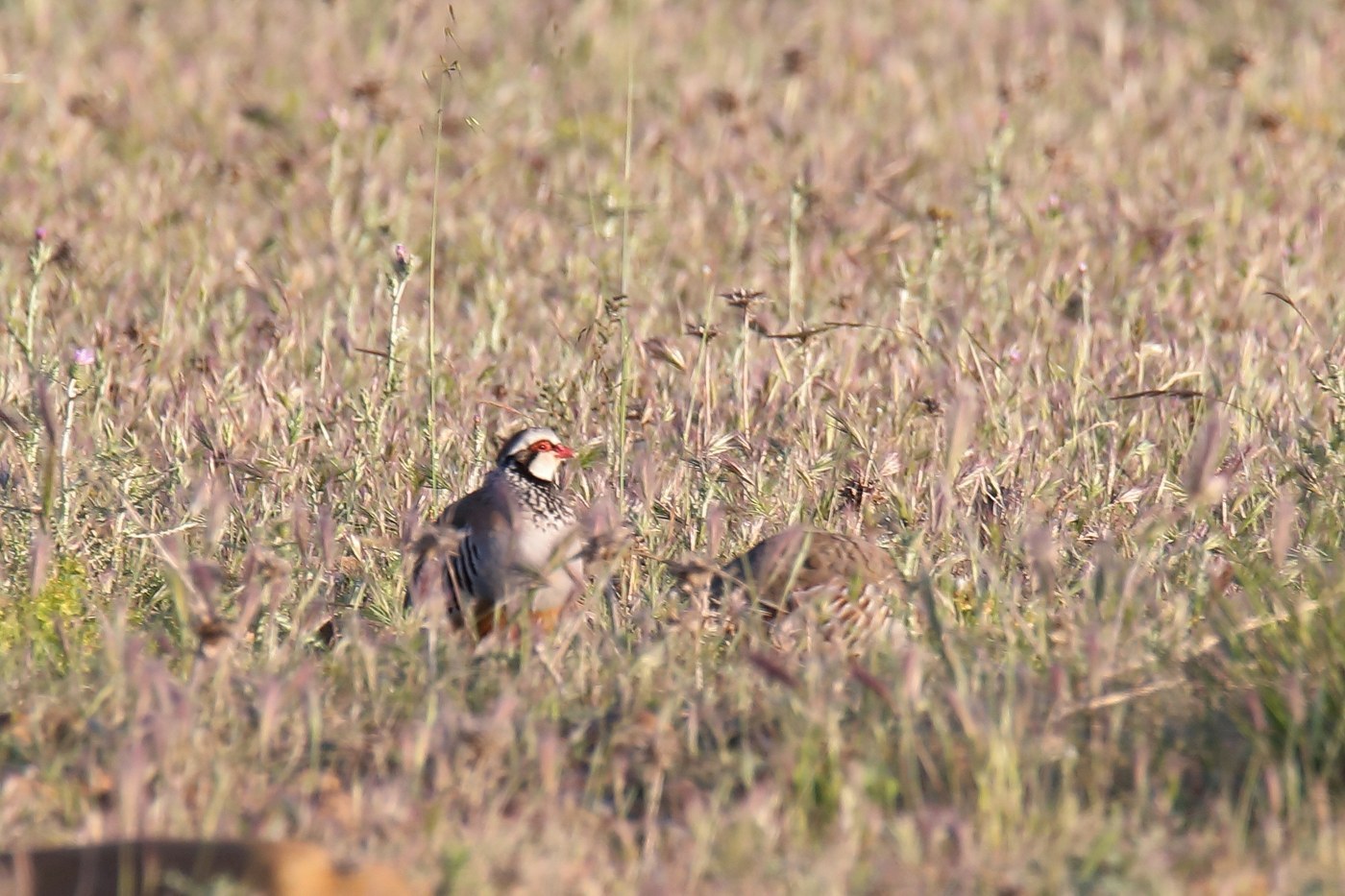
Red-legged Partridge
Flank, body, and flight feathers

White-tailed Ptarmigan
Small body feathers with a tail that stays pure white year-round, unlike other ptarmigan

Edwards's Pheasant
Contour and tail feathers

Sooty Grouse
Dense, plain contour feathers with a pale-tipped, fanned tail

Snow Partridge
Finely vermiculated barred contour feathers