

Temminck's Tragopan
Tragopan temminckii
A vividly colored Asian pheasant with rich orange-red plumage dotted in pearly white spots, best known for the male's inflatable blue throat lappet used in courtship display.
- Feather type
- Contour feathers with white-spotted pattern
- Colours
- Deep red and orange with white, black-ringed spots
- Bird size
- Medium pheasant, ~58-67 cm
Found a feather like this?
Identify any feather from a photo, free.
Overview
Overview
Temminck's Tragopan inhabits the dense montane forests and bamboo thickets stretching from the eastern Himalayas through central and southern China. It belongs to a small group of pheasants, the tragopans, known for their unusual fleshy throat ornaments and horn-like head structures displayed during courtship.
Males are among the most vividly patterned pheasants, combining a deep orange-red body with regularly spaced white spots, while females rely on cryptic brown mottling for camouflage.
Identifying the Feather
Feather Identification
- Body feathers: deep crimson-orange overall, each feather bearing a distinct white spot ringed in black, creating a dense polka-dot pattern
- Head: mostly bare blue-gray facial skin with a dark crown, contrasting sharply with the vivid body plumage
- Throat lappet: a fleshy, inflatable wattle (present as bare skin, not feathers) in blue and orange, inflated during display
- Tail feathers: shorter and more rounded than typical pheasants, brownish with fine barring
- Underparts: buff to whitish with dark spotting, paler than the fiery back and breast
- The bold white-spotted orange-red plumage is diagnostic and unlikely to be confused with other tragopan species, which show different ground colors (such as Satyr Tragopan's deeper crimson or Blood Pheasant's grayer tones)
Plumage & Molt
Plumage Details
Males display the full ornamental plumage: a rich orange-red body densely covered in white, black-ringed spots, a dark crown, and blue facial skin. Females are entirely different in appearance, cloaked in mottled brown, buff, and black for camouflage on the forest floor, with no spotting pattern or bright coloring.
Juveniles resemble females initially, with young males gradually acquiring the orange-red spotted plumage and inflatable throat lappet as they reach maturity. The annual molt renews the vivid spotted feathers, which can fade slightly with wear before replacement.
Habitat & Range
Habitat & Range
Temminck's Tragopan is found in temperate and subalpine forests with dense bamboo or rhododendron understory across the eastern Himalayas, southern China, and parts of northern Southeast Asia. It is largely resident, though some populations shift to lower elevations during winter to avoid heavy snow cover, returning to higher forest habitat for breeding.
Behavior & Field Notes
Behavior & Field Notes
This species is shy and typically solitary or found in pairs, foraging on the forest floor and in low vegetation for seeds, berries, and shoots. Males perform a dramatic courtship display, inflating the throat lappet and extending small blue horn-like structures above the eyes while calling loudly.
Nests are often placed low in trees or dense shrubs rather than directly on the ground, a trait shared among tragopans. The voice includes loud, harsh, wailing calls given especially during the breeding season. In the field, dense bamboo cover rustling followed by a flash of orange-red spotted plumage is a classic sign of this species.
Frequently asked questions
What is the throat lappet used for?
The inflatable blue-and-orange throat lappet is displayed by males during courtship to attract females, often paired with small horn-like projections above the eyes.
How can you tell males and females apart by plumage?
Males show vivid orange-red plumage covered in white, black-ringed spots, while females are cryptically mottled brown and buff with no spotting pattern.
Where do Temminck's Tragopans nest?
Unlike many pheasants, they often nest low in trees or dense shrubs rather than directly on the ground.
What habitat does this species prefer?
It favors montane forest with dense bamboo or rhododendron understory across the eastern Himalayas and central China.
Temminck's Tragopan guides
In-depth guides for identifying and understanding Temminck's Tragopan.

Other feathers you may enjoy

Ring-necked Pheasant
Body (contour), tail, and wing feathers

Bornean Peacock-pheasant
Contour and tail feathers with iridescent ocelli

Crested Argus
Extremely elongated, ocellated (eyespot-patterned) tail feathers among the longest of any bird; tall, erectile crest

Grey Partridge
Body and flank feathers

Willow Ptarmigan
Larger, stockier body feathers with warmer rufous tones in summer; tail feathers black year-round

Wild Turkey
Broad, iridescent body feathers and large flight and tail feathers

Bulwer's Pheasant
Contour feathers and elongated white tail feathers
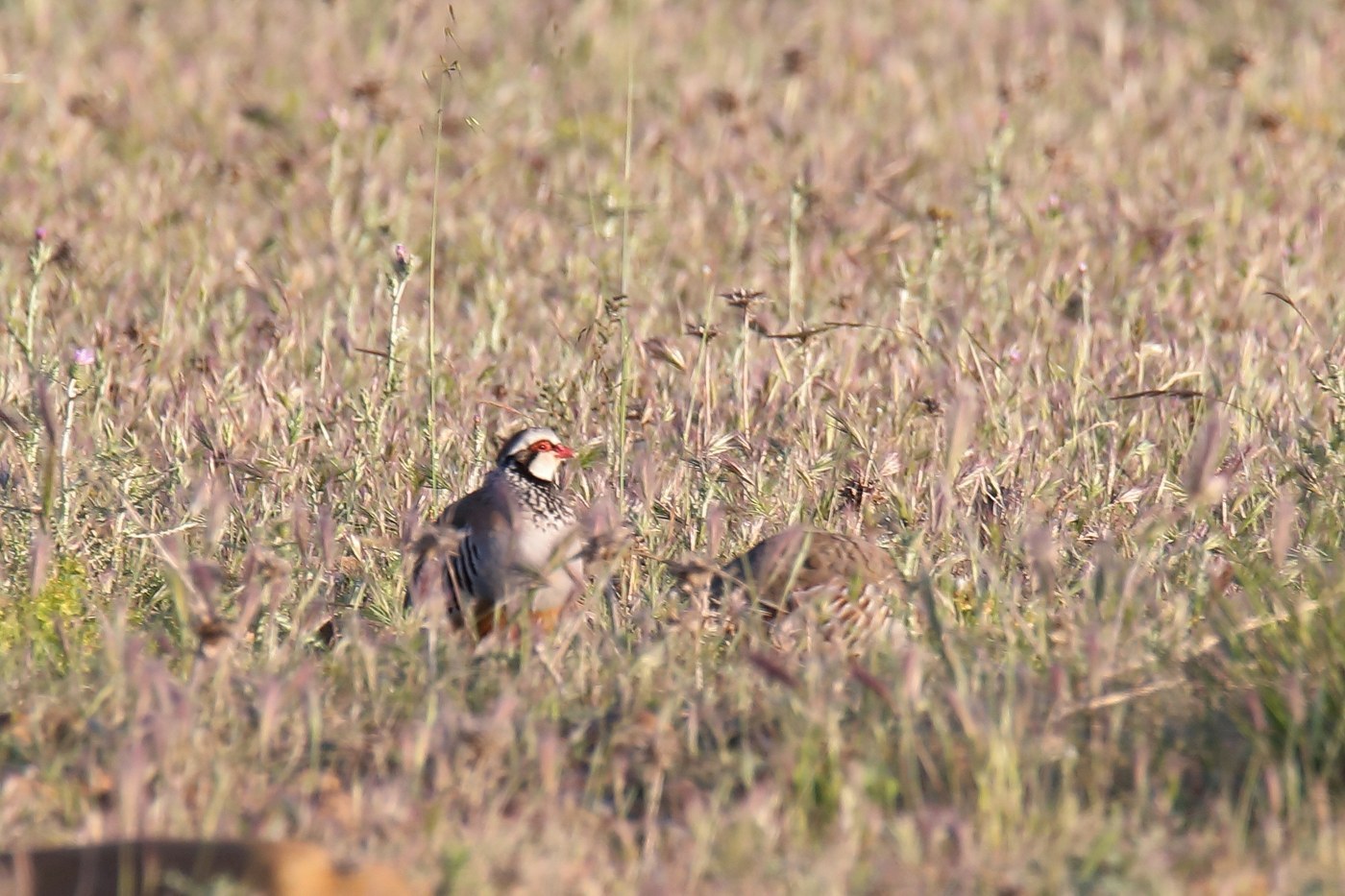
Red-legged Partridge
Flank, body, and flight feathers

White-tailed Ptarmigan
Small body feathers with a tail that stays pure white year-round, unlike other ptarmigan

Edwards's Pheasant
Contour and tail feathers

Sooty Grouse
Dense, plain contour feathers with a pale-tipped, fanned tail

Snow Partridge
Finely vermiculated barred contour feathers