
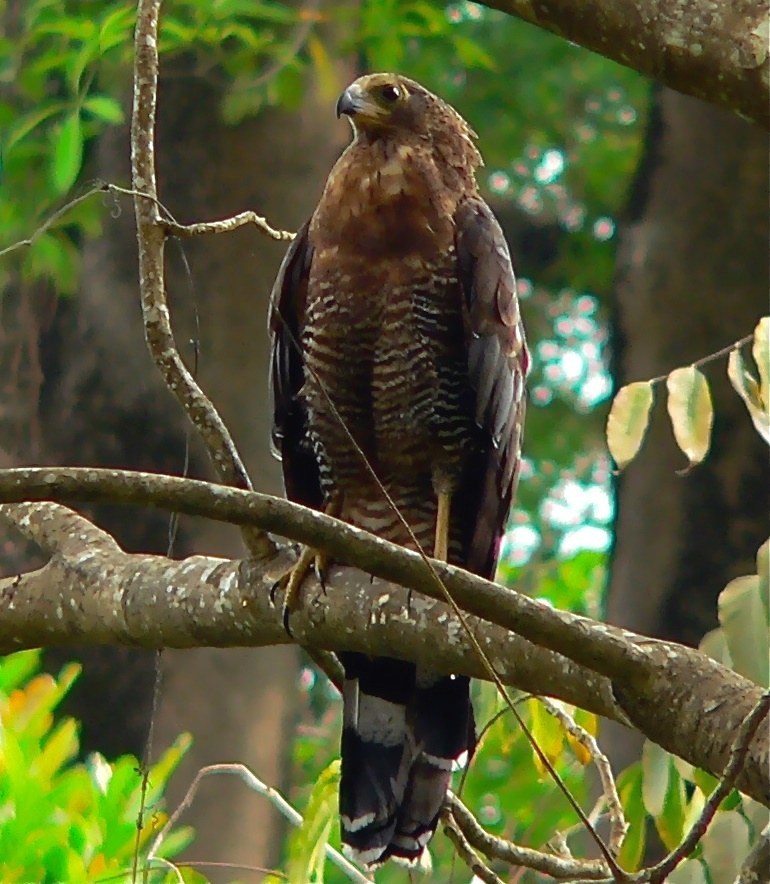
African Harrier-Hawk
Polyboroides typus
A distinctive gray African raptor known for its bare, color-changing facial skin and unusually flexible double-jointed legs, used to probe tree holes and nests for prey.
- Feather type
- Long broad wings, long tail, loose body feathers
- Colours
- Ashy gray body, black-and-white barred tail, bare yellow-orange face
- Bird size
- Large raptor, ~60-66 cm
Found a feather like this?
Identify any feather from a photo, free.
Overview
The African Harrier-Hawk is a widespread raptor of sub-Saharan Africa, notable among raptors for its bare facial skin, which can flush color with excitement, and for legs with unusually flexible joints that allow it to reach into holes and crevices for prey. It occupies forest, woodland, and savanna habitats across much of the continent.
Identifying the Feather
Body feathers are ashy gray overall, with black flight feathers showing pale barring, and the tail is black crossed by one wide grayish-white band. Vent and undertail covert feathers are notably loose and fluffy compared to the sleeker body plumage, an adaptation that may reduce feather damage while probing into cavities. Unlike most raptors, the face is bare skin rather than feathered, a feature evident when examining the head region even from a study skin or photograph rather than an isolated feather.
Plumage & Molt
Adults are ashy-gray overall with black remiges showing pale barring and a single broad band across an otherwise black tail. Juveniles are considerably different, being brown overall and heavily barred, taking a few years to reach the clean gray adult pattern. The bare facial skin can flush from pale yellow to deep orange-red depending on the bird's emotional state.
Habitat & Range
This species occupies forest, woodland edge, and savanna across sub-Saharan Africa, generally avoiding only the driest desert regions and dense unbroken rainforest interior. It is largely resident throughout its range.
Behavior & Field Notes
It forages by probing into tree holes, weaver bird nests, and palm fruit clusters using its unusually flexible, double-jointed legs, taking nestlings, insects, and other small prey inaccessible to most raptors. Flight is slow and somewhat labored with deep wingbeats, and the species gives whistling calls, particularly near the nest, which is a bulky twig platform built high in a tall tree.
Frequently asked questions
What unusual physical trait defines African Harrier-Hawk?
Unusually flexible, double-jointed legs that let it probe into holes, nests, and crevices that other raptors cannot reach.
How can you recognize this species' tail feathers?
Black overall with one broad grayish-white band crossing it.
Is the head feathered in this species?
No, it has bare facial skin that can change color with the bird's excitement level, unlike the feathered heads of most raptors.
What does African Harrier-Hawk eat?
Nestlings, insects, and other small prey extracted from tree holes, nests, and fruit clusters.
African Harrier-Hawk guides
In-depth guides for identifying and understanding African Harrier-Hawk.
Other feathers you may enjoy

Australian Hobby
Long, narrow pointed flight feathers; slender tail feathers

California Condor
Massive flight feathers; long broad primaries; large tail feathers

Brown Falcon
Broad, rounded flight feathers; variable-toned contour feathers
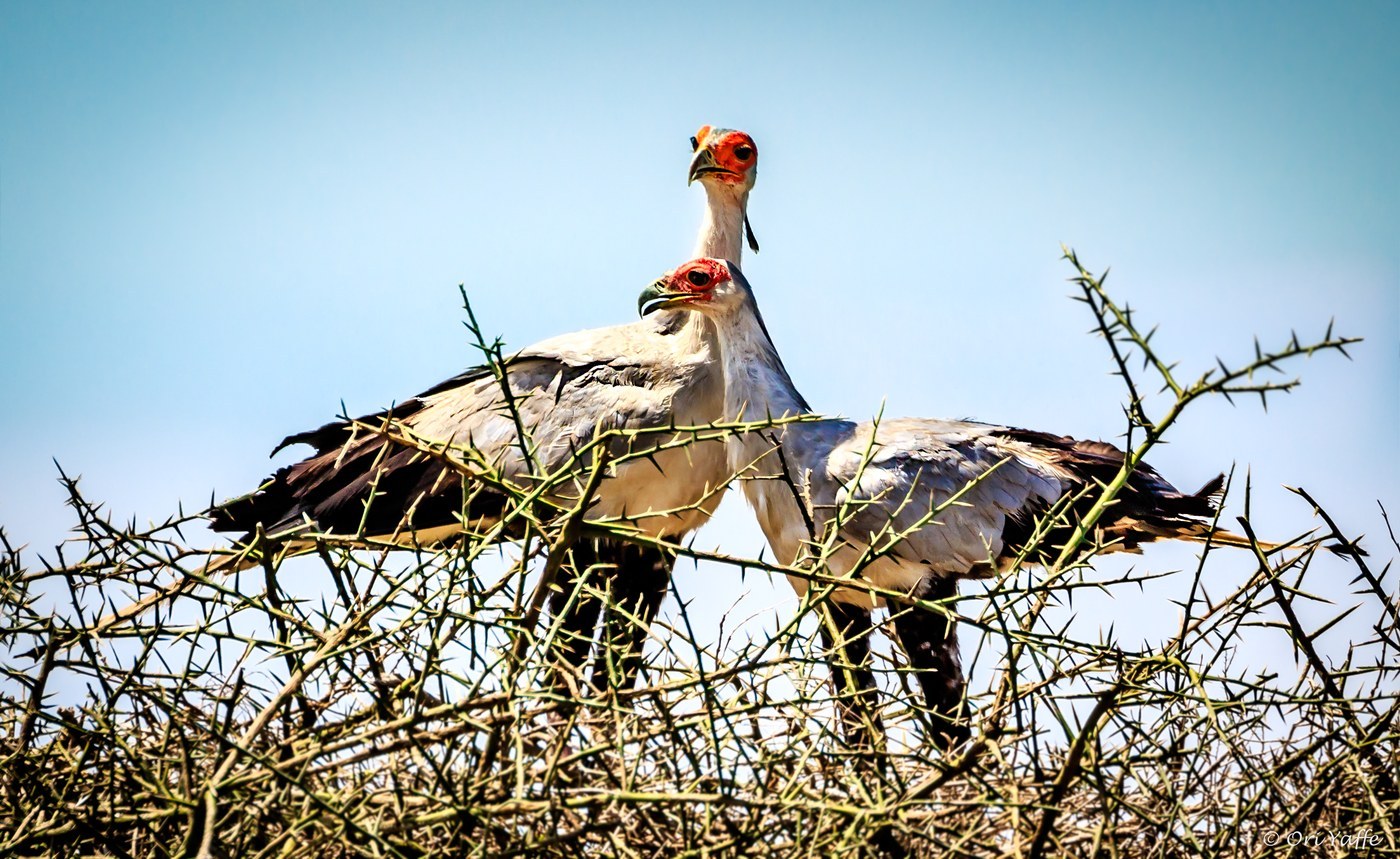
Secretarybird
Long crest feathers; broad flight feathers; elongated central tail feathers

Orange-breasted Falcon
Broad-based pointed flight feathers; bold breast and belly feathers
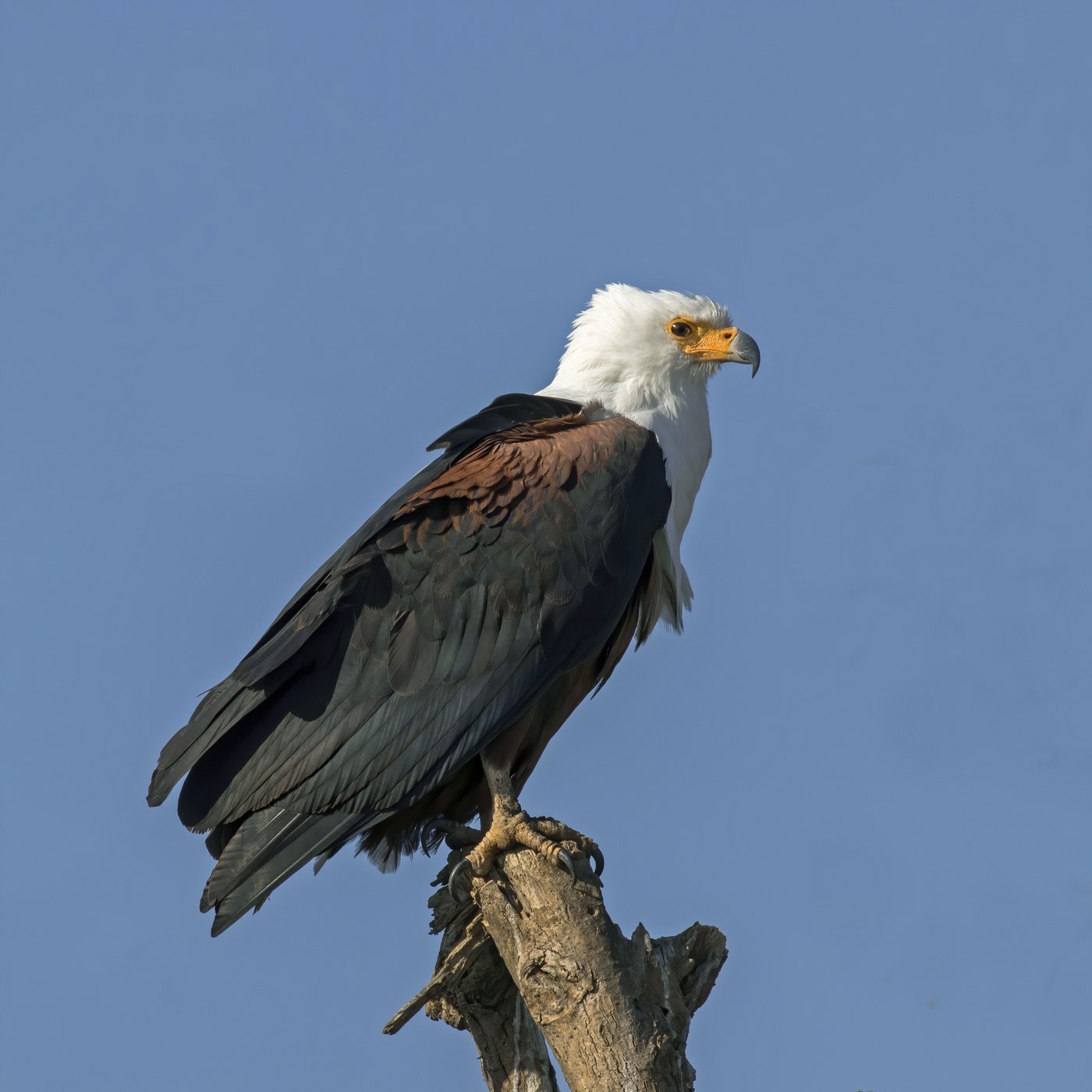
African Fish Eagle
Flight, tail, and body feathers

Amur Falcon
Slender pointed flight feathers; soft slate or orange-buff contour feathers
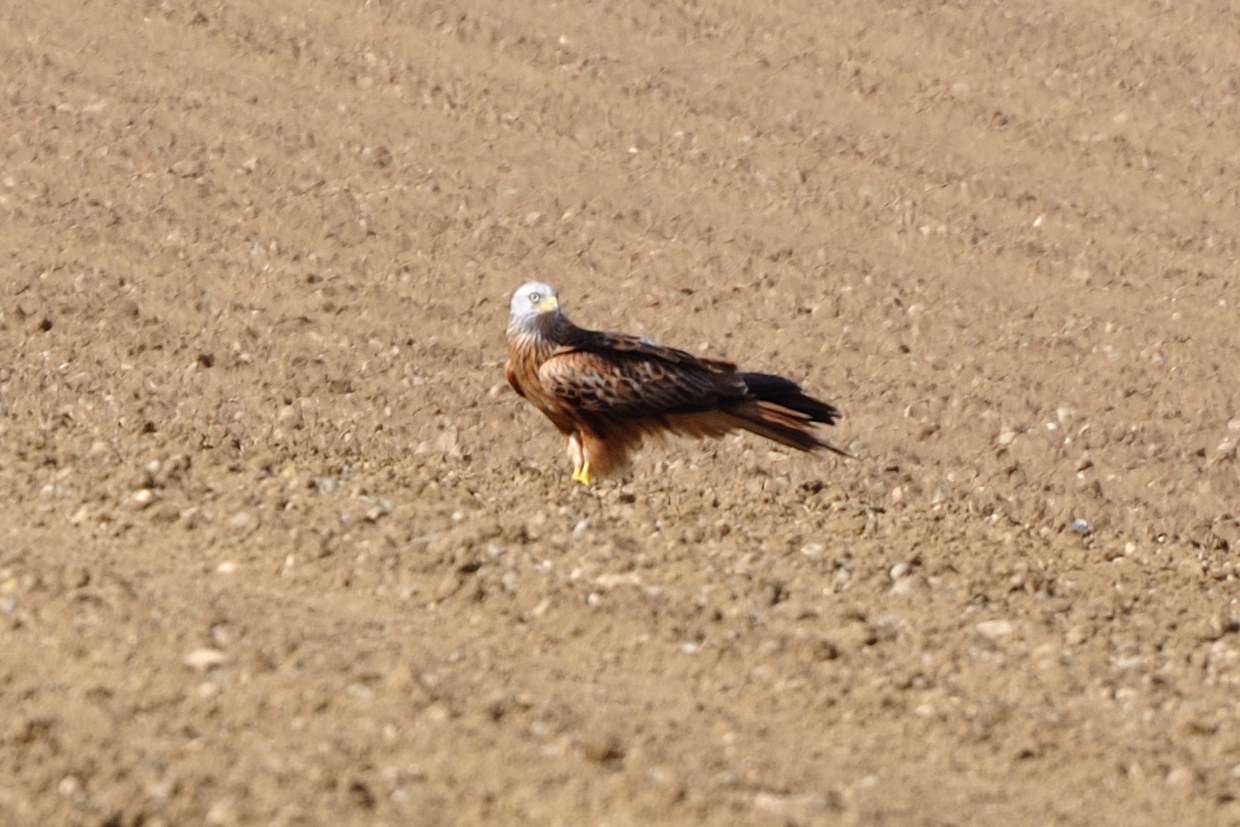
Red Kite
Flight (wing) and tail feathers
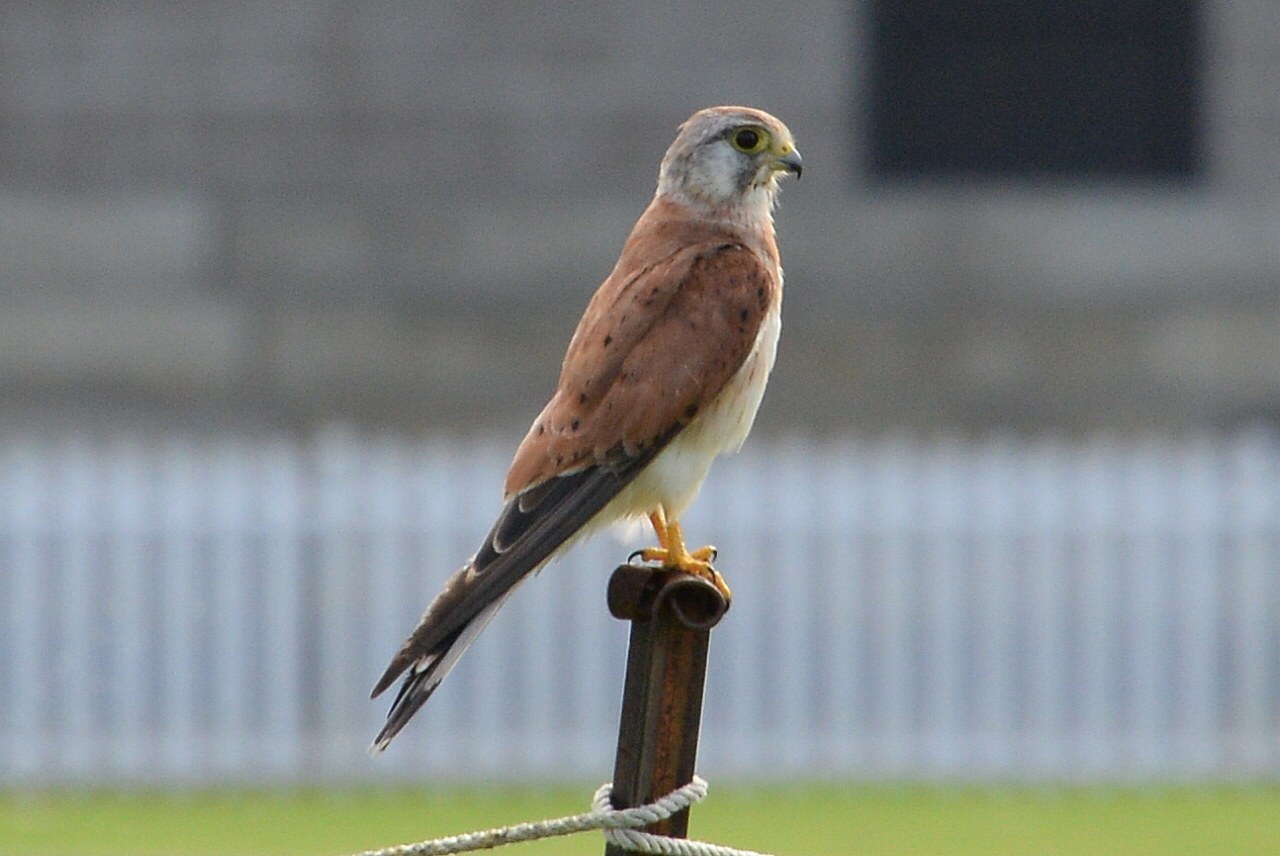
Nankeen Kestrel
Slim pointed flight feathers; lightly marked contour feathers

Andean Condor
Massive flight feathers; broad primaries and secondaries; sturdy tail feathers

Plumbeous Forest Falcon
Short rounded flight feathers; finely barred tail feathers

Sooty Falcon
Long pointed flight feathers; slim tail feathers