
How to Identify African Harrier-Hawk Feathers
A guide to identifying African Harrier-Hawk feathers by their pale ash-gray body plumage and boldly banded black-and-white tail.
Read the full African Harrier-Hawk encyclopedia entry →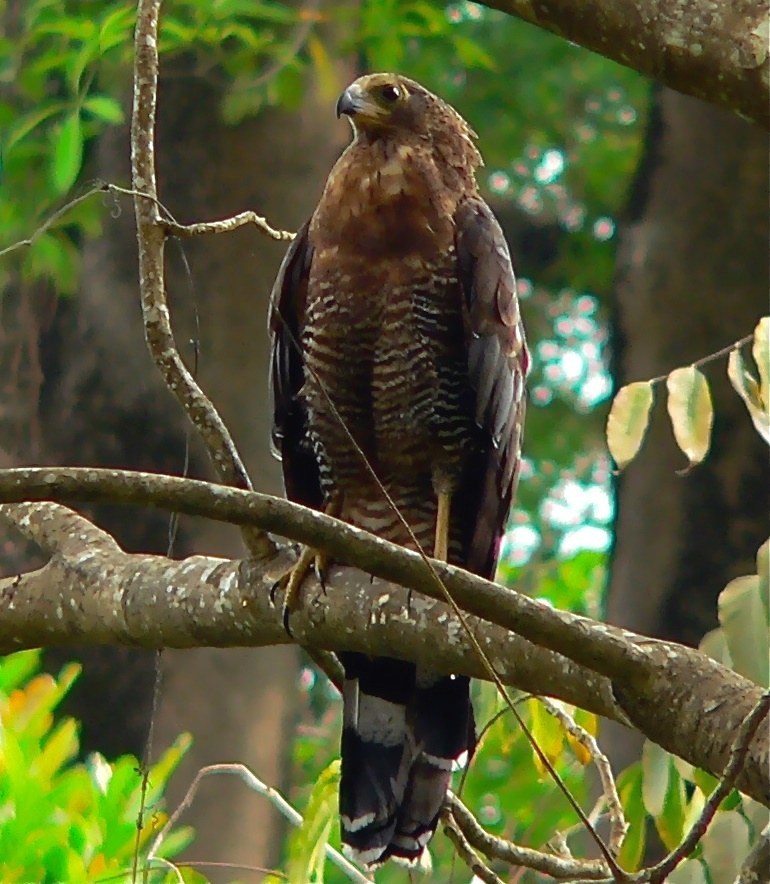
What African Harrier-Hawk's Feathers Look Like
African Harrier-Hawk is a slender, long-legged raptor, and its feathers reflect a soft, understated color scheme punctuated by one bold marking. Body contour feathers are pale ash-gray, finely vermiculated and loosely textured, giving the bird a somewhat soft, almost powdery look compared to other raptors. The tail is the most useful feather for identification: it is barred black-and-white along most of its length but carries one broad, bold black band near the tip, followed by a crisp white terminal edge — a distinctive banding pattern not shared by most other African raptors of similar size. Flight feathers are blackish with fine white barring on the secondaries, and small, loose crest feathers may be found from the nape.
Step-by-Step: Is This Feather From a African Harrier-Hawk?
- Check the tail banding pattern. Look for fine black-and-white barring along most of the feather, then one especially wide black band near the tip, followed by a white edge — this specific combination is the strongest single clue.
- Feel the body feather texture. Pale ash-gray and finely vermiculated, softer and looser than the tighter, more contrasty feathers of many accipiters.
- Examine flight feathers. Blackish with fine white barring on the secondaries rather than heavy rufous barring.
- Look for loose nape feathers. Small, slightly shaggy crest-like feathers from the back of the head support a harrier-hawk origin.
- Rule out bold rufous tones. This species' plumage stays within the gray-black-white range; feathers with strong rufous or chestnut barring point to a different raptor.
Similar Species & How to Tell Them Apart
- African Goshawk and other Accipiters: Typically show rufous or orange barring on the underparts and shorter, more rounded wing feathers, without the single bold black tail band and white tip combination.
- Western Banded Snake-Eagle: Browner overall tones and a tail pattern built around one wide white band rather than the African Harrier-Hawk's fine barring plus single black band near the tip.
- Bat Hawk: Mostly dark blackish-brown overall with a bold white throat patch, lacking the pale gray body and banded tail pattern entirely.
Where & When You'll Find Them
African Harrier-Hawk is widespread across forest edges, savanna woodland, and even suburban gardens throughout sub-Saharan Africa. It is a resident species known for its unusually flexible, double-jointed legs, which it uses to reach into tree cavities, weaver nests, and palm fruit clusters for prey — a habit that means feathers are sometimes found near nesting colonies of other bird species it raids. Molt is gradual and occurs across the year rather than in one tight season.
Frequently asked questions
What's the single best feather to look for?
A tail feather with fine black-and-white barring along most of its length, then one unusually wide black band near the tip and a crisp white edge, is close to unique among African raptors of this size.
How is this different from a hawk with rufous barring?
African Harrier-Hawk stays within gray, black, and white tones. If the feather shows rufous, chestnut, or orange barring instead, you're likely looking at a different accipiter or buzzard species.
Why might I find feathers near a weaver bird colony?
This species is known for raiding weaver and other cavity nests using its unusually flexible legs, so feathers sometimes turn up near active or former colonial nesting sites.
Do juveniles have the same tail banding?
Juveniles are browner overall with less crisp tail banding, so a duller, more diffusely marked tail feather could still belong to a young bird of this species.