
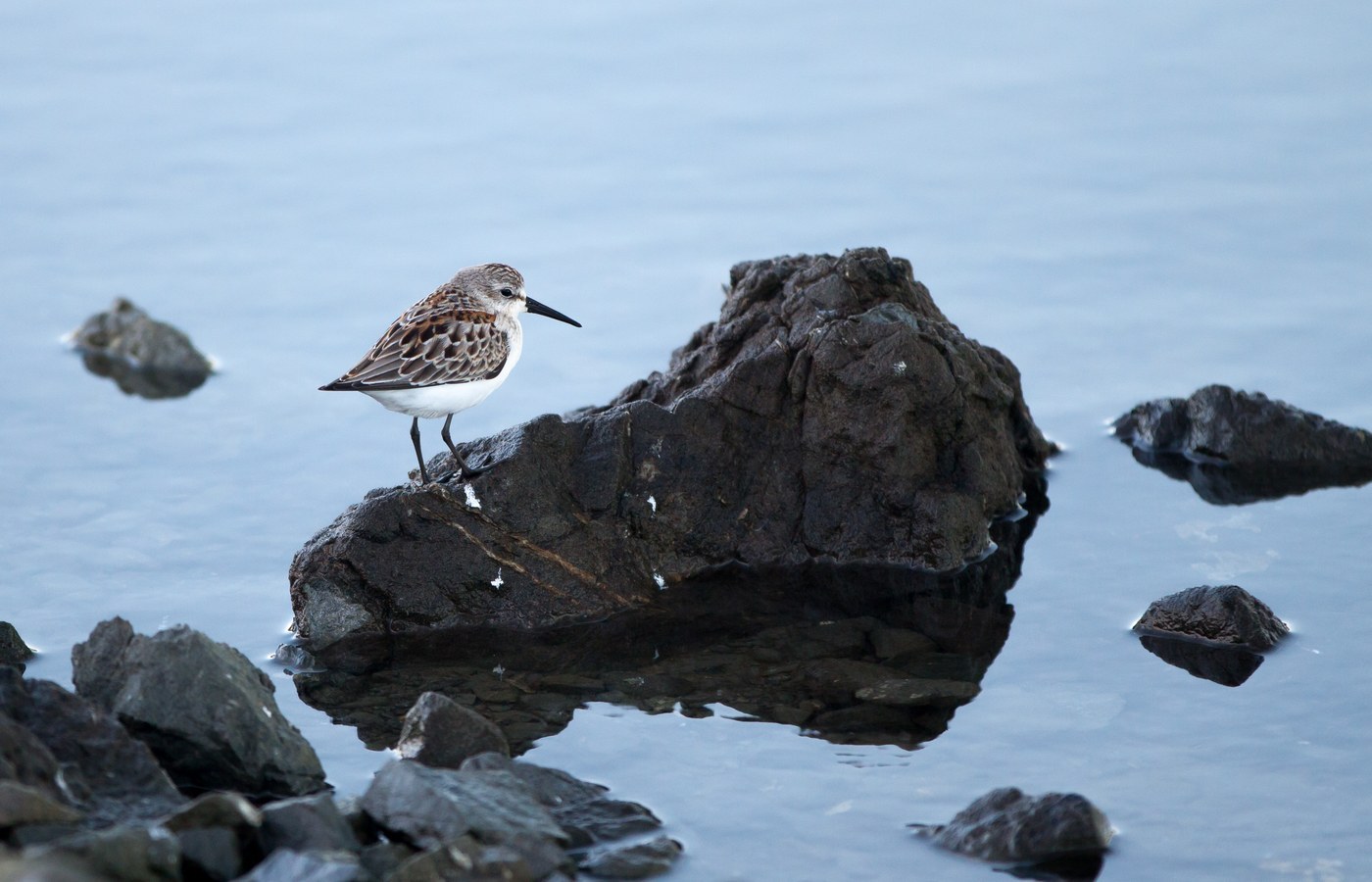
Western Sandpiper
Calidris mauri
A tiny sandpiper with black legs and a long, slightly drooped bill, showing rufous highlights on the crown and scapulars in breeding plumage.
- Feather type
- Contour and flight feathers
- Colours
- Gray-brown with rufous highlights (breeding)
- Bird size
- Very small sandpiper, ~14-17 cm
Found a feather like this?
Identify any feather from a photo, free.
Overview
Overview
The Western Sandpiper is one of the smallest common North American shorebirds, part of the group known informally as "peeps" for their diminutive size and similar plumages. In breeding plumage it shows rufous tones on the crown, ear coverts, and scapulars against otherwise gray-brown upperparts, while non-breeding birds appear plainer gray above and white below. Its relatively long, slightly drooped bill tip is a helpful feature for separating it from other small peeps.
It breeds on Alaskan tundra and migrates in huge numbers along both coasts of North America, often forming dense mixed flocks with other small sandpipers.
Identifying the Feather
Feather Identification
- Breeding upperparts: Rufous tones on the crown and scapular feathers contrast with grayer wing coverts, giving a two-toned back pattern.
- Non-breeding upperparts: Plain gray-brown, lacking the rufous highlights, similar to other small peeps but often slightly paler.
- Bill: Relatively long for its size with a noticeable downward droop at the tip, longer and more curved than the Semipalmated Sandpiper's bill.
- Legs: Black, matching most other small Calidris sandpipers.
- Compared to similar species: The longer, more drooped bill and rufous scapular patches in breeding plumage separate it from the shorter, straighter-billed Semipalmated Sandpiper.
Plumage & Molt
Plumage Notes
Breeding adults show rufous coloring on the crown and scapulars against grayer wing coverts; non-breeding birds are plain gray-brown above and white below, losing the rufous tones entirely. Sexes look similar, though females may show slightly less rufous coloring than males. Juveniles show bright rufous-fringed scapulars creating a distinctive two-toned back pattern, more vivid than in adult non-breeding plumage.
Habitat & Range
Habitat & Range
Western Sandpipers breed on coastal tundra in western Alaska, migrating along both the Pacific and Atlantic coasts of North America, as well as through the interior, to winter along coastlines from the southern United States through Central and northern South America. They favor mudflats, sandy beaches, and coastal marshes during migration and winter.
Behavior & Field Notes
Behavior & Field Notes
This species forages by probing rapidly in soft mud and shallow water for small invertebrates, often alongside other small sandpipers in large mixed flocks. Its call is a thin, high-pitched "jeet" or "cheet," useful for distinguishing it from similar species by ear. Nesting occurs on the ground on Arctic tundra, typically well concealed among low vegetation near water.
Frequently asked questions
What color are Western Sandpiper feathers?
Breeding feathers show rufous tones on the crown and scapulars against gray-brown wing coverts; non-breeding feathers are plain gray-brown above and white below.
How can I tell a Western Sandpiper from a Semipalmated Sandpiper by feather or bill?
The Western Sandpiper typically has a longer bill with a more pronounced downward droop, plus rufous scapular tones in breeding plumage, unlike the shorter, straighter-billed Semipalmated Sandpiper.
Do juvenile Western Sandpipers look like adults?
Juveniles show brighter rufous-fringed scapulars creating a more contrasting two-toned back than the plainer adult non-breeding plumage.
Where would I find a Western Sandpiper feather?
On mudflats, beaches, and coastal marshes along migration routes and wintering areas from the United States through Central and northern South America.
Western Sandpiper guides
In-depth guides for identifying and understanding Western Sandpiper.
Other feathers you may enjoy
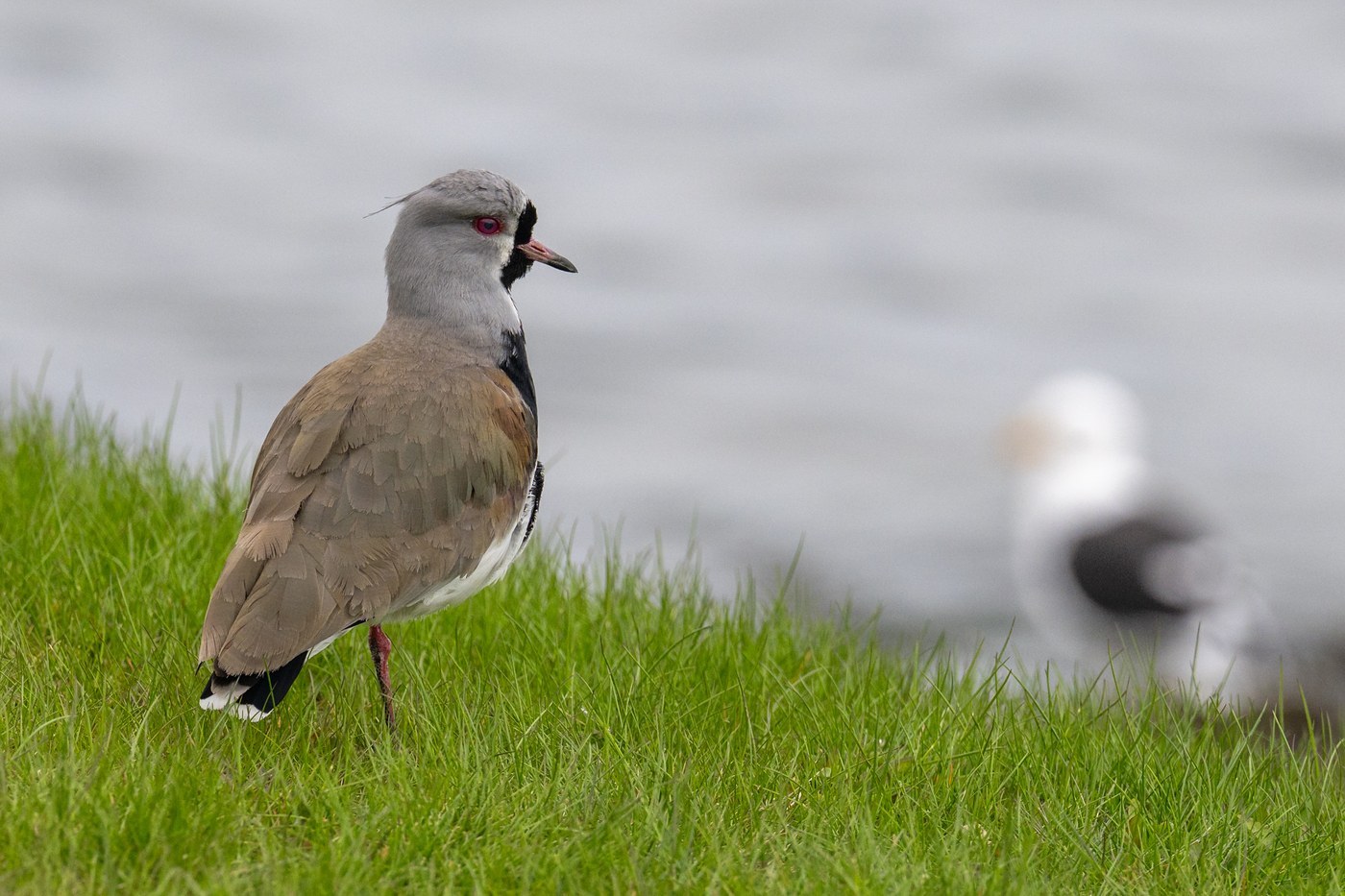
Southern Lapwing
Body, flight, and tail feathers

Jack Snipe
Body and flight feathers

Far Eastern Curlew
Body, flight, and tail feathers

Terek Sandpiper
Body and flight feathers

Wilson's Phalarope
Body and flight feathers
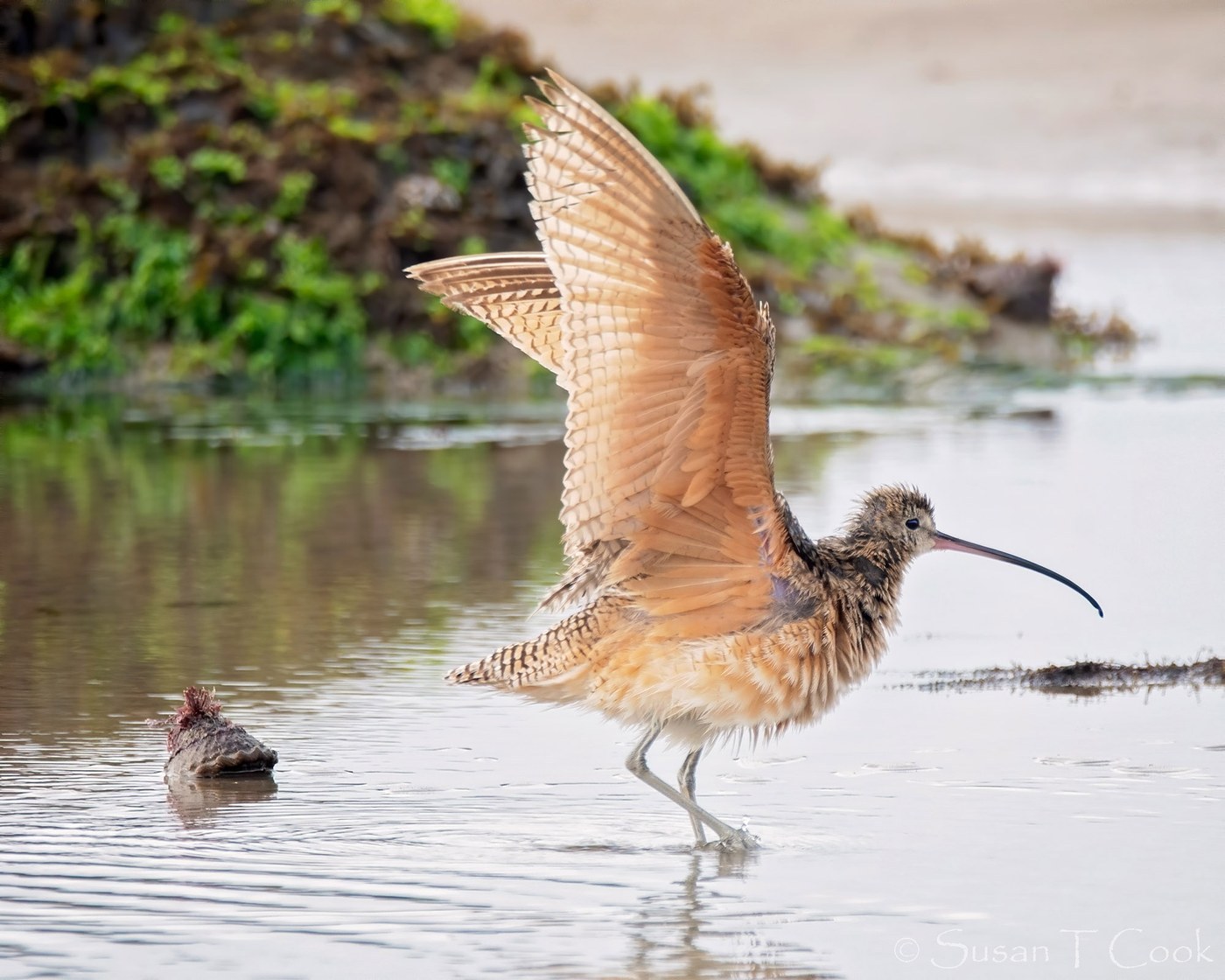
Long-billed Curlew
Body, flight, and tail feathers

Upland Sandpiper
Body, flight, and tail feathers

Red Phalarope
Body and flight feathers

Eurasian Dotterel
Body feathers
Masked Lapwing
Body, flight, and tail feathers
Eurasian Curlew
Body, flight, and tail feathers
Solitary Sandpiper
Contour and flight feathers