
How to Identify Western Sandpiper Feathers
A field guide to identifying tiny Western Sandpiper feathers by their rufous breeding-season scapular edging, plain gray nonbreeding tones, and how to separate them from other confusingly similar 'peep' sandpipers.
Read the full Western Sandpiper encyclopedia entry →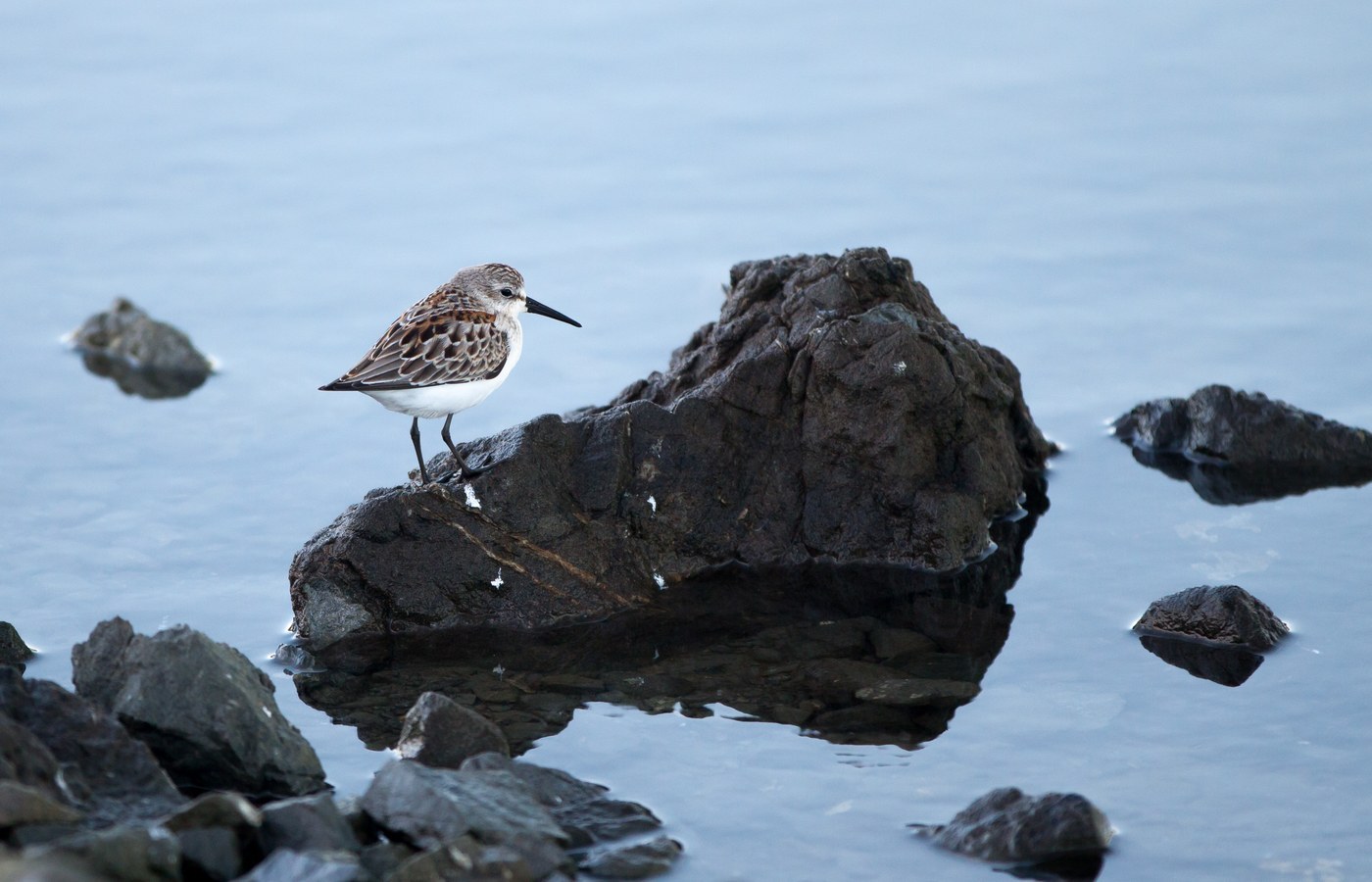
What Western Sandpiper Feathers Look Like
Western Sandpiper is one of the smallest shorebirds ("peeps"), so its feathers are correspondingly tiny — most contour and covert feathers are under an inch, and even primaries rarely exceed 2.5 inches. Plumage changes noticeably by season, which matters for identification.
In breeding plumage (spring/early summer), scapular and upper back feathers show bright rufous or reddish-brown centers and edges, along with a rufous wash on the crown — this rusty tone is the most eye-catching feather trait of the species. The underparts feathers show fine black chevron-shaped spotting along the flanks, unlike the plain white bellies of many other small shorebirds.
In nonbreeding plumage (fall/winter), body feathers turn plain pale gray-brown above and clean white below, losing the rufous tones almost entirely — these feathers look much more generic and require close comparison with other peeps.
Flight feathers are gray-brown with pale fringes when fresh, unbarred, and quite small and narrow given the bird's size. Leg feathering is not diagnostic, but note that this species has black legs, useful contextual information if found with a foot or leg fragment.
Step-by-Step: Is This Feather From a Western Sandpiper?
- Check the size. Anything larger than about 2.5 inches for a flight feather is too big — this is a very small-bodied shorebird.
- Look for rufous edging. A scapular or crown feather with a reddish-rust center/edge in spring or early summer is a strong seasonal clue.
- Check flank feathers for chevron spotting. Fine, dark V-shaped marks on individual feathers support this species over plainer-bellied peeps.
- Note the season. Rufous tones point to breeding plumage (spring migration/early summer); plain gray-brown points to nonbreeding plumage (fall/winter) and requires more caution before concluding species.
- Consider the habitat. Mudflats, sandy beaches, and estuaries along the coasts fit this species well during migration and winter; interior wetlands are more likely other peeps.
Similar Species & How to Tell Them Apart
- Semipalmated Sandpiper — lacks strong rufous tones even in breeding plumage; feathers stay duller gray-brown year-round with only slight warm tinges.
- Least Sandpiper — smaller still, browner overall, and has yellowish-green legs rather than black (a clue if any leg material is present); body feathers lack the crisp rufous scapular edging of breeding Western Sandpiper.
- Dunlin — notably larger, with a longer, more strongly drooped bill and, in breeding plumage, a solid black belly patch rather than fine chevron spotting.
- Sanderling — larger and paler, with a bold white wingstripe visible on the flight feathers that Western Sandpiper lacks.
Where & When You'll Find Them
Western Sandpipers breed on Alaskan tundra and winter along both coasts of the Americas from the US south to South America, favoring intertidal mudflats, sandy beaches, and estuaries during migration and winter. Feathers are most often found at these coastal stopover and wintering sites. The species undergoes a complete molt mostly on the wintering grounds, with a partial molt of body feathers before spring migration — so rufous breeding-type feathers are typically shed near the very end of the breeding season or found on birds staging for migration in late summer, while worn, faded feathers are common on wintering grounds through the colder months.
Frequently asked questions
How small should a Western Sandpiper feather be?
Very small — even the longest flight feathers rarely exceed about 2.5 inches, consistent with one of the smallest shorebird species.
What's the best single clue in breeding season?
Rufous or rust-colored edging on a scapular or crown feather, which is much brighter and more extensive than in most similar peeps.
Can I identify a nonbreeding (winter) feather with confidence?
It's much harder — nonbreeding feathers are plain gray-brown and very similar across several peep species, so location, season, and any leg color evidence become more important than the feather alone.
Does leg color help even without feathers attached?
Yes, if a leg fragment is present — black legs support Western or Semipalmated Sandpiper, while yellowish-green legs point instead to Least Sandpiper.
Where along the coast are feathers most likely?
Tidal mudflats, sandy beaches, and estuary edges, especially during migration stopovers in spring and fall and through the winter along non-breeding coastlines.