
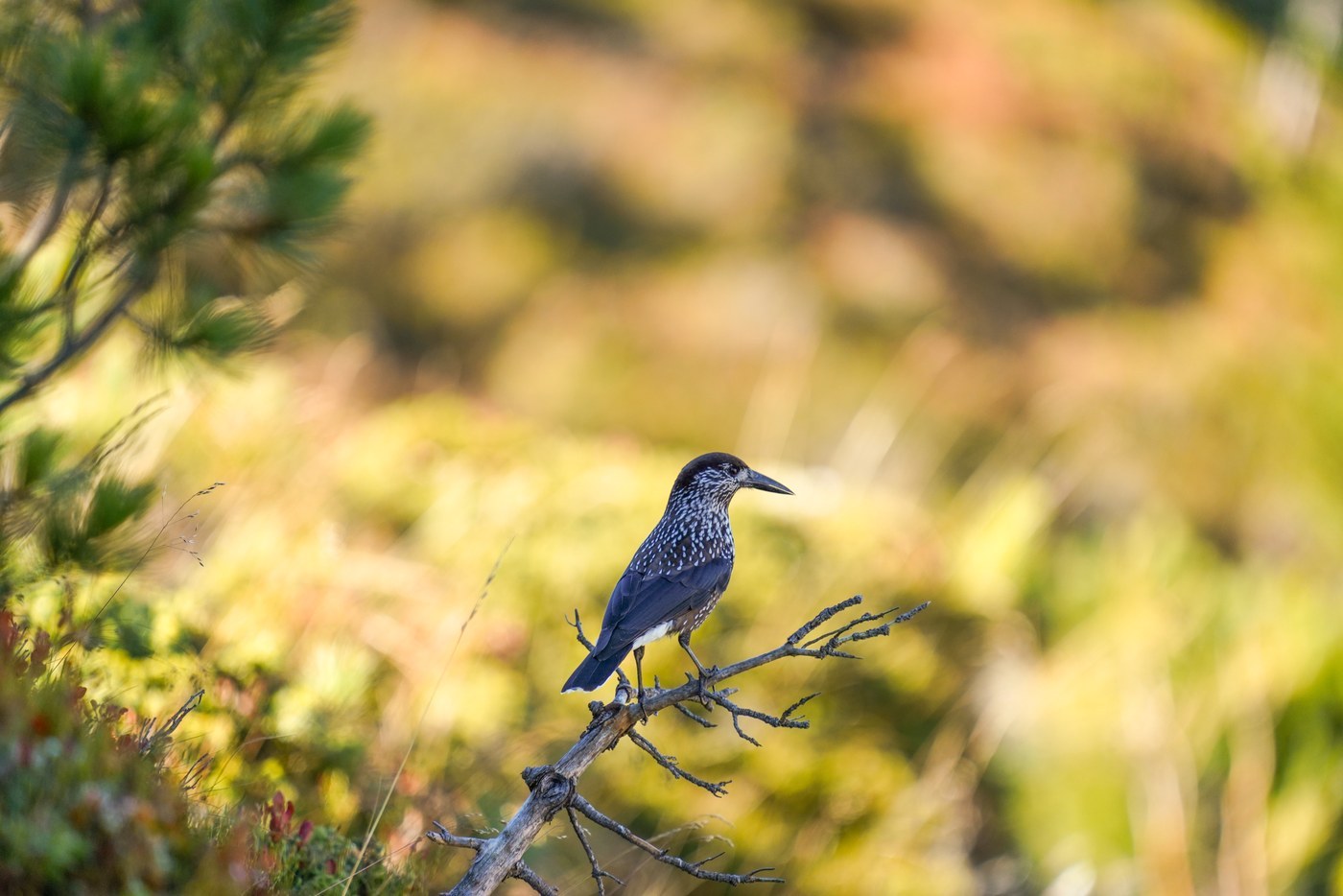
Spotted Nutcracker
Nucifraga caryocatactes
A chunky brown corvid covered in bold white spots, found in coniferous forests across Eurasia, where it caches nuts and pine seeds for winter.
- Feather type
- Contour and flight feathers
- Colours
- Chocolate-brown body densely marked with white spots, dark wings, white-tipped tail
- Bird size
- Jay-sized, ~32-35 cm
Found a feather like this?
Identify any feather from a photo, free.
Overview
The Spotted Nutcracker is a heavyset member of the crow family found across the coniferous and mixed forests of Europe and Asia, from the Alps to Siberia and Japan. Its dark chocolate-brown plumage is covered in crisp white spots, giving it a speckled appearance unlike any other Eurasian songbird. Different populations specialize on hazelnuts, pine seeds, or a mix of both, and the bird's stout bill is shaped accordingly.
Identifying the Feather
Contour feathers on the head, back, and underparts are dark brown, each tipped with a neat white spot, producing an overall speckled pattern. The wings and tail are blackish with a glossy sheen, and the tail shows a narrow white tip and white corners visible from below in flight. Compared to other corvids, no other Eurasian species shows this dense brown-and-white spotting, making plumage alone a reliable identification feature.
Plumage & Molt
Males and females are alike in plumage. Juveniles are similarly spotted but with slightly less crisp markings and a browner overall tone until their post-juvenile molt. Adults have one complete molt annually after breeding, and the white spotting can look slightly duller when feathers are worn later in the year.
Habitat & Range
This species inhabits coniferous and mixed forests across a broad Eurasian range, favoring areas with mature spruce, pine, or hazel. Most populations are resident, though some northern and montane birds move to lower elevations or irrupt southward in years of poor seed crops.
Behavior & Field Notes
Spotted Nutcrackers cache large numbers of nuts or seeds in the ground or in bark crevices, using memory to retrieve them later, a behavior that also disperses tree seeds across the landscape. Flight is direct with steady wingbeats. Calls include a harsh, repeated "krair" or "kra-kra-kra." Nesting occurs early in spring in tall conifers, timed with the availability of stored food for nestlings.
Frequently asked questions
How do I recognize a Spotted Nutcracker feather?
Feathers from the body are dark brown with crisp individual white spots, a pattern not duplicated by any other Eurasian corvid.
What does the Spotted Nutcracker eat?
It relies heavily on cached hazelnuts and pine seeds, which it gathers and stores in large quantities for winter use.
Where is the Spotted Nutcracker found?
It occurs across coniferous and mixed forests from western Europe through Siberia and into East Asia.
Is the Spotted Nutcracker related to Clark's Nutcracker?
Yes, both belong to the same genus, Nucifraga, but Clark's Nutcracker is pale gray while the Spotted Nutcracker is brown with white spots.
Spotted Nutcracker guides
In-depth guides for identifying and understanding Spotted Nutcracker.
Other feathers you may enjoy

Yellow-billed Magpie
Contour, wing, and tail feathers

White-throated Magpie-Jay
Contour, wing, and tail feathers

White-necked Crow
Contour and flight feathers

Slender-billed Crow
Contour and flight feathers

Sinaloa Crow
Contour and flight feathers

Siberian Jay
Contour, wing, and tail feathers

Yellow-billed Blue Magpie
Contour, wing, and tail feathers
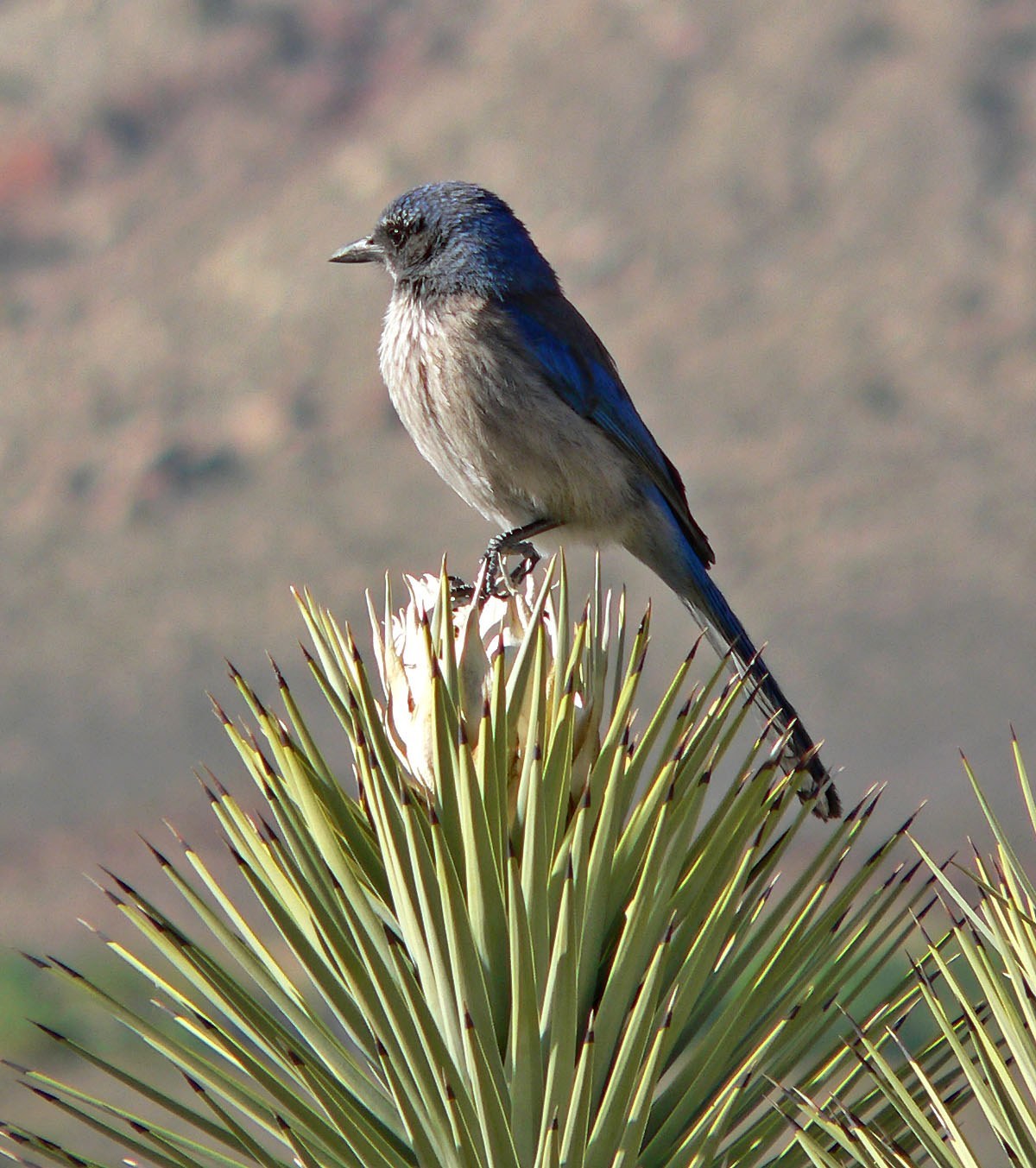
Woodhouse's Scrub-Jay
Contour and flight feathers
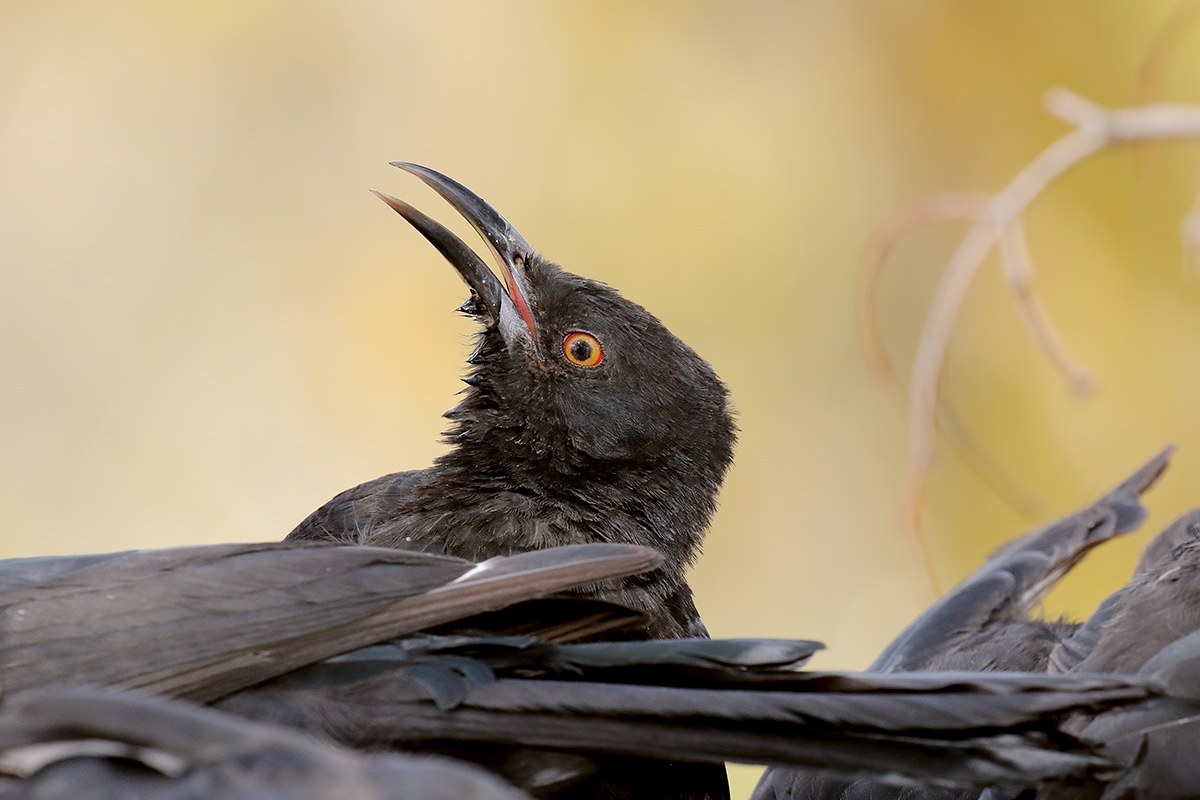
White-winged Chough
Contour and flight feathers

Rufous Treepie
Long, graduated tail feathers; loose body contour feathers

Thick-billed Raven
Contour and flight feathers
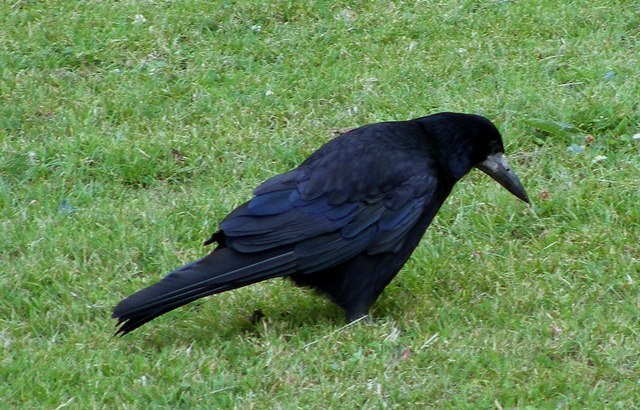
Rook
Glossy purple-black flight and body feathers; loose, shaggy thigh (leg) feathers