

Spotted Dove
Spilopelia chinensis
A common Asian dove instantly recognized by the broad black collar on its hindneck, which is finely spotted with white like a string of pearls.
- Feather type
- Contour feathers, patterned neck-patch feathers with white spotting
- Colours
- Grayish-brown body with a black nape collar densely spotted in white
- Bird size
- Pigeon-sized, ~28-30 cm
Found a feather like this?
Identify any feather from a photo, free.
Overview
The Spotted Dove is a familiar bird across South and Southeast Asia and has also become established in parts of Australia and North America through introductions. It has a soft grayish-brown body with a pinkish breast and a distinctive patch of black feathers on the back and sides of the neck, each feather tipped with a small white spot, giving the collar a spotted or lace-like appearance. It is a confident, adaptable species often seen in urban and suburban settings.
Identifying the Feather
- Nape/neck patch feathers: black feathers each with a rounded white spot near the tip, covering the sides and back of the neck in a broad patch
- Back and wing coverts: plain grayish-brown, unspotted, providing contrast with the patterned neck
- Tail feathers: long and graduated, dark with white corners visible in flight and when the tail is spread
- Breast feathers: soft pinkish-brown with a smooth, unmarked texture
- Compare with the Laughing Dove, which lacks the spotted collar and instead shows a small solid black patch on the upper breast
Plumage & Molt
Sexes are alike in plumage. Juveniles lack the spotted neck patch, appearing plain brown until they mature, at which point the patch develops through subsequent molts. Adults undergo a complete molt after breeding, and the neck-patch feathers are replaced along with the rest of the body plumage.
Habitat & Range
Native to South and East Asia, the Spotted Dove has been widely introduced and now occurs from Hawaii to parts of Australia and the western United States. It thrives in urban parks, gardens, farmland, and open woodland, generally avoiding dense unbroken forest, and is typically a non-migratory resident wherever it occurs.
Behavior & Field Notes
This dove forages on the ground for seeds, walking with a steady bobbing motion, and readily visits gardens and feeding areas near human habitation. Its voice is a soft, repetitive cooing with a distinctive rhythmic cadence. Nests are loose stick platforms placed in trees, shrubs, or on building ledges. It is often seen in pairs or small flocks and tolerates close approach in urban settings.
Frequently asked questions
What is the easiest feather feature to identify this species by?
The black neck patch spotted with small white dots is diagnostic and unlike the plumage of most other common doves in its range.
Do juveniles show the spotted collar?
No, young birds lack the patch entirely and only develop it as they mature after their first molt.
How can I distinguish Spotted Dove feathers from Laughing Dove feathers?
Spotted Dove has a broad white-spotted black collar on the neck, while Laughing Dove has only a small solid black patch on the upper breast and no spotting.
Is the tail pattern useful for identification?
Yes, the long graduated tail with white corners is a helpful supporting feature, especially when the collar is not clearly visible.
Spotted Dove guides
In-depth guides for identifying and understanding Spotted Dove.

Spotted Dove identified by the community
Real feathers identified with Feather Identifier.

Other feathers you may enjoy

Victoria Crowned Pigeon
Large lace-like fan crest plumes over dense body contour feathers

Plain Pigeon
Contour feathers, plain and uniformly toned, with a white wing patch

Zenaida Dove
Contour and flight feathers, faint iridescent sheen on neck

Pink Pigeon
Soft contour feathers with graduated tail

Nicobar Pigeon
Long, hackle-like elongated neck feathers with iridescent sheen
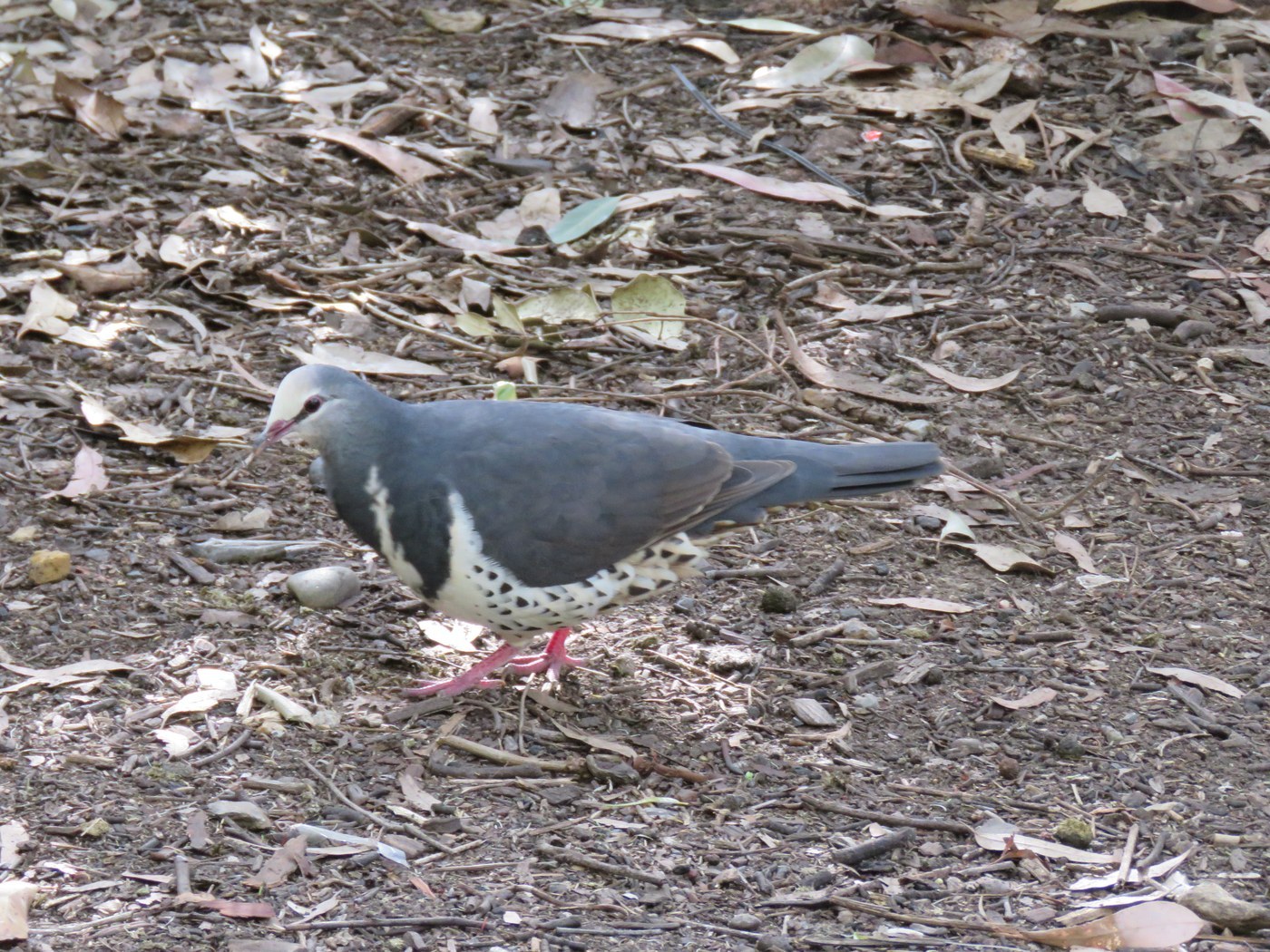
Wonga Pigeon
Dense, soft body contour feathers over a stocky frame

Squatter Pigeon
Dense, cryptic body contour feathers with a bold facial pattern

White-winged Dove
Broad, sturdy flight feathers with a bold white wing stripe

Western Crowned Pigeon
Rounded fan crest plumes over dense soft body feathers

Snow Pigeon
Dense insulating body contour feathers with a bold white rump and belly patch

Zebra Dove
Contour feathers with bold, extensive black-and-white barring

Scaly-naped Pigeon
Contour feathers with iridescent scaled nape pattern