

Ruddy Quail-Dove
Geotrygon montana
A plump, reddish-chestnut forest-floor dove marked with a distinctive pale stripe below the eye, more often heard than seen in dense tropical undergrowth.
- Feather type
- Contour feathers, reddish-brown with a distinctive facial stripe
- Colours
- Rich reddish-chestnut body in males with a pale buffy stripe below the eye
- Bird size
- Small, plump dove, ~23-25 cm
Found a feather like this?
Identify any feather from a photo, free.
Overview
The Ruddy Quail-Dove is a small, ground-dwelling dove found in forest understory from the Caribbean through Central America and much of tropical South America. Males show a rich reddish-chestnut plumage with a purplish sheen on the upperparts and a pale buffy stripe running below the eye across the cheek. Females are duller, more olive-brown overall, retaining a similar but less contrasting facial stripe. It is a shy species, typically encountered walking quietly on the forest floor.
Identifying the Feather
- Male body feathers: rich reddish-chestnut with a subtle purplish iridescent sheen on the back and wing coverts
- Facial stripe feathers: pale buffy-white stripe below the eye, present in both sexes but more contrasting in males
- Female body feathers: duller olive-brown, lacking the strong reddish tone of the male
- Tail feathers: short and rounded, typical of forest-floor quail-doves
- Compare with the Key West Quail-Dove, which shows a bolder white facial stripe and more extensive iridescence on the upperparts
Plumage & Molt
Males and females differ noticeably, with males showing the richer reddish-chestnut coloring and females a duller olive-brown tone. Juveniles resemble females but show additional buff fringing on the body feathers, lost after the first molt. Adults undergo one complete molt annually.
Habitat & Range
This species inhabits the understory and floor of humid forest from the Caribbean islands through Central America and into much of tropical South America. It is generally resident, remaining within suitable forest habitat, occasionally straying to forest edge in search of fallen fruit and seeds.
Behavior & Field Notes
Ruddy Quail-Doves forage quietly on the forest floor, walking with a low, steady gait while picking at fallen seeds and small fruit. Their call is a low, mournful cooing given from a concealed perch. Nests are simple stick platforms placed low in vegetation. This species is often more easily detected by voice than by sight, given its preference for dense understory cover.
Frequently asked questions
What is the most useful feather feature for identifying this species?
The rich reddish-chestnut body plumage combined with the pale buffy facial stripe below the eye is the clearest identification combination in males.
How do female feathers differ from male feathers?
Females are duller and more olive-brown overall, lacking the strong reddish-chestnut tone and iridescent sheen seen in males.
How can this species be told from the Key West Quail-Dove?
The Key West Quail-Dove shows a bolder, more clearly defined white facial stripe and more extensive iridescence on the upperparts.
Where is a molted feather from this species most likely to be found?
On the floor of humid forest understory, since this species rarely ventures far from dense ground cover.
Ruddy Quail-Dove guides
In-depth guides for identifying and understanding Ruddy Quail-Dove.

Other feathers you may enjoy

Victoria Crowned Pigeon
Large lace-like fan crest plumes over dense body contour feathers

Plain Pigeon
Contour feathers, plain and uniformly toned, with a white wing patch

Zenaida Dove
Contour and flight feathers, faint iridescent sheen on neck

Pink Pigeon
Soft contour feathers with graduated tail

Nicobar Pigeon
Long, hackle-like elongated neck feathers with iridescent sheen
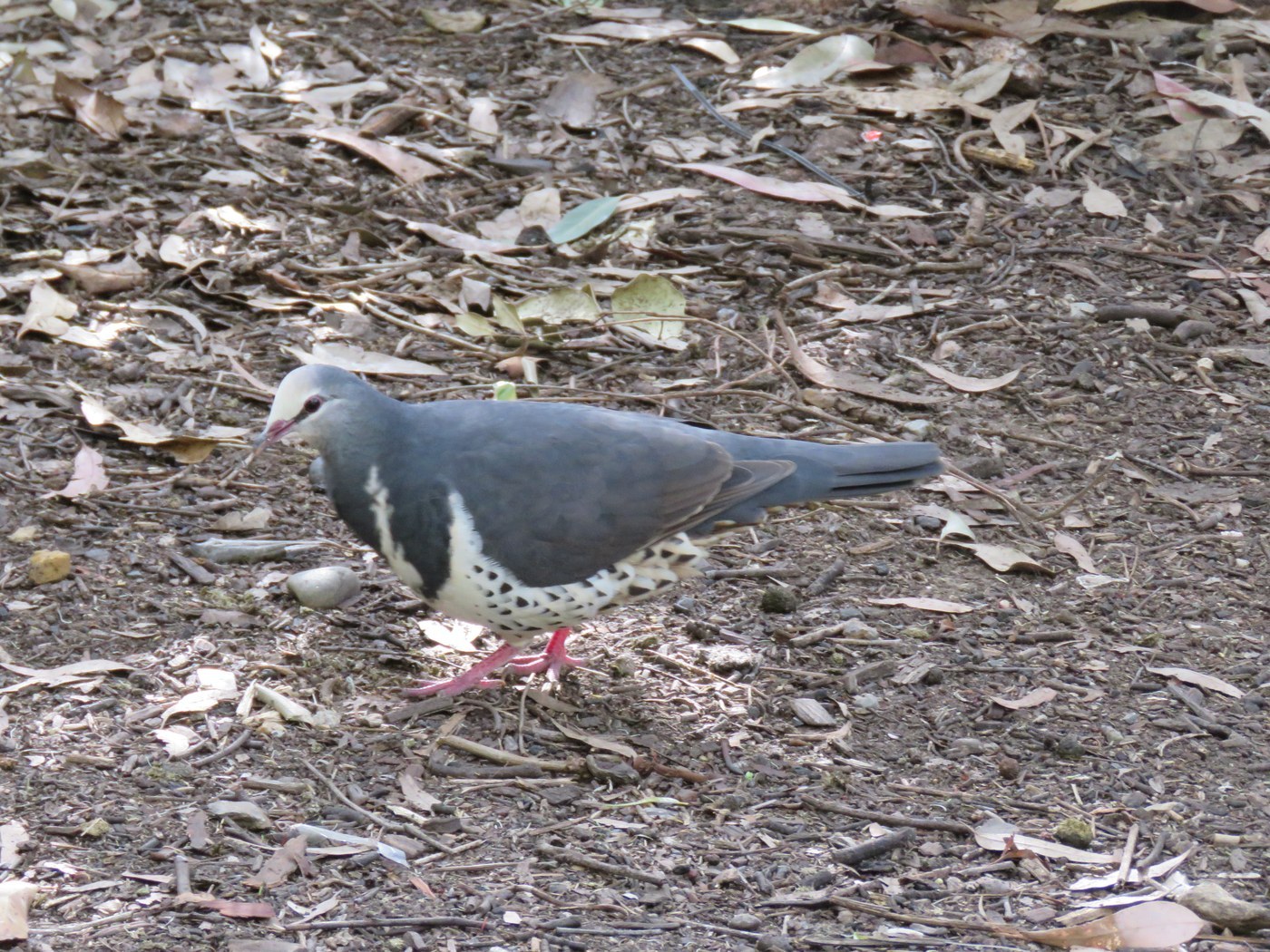
Wonga Pigeon
Dense, soft body contour feathers over a stocky frame

Squatter Pigeon
Dense, cryptic body contour feathers with a bold facial pattern

White-winged Dove
Broad, sturdy flight feathers with a bold white wing stripe

Western Crowned Pigeon
Rounded fan crest plumes over dense soft body feathers

Snow Pigeon
Dense insulating body contour feathers with a bold white rump and belly patch

Zebra Dove
Contour feathers with bold, extensive black-and-white barring

Scaly-naped Pigeon
Contour feathers with iridescent scaled nape pattern