

Ruby-throated Hummingbird
Archilochus colubris
The only breeding hummingbird across most of eastern North America, males carry a brilliant iridescent red throat patch that can flash black in poor light, set against emerald-green upperparts.
- Feather type
- Tiny contour, gorget, and narrow flight feathers
- Colours
- Iridescent green, brilliant red (males), white
- Bird size
- Tiny, ~9 cm
Found a feather like this?
Identify any feather from a photo, free.
Overview
The Ruby-throated Hummingbird is the common breeding hummingbird of the eastern United States and southern Canada. Its feathers are tiny and specialized, with iridescent green covering the crown and back and, in males, a dazzling ruby-red throat patch called a gorget that can appear dull black when not catching direct light. Because of the species' small size, individual feathers are minute and delicate, most often found near feeders, gardens, or flowering plants.
Identifying the Feather
Size and Shape
Hummingbird feathers are extremely small, often only a centimeter or two, with narrow, stiff flight feathers adapted for rapid wingbeats and body feathers that are dense and scale-like.
Color and Pattern
- Crown and back feathers: iridescent green, shifting with light angle
- Male throat (gorget) feathers: brilliant iridescent red, appearing black without direct light
- Underparts: whitish to pale gray
- Female throat feathers: plain whitish, lacking the male's iridescent patch
Distinguishing from Similar Species
Ruby-throated Hummingbird feathers are best distinguished from other eastern hummingbird species by range, since it is the only regularly breeding species across most of the eastern half of the continent. Compared to western species like Black-chinned or Anna's Hummingbird, the male's gorget color when caught in good light is a purer, saturated red rather than the more purple or magenta-pink male gorgets of some western species.
Plumage & Molt
Adult males show an iridescent green back and crown with a brilliant red gorget and whitish underparts; adult females lack the red gorget, showing a plain whitish throat and slightly duller green upperparts. Juveniles resemble females, and young males gradually acquire gorget feathers through their first year. Hummingbirds undergo a complete molt on their wintering grounds, replacing feathers over an extended period distinct from the breeding-season molt pattern of most songbirds.
Habitat & Range
Ruby-throated Hummingbirds breed across the eastern United States and southern Canada, occupying gardens, woodland edges, meadows, and forest clearings with abundant flowering plants. The species is strongly migratory, wintering primarily in Mexico and Central America, with some individuals making a long nonstop flight across the Gulf of Mexico during migration.
Behavior & Field Notes
This species feeds on nectar from tubular flowers and readily visits sugar-water feeders, supplementing its diet with small insects and spiders for protein. Females build a tiny cup nest of plant down bound with spider silk, camouflaged with lichen, and raise young without assistance from males. Calls include soft chip notes, and males perform dramatic U-shaped or pendulum display flights to attract mates. Ruby-throats are highly territorial at feeding sites, often chasing off other hummingbirds despite their tiny size.
Frequently asked questions
What color is a Ruby-throated Hummingbird's throat feather?
In males it is brilliant iridescent red, though it can look dull black when not lit directly; females have plain whitish throat feathers.
How small are hummingbird feathers?
Extremely small, often just a centimeter or two, with narrow flight feathers suited to rapid, hovering flight.
Is the Ruby-throated Hummingbird the only hummingbird in the eastern US?
It is the only species that regularly breeds across most of the eastern United States and southern Canada.
Do hummingbird feathers change with the light?
Yes, the iridescent green and red feathers are structurally colored, meaning their apparent color shifts dramatically depending on viewing angle and light.
Ruby-throated Hummingbird guides
In-depth guides for identifying and understanding Ruby-throated Hummingbird.

Ruby-throated Hummingbird identified by the community
Real feathers identified with Feather Identifier.


Other feathers you may enjoy

Speckled Hummingbird
Small contour feathers with fine speckled underpart markings
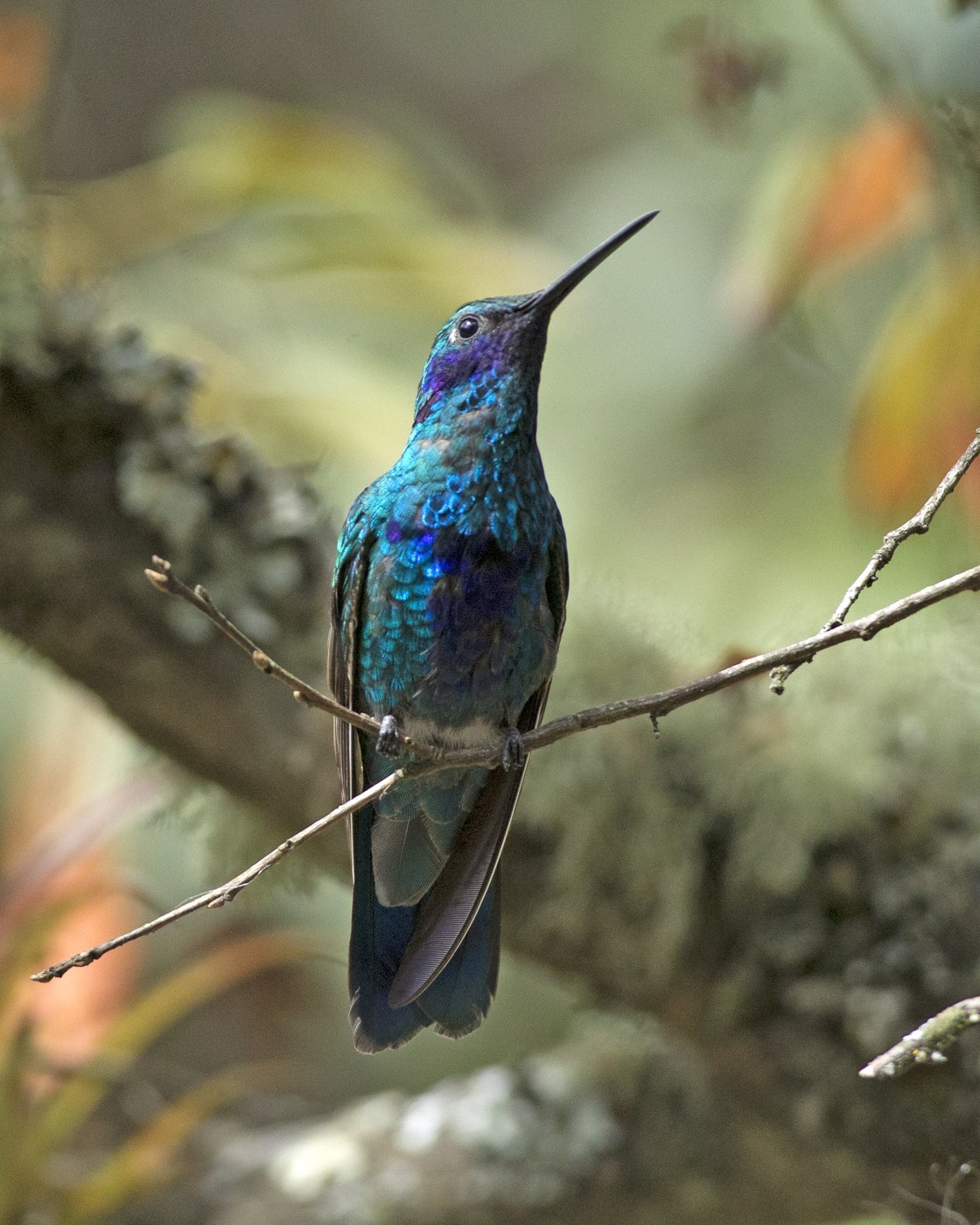
Sparkling Violetear
Iridescent body feathers, large violet ear and chest patches
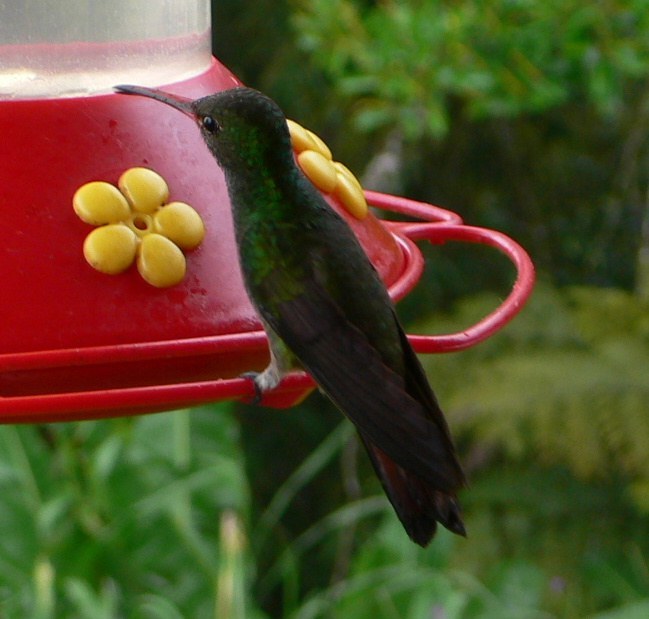
Rufous-tailed Hummingbird
Iridescent throat and breast feathers, rufous tail feathers

Rufous-breasted Hermit
Slightly decurved bill with rufous-washed contour feathers
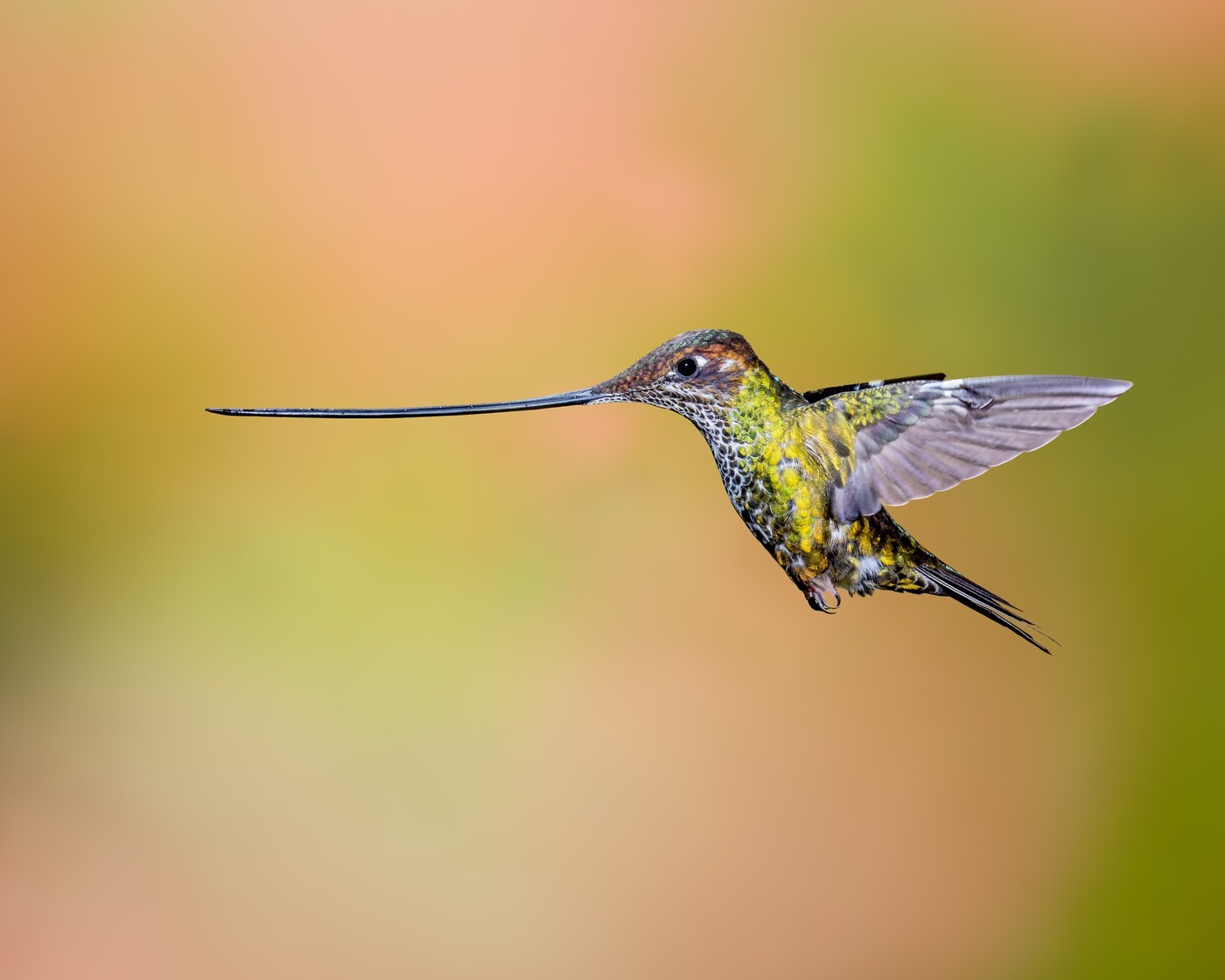
Sword-billed Hummingbird
Iridescent body feathers, extraordinarily long bill (non-feather feature)
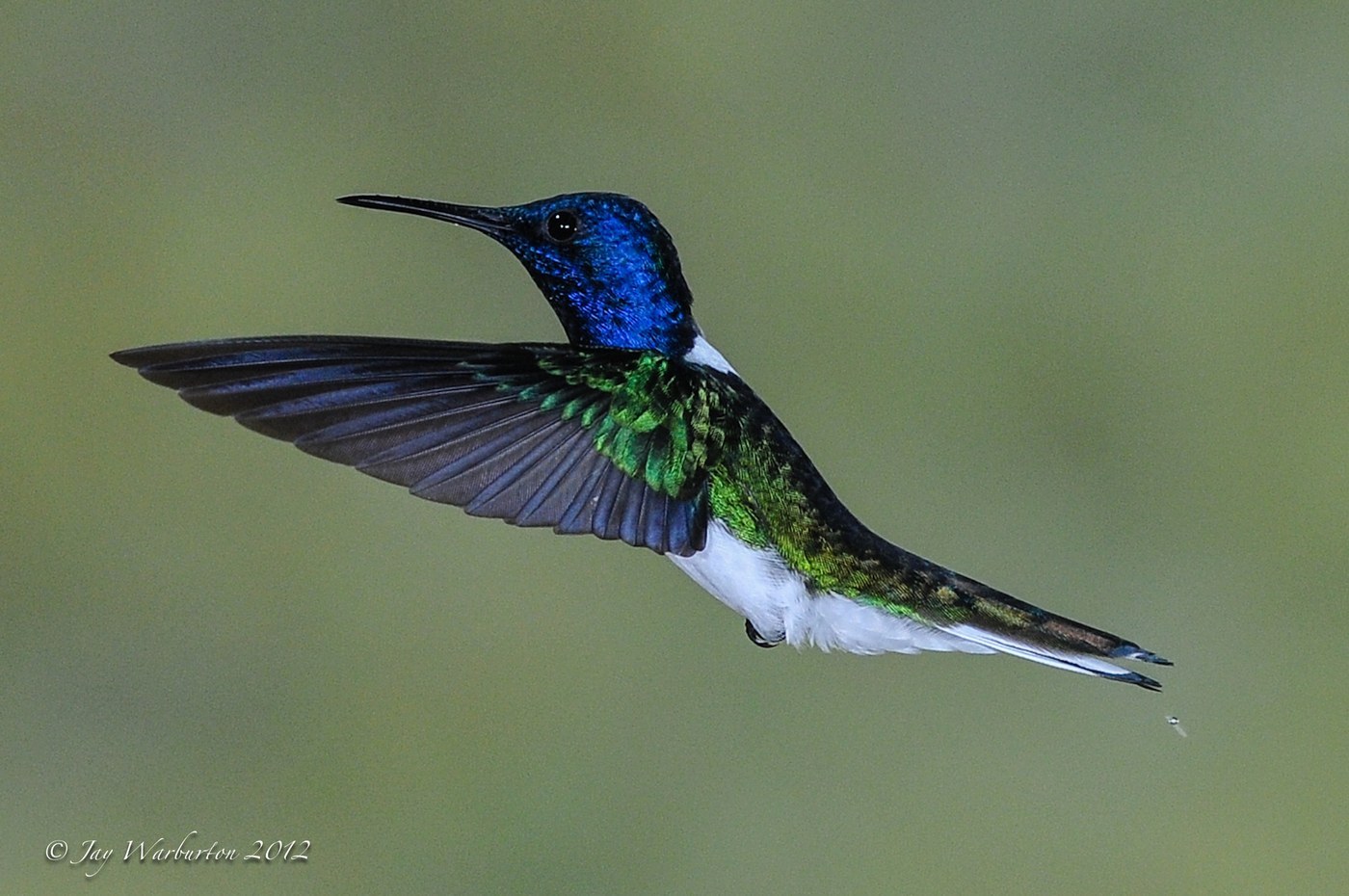
White-necked Jacobin
Iridescent head feathers, contrasting white nape and belly

White-eared Hummingbird
Iridescent gorget feathers, bold facial stripe
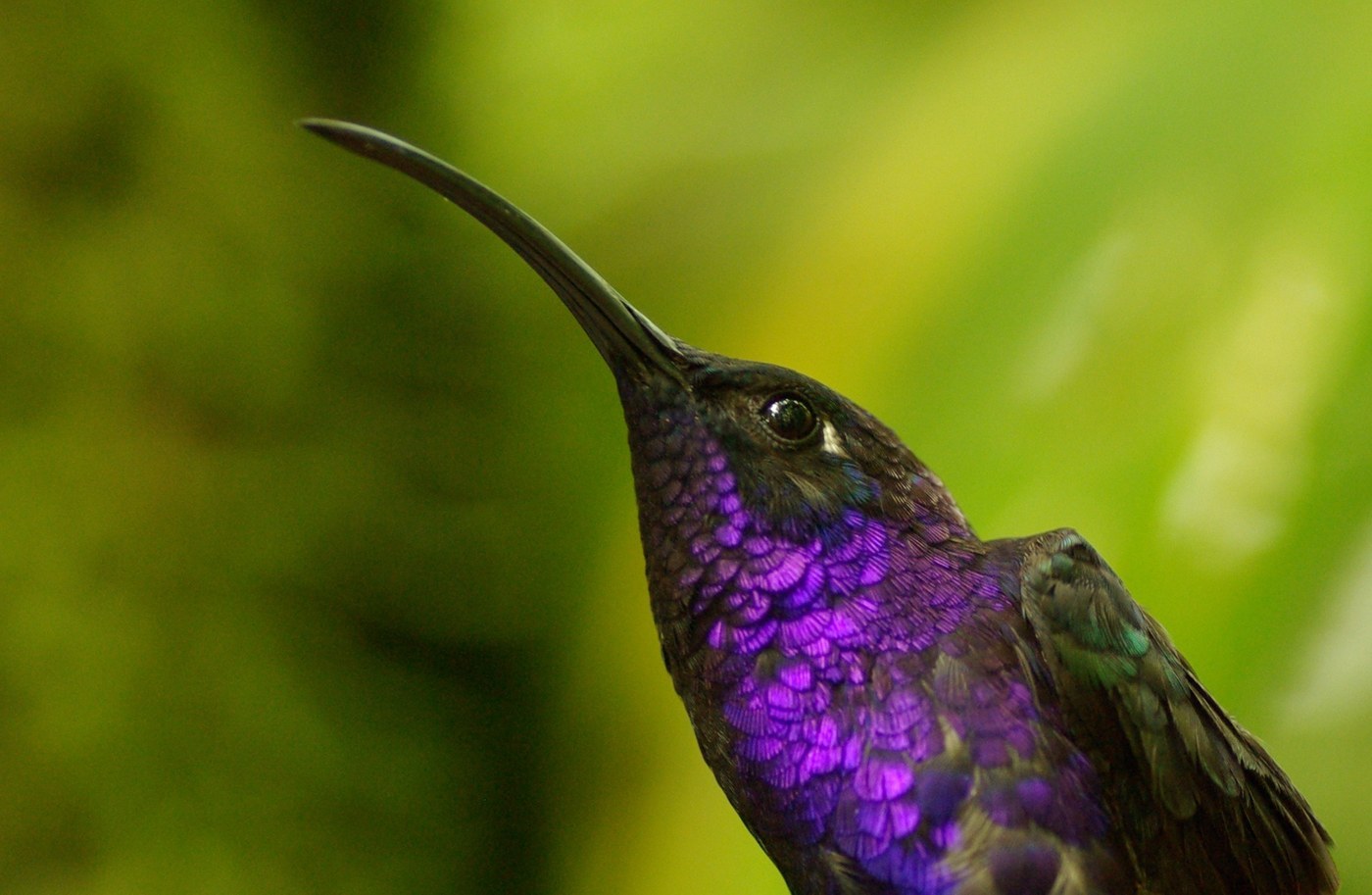
Violet Sabrewing
Iridescent body feathers, thickened curved primary shafts

Velvet-purple Coronet
Dense, velvety contour feathers with iridescent crown patch

Violet-crowned Hummingbird
Iridescent crown feathers, clean white underparts

Shining Sunbeam
Iridescent contour feathers with coppery-bronze wing sheen

Rufous Hummingbird
Tiny contour, gorget, and narrow flight feathers