

Speckled Hummingbird
Adelomyia melanogenys
A modestly plumed Andean hummingbird best known for the fine dark speckling across its buffy underparts, which distinguishes it from plainer relatives.
- Feather type
- Small contour feathers with fine speckled underpart markings
- Colours
- Bronzy-green above, buff underparts with dark speckling
- Bird size
- Small hummingbird, ~8-9 cm
Found a feather like this?
Identify any feather from a photo, free.
Overview
Overview
The Speckled Hummingbird is a small, unassuming species found in the understory and edges of humid montane forest along the Andes from Venezuela to Bolivia. Unlike many flashier hummingbirds, it relies on subtle plumage detail rather than bold iridescence for identification.
Both sexes look broadly similar, with bronzy-green upperparts and pale buff underparts marked with fine dusky speckling, a feature that gives the species its common name.
Identifying the Feather
Feather Identification
- Body feathers: Bronzy-green above, contrasting with buffy-cinnamon underparts
- Underpart feathers: Show distinct dark speckled or streaked markings, unlike the plain underparts of many similar-sized hummingbirds
- Tail feathers: Rounded, bronzy-green with buff tips in some individuals
- Shaft color: Pale, blending with the buff vane on underparts
- Size: Small and compact, smaller than most Coeligena or Boissonneaua species sharing its range
- Similar species: The speckled underparts separate it from plain-breasted hermits and brilliants of similar size and habitat
Plumage & Molt
Plumage Details
Adults of both sexes show bronze-green upperparts and buffy underparts with fine dark speckling concentrated on the throat and breast. There is little sexual dimorphism, though females may show slightly less defined speckling. Juveniles are similar but duller, with less distinct markings until after their first molt. No pronounced seasonal plumage change occurs in this species.
Habitat & Range
Habitat & Range
Speckled Hummingbirds inhabit humid montane and cloud forest, forest edges, and adjacent secondary growth along the Andes from Venezuela and Colombia south through Ecuador and Peru to Bolivia. The species is resident and non-migratory, typically found at middle elevations within its mountainous range.
Behavior & Field Notes
Behavior & Field Notes
This species feeds on nectar from a variety of understory flowers, often trap-lining a regular circuit of blooms, and also takes small insects. It is less territorial than many hummingbirds, often foraging quietly within dense vegetation rather than defending flowers aggressively. Nests are small cups of moss and plant fiber placed on low branches or ferns. Calls are soft, high-pitched chips, generally less conspicuous than the vocalizations of many co-occurring hummingbird species.
Frequently asked questions
What feather feature best identifies the Speckled Hummingbird?
Fine dark speckling on the buffy throat and breast feathers, contrasting with plain bronze-green upperparts.
Are males and females easy to tell apart?
No, the sexes look quite similar, with only subtle differences in the intensity of underpart speckling.
Where in the Andes is this species found?
In humid montane and cloud forest from Venezuela south to Bolivia, generally at middle elevations.
Does this hummingbird show bright iridescent patches?
No, it is relatively subdued in color compared to many Andean hummingbirds, relying on speckled patterning rather than bright gorget colors.
Speckled Hummingbird guides
In-depth guides for identifying and understanding Speckled Hummingbird.

Other feathers you may enjoy
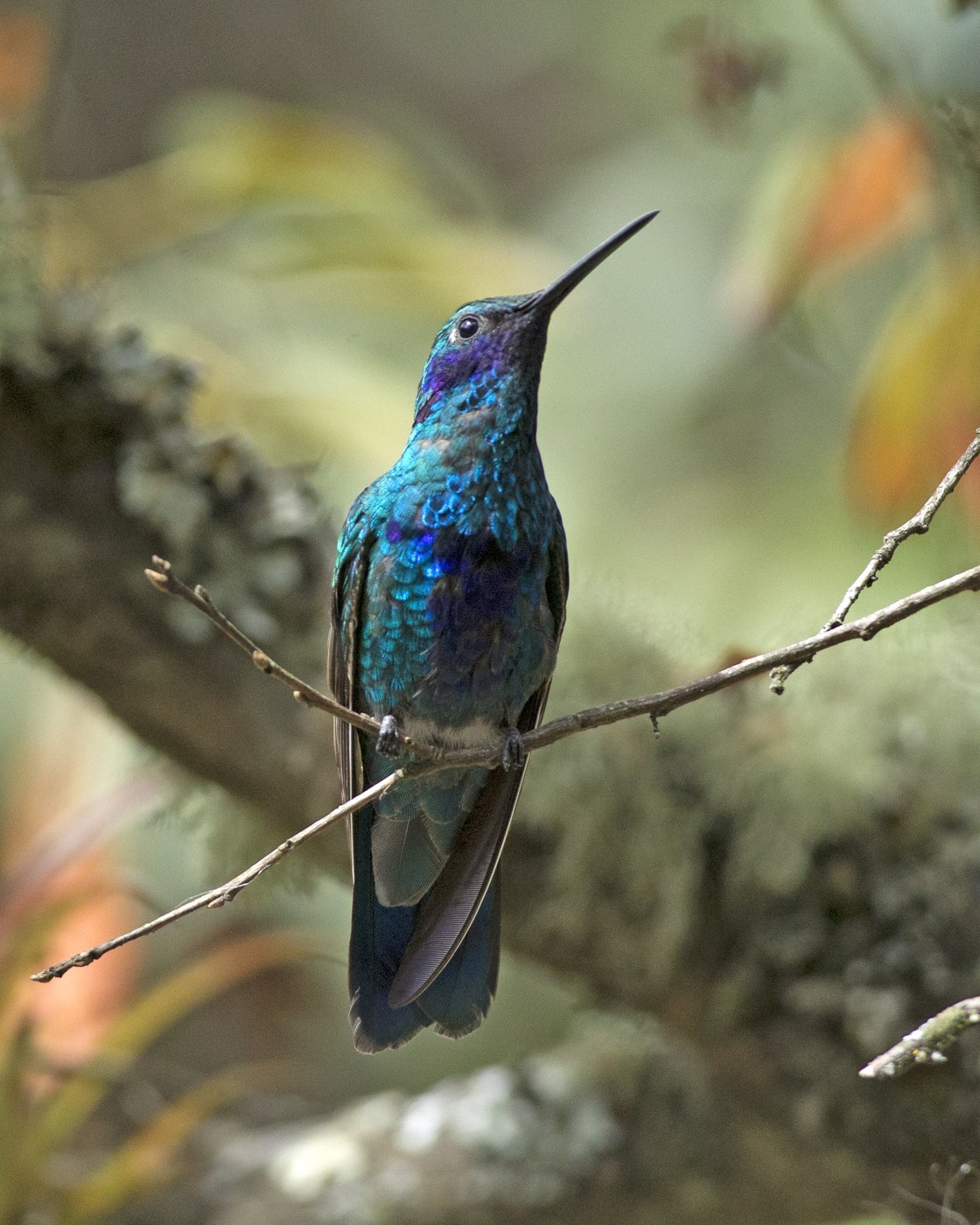
Sparkling Violetear
Iridescent body feathers, large violet ear and chest patches
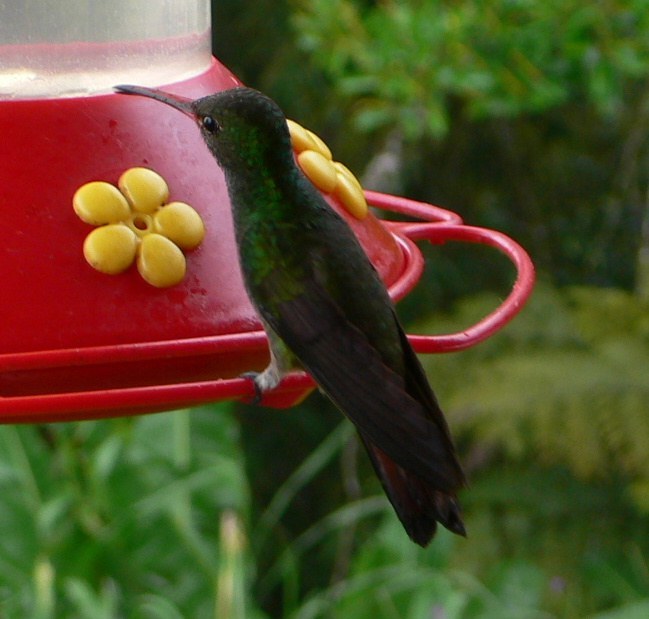
Rufous-tailed Hummingbird
Iridescent throat and breast feathers, rufous tail feathers

Rufous-breasted Hermit
Slightly decurved bill with rufous-washed contour feathers
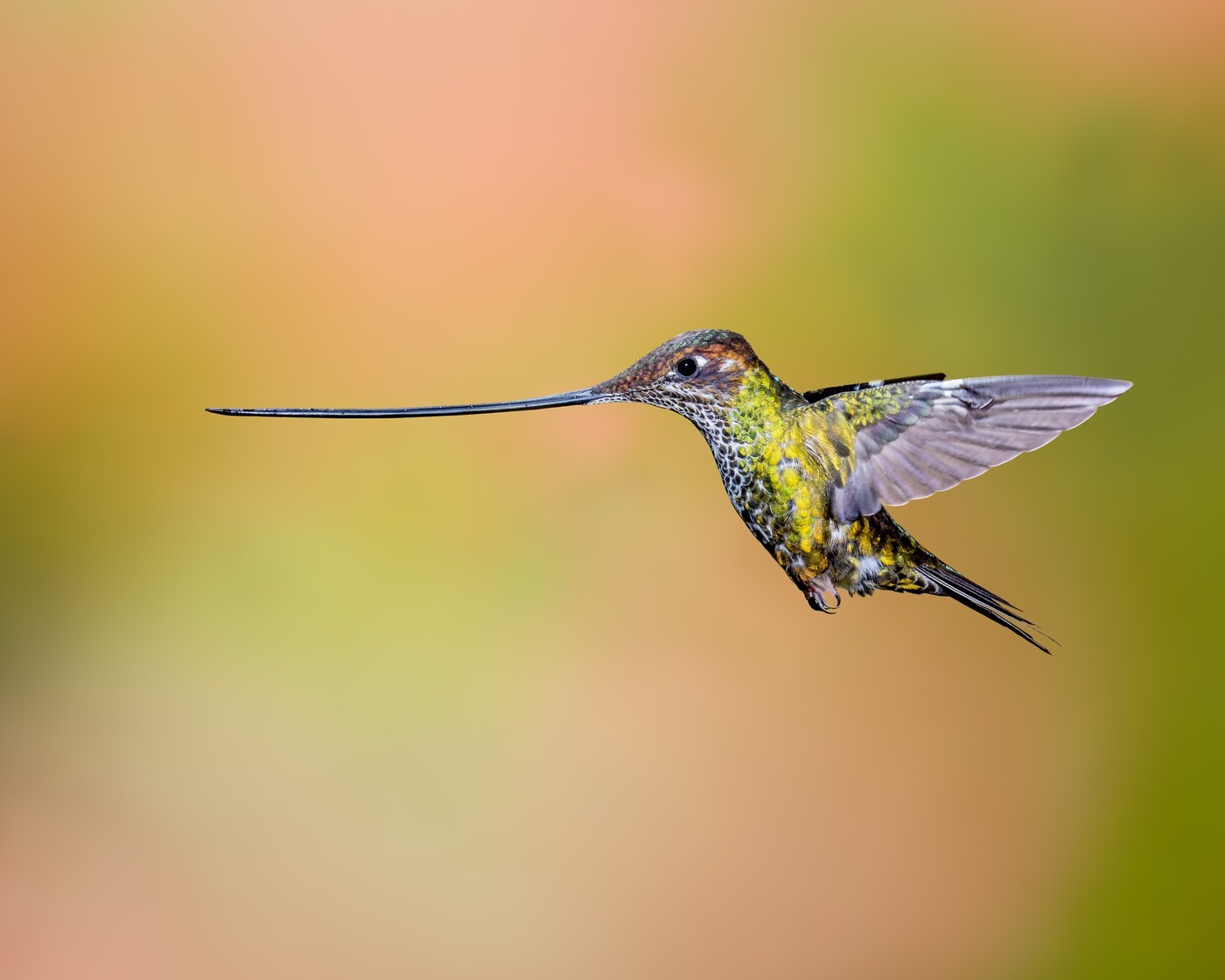
Sword-billed Hummingbird
Iridescent body feathers, extraordinarily long bill (non-feather feature)
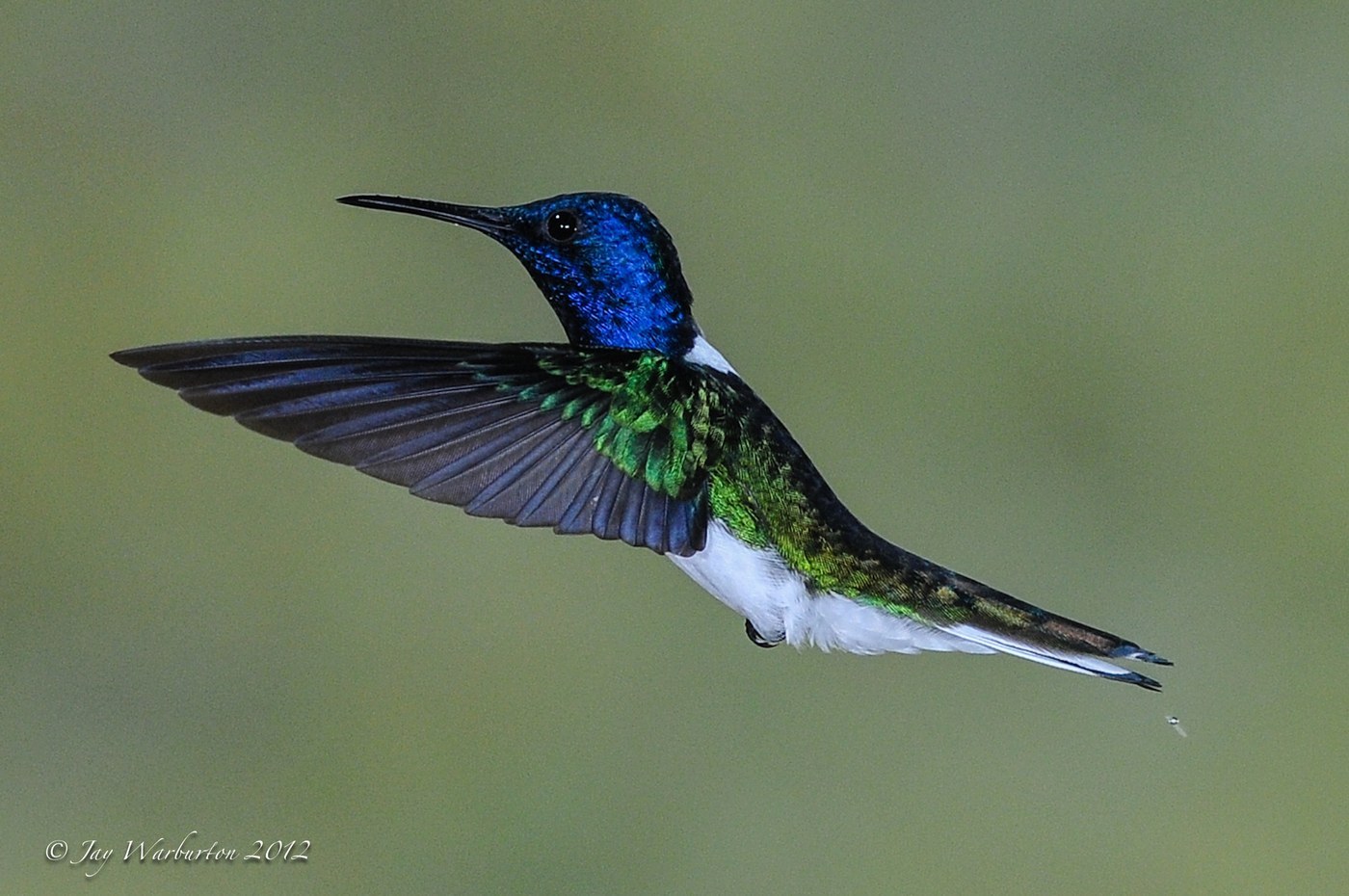
White-necked Jacobin
Iridescent head feathers, contrasting white nape and belly

White-eared Hummingbird
Iridescent gorget feathers, bold facial stripe
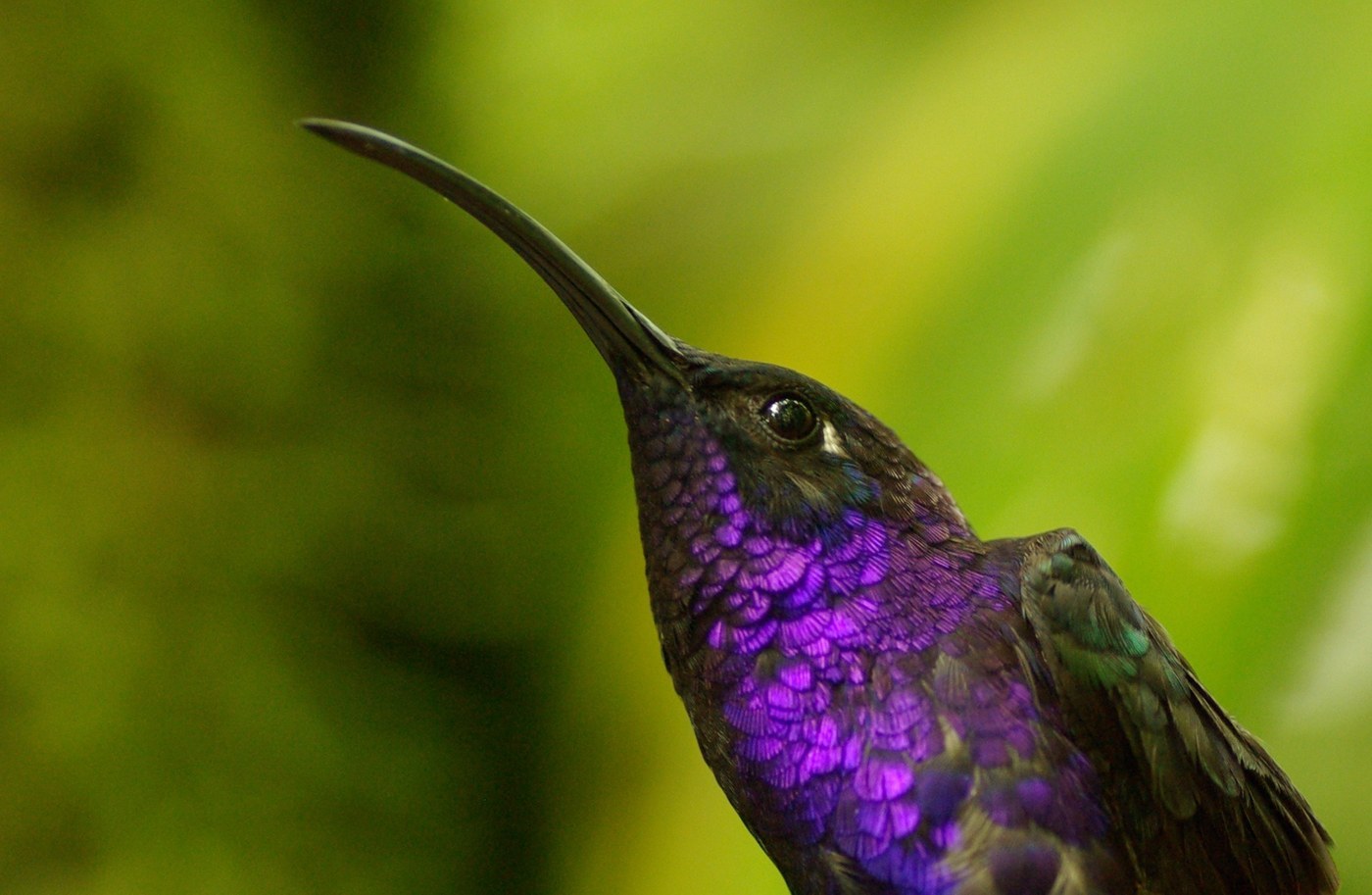
Violet Sabrewing
Iridescent body feathers, thickened curved primary shafts

Velvet-purple Coronet
Dense, velvety contour feathers with iridescent crown patch

Violet-crowned Hummingbird
Iridescent crown feathers, clean white underparts

Shining Sunbeam
Iridescent contour feathers with coppery-bronze wing sheen

Rufous Hummingbird
Tiny contour, gorget, and narrow flight feathers
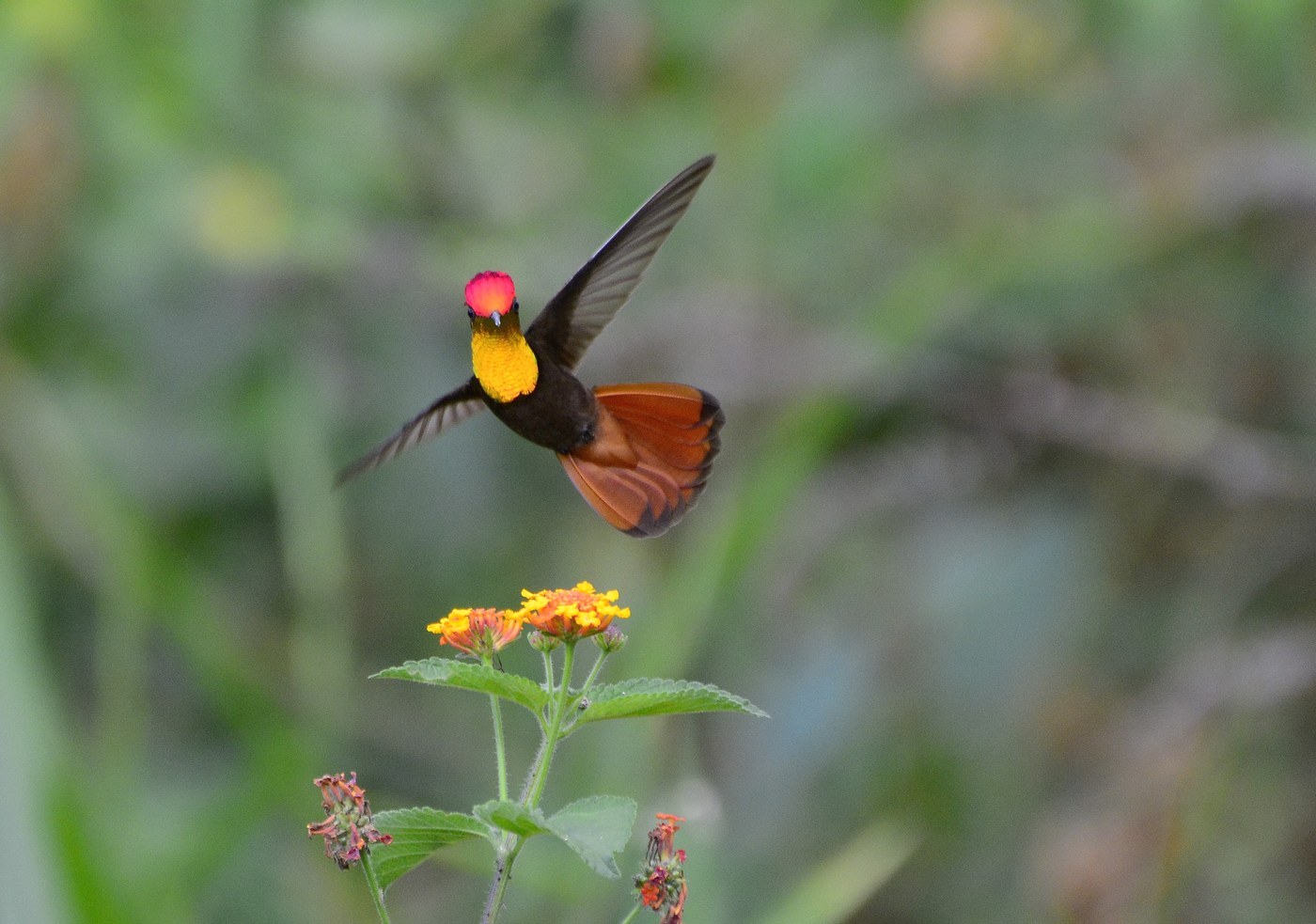
Ruby-topaz Hummingbird
Iridescent crown and gorget feathers, chestnut body feathers