

Violet-crowned Hummingbird
Amazilia violiceps
A clean-looking desert hummingbird with brilliant white underparts and a violet-blue crown that catches the light against otherwise subdued upperparts.
- Feather type
- Iridescent crown feathers, clean white underparts
- Colours
- Violet-blue crown, bronze-green back, bright white underparts
- Bird size
- Small to medium, ~10 cm
Found a feather like this?
Identify any feather from a photo, free.
Overview
Overview
The Violet-crowned Hummingbird inhabits riparian woodland, sycamore-lined canyons, and desert washes in the southwestern United States and Mexico. It stands out among Amazilia-type hummingbirds for its unusually bright, unmarked white underparts, which contrast sharply with its colorful crown.
Both sexes show the crown color and white underparts, making this one of the easier hummingbirds to sex-neutral identify by plumage alone compared to species with strongly dimorphic gorgets.
Identifying the Feather
Feather ID Notes
The crown feathers show violet-blue iridescence that is present in both sexes, a useful year-round feature. Underparts are strikingly clean white, lacking the buffy or gray wash seen in many related species, making this a key field mark.
- Crown feathers: violet-blue, iridescent, present in both sexes
- Underpart feathers: bright white, unusually clean and unmarked
- Back feathers: bronze-green
- Bill: red with a black tip The combination of a colorful crown with plain white underparts (rather than a colorful throat) distinguishes this species from most other similarly built hummingbirds.
Plumage & Molt
Plumage Details
Males and females look quite similar, both showing the violet crown and white underparts, though the crown color can be slightly less extensive or vivid in females. Juveniles are duller with a less developed crown color. There is no marked seasonal plumage change, with feather condition refreshed by an annual molt.
Habitat & Range
Habitat & Range
This species favors riparian corridors, sycamore and cottonwood canyons, and desert washes in the southwestern United States (notably Arizona and New Mexico) and Mexico. Some populations are resident while others show local seasonal movements tied to flowering cycles and elevation.
Behavior & Field Notes
Behavior & Field Notes
Violet-crowned Hummingbirds feed on nectar from native flowering trees and shrubs and readily visit feeders, along with catching small insects in flight. They are often quite tame and can be approached closely at feeding stations. Nests are small cups placed on horizontal branches, frequently over dry washes. Calls include sharp chip notes and dry chattering during interactions with other hummingbirds.
Frequently asked questions
What is the key identifying feature of the Violet-crowned Hummingbird?
A violet-blue crown paired with unusually bright, clean white underparts.
Do males and females look different?
They are quite similar, both showing the crown color and white underparts, though females can be slightly duller.
Where does this hummingbird live?
In riparian canyons and desert washes in the southwestern United States and Mexico.
Is the Violet-crowned Hummingbird migratory?
Some populations are resident, while others make local seasonal movements related to flower availability.
Violet-crowned Hummingbird guides
In-depth guides for identifying and understanding Violet-crowned Hummingbird.

Other feathers you may enjoy

Speckled Hummingbird
Small contour feathers with fine speckled underpart markings
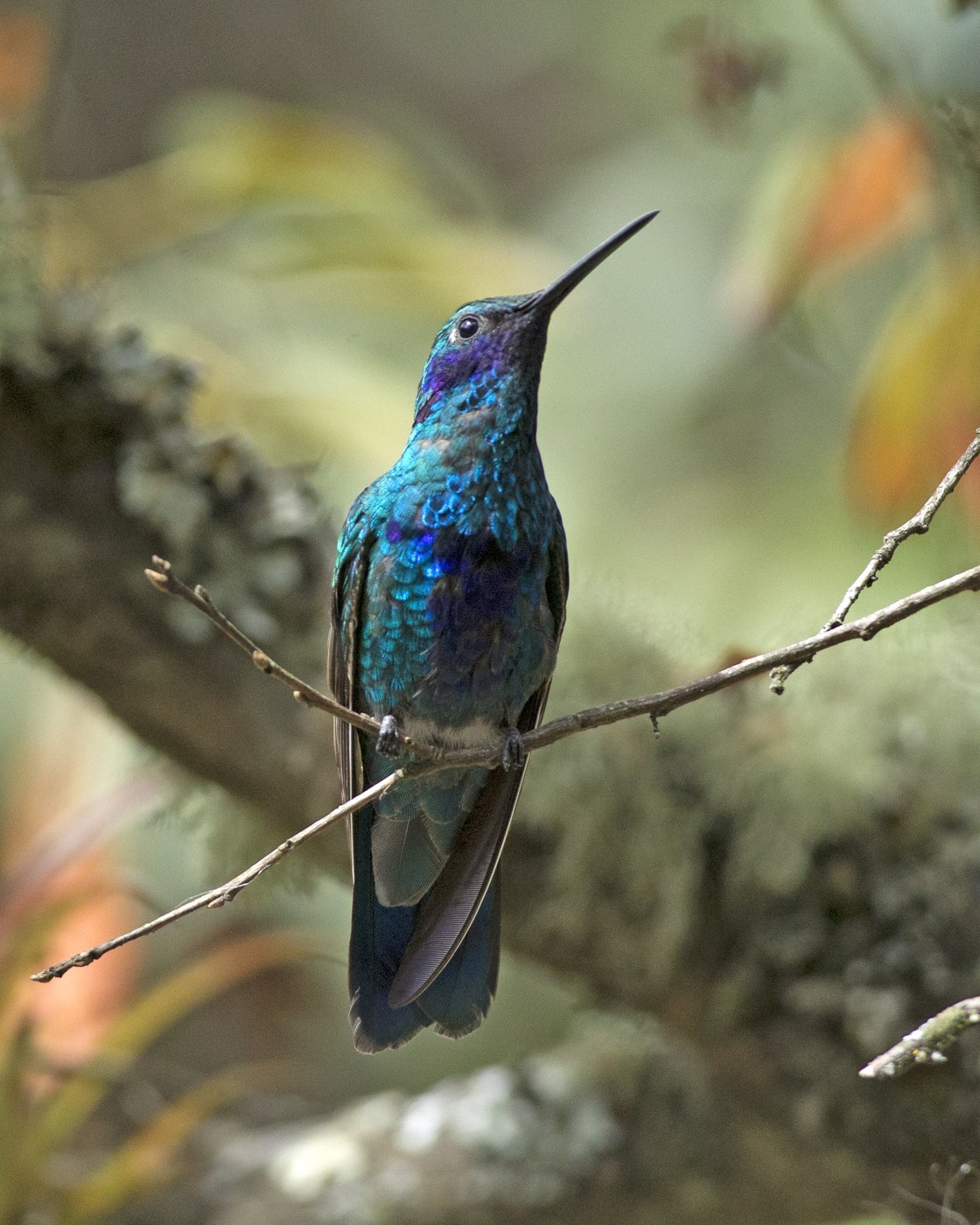
Sparkling Violetear
Iridescent body feathers, large violet ear and chest patches
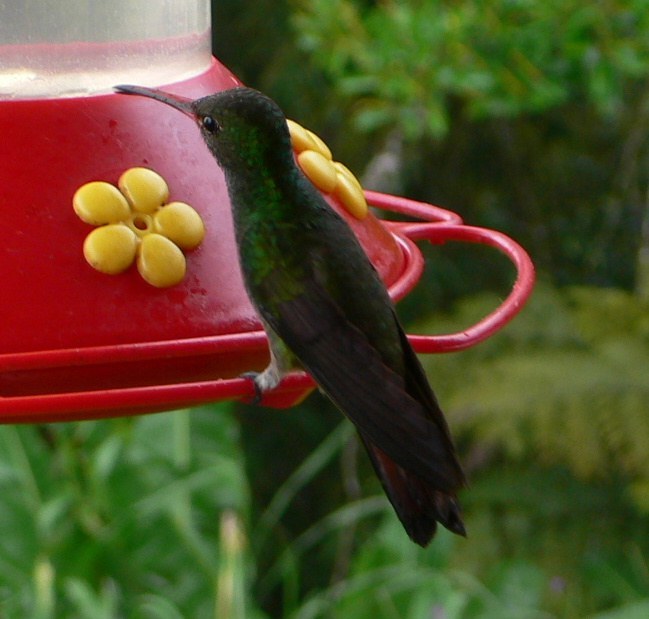
Rufous-tailed Hummingbird
Iridescent throat and breast feathers, rufous tail feathers

Rufous-breasted Hermit
Slightly decurved bill with rufous-washed contour feathers
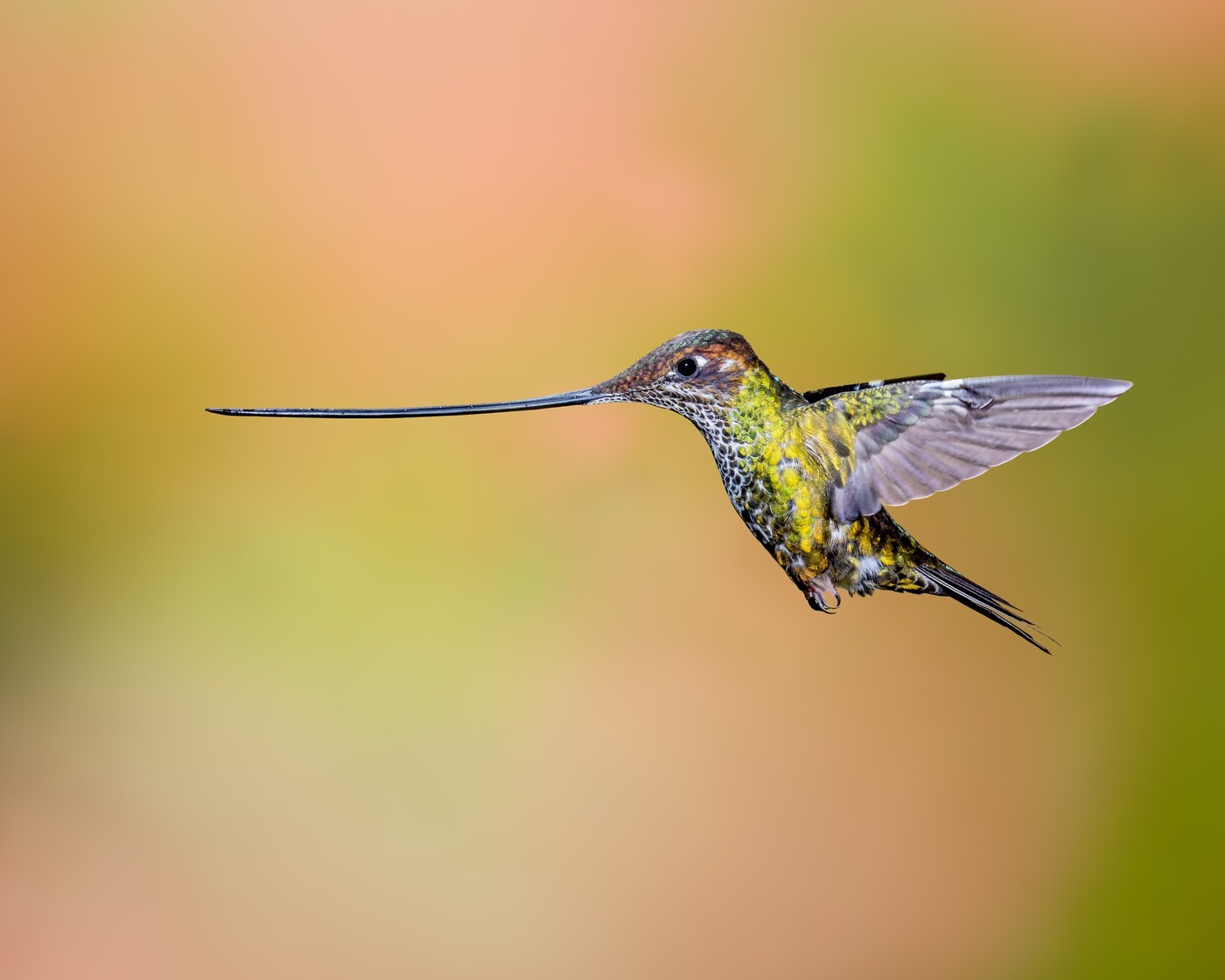
Sword-billed Hummingbird
Iridescent body feathers, extraordinarily long bill (non-feather feature)
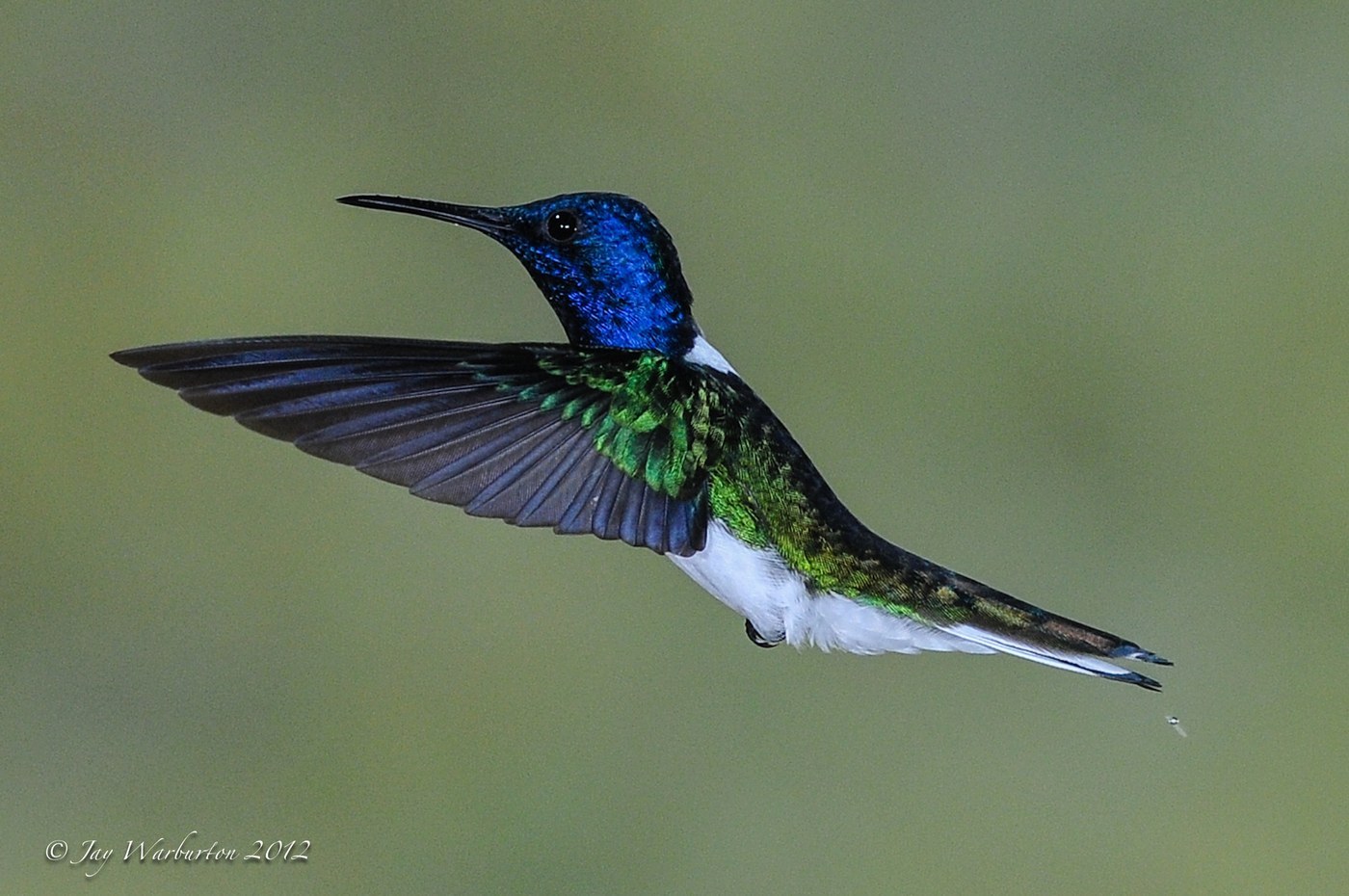
White-necked Jacobin
Iridescent head feathers, contrasting white nape and belly

White-eared Hummingbird
Iridescent gorget feathers, bold facial stripe
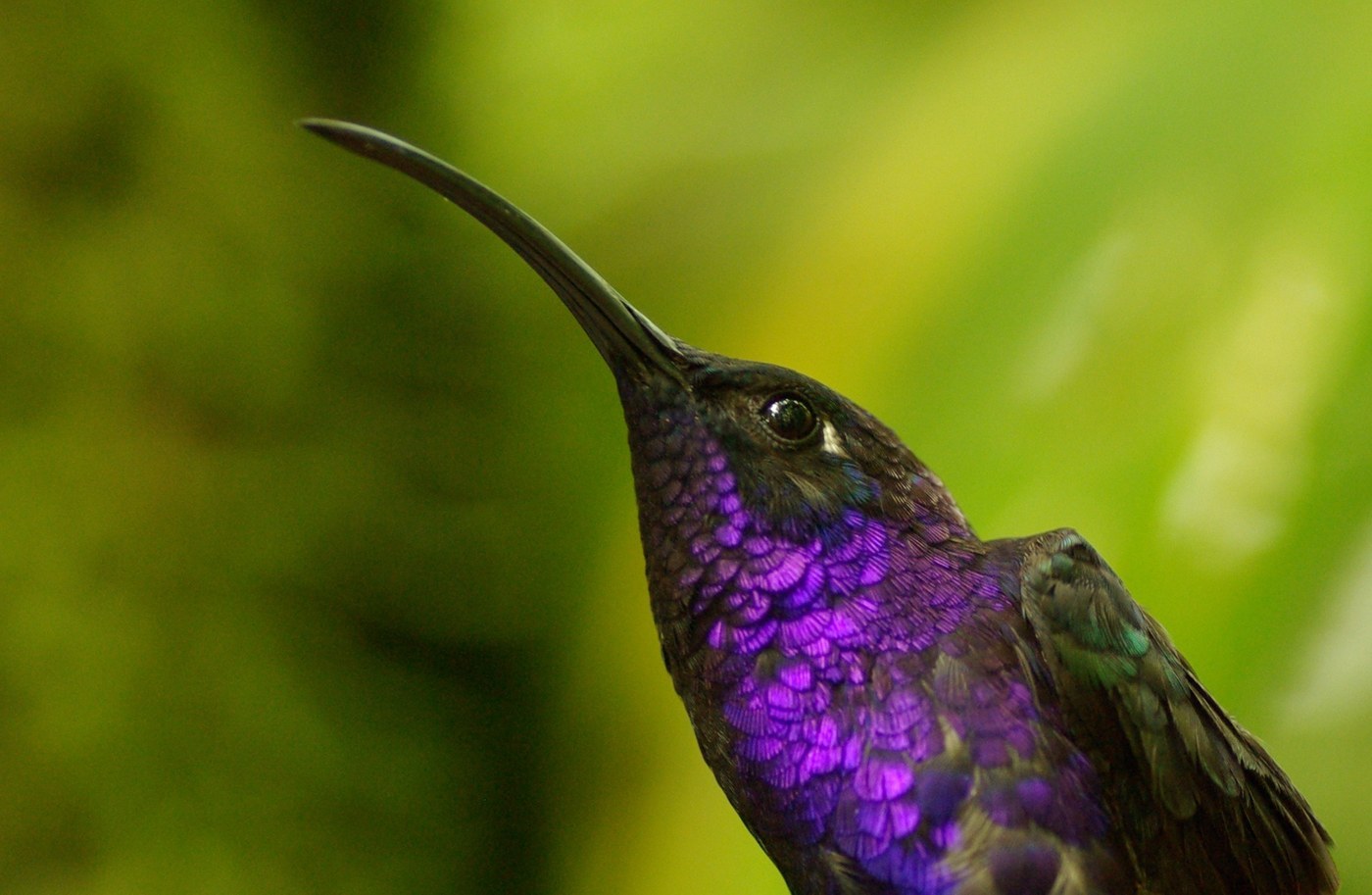
Violet Sabrewing
Iridescent body feathers, thickened curved primary shafts

Velvet-purple Coronet
Dense, velvety contour feathers with iridescent crown patch

Shining Sunbeam
Iridescent contour feathers with coppery-bronze wing sheen

Rufous Hummingbird
Tiny contour, gorget, and narrow flight feathers
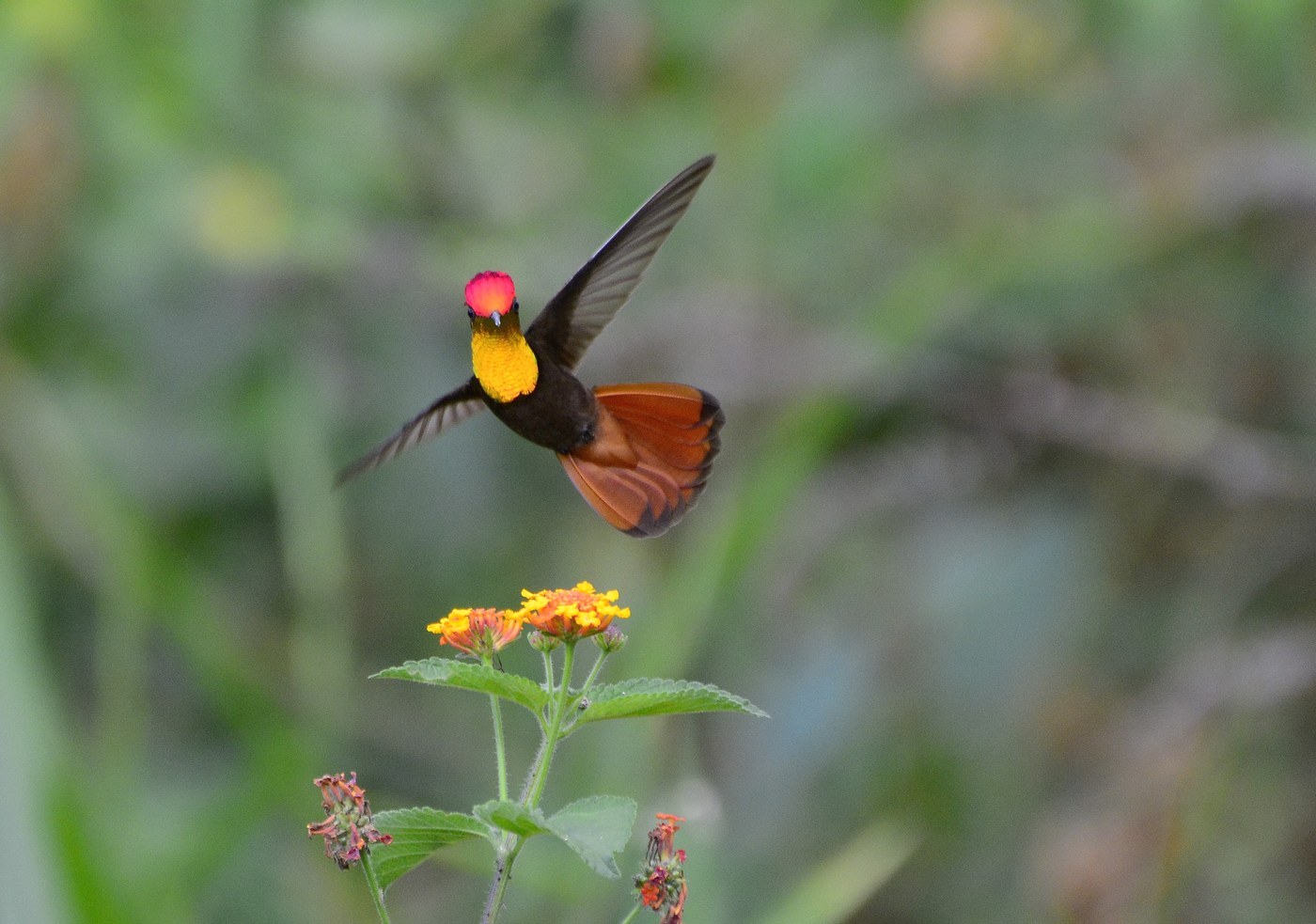
Ruby-topaz Hummingbird
Iridescent crown and gorget feathers, chestnut body feathers