

Rock Dove
Columba livia
The wild ancestor of the familiar city pigeon, typically blue-grey with bold black wing bars and a white rump, though feral descendants show enormous color variation.
- Feather type
- Blue-grey wing feathers with two bold black bars; white rump feathers
- Colours
- Blue-grey with black wing bars, a white rump patch, and iridescent green-purple neck feathers (though feral birds show many color variants)
- Bird size
- Medium pigeon, ~32-34 cm
Found a feather like this?
Identify any feather from a photo, free.
Overview
The Rock Dove is the wild species from which all feral and domestic pigeons descend, originally a bird of coastal cliffs and rocky terrain across Europe, North Africa, and Asia. Truly wild populations persist in remote coastal and mountainous areas, while feral descendants are now among the most common birds in cities worldwide.
Wild-type Rock Doves show a fairly consistent blue-grey plumage pattern, but because feral populations have been bred and mixed for centuries, feathers from urban pigeons can appear in a huge range of colors, from white to black, red-brown, and pied patterns.
A classic wild-type Rock Dove feather shows blue-grey coloring, two bold black wing bars, and a white patch on the rump — a combination useful for identifying the pattern even on many feral pigeons that retain the ancestral coloring.
Identifying the Feather
Wild-type wing feathers
- Blue-grey with two bold, well-defined black bars crossing the folded wing, generally more prominent than the shorter bars of a Stock Dove.
Rump feathers
- A patch of white feathers on the rump is a helpful diagnostic feature of the ancestral wild-type pattern, visible in flight and on shed feathers from that area.
Neck feathers
- Show iridescent green and purple sheen, similar to other pigeons.
Feral variation
- Because feral pigeons descend from selectively bred domestic stock, feathers may be found in white, black, brown, red, pied, or checkered patterns rather than the classic wild-type coloring.
Confusion species
Stock Dove lacks the white rump patch and has shorter wing bars; Wood Pigeon is larger with a white neck patch and pinkish breast. A feather with a white rump patch and bold black wing bars, especially in an urban setting, points to Rock Dove or its feral descendants.
Plumage & Molt
Wild-type adults are blue-grey with two bold black wing bars, a white rump patch, and an iridescent green-purple sheen on the neck. Feral descendants show extensive plumage variation due to centuries of domestication, including white, black, brown, red, and pied forms.
Males and females look similar in both wild and feral forms. Juveniles are duller with less iridescence, gaining full adult coloring after their first molt.
Rock Doves molt completely after breeding, and because feral populations can breed nearly year-round in cities, molt timing is less strictly seasonal than in many other pigeons.
Habitat & Range
Truly wild Rock Doves nest on coastal cliffs and rocky outcrops across their native range in Europe, North Africa, and parts of Asia. Feral descendants are now abundant in towns and cities worldwide, nesting on buildings, bridges, and other structures that mimic cliff ledges.
Both wild and feral populations are largely resident, remaining in the same general area year-round.
Behavior & Field Notes
Rock Doves feed on seeds, grain, and, in urban feral populations, a wide variety of human food scraps. They are highly gregarious, often gathering in large flocks to feed and roost.
They nest on ledges, ranging from natural cliff faces to building ledges and bridges, building a simple nest of twigs and debris. Their call is a soft, repetitive cooing.
A blue-grey feather with bold black wing bars and a white rump patch found in a city or along a rocky coastline is characteristic of Rock Dove, though feral pigeon feathers may show almost any color due to domestication.
Frequently asked questions
Why do feral pigeon feathers come in so many colors?
Feral Rock Doves descend from centuries of selective breeding as domestic pigeons, which introduced far more color and pattern variation than occurs in wild populations.
What does a classic wild-type Rock Dove feather look like?
Blue-grey with two bold black wing bars and a white rump patch, plus iridescent green-purple neck feathers.
How can I tell Rock Dove from Stock Dove by feather?
Rock Dove typically shows a white rump patch and bolder wing bars, while Stock Dove lacks white markings entirely and has shorter wing bars.
Are city pigeon feathers the same species as wild Rock Doves?
Yes, feral city pigeons are the same species, Columba livia, descended from wild Rock Doves through domestication.
Where do truly wild Rock Doves live?
On coastal cliffs and rocky terrain in parts of their native range, distinct from the urban feral populations found in most cities.
Rock Dove guides
In-depth guides for identifying and understanding Rock Dove.

Rock Dove identified by the community
Real feathers identified with Feather Identifier.


Other feathers you may enjoy

Victoria Crowned Pigeon
Large lace-like fan crest plumes over dense body contour feathers

Plain Pigeon
Contour feathers, plain and uniformly toned, with a white wing patch

Zenaida Dove
Contour and flight feathers, faint iridescent sheen on neck

Pink Pigeon
Soft contour feathers with graduated tail

Nicobar Pigeon
Long, hackle-like elongated neck feathers with iridescent sheen
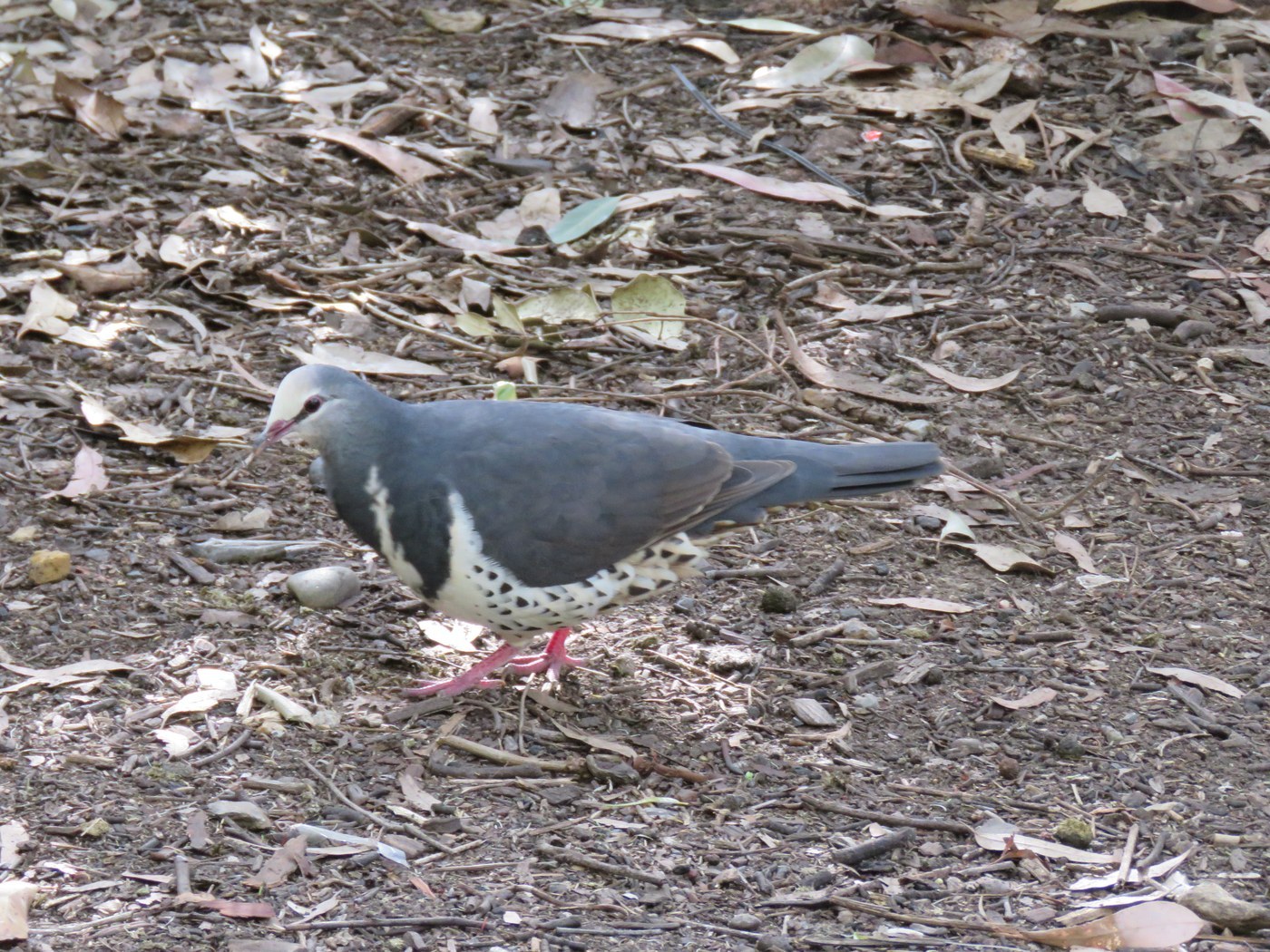
Wonga Pigeon
Dense, soft body contour feathers over a stocky frame

Squatter Pigeon
Dense, cryptic body contour feathers with a bold facial pattern

White-winged Dove
Broad, sturdy flight feathers with a bold white wing stripe

Western Crowned Pigeon
Rounded fan crest plumes over dense soft body feathers

Snow Pigeon
Dense insulating body contour feathers with a bold white rump and belly patch

Zebra Dove
Contour feathers with bold, extensive black-and-white barring

Scaly-naped Pigeon
Contour feathers with iridescent scaled nape pattern