

Pied Kingfisher
Ceryle rudis
A striking black-and-white kingfisher known for hovering over water before plunging to catch prey.
- Feather type
- Short, dense contour feathers and pointed flight feathers
- Colours
- Bold black and white barring and spotting
- Bird size
- Jay-sized, ~25 cm
Found a feather like this?
Identify any feather from a photo, free.
Overview
Overview
The Pied Kingfisher is a widespread and highly recognizable kingfisher found across much of Africa and Asia, distinguished by its bold black-and-white plumage, a pattern shared by few other kingfisher species. It is especially known for its ability to hover steadily over water while searching for prey.
- Entirely black-and-white plumage, unusual among kingfishers
- Frequently hovers in place over open water
- One of the most widely distributed kingfisher species
Identifying the Feather
Feather Identification
Pied Kingfisher feathers show a strong black-and-white pattern with fine barring rather than the blue or green tones typical of many other kingfishers.
- Crest and crown feathers: black with white streaking, forming a short, shaggy crest
- Upperpart feathers: black with white spotting and barring across the back and wings
- Underpart feathers: white with one or two black breast bands, the number of bands differing between sexes
- Flight feathers: black and white in a barred pattern, producing a flickering black-and-white effect in flight
- Compared to similar species: the strictly black-and-white pattern, without any blue or green tones, readily separates this species from most other kingfishers, which typically show blue, green, or rufous coloring
Plumage & Molt
Plumage Notes
Males typically show two black breast bands, while females usually show a single, sometimes broken breast band, providing a reliable way to sex individuals by plumage. Juveniles resemble adults but may show a less crisply defined breast band pattern before their first full molt.
- Clear sexual dimorphism in breast band number, useful for identification
- Juvenile plumage is a slightly duller, less sharply patterned version of the adult
- Molt occurs on a regular cycle without a distinct seasonal color change
Habitat & Range
Habitat & Range
Widely distributed across sub-Saharan Africa and parts of the Middle East and Asia, found near a wide range of freshwater and coastal habitats.
- Occurs along rivers, lakes, estuaries, and coastal lagoons
- Generally resident within its range, though some local movements occur with water level changes
- One of the most abundant and widespread kingfisher species across its combined African and Asian range
Behavior & Field Notes
Behavior & Field Notes
Pied Kingfishers are notable for their distinctive hovering behavior, holding a stationary position over water before diving down onto prey.
- Diet: primarily small fish and other aquatic prey captured by diving after hovering over open water
- Nesting: excavates a burrow in an earthen bank, often in loose colonies at suitable sites
- Voice: sharp, chattering calls given in flight and at nesting colonies
- Field notes: the combination of bold black-and-white plumage and a characteristic hovering flight makes this one of the easiest kingfishers to identify at a glance, even before other features are visible
Frequently asked questions
What makes Pied Kingfisher feathers distinctive?
Their entirely black-and-white pattern, without any blue or green tones, sets them apart from most other kingfisher species.
How can you tell male and female Pied Kingfishers apart?
Males typically show two black breast bands, while females usually show a single, sometimes broken, breast band.
What behavior is the Pied Kingfisher known for?
It is known for hovering steadily over open water before diving down to catch prey, a distinctive hunting technique.
Where is the Pied Kingfisher found?
It is widely distributed across sub-Saharan Africa and parts of the Middle East and Asia, near rivers, lakes, and coastal waters.
Pied Kingfisher guides
In-depth guides for identifying and understanding Pied Kingfisher.

Other feathers you may enjoy

Common Cuckoo
Flight and body feathers
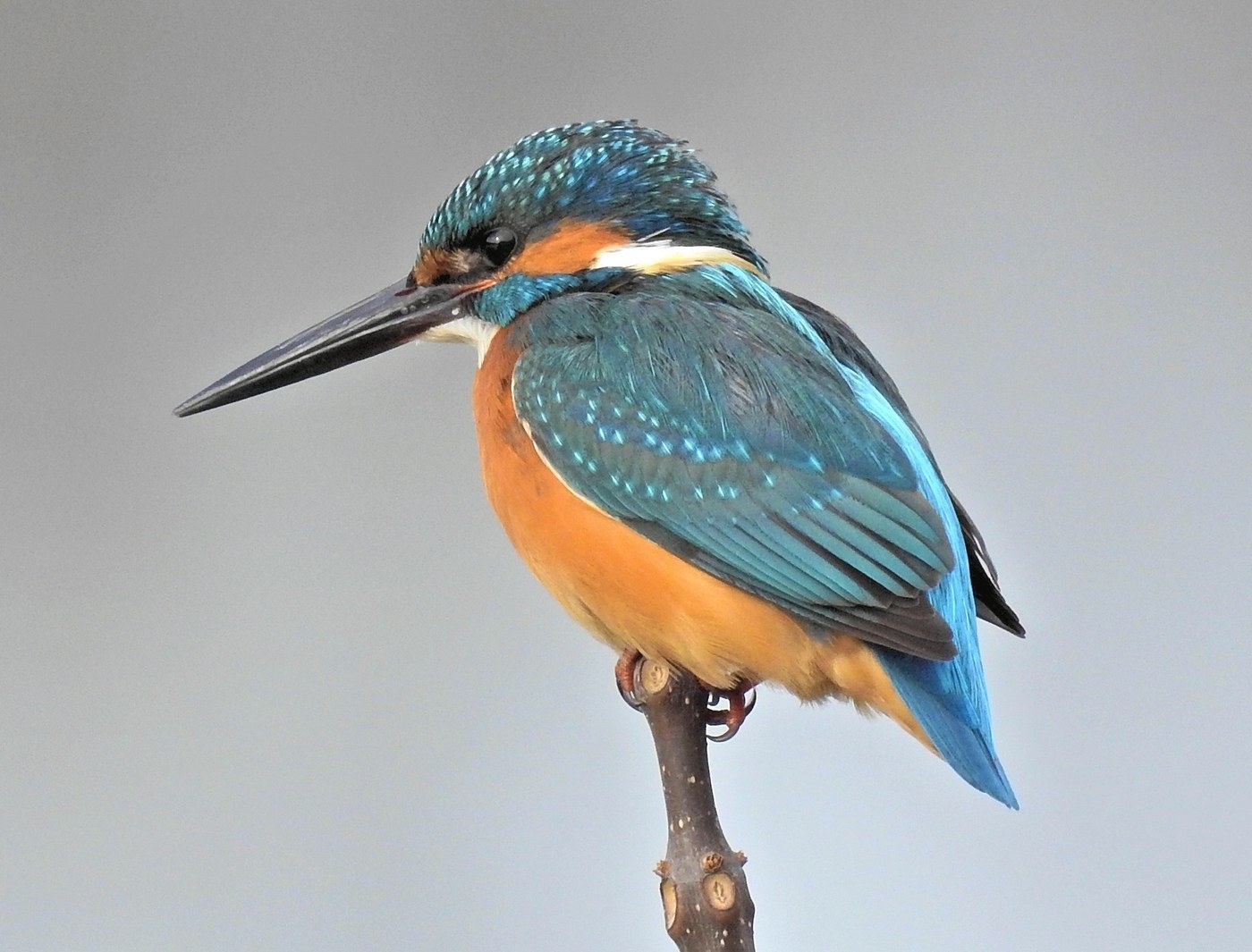
Common Kingfisher
Body (contour) and wing feathers
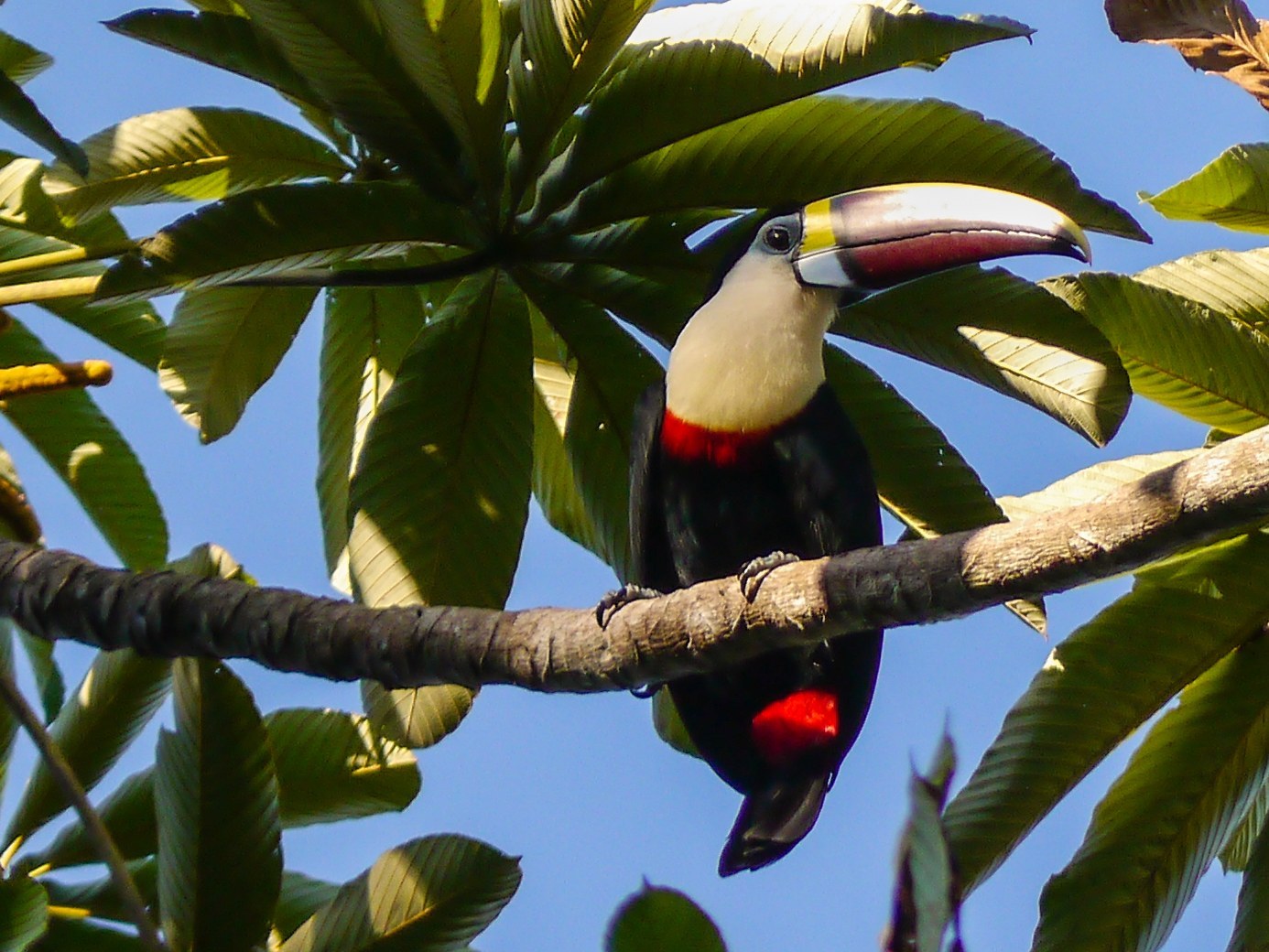
White-throated Toucan
Short rounded contour feathers, short broad wings

White-throated Kingfisher
Dense contour feathers; broad rounded wings

White-throated Bee-eater
Sleek, aerodynamic contour feathers; elongated central tail streamers
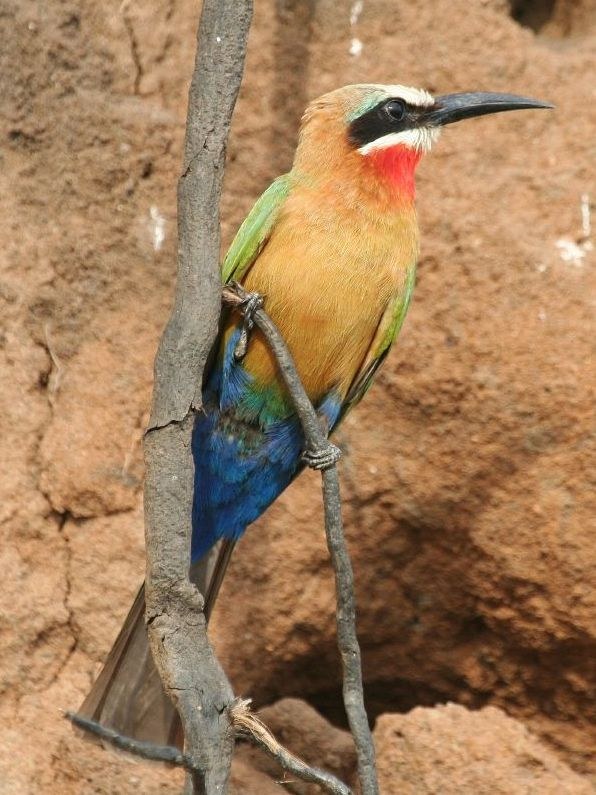
White-fronted Bee-eater
Sleek contour feathers; short tail with slight point

Southern Yellow-billed Hornbill
Slender contour feathers, moderate flight feathers
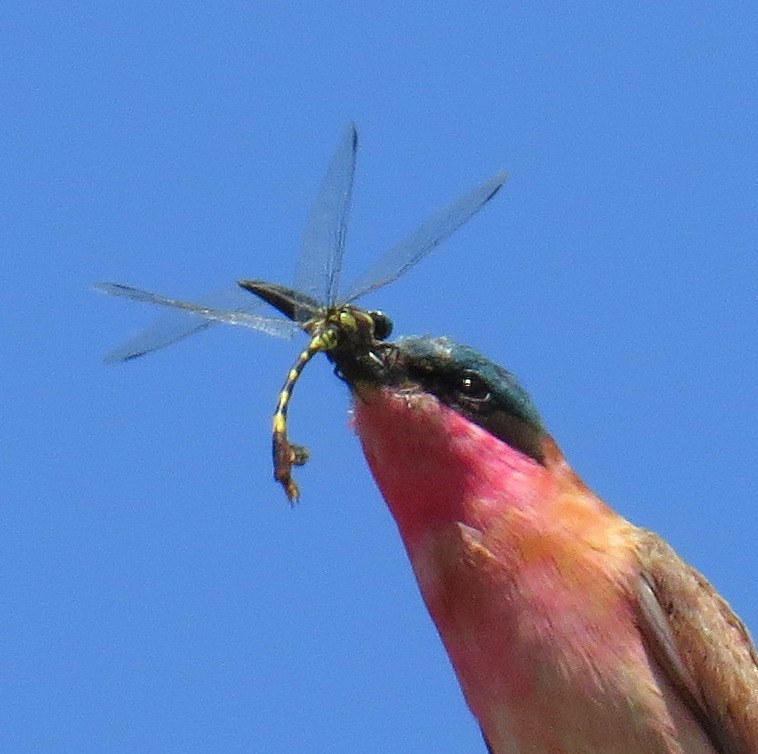
Southern Carmine Bee-eater
Sleek, pointed contour feathers; elongated central tail streamers
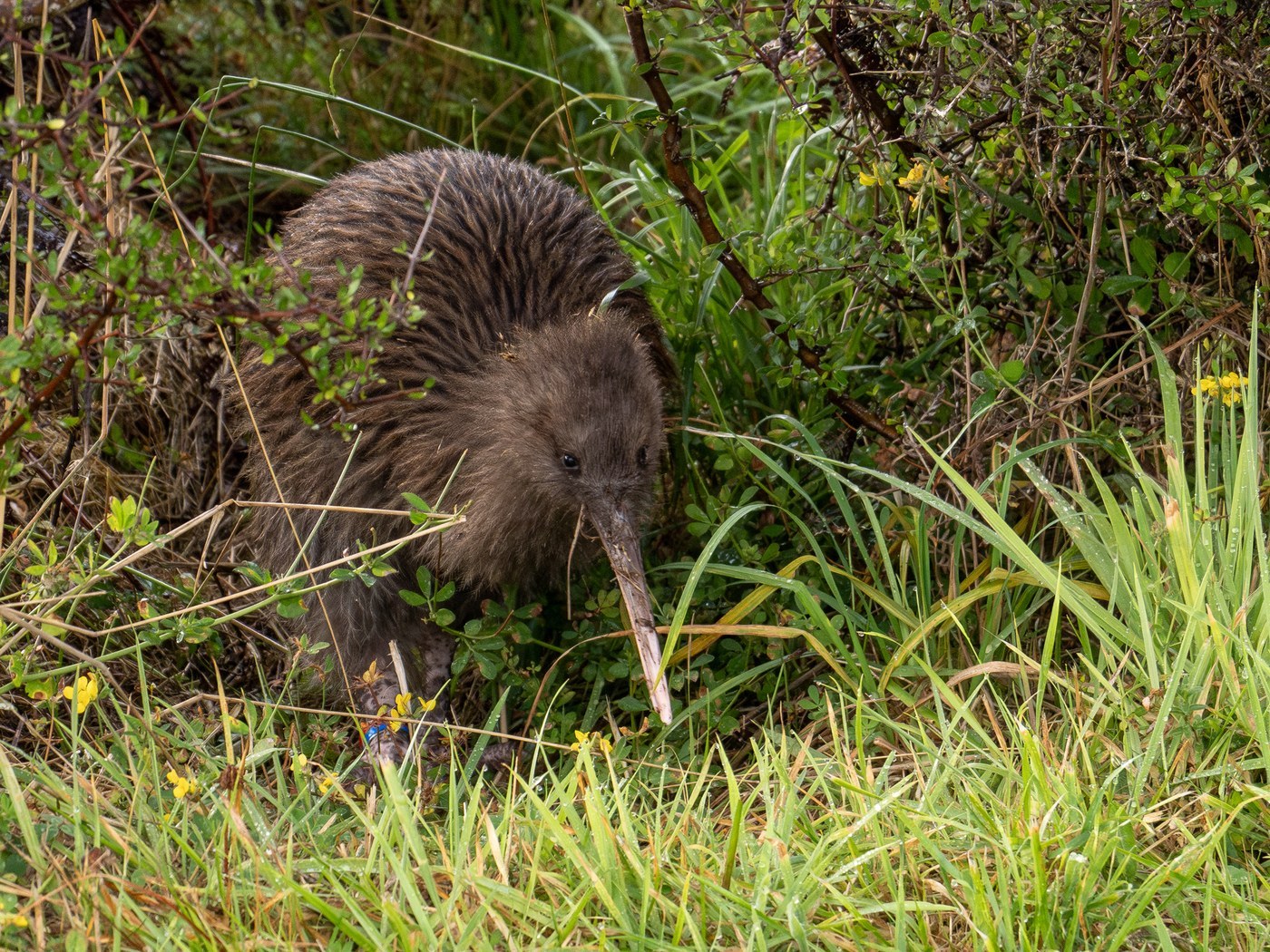
Southern Brown Kiwi
Shaggy, hair-like plumage with loose barbs lacking barbules; flightless, vestigial wings hidden beneath body feathers

Somali Ostrich
Loose, soft plumes lacking interlocking barbules

Wreathed Hornbill
Dense contour feathers, broad flight feathers

Woodland Kingfisher
Firm contour feathers; broad wing feathers