

Pied Imperial Pigeon
Ducula bicolor
The Pied Imperial Pigeon is a striking black-and-white pigeon of coastal forests and islands, easily recognized by its creamy white body and bold black flight feathers.
- Feather type
- Large, bold black-and-white body contour feathers
- Colours
- Creamy white body with black flight feathers and tail tip
- Bird size
- Large pigeon, ~35-45 cm
Found a feather like this?
Identify any feather from a photo, free.
Overview
The Pied Imperial Pigeon is a large, boldly patterned pigeon closely tied to coastal forest and small offshore islands across Southeast Asia and northern Australia. Its clean white body contrasted with black wingtips and tail band makes it one of the more instantly recognizable pigeons in flight.
Identifying the Feather
The body plumage is creamy white overall, contrasting sharply with solid black primary flight feathers and a black band near the tip of the tail. This crisp white-and-black pattern is distinctive and unlike any other pigeon sharing its coastal range. In flight, the black wingtips and tail band stand out clearly against the pale body. Perched birds show the same clean contrast, with white body feathers extending down to the vent.
Plumage & Molt
Sexes are alike, both showing the white body and black flight feathers and tail band. Juveniles are similar but may show a slightly duller, less pure white tone that whitens with maturity. Molt is gradual, tied to a largely non-migratory tropical lifestyle with local movements between islands.
Habitat & Range
Found in coastal forest, mangroves, and small islands from Southeast Asia through the Philippines and Indonesia to northern Australia. Many populations commute daily between breeding islets and mainland or larger island foraging areas, with some undertaking longer seasonal movements.
Behavior & Field Notes
Pied Imperial Pigeons feed on fruit, often in flocks that commute between roosting islands and mainland forest to feed. They nest colonially, building stick platform nests in trees on predator-free islands. Their call is a deep, resonant booming sound. Their striking pattern and habit of forming large flying flocks make them a conspicuous coastal species.
Frequently asked questions
What identifies Pied Imperial Pigeon feathers?
A creamy white body contrasting sharply with black flight feathers and a black tail band.
Where does it live?
Along coastal forest and small islands across Southeast Asia and northern Australia.
Does it travel between islands?
Yes, flocks often commute daily between roosting islands and mainland feeding areas.
What does it eat?
Mainly fruit gathered from coastal and island forest.
Pied Imperial Pigeon guides
In-depth guides for identifying and understanding Pied Imperial Pigeon.

Other feathers you may enjoy

Victoria Crowned Pigeon
Large lace-like fan crest plumes over dense body contour feathers

Plain Pigeon
Contour feathers, plain and uniformly toned, with a white wing patch

Zenaida Dove
Contour and flight feathers, faint iridescent sheen on neck

Pink Pigeon
Soft contour feathers with graduated tail

Nicobar Pigeon
Long, hackle-like elongated neck feathers with iridescent sheen
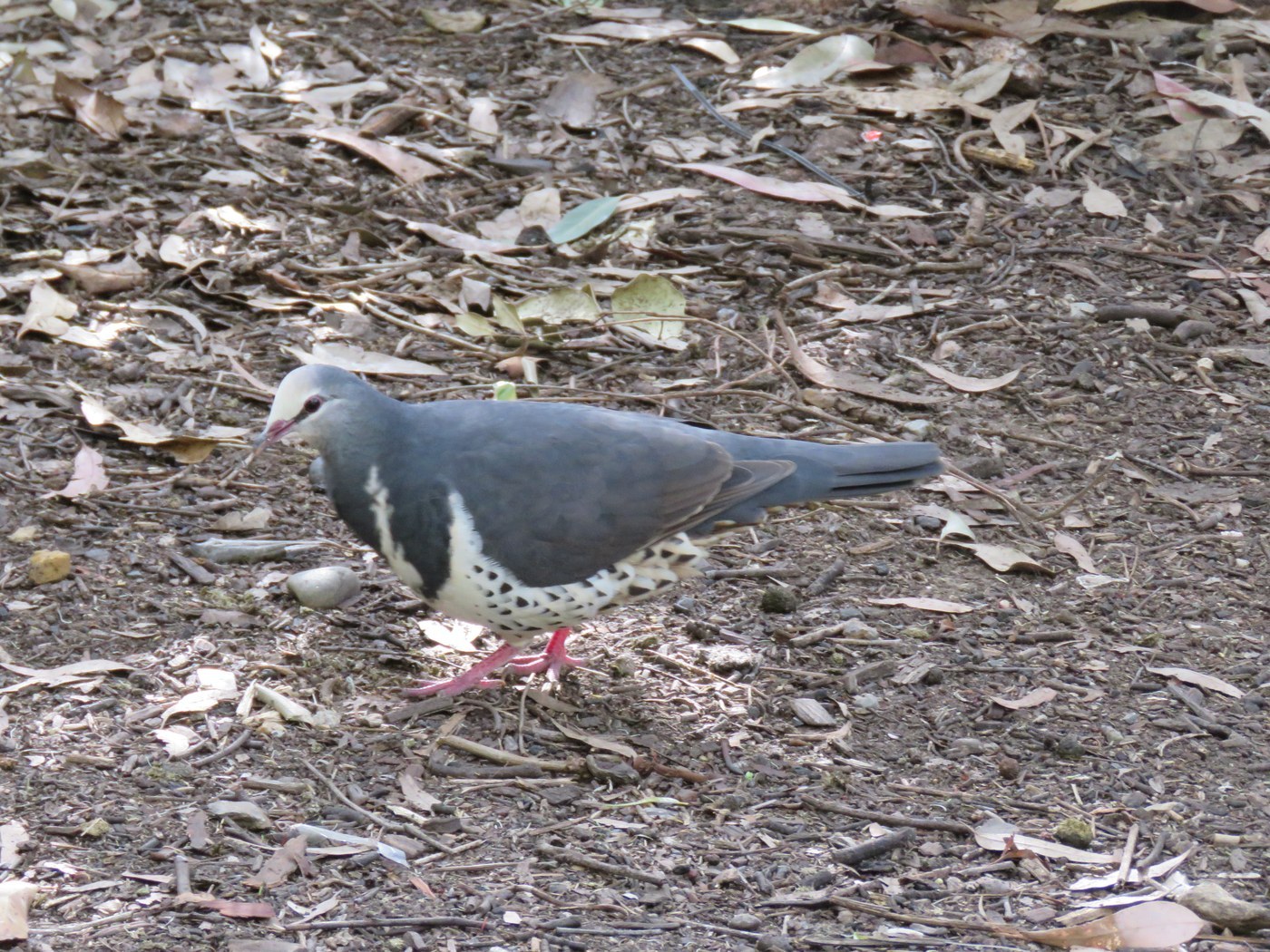
Wonga Pigeon
Dense, soft body contour feathers over a stocky frame

Squatter Pigeon
Dense, cryptic body contour feathers with a bold facial pattern

White-winged Dove
Broad, sturdy flight feathers with a bold white wing stripe

Western Crowned Pigeon
Rounded fan crest plumes over dense soft body feathers

Snow Pigeon
Dense insulating body contour feathers with a bold white rump and belly patch

Zebra Dove
Contour feathers with bold, extensive black-and-white barring

Scaly-naped Pigeon
Contour feathers with iridescent scaled nape pattern