

Passenger Pigeon
Ectopistes migratorius
Once among the most numerous birds in North America, the Passenger Pigeon was a slender, fast-flying species with a long pointed tail and iridescent neck patch, driven to extinction by the early 1900s.
- Feather type
- Long, pointed tail feathers and sleek contour feathers with an iridescent neck patch
- Colours
- Slate-blue upperparts, rich rufous-buff breast in males, and an iridescent bronze-green-and-pink neck patch
- Bird size
- Slender pigeon, ~38-41 cm including a long tail
Found a feather like this?
Identify any feather from a photo, free.
Overview
The Passenger Pigeon was once one of the most abundant birds in North America, forming flocks so large they were described as darkening the sky for hours as they passed. It inhabited the deciduous forests of eastern North America, feeding heavily on mast such as acorns and beechnuts. Intensive hunting and large-scale habitat loss through the 19th century drove the species to extinction, with the last known individual dying in captivity in 1914. Its plumage combined a slender build, long pointed tail, and striking iridescent neck feathering.
Identifying the Feather
- Tail feathers: notably long and pointed, longer and more tapered than in any other North American pigeon or dove, giving the bird a streamlined silhouette in flight
- Neck patch feathers: iridescent, shifting between bronze, green, and pink depending on the angle of light, more vivid in males
- Male body feathers: slate-blue upperparts contrasting with a rich rufous-buff breast
- Female body feathers: duller and grayer overall, with less vivid neck iridescence than males
- Museum and historical specimens remain the primary source for examining this species' feathers, since it no longer exists in the wild; compare described features against the Mourning Dove, its closest living relative, which is smaller with a shorter tail and far less vivid neck iridescence
Plumage & Molt
Males were more brightly colored, with a bluish-slate back, a rufous-buff breast, and a vivid iridescent neck patch, while females were duller and more uniformly grayish-brown with reduced iridescence. Juveniles resembled females but lacked neck iridescence entirely, developing it gradually as they matured. As with other pigeons, adults would have undergone a complete annual molt.
Habitat & Range
Passenger Pigeons ranged across the deciduous forests of eastern and central North America, from southern Canada into the northeastern and midwestern United States, with huge nomadic movements tracking mast crops such as acorns and beechnuts. The species required vast tracts of forest and nested in enormous colonies. Habitat loss combined with unregulated hunting through the 1800s caused a catastrophic population collapse, and the species was declared extinct in the early 20th century.
Behavior & Field Notes
Historical accounts describe Passenger Pigeons as highly social, nesting and roosting in colonies of staggering size, sometimes numbering in the millions of birds. They fed on mast crops, fruit, and seeds, foraging in large flocks that moved rapidly through the forest canopy and in open country. Their call was described as a variety of harsh, chattering notes rather than the soft cooing typical of many other pigeons. Nests were simple stick platforms built in enormous numbers within a single colony tree or grove.
Frequently asked questions
What feather feature most distinguished the Passenger Pigeon in flight?
Its long, pointed tail gave it a notably streamlined silhouette, longer and more tapered than any other pigeon or dove native to North America.
How did male and female plumage differ?
Males showed a bluish-slate back, rufous-buff breast, and vivid iridescent neck patch, while females were duller and grayer with less pronounced iridescence.
Is the Passenger Pigeon related to any living species?
Its closest living relative is the Mourning Dove, though the Passenger Pigeon was larger, longer-tailed, and more vividly iridescent on the neck.
Why is this species now extinct?
A combination of large-scale hunting and extensive deforestation through the 19th century caused a rapid population collapse, with the last known individual dying in captivity in 1914.
Passenger Pigeon guides
In-depth guides for identifying and understanding Passenger Pigeon.

Other feathers you may enjoy

Victoria Crowned Pigeon
Large lace-like fan crest plumes over dense body contour feathers

Plain Pigeon
Contour feathers, plain and uniformly toned, with a white wing patch

Zenaida Dove
Contour and flight feathers, faint iridescent sheen on neck

Pink Pigeon
Soft contour feathers with graduated tail

Nicobar Pigeon
Long, hackle-like elongated neck feathers with iridescent sheen
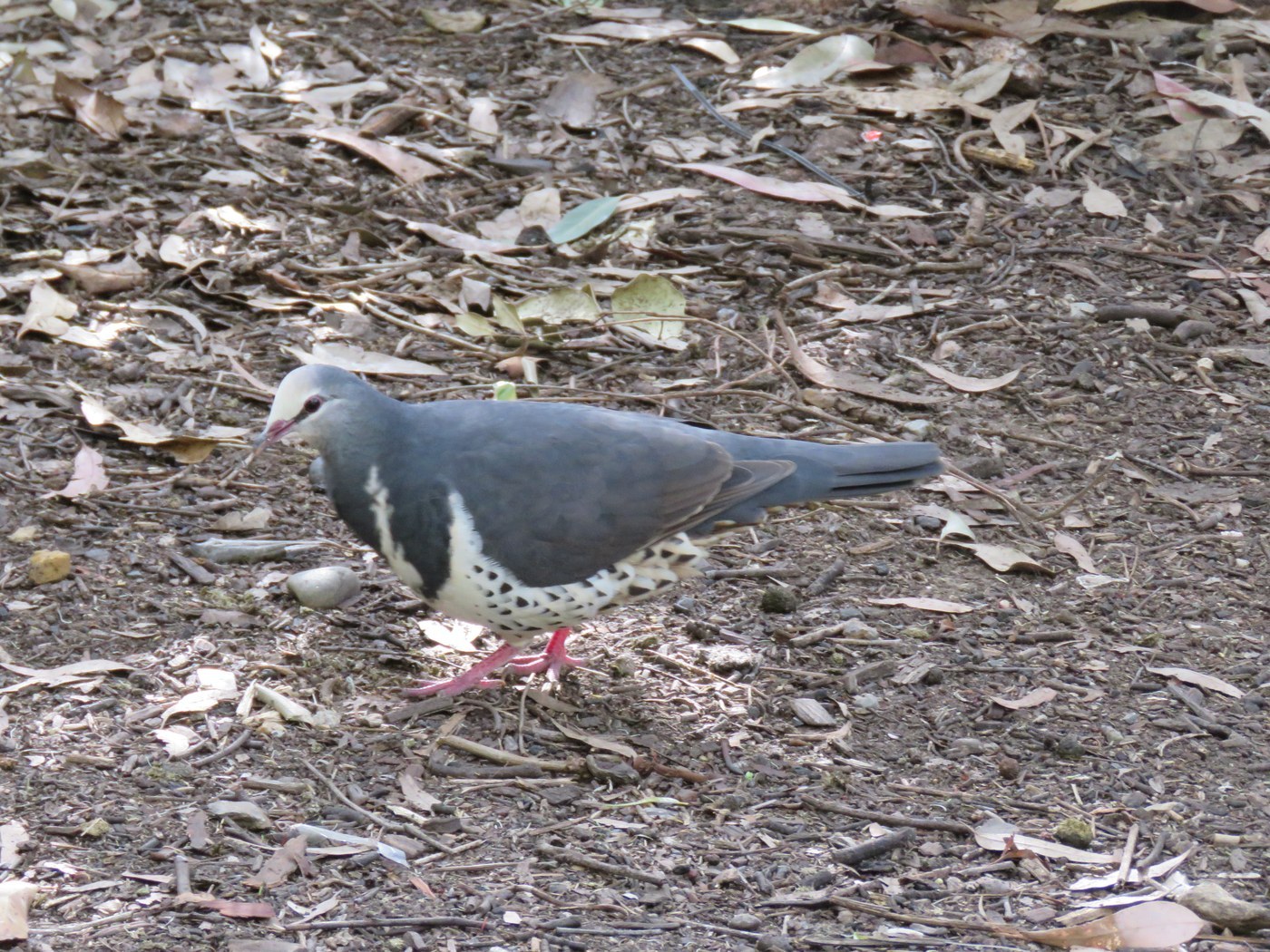
Wonga Pigeon
Dense, soft body contour feathers over a stocky frame

Squatter Pigeon
Dense, cryptic body contour feathers with a bold facial pattern

White-winged Dove
Broad, sturdy flight feathers with a bold white wing stripe

Western Crowned Pigeon
Rounded fan crest plumes over dense soft body feathers

Snow Pigeon
Dense insulating body contour feathers with a bold white rump and belly patch

Zebra Dove
Contour feathers with bold, extensive black-and-white barring

Scaly-naped Pigeon
Contour feathers with iridescent scaled nape pattern