
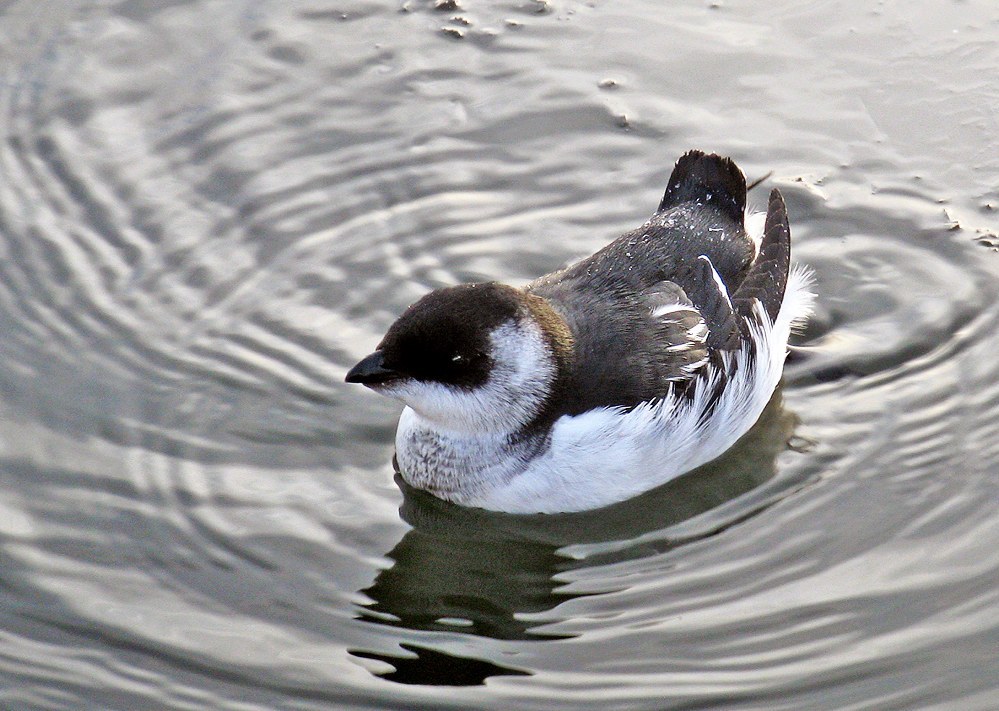
Little Auk
Alle alle
The smallest auk of the North Atlantic, a dumpy, tightly packed little bird with a black-and-white pattern and a stubby bill, breeding in immense colonies in the high Arctic.
- Feather type
- Contour, flight, and short tail feathers
- Colours
- Black upperparts and breast, white underparts, white scapular streaks
- Bird size
- Tiny, sparrow-plump, ~19-21 cm
Found a feather like this?
Identify any feather from a photo, free.
Overview
The Little Auk, known in North America as the Dovekie, is a tiny, chunky seabird that breeds in some of the largest seabird colonies on Earth along high-Arctic coastlines. Its small size, stubby bill, and simple black-and-white pattern distinguish it easily from all the larger auks.
Identifying the Feather
- Upperpart feathers are black, with fine white streaking along the scapulars (shoulder feathers) that is distinctive at close range
- Underparts are white, with black extending down over the upper breast in breeding adults, unlike the cleaner white breast of non-breeding birds
- Flight feathers are short and rounded, matching the bird's small, compact body and whirring flight
- Tail feathers are very short and squared, contributing to the species' dumpy, rounded silhouette
- Feathers overall are noticeably smaller in scale than those of any other North Atlantic auk, reflecting the bird's tiny size
Plumage & Molt
- Breeding adults show a black head, neck, and upper breast contrasting with a white lower breast and belly, plus white scapular streaks
- Non-breeding adults show white extending up over the throat and lower face, with less black on the breast
- Juveniles resemble non-breeding adults with slightly duller feather edges
- Sexes are alike in plumage
- A complete molt after breeding, including flight feathers, is followed by a flightless period spent on the water
Habitat & Range
Little Auks breed in enormous colonies on scree slopes and boulder fields along high-Arctic coastlines, including Greenland, Svalbard, and other Arctic islands. Outside the breeding season they winter over the North Atlantic, ranging as far south as the coasts of northwestern Europe and northeastern North America, particularly near pack ice edges and cold, productive waters.
Behavior & Field Notes
This auk feeds mainly on small planktonic crustaceans, diving to pursue prey in cold, productive Arctic waters, and its abundance at colonies makes it a key food source for Arctic predators. It nests in crevices among boulders and scree, often in colonies numbering in the millions of individuals. Its calls are chattering, trilling notes given in dense choruses at breeding colonies.
Frequently asked questions
What identifies a Little Auk feather?
Look for a small black feather from the upperparts, sometimes with a fine white streak if from the scapular region, or a white feather from the underparts; the notably small size compared with other auk feathers is a strong clue.
Why is the Little Auk also called the Dovekie?
Dovekie is the common North American name for the same species, referring to its small, dove-like proportions.
What does the Little Auk mainly eat?
It feeds primarily on small planktonic crustaceans found in cold, productive Arctic waters.
Little Auk guides
In-depth guides for identifying and understanding Little Auk.
Other feathers you may enjoy

Western Gull
Body, flight, and tail feathers
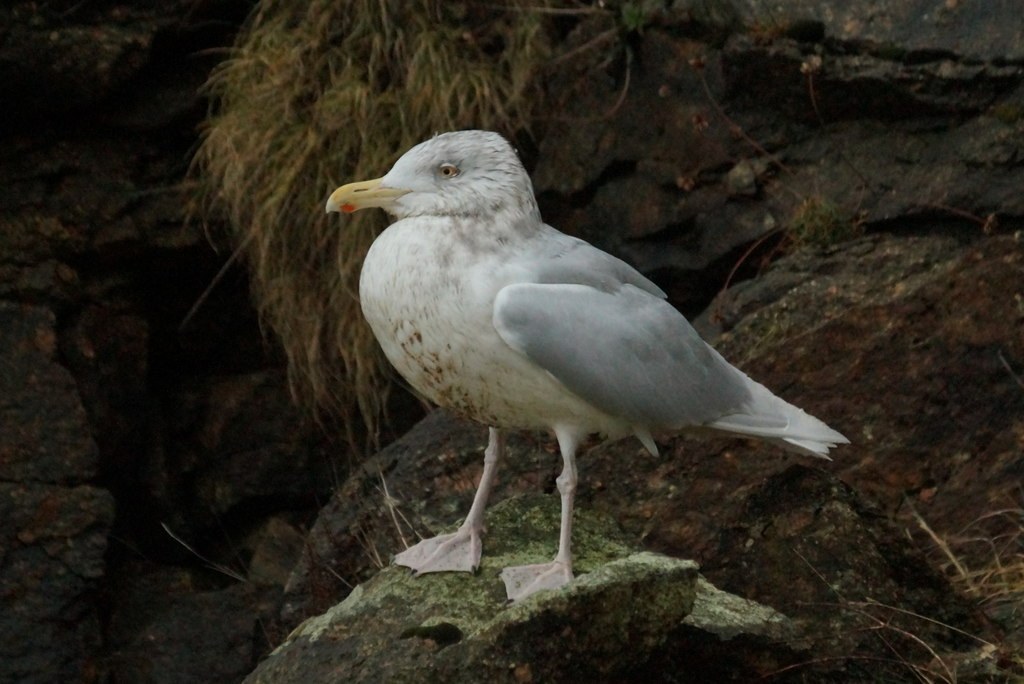
Glaucous Gull
Body, flight, and tail feathers

American Herring Gull
Body, flight, and tail feathers

Great Black-backed Gull
Body, flight, and tail feathers

Common Gull
Body, flight, and tail feathers
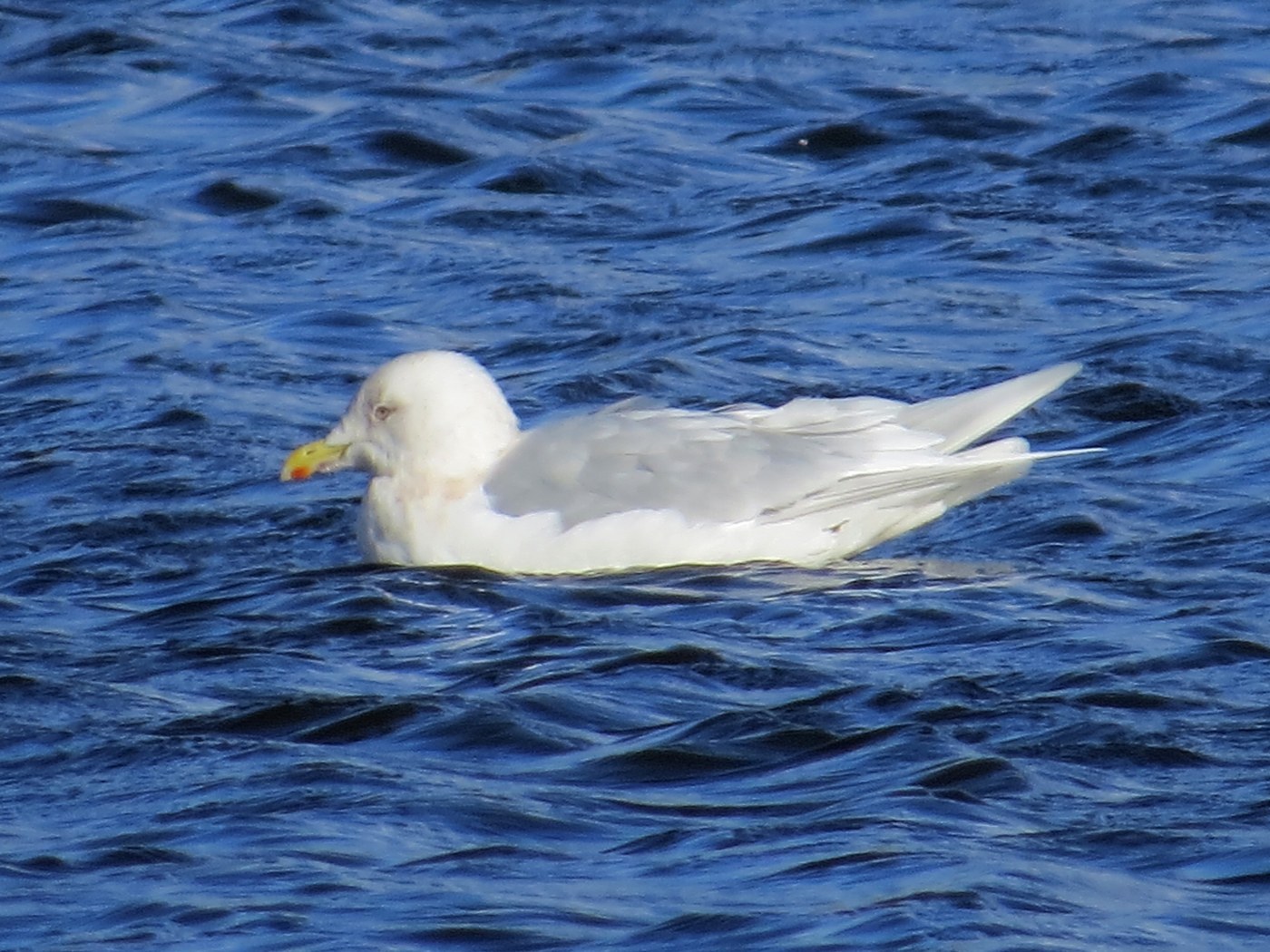
Iceland Gull
Body, flight, and tail feathers

Ring-billed Gull
Body, flight, and tail feathers

Glaucous-winged Gull
Body, flight, and tail feathers

Herring Gull
Body, flight, and tail feathers

Lesser Black-backed Gull
Body, flight, and tail feathers

California Gull
Body, flight, and tail feathers
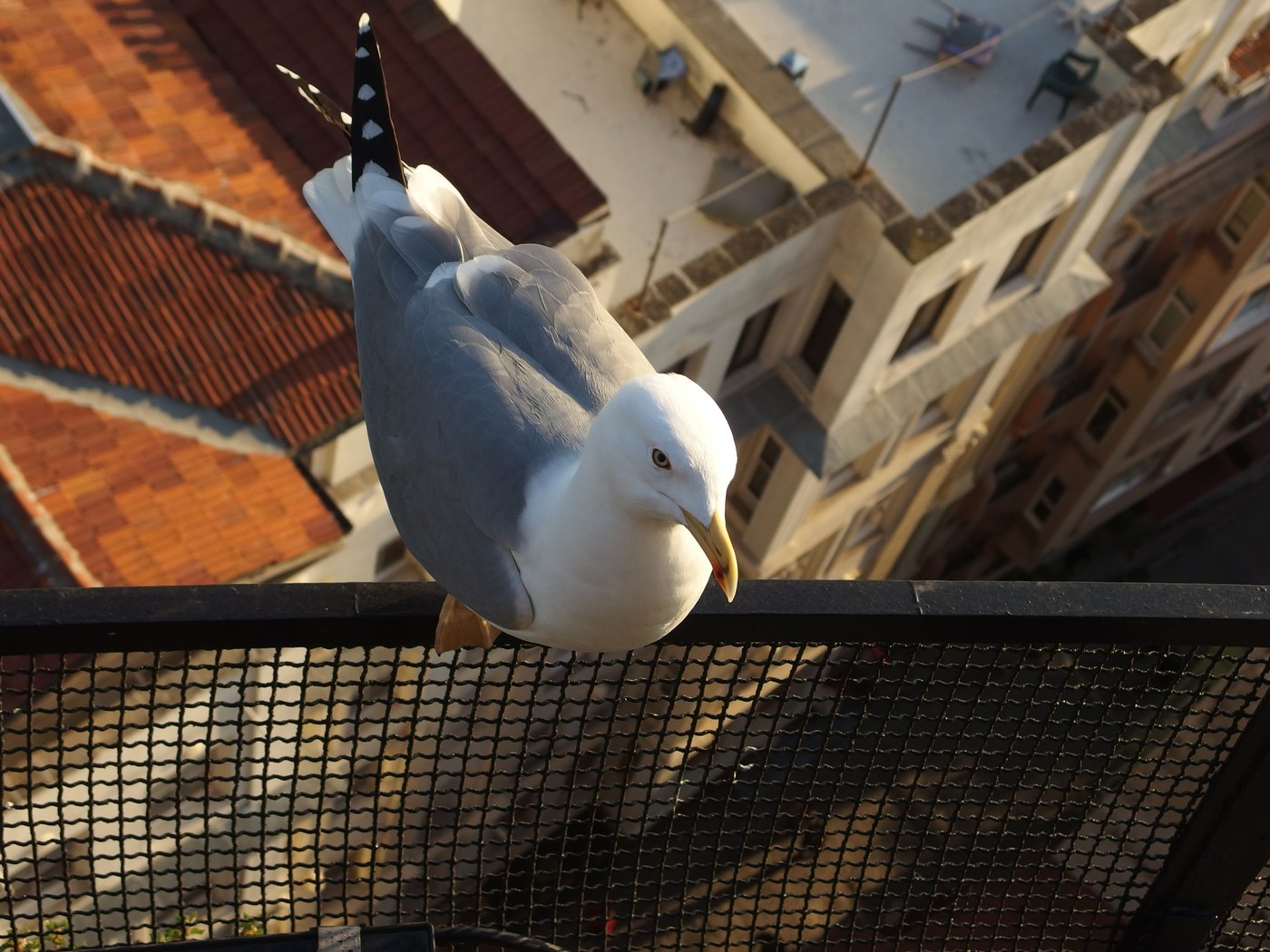
Yellow-legged Gull
Body, wing covert, and flight feathers