
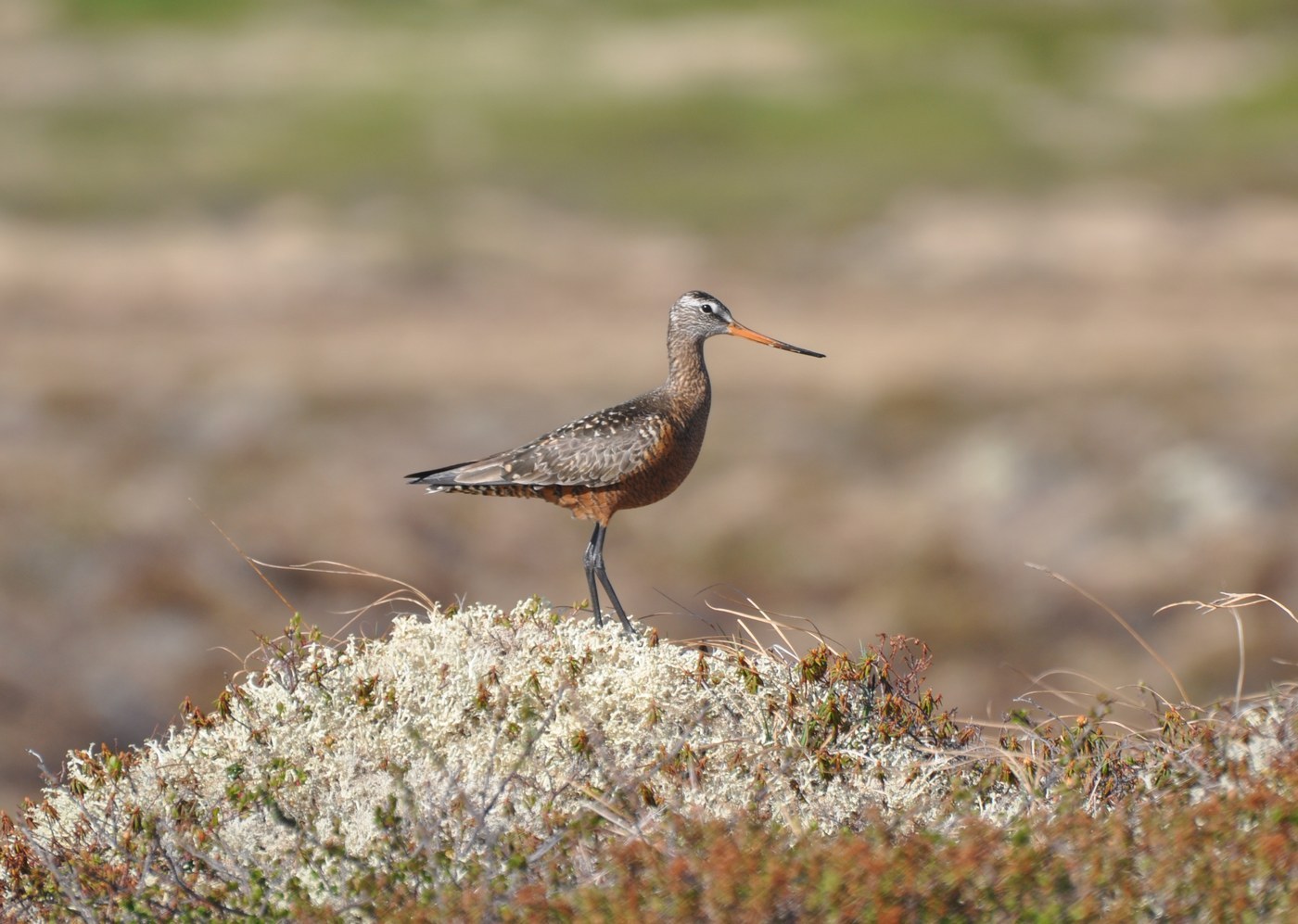
Hudsonian Godwit
Limosa haemastica
A long-distance migrant godwit with deep chestnut, heavily barred breeding plumage and distinctive black underwing coverts, known for undertaking one of the longest nonstop overwater flights of any shorebird.
- Feather type
- Large wader contour and flight feathers
- Colours
- Deep chestnut, heavily barred breeding underparts; plain gray-brown nonbreeding plumage; black underwing coverts
- Bird size
- Large, ~37-42 cm
Found a feather like this?
Identify any feather from a photo, free.
Overview
Overview
The Hudsonian Godwit is a striking, long-billed shorebird known for its remarkable long-distance migrations, with some populations flying nonstop over open ocean for thousands of kilometers between breeding grounds and South American wintering areas. Its breeding plumage is a deep, richly barred chestnut, quite different from the plainer nonbreeding gray.
Feathers are most often found at key migratory staging areas along the Atlantic and Pacific coasts, or on wintering grounds in southern South America.
Identifying the Feather
Feather Identification
- Breeding underparts: deep chestnut-red with bold dark barring throughout, one of the most richly colored godwit plumages.
- Underwing feathers: blackish underwing coverts, a distinctive feature visible in flight and a useful clue on shed wing feathers, differing from the paler or cinnamon underwings of other godwits.
- Nonbreeding feathers: plain gray-brown above and pale gray below, a dramatic contrast to the vivid breeding plumage.
- Tail feathers: a black tail with a white base, forming a bold black-and-white pattern in flight.
- Versus other godwits: the combination of black underwing coverts and a black-based-white tail readily separates Hudsonian Godwit from Marbled Godwit's cinnamon underwings and Black-tailed or Bar-tailed Godwit's different wing patterns.
Plumage & Molt
Plumage Notes
Breeding adults show a deep chestnut-red underside with bold, extensive dark barring; females tend to be larger and slightly duller than males. Nonbreeding adults transform to a plain gray-brown above and pale gray below, one of the more dramatic seasonal changes among godwits.
Juveniles show a buffy wash with neatly scaled upperpart feathers, distinct from both the vivid breeding adult and the plainer nonbreeding adult. Molt into nonbreeding plumage occurs largely after long migratory flights are complete, often well into the nonbreeding season.
Habitat & Range
Habitat & Range
Hudsonian Godwits breed in scattered locations across subarctic tundra and boreal bog habitats in Alaska and Canada, including areas near Hudson Bay. They undertake extraordinary migratory journeys, often flying nonstop over open ocean, to winter primarily in southern South America, including Chile and Argentina.
Behavior & Field Notes
Behavior & Field Notes
Hudsonian Godwits forage by probing deeply in mud and shallow water for invertebrates, both on breeding tundra and at coastal staging and wintering sites. They are known for concentrating in large numbers at a relatively small number of critical migratory stopover locations.
Nests are shallow scrapes on tundra or bog. The flight call is a sharp, ringing note. Because of the species' reliance on long nonstop flights and a limited number of key staging areas, feathers are often concentrated at these specific stopover sites during migration windows.
Frequently asked questions
What is the most distinctive feather feature of Hudsonian Godwit?
Blackish underwing coverts combined with a black tail showing a white base, a pattern not matched by other godwit species.
What does breeding plumage look like?
Deep chestnut-red underparts with bold, extensive dark barring throughout.
How dramatic is the seasonal plumage change?
Quite dramatic - nonbreeding adults become plain gray-brown above and pale gray below, a strong contrast to the vivid breeding plumage.
Where would I find Hudsonian Godwit feathers?
At key migratory staging sites along major flyways, or on wintering grounds in southern South America.
What is notable about this species' migration?
Some populations fly nonstop over open ocean for thousands of kilometers between breeding and wintering areas, one of the longest such flights of any shorebird.
Hudsonian Godwit guides
In-depth guides for identifying and understanding Hudsonian Godwit.
Other feathers you may enjoy
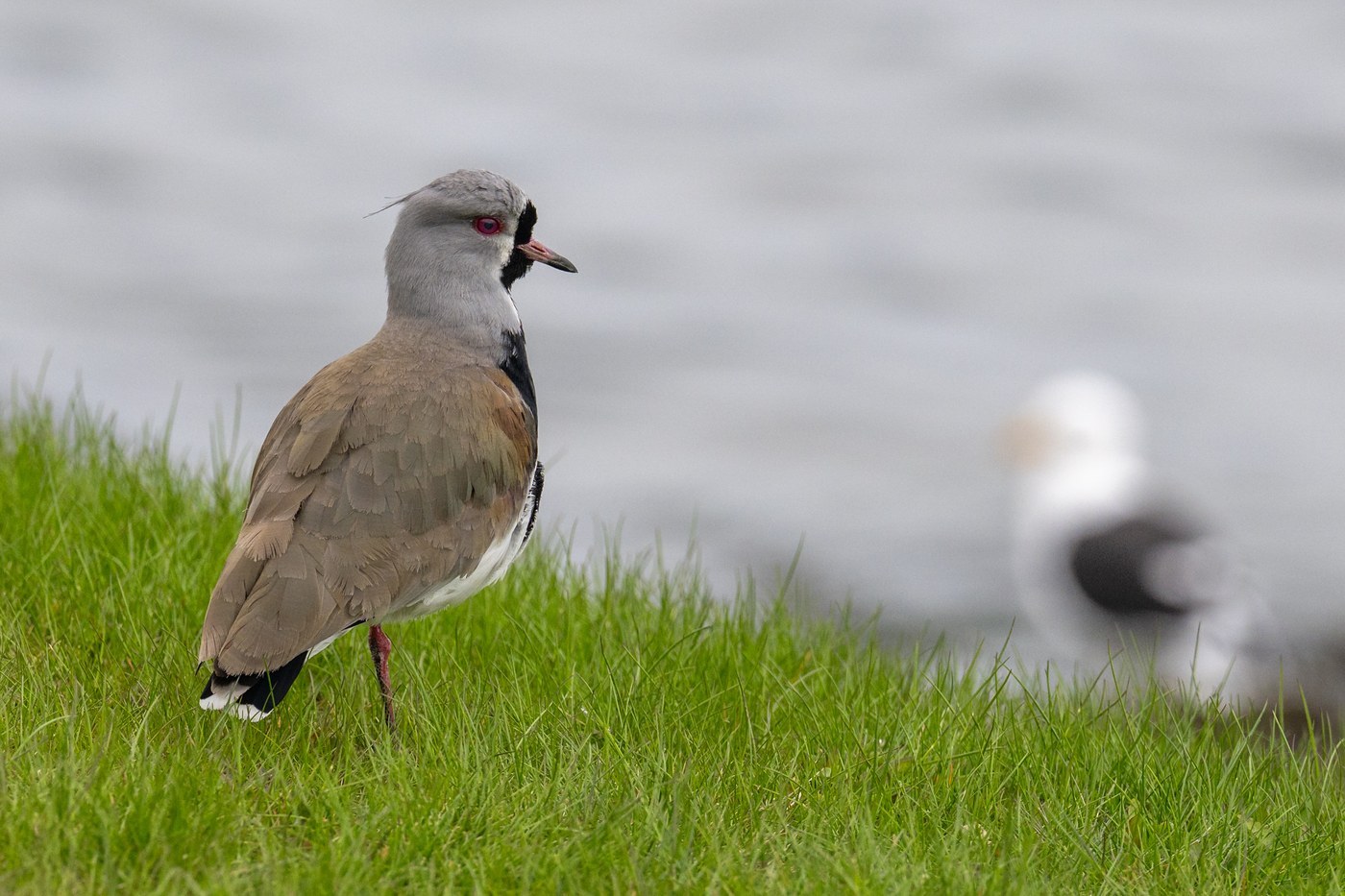
Southern Lapwing
Body, flight, and tail feathers

Jack Snipe
Body and flight feathers

Far Eastern Curlew
Body, flight, and tail feathers

Terek Sandpiper
Body and flight feathers

Wilson's Phalarope
Body and flight feathers
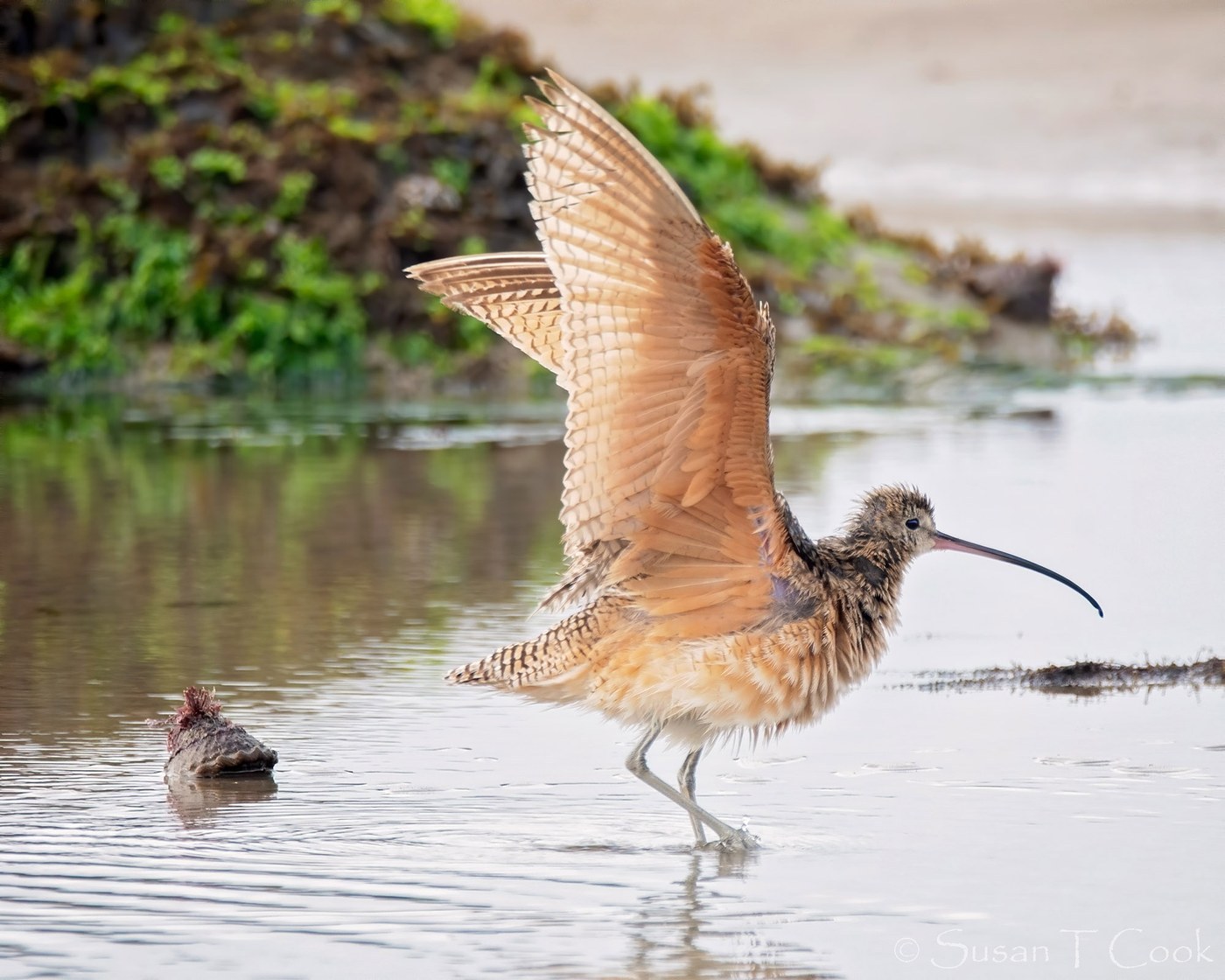
Long-billed Curlew
Body, flight, and tail feathers

Upland Sandpiper
Body, flight, and tail feathers

Red Phalarope
Body and flight feathers

Eurasian Dotterel
Body feathers
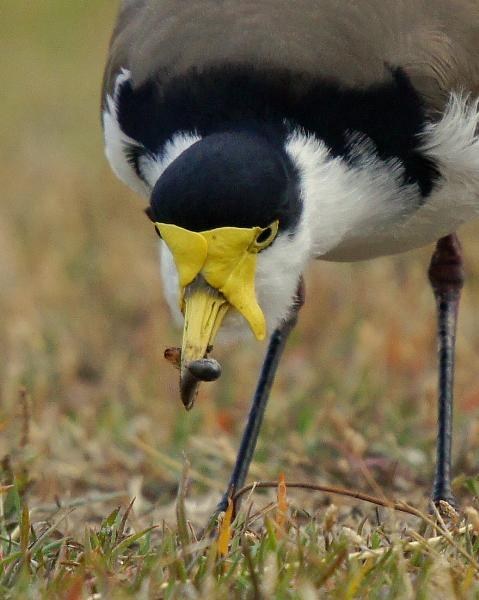
Masked Lapwing
Body, flight, and tail feathers
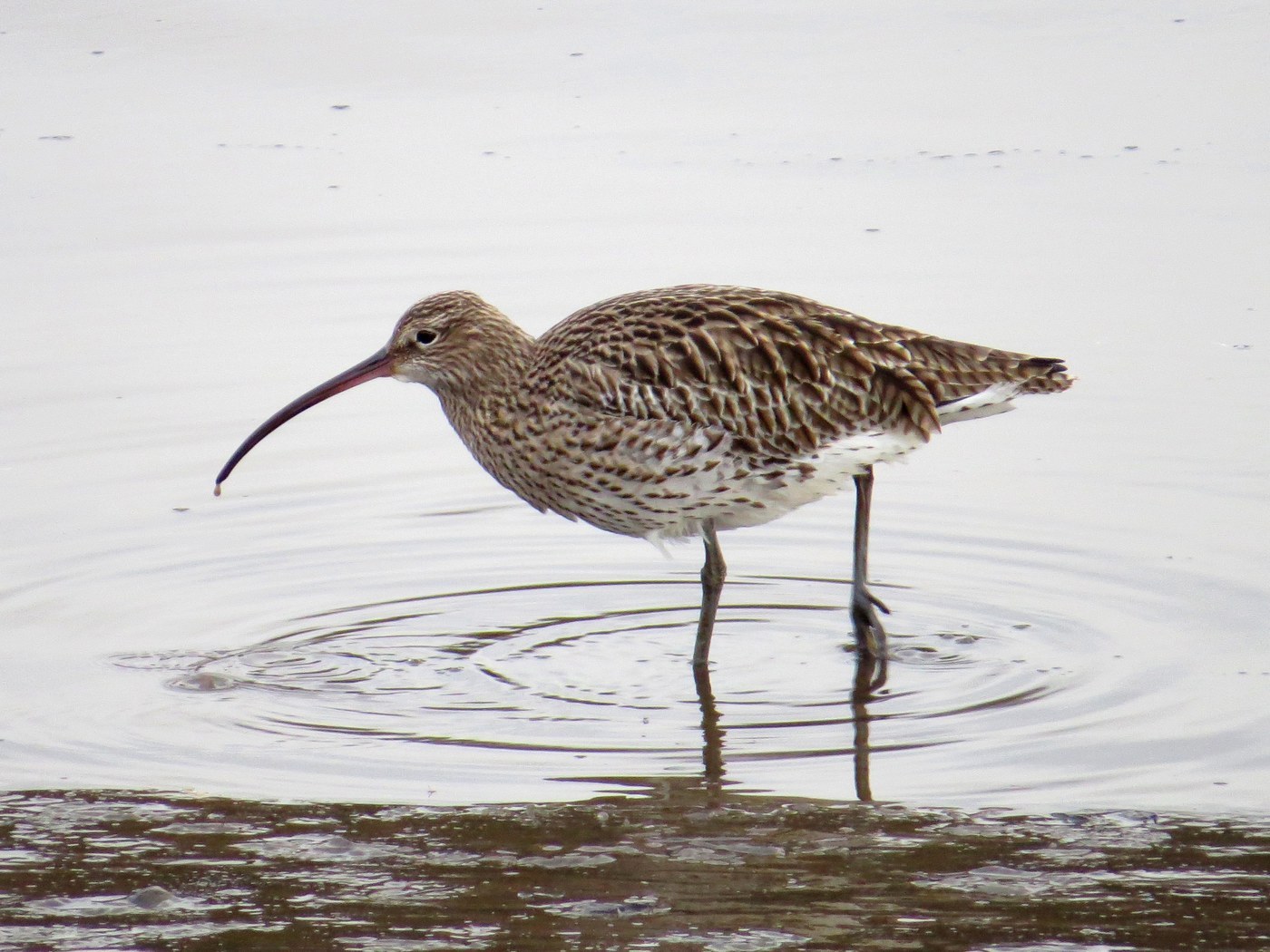
Eurasian Curlew
Body, flight, and tail feathers
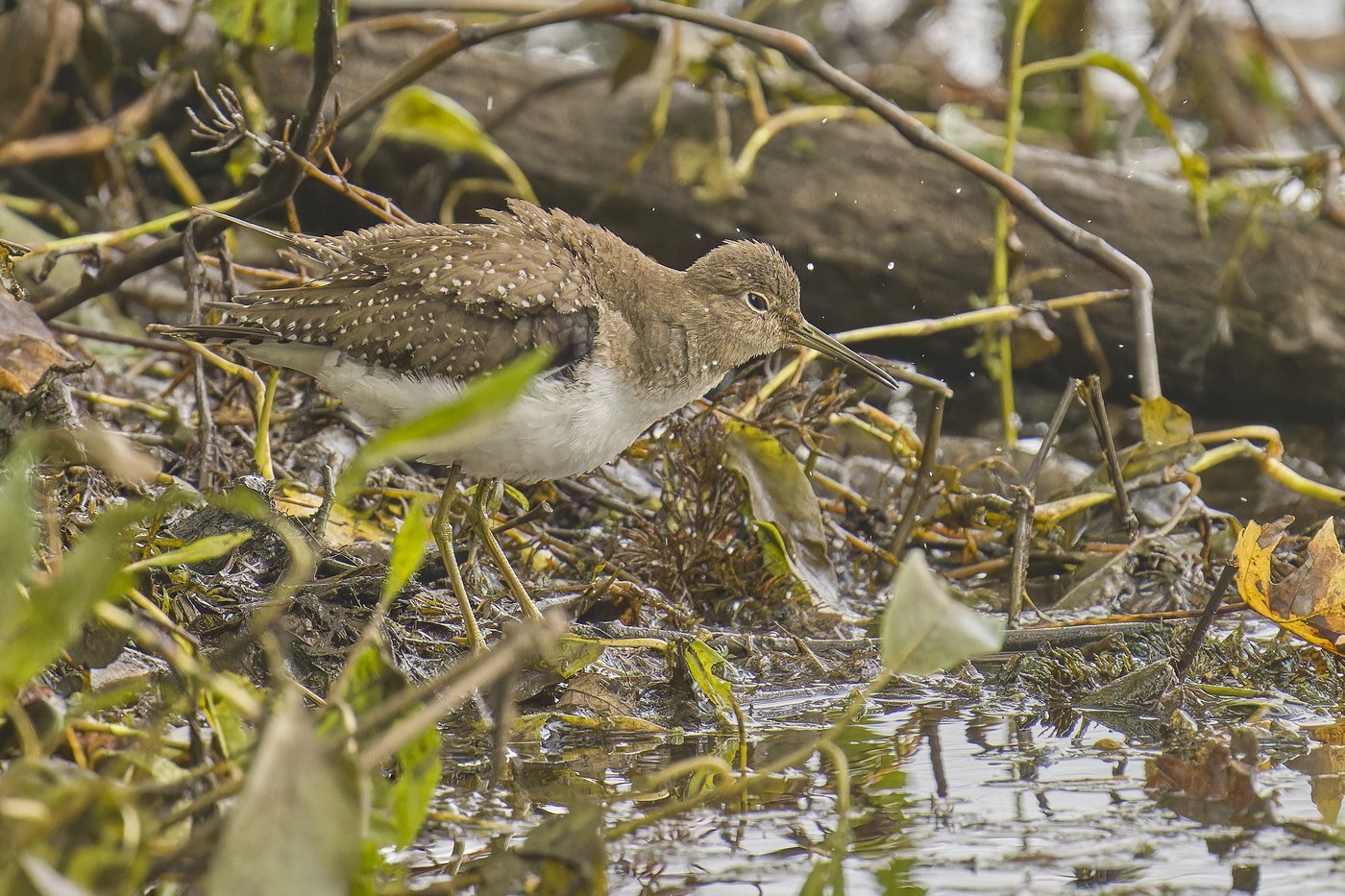
Solitary Sandpiper
Contour and flight feathers