

Spotted Sandpiper
Actitis macularius
A small, constantly bobbing sandpiper whose breeding-season underparts are covered in bold round black spots unlike any other North American shorebird.
- Feather type
- Contour and flight feathers
- Colours
- Olive-brown with bold black spotting (breeding)
- Bird size
- Small sandpiper, ~18-20 cm
Found a feather like this?
Identify any feather from a photo, free.
Overview
Overview
The Spotted Sandpiper is a small, active shorebird best known for its habit of teetering its rear end up and down almost continuously while foraging along shorelines. In breeding plumage its white underparts are marked with large, bold black spots, a pattern unmatched by any other common North American sandpiper. Non-breeding birds lose the spots entirely, becoming plain brownish above and white below.
Unlike many sandpipers that flock in large numbers, Spotted Sandpipers are usually seen singly or in loose pairs along the edges of freshwater habitats.
Identifying the Feather
Feather Identification
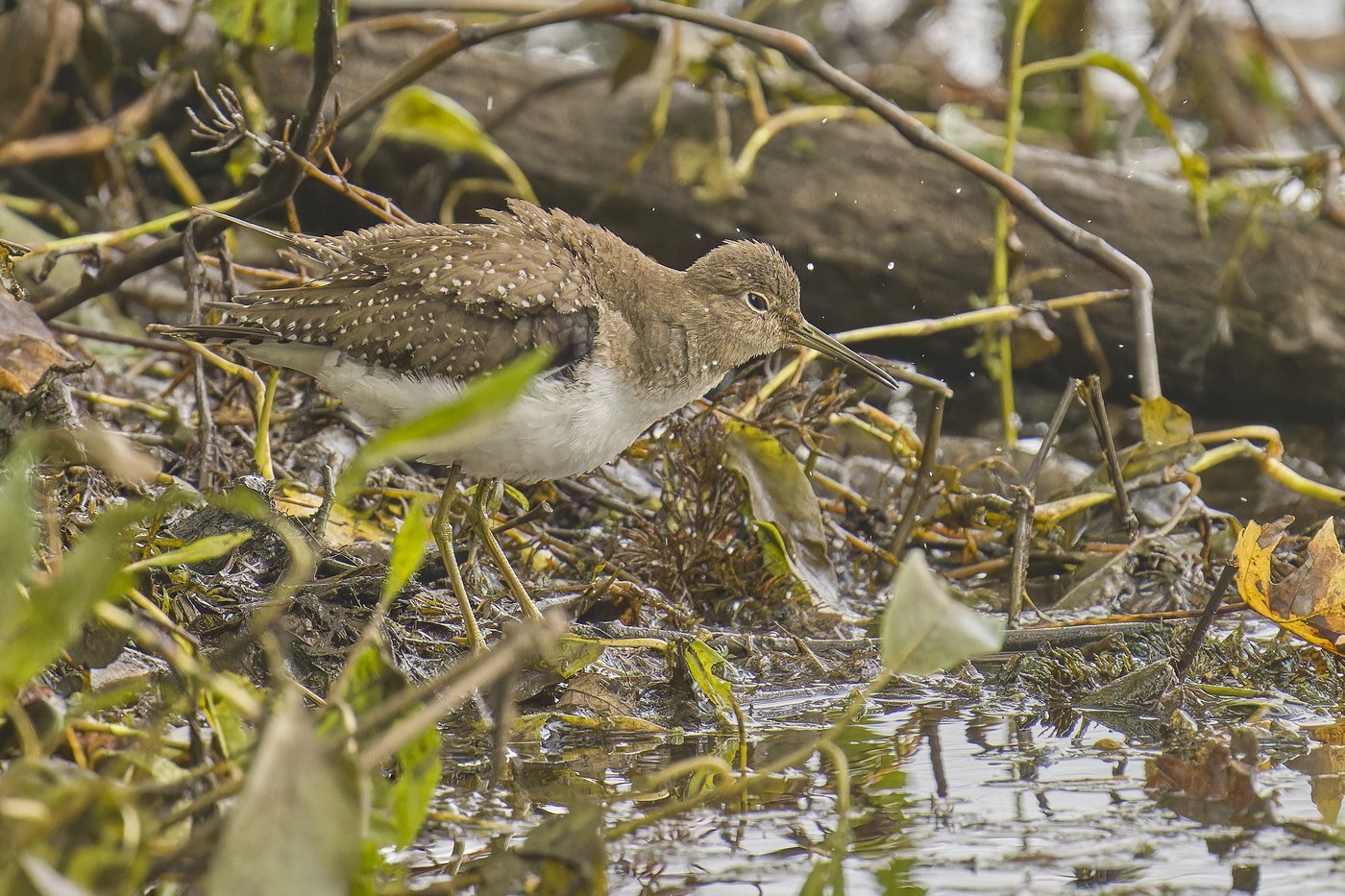
- Underparts (breeding): Bold, round black spots scattered across an otherwise white breast, belly, and flanks, unique among similarly sized sandpipers.
- Underparts (non-breeding/juvenile): Plain white with no spotting, which can cause confusion with the Common Sandpiper outside the breeding season.
- Upperparts: Olive-brown, faintly barred in fresh plumage, with a short white wingstripe visible in flight formed by white tips and bases on the flight feathers.
- Bill and legs: Bill is orange-based with a dark tip in breeding adults; legs and feet are dull yellowish-orange, both fading in winter.
- Compared to similar species: The bold black spotting is diagnostic when present; when absent, the shallow, stiff-winged flight style and constant tail-bobbing are the best clues, distinguishing it from the Common Sandpiper of Eurasia.
Plumage & Molt
Plumage Notes
Breeding adults show heavy black spotting on white underparts and warm brown upperparts with dark barring; this spotting is lost in the non-breeding season, when birds appear plain brownish-gray above and clean white below. Sexes look alike, though females average slightly larger and more heavily spotted. Juveniles resemble non-breeding adults, with buffy fringes on the wing coverts that wear away over the first year.
Habitat & Range
Habitat & Range
Spotted Sandpipers breed along the margins of streams, rivers, lakes, and ponds across most of North America, from the Arctic tree line south to the temperate United States. The species is strongly migratory, wintering from the southern United States through Central and South America along a wide variety of freshwater and coastal shorelines.
Behavior & Field Notes
Behavior & Field Notes
This species forages by picking insects and small invertebrates from shorelines, rocks, and shallow water, often bobbing its tail almost constantly, a habit that aids quick identification even at a distance. Flight is distinctive: shallow, stiff, fluttering wingbeats low over the water. Spotted Sandpipers are notable for a breeding system in which females often mate with multiple males, each of which incubates a separate clutch. Calls include a sharp, clear "peet-weet."
Frequently asked questions
What makes Spotted Sandpiper feathers distinctive?
In breeding plumage, bold round black spots cover the white underparts, a pattern not shared by other common sandpipers of similar size.
Do Spotted Sandpipers have spots year-round?
No, the spots are only present in breeding plumage; non-breeding and juvenile birds have plain white underparts.
How can I tell a Spotted Sandpiper feather from a Common Sandpiper feather?
The two are very similar in non-breeding plumage; range is the most reliable clue, as Spotted Sandpiper occurs in the Americas and Common Sandpiper in Eurasia and Africa.
Where would I find a Spotted Sandpiper feather?
Along the edges of streams, rivers, lakes, and ponds throughout much of North America.
Spotted Sandpiper guides
In-depth guides for identifying and understanding Spotted Sandpiper.

Other feathers you may enjoy
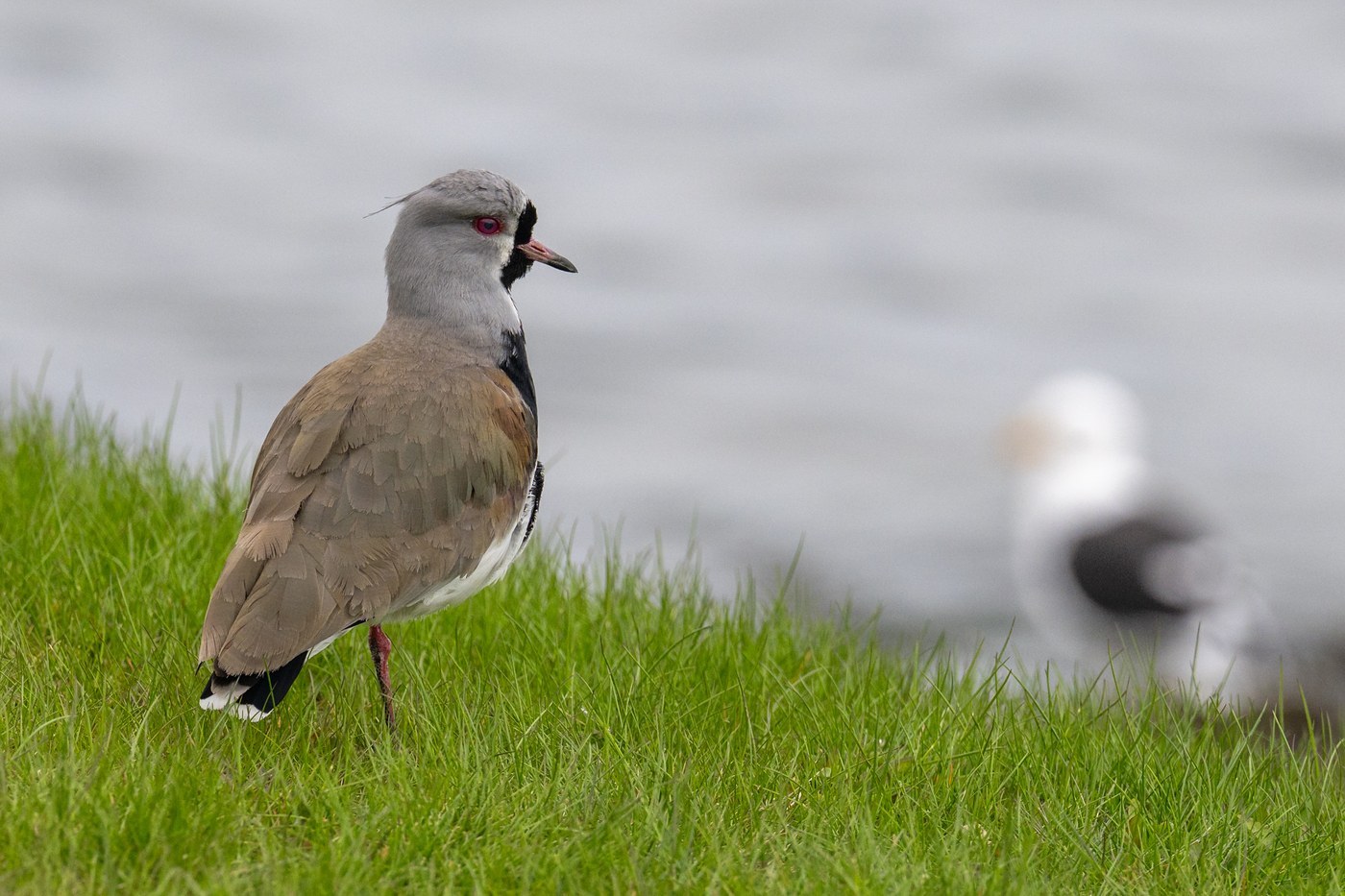
Southern Lapwing
Body, flight, and tail feathers

Jack Snipe
Body and flight feathers

Far Eastern Curlew
Body, flight, and tail feathers

Terek Sandpiper
Body and flight feathers

Wilson's Phalarope
Body and flight feathers
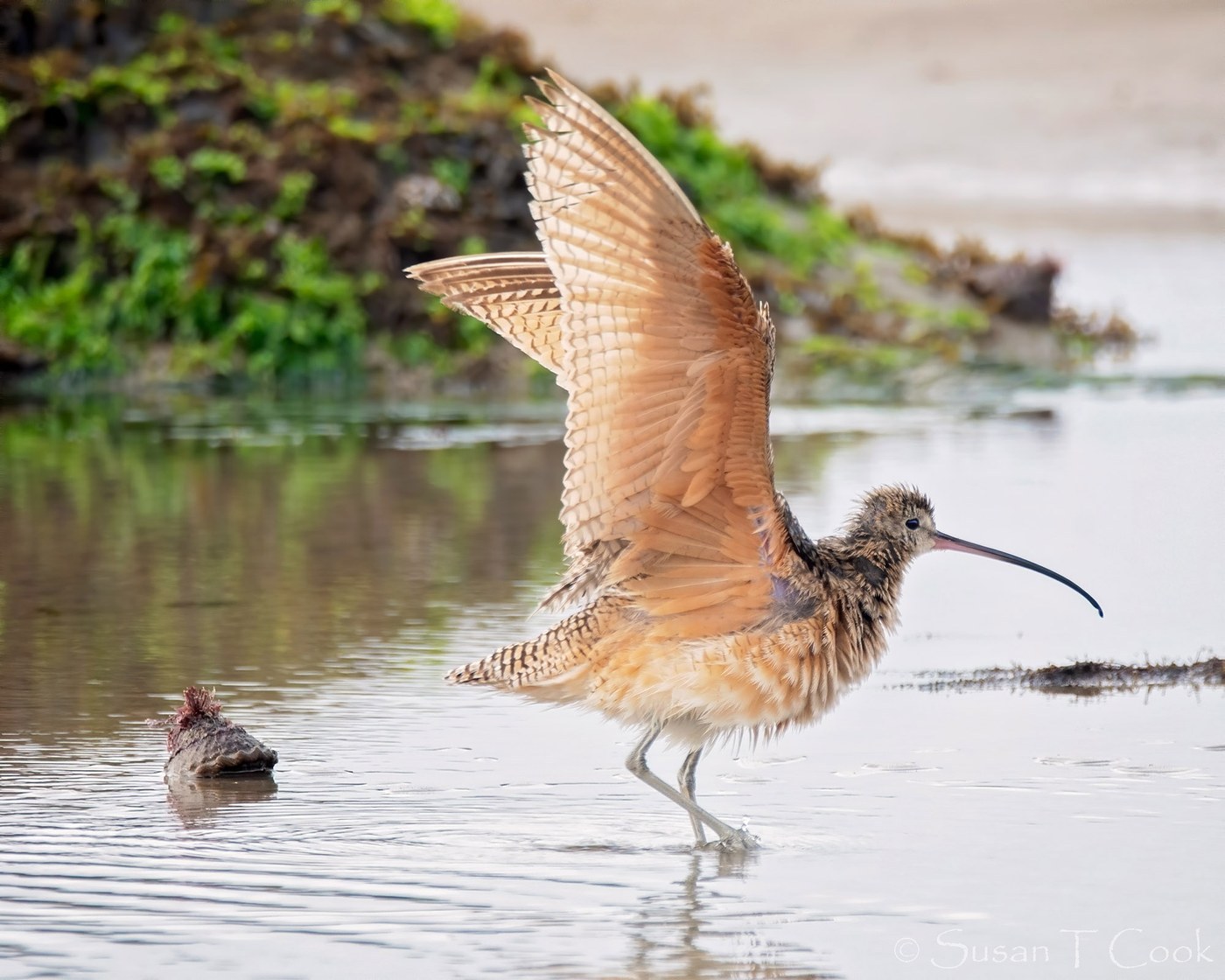
Long-billed Curlew
Body, flight, and tail feathers

Upland Sandpiper
Body, flight, and tail feathers

Red Phalarope
Body and flight feathers

Eurasian Dotterel
Body feathers
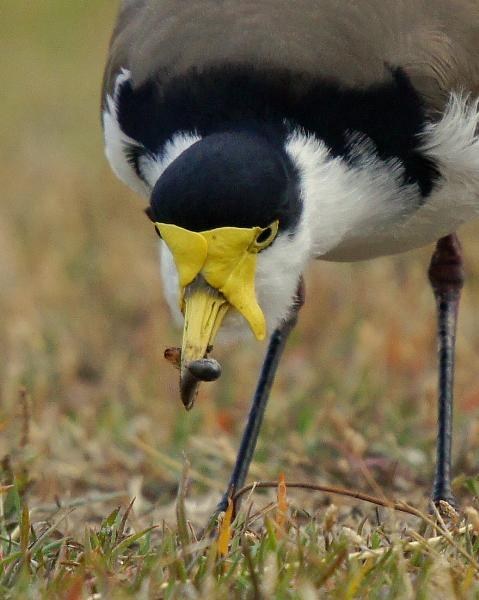
Masked Lapwing
Body, flight, and tail feathers
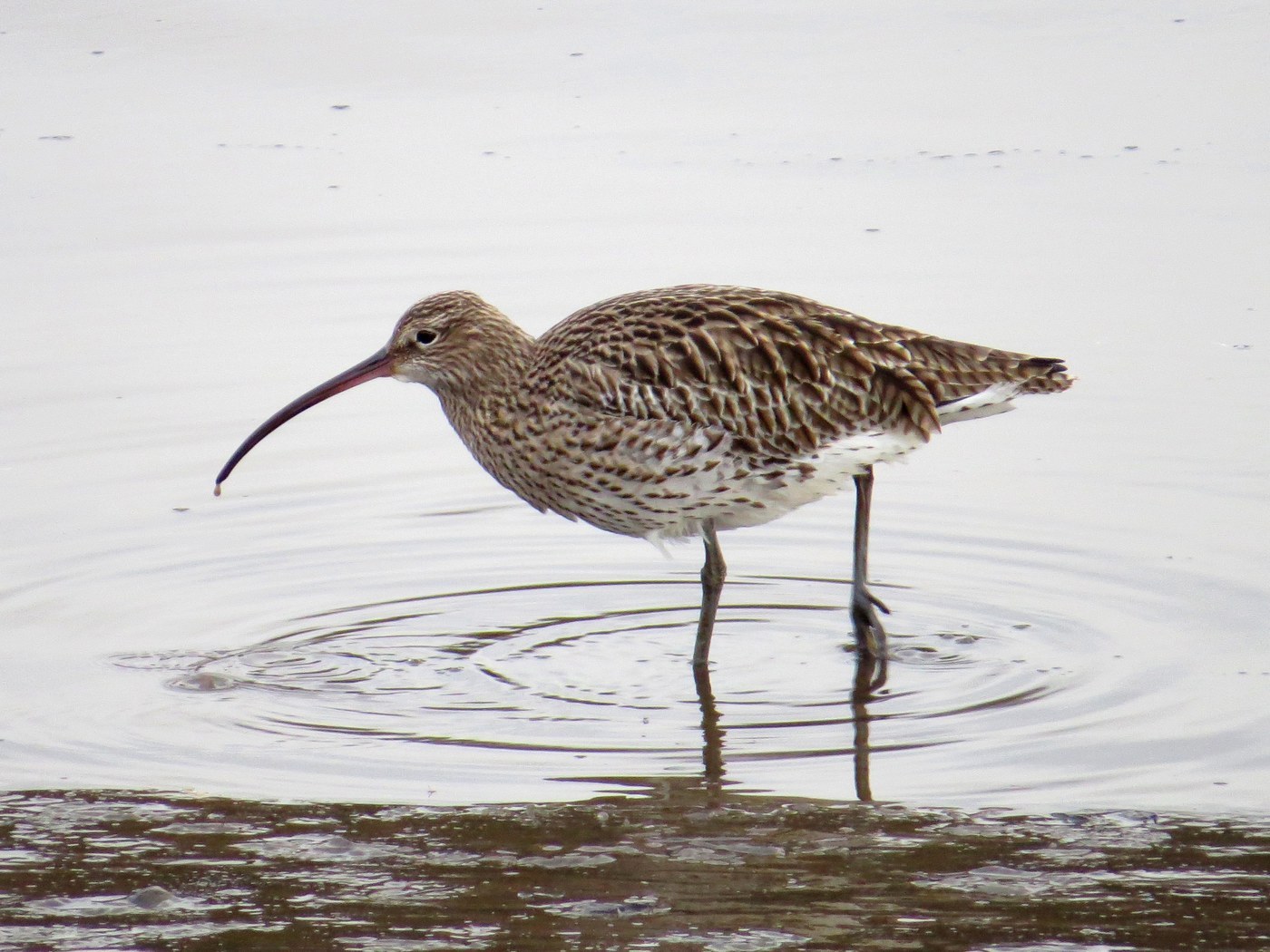
Eurasian Curlew
Body, flight, and tail feathers
Solitary Sandpiper
Contour and flight feathers