
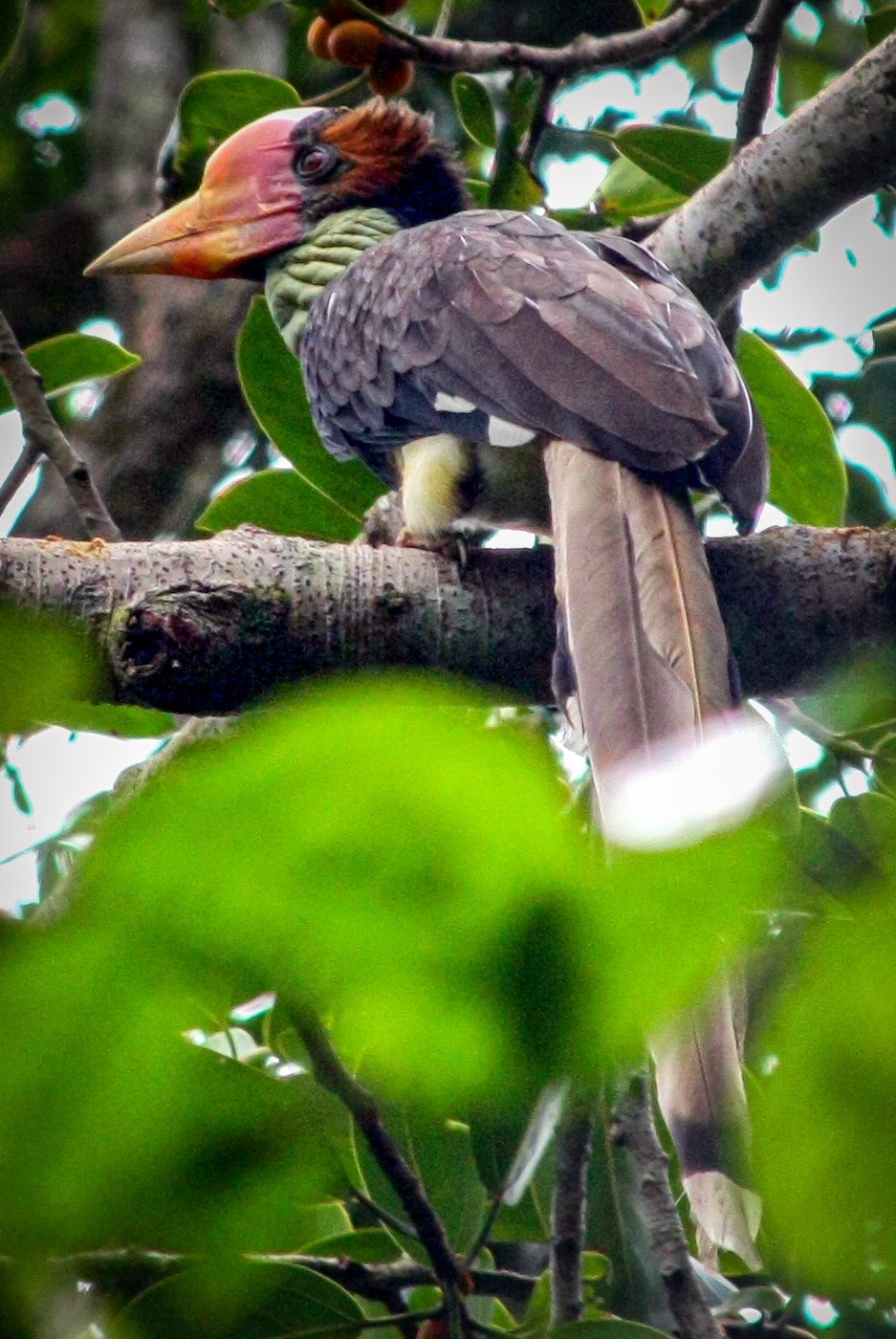
Helmeted Hornbill
Rhinoplax vigil
The Helmeted Hornbill is a large, distinctive Southeast Asian rainforest bird best known for its solid casque and greatly elongated central tail feathers, which extend far beyond the rest of the tail. Its dark body plumage contrasts with white leg feathers and a long, banded tail.
- Feather type
- Elongated central tail feathers, dense contour feathers
- Colours
- Blackish-brown body with a white belly and long white tail feathers marked by a black band
- Bird size
- Very large, ~110-120 cm including elongated tail
Found a feather like this?
Identify any feather from a photo, free.
Overview
Overview
The Helmeted Hornbill is unique among hornbills for possessing a solid, rather than hollow, casque and for its exceptionally long central tail feathers. Its plumage is otherwise a fairly typical dark hornbill pattern, but the tail proportions alone make it one of the most distinctive large forest birds in its range.
- Only hornbill with a solid casque structure
- Central tail feathers are dramatically elongated compared to other hornbills
- Found in undisturbed lowland and hill rainforest of Sundaic Southeast Asia
Identifying the Feather
Feather Identification
Body plumage is blackish-brown, with white on the belly and lower underparts. The most distinctive feathers are the greatly elongated central tail feathers, which are white with a black subterminal band and extend well beyond the rest of the tail.
- Body: blackish-brown contour feathers
- Belly and legs: white
- Central tail feathers: greatly elongated, white with a black band near the tip
- Remaining tail feathers: shorter, dark with paler tips
The combination of dark body plumage with dramatically elongated white-and-black central tail feathers is unmatched among other Southeast Asian hornbills, making shed tail feathers relatively easy to place to species.
Plumage & Molt
Plumage Notes
Males and females share a similar plumage pattern, differing mainly in bare throat skin color, with males showing red throat skin and females paler yellowish skin. Juveniles show shorter central tail feathers and duller body plumage before the elongated feathers fully develop.
- Sexes alike in body plumage; bare throat skin differs
- Juveniles show underdeveloped tail elongation
- The elongated central tail feathers grow progressively with age and can show wear from the bird's display and territorial behavior
Habitat & Range
Habitat & Range
Restricted to lowland and hill rainforest of the Sundaic region, including Borneo, Sumatra, and the Malay Peninsula, generally requiring large, undisturbed forest tracts.
- Non-migratory resident of mature rainforest
- Highly dependent on tall, intact forest structure
- Sensitive to logging and habitat loss due to specialized habitat needs
Behavior & Field Notes
Behavior & Field Notes
This hornbill forages mainly on fruit supplemented by small animal prey, and is known for a distinctive far-carrying call used in territorial and social displays.
- Voice: a series of loud hoots accelerating into a distinctive laughing, cackling climax that carries long distances through the forest
- Nesting: natural tree cavities in large rainforest trees, with the female sealed in during incubation
- Field notes: the greatly elongated white-and-black central tail feathers are the single clearest confirming feature among Southeast Asian hornbills
Frequently asked questions
What makes Helmeted Hornbill feathers so distinctive?
The greatly elongated central tail feathers, white with a black band near the tip, are unlike any other Southeast Asian hornbill's tail.
How does the casque of this species differ from other hornbills?
It is solid rather than hollow, unique within the hornbill family, though this trait relates to the bill structure rather than the feathers.
Where does this species live?
In lowland and hill rainforest across Borneo, Sumatra, and the Malay Peninsula, requiring large tracts of undisturbed forest.
How can you sex this hornbill by appearance?
Body plumage looks similar between sexes, but bare throat skin differs, red in males and paler yellowish in females.
Helmeted Hornbill guides
In-depth guides for identifying and understanding Helmeted Hornbill.

Other feathers you may enjoy

Common Cuckoo
Flight and body feathers
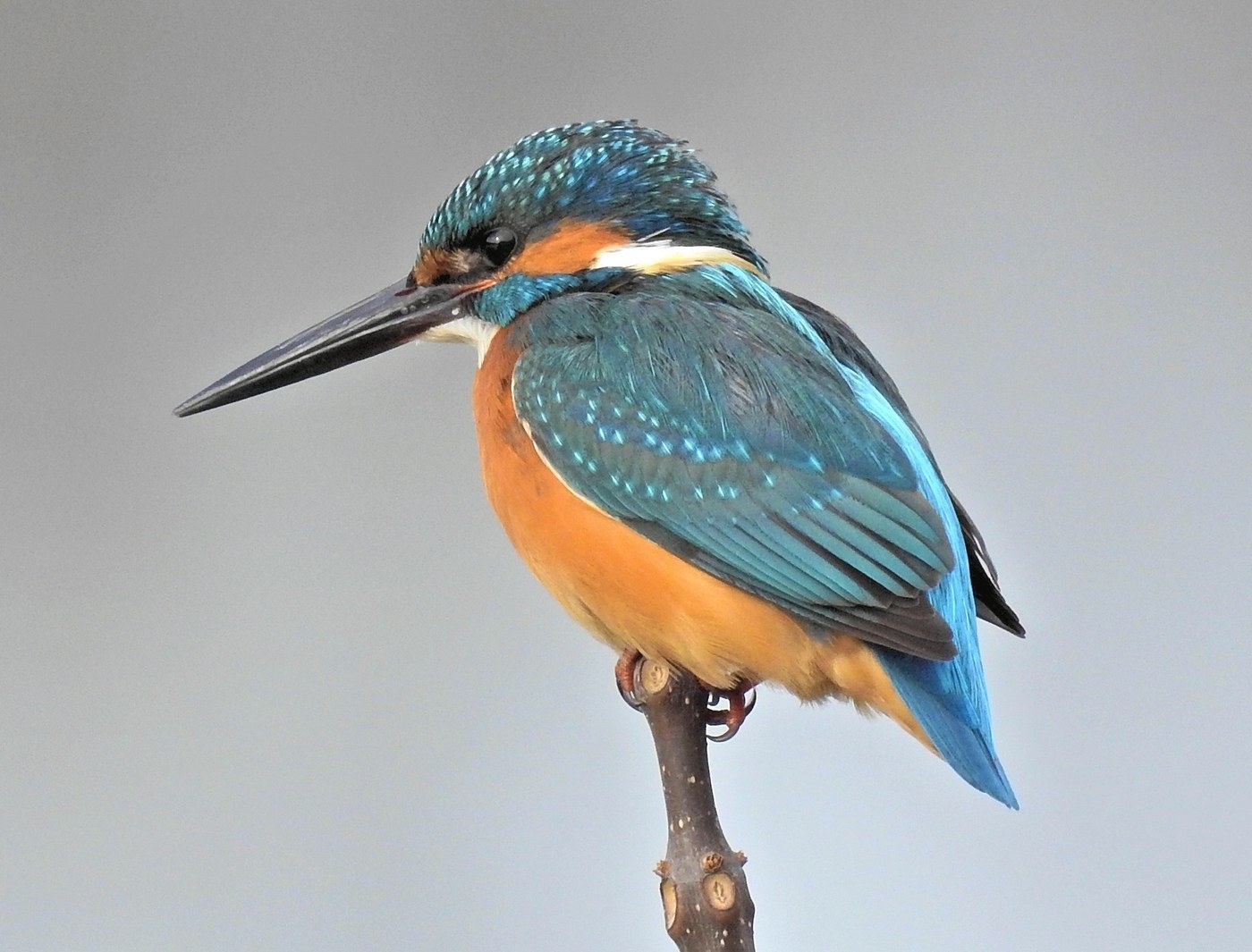
Common Kingfisher
Body (contour) and wing feathers
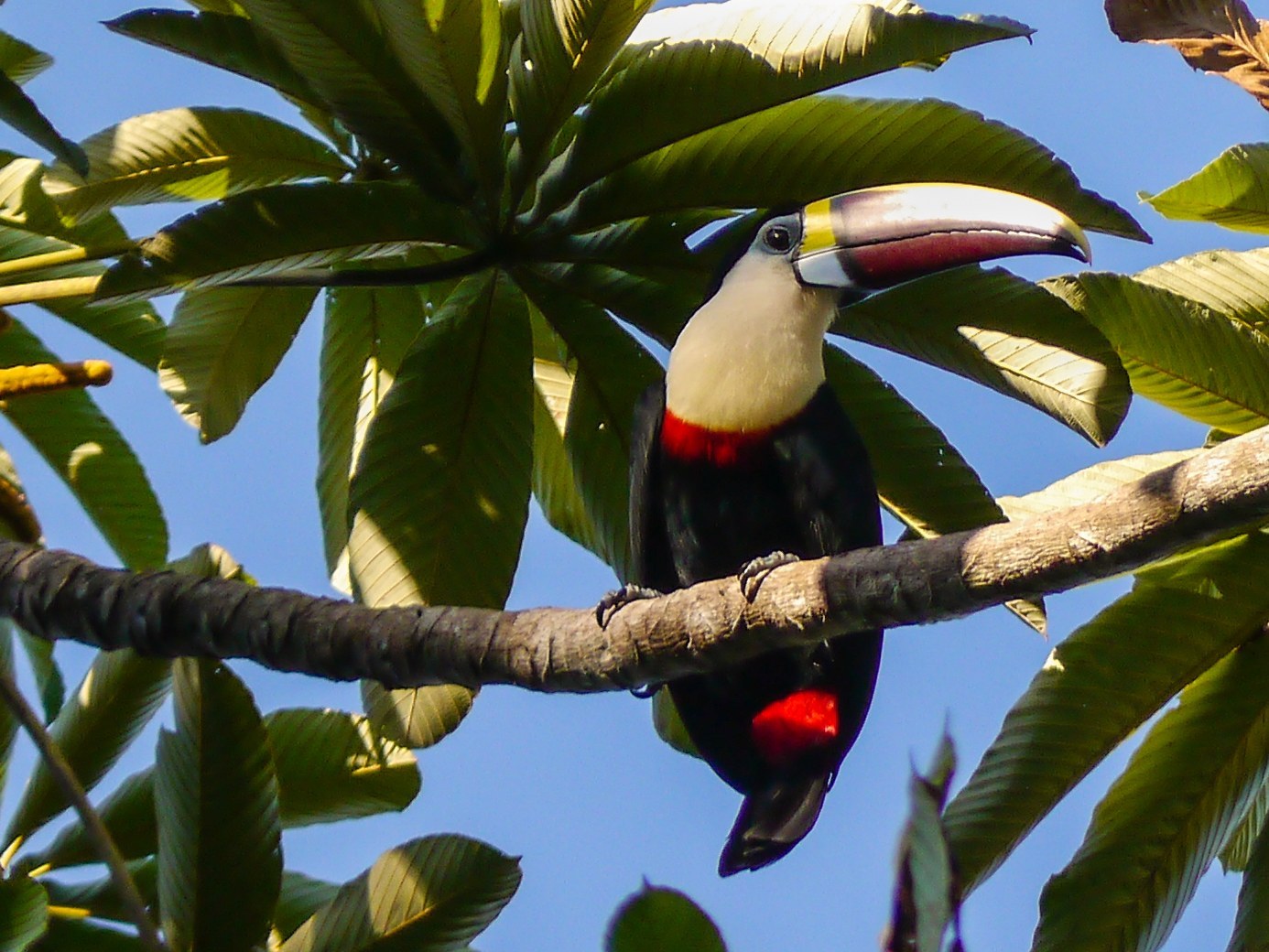
White-throated Toucan
Short rounded contour feathers, short broad wings
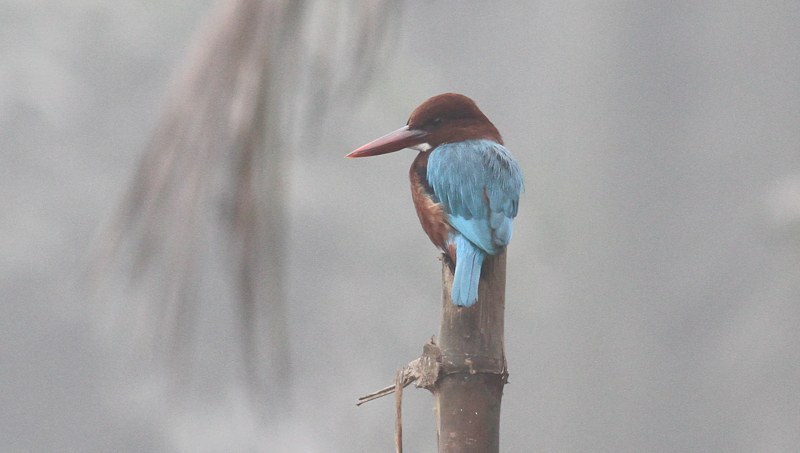
White-throated Kingfisher
Dense contour feathers; broad rounded wings

White-throated Bee-eater
Sleek, aerodynamic contour feathers; elongated central tail streamers
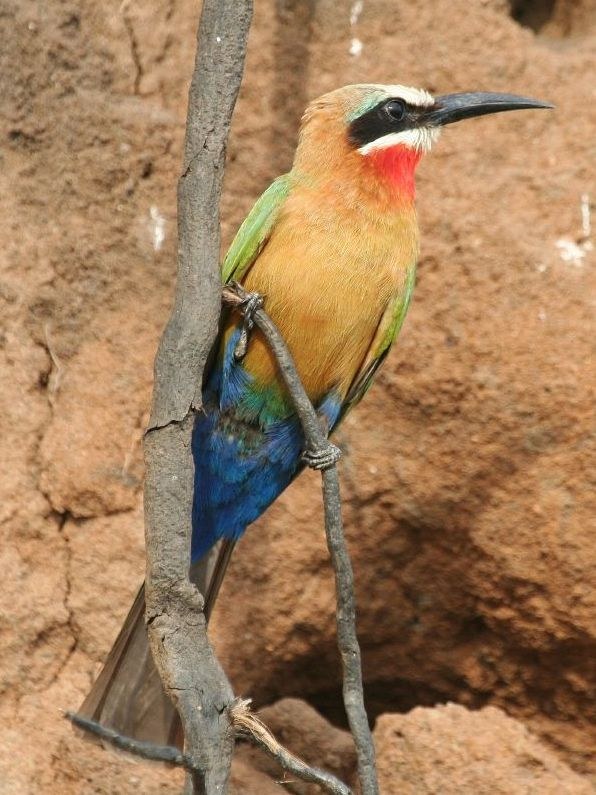
White-fronted Bee-eater
Sleek contour feathers; short tail with slight point

Southern Yellow-billed Hornbill
Slender contour feathers, moderate flight feathers
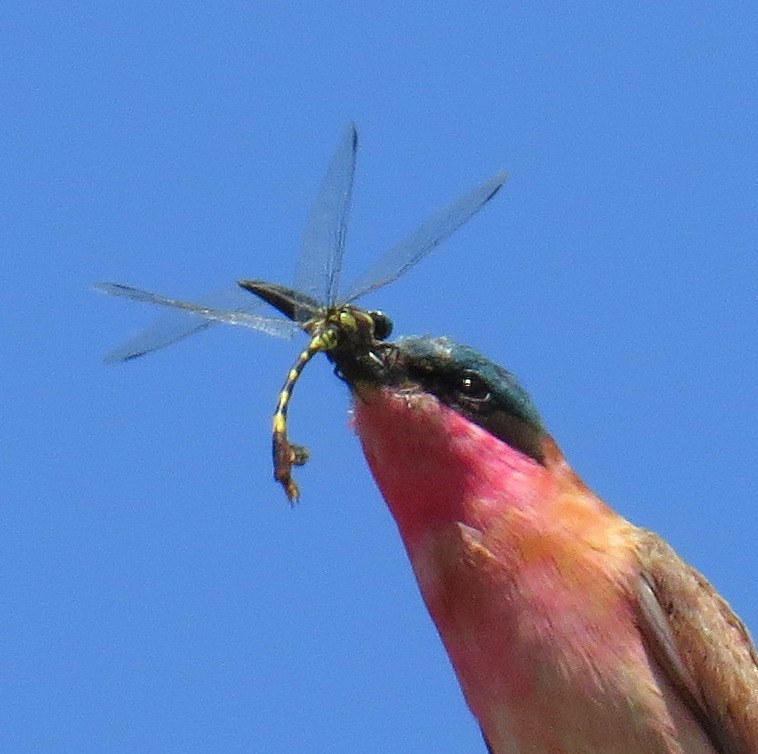
Southern Carmine Bee-eater
Sleek, pointed contour feathers; elongated central tail streamers
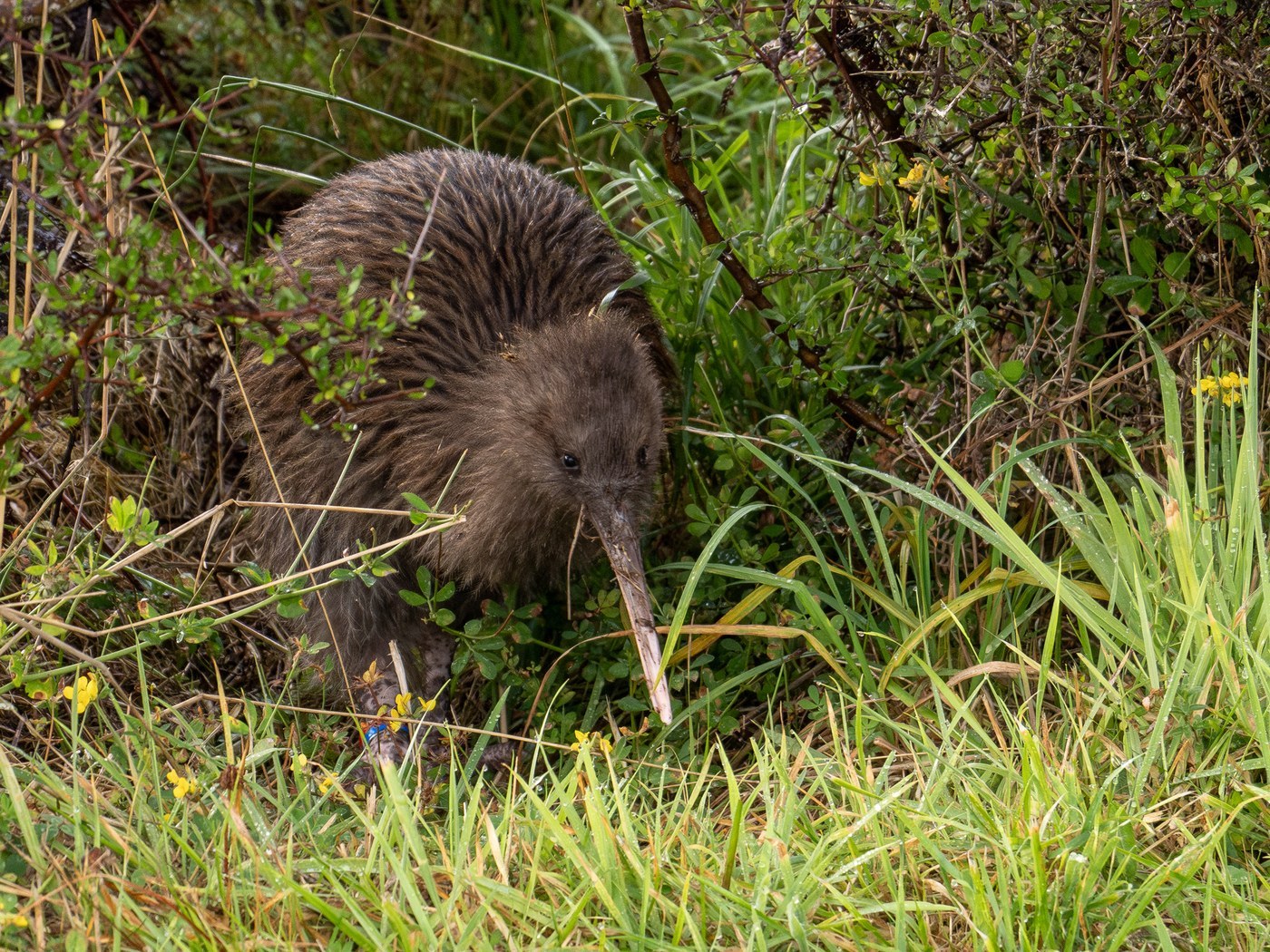
Southern Brown Kiwi
Shaggy, hair-like plumage with loose barbs lacking barbules; flightless, vestigial wings hidden beneath body feathers

Somali Ostrich
Loose, soft plumes lacking interlocking barbules

Wreathed Hornbill
Dense contour feathers, broad flight feathers

Woodland Kingfisher
Firm contour feathers; broad wing feathers