
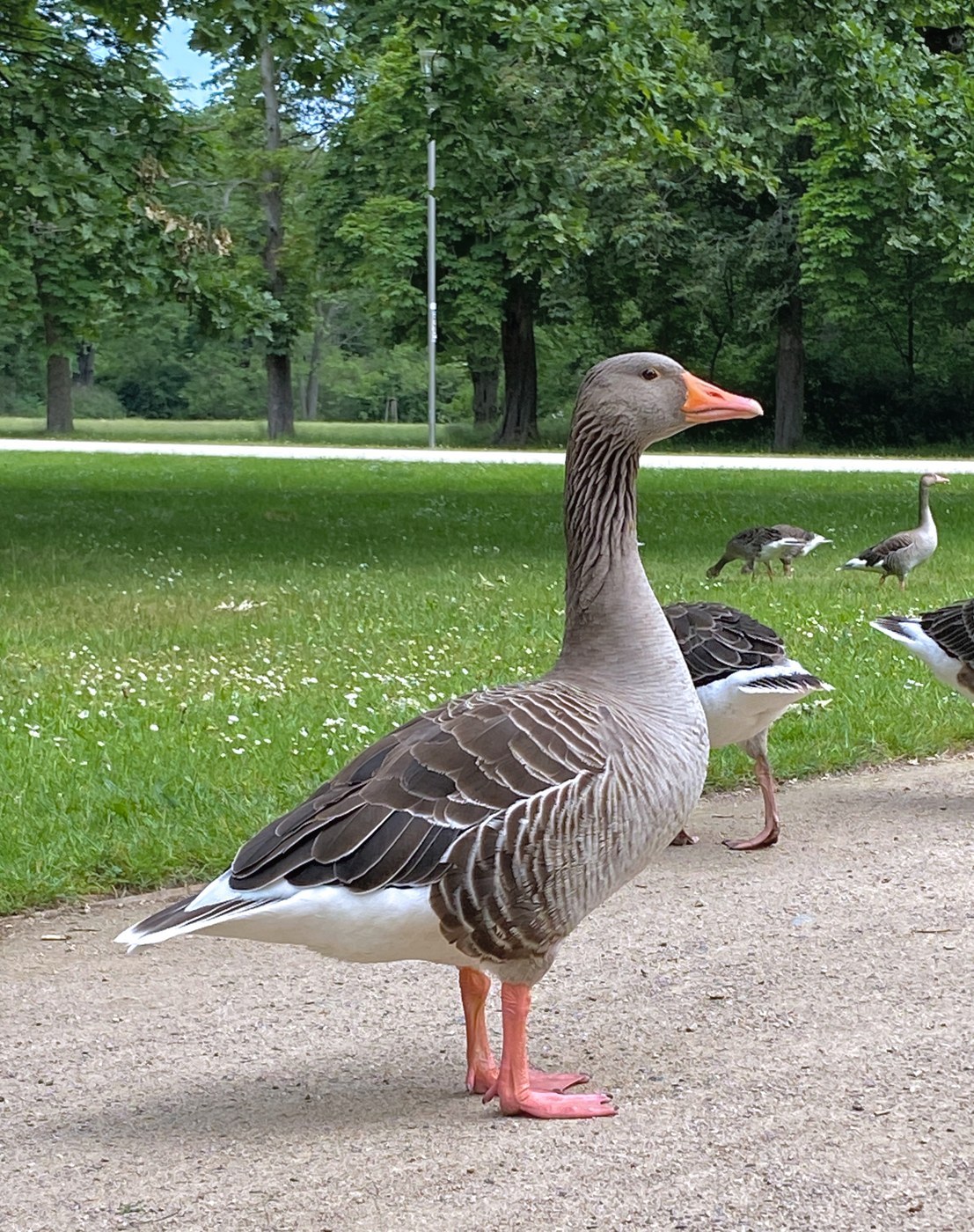
Greylag Goose
Anser anser
A bulky gray-brown goose, ancestor of most domestic geese breeds, recognized by its heavy orange-pink bill and a pale bluish-gray patch on the forewing.
- Feather type
- Contour and flight feathers
- Colours
- Gray-brown with pale fringing, pale gray forewing patch
- Bird size
- Large goose, ~80 cm
Found a feather like this?
Identify any feather from a photo, free.
Overview
The Greylag Goose is the wild ancestor of the majority of domestic goose breeds and remains widespread and common across temperate Europe and Asia. It is a heavily built, uniformly gray-brown goose, distinguished from other gray geese chiefly by its stout, all-orange or pink bill and a pale gray panel across the front of the wing.
Identifying the Feather
Body feathers are gray-brown broadly fringed with white or pale gray, producing a coarser, more barred appearance than the finer scaling of the White-fronted Goose. The most distinctive feather feature is the pale bluish-gray patch formed by the lesser and median upperwing coverts, visible both in flight and as a color block on individual shed feathers—darker geese like the Bean Goose lack this pale panel. The bill is notably heavy and thick-based. Legs are pink.
Plumage & Molt
Sexes are alike, with males averaging slightly larger and heavier-billed. Juveniles are duller and less crisply patterned, lacking the well-defined pale fringing of adults. Molt occurs after breeding, with a flightless period while new flight feathers grow in.
Habitat & Range
Breeds across a broad swath of temperate Europe and Asia in wetlands, reedbeds, and lake margins, and winters somewhat further south on similar habitats as well as farmland. Feral and semi-domesticated populations, descended from or interbred with barnyard geese, are common in parks and urban wetlands well outside the natural range.
Behavior & Field Notes
Grazes extensively on grasses, cereal crops, and waste grain, often in large flocks on farmland adjacent to water. Nests on the ground near wetlands, usually well hidden in vegetation. Gives loud, resonant honking calls similar to the familiar sound of domestic geese, reflecting its status as their direct wild ancestor.
Frequently asked questions
Is the Greylag Goose related to farmyard geese?
Yes, it is the wild ancestor of nearly all breeds of domestic goose, and many feral park geese show mixed wild and domestic traits.
How do you tell a Greylag Goose feather from a Bean Goose feather?
Greylag feathers include a pale bluish-gray forewing patch that Bean Goose lacks, and the Greylag's bill is noticeably heavier.
What color are a Greylag Goose's legs?
Pink, which along with its thick orange-pink bill helps separate it from similarly sized gray geese.
Where do Greylag Geese nest?
On the ground near lakes, marshes, and reedbeds across temperate Europe and Asia, well hidden within waterside vegetation.
Greylag Goose guides
In-depth guides for identifying and understanding Greylag Goose.
Greylag Goose identified by the community
Real feathers identified with Feather Identifier.


Other feathers you may enjoy

Mallard
Wing (speculum), body, and tail feathers

Spectacled Eider
Large sea-duck body feathers with distinctive eye-ring patches

Canada Goose
Body and flight feathers
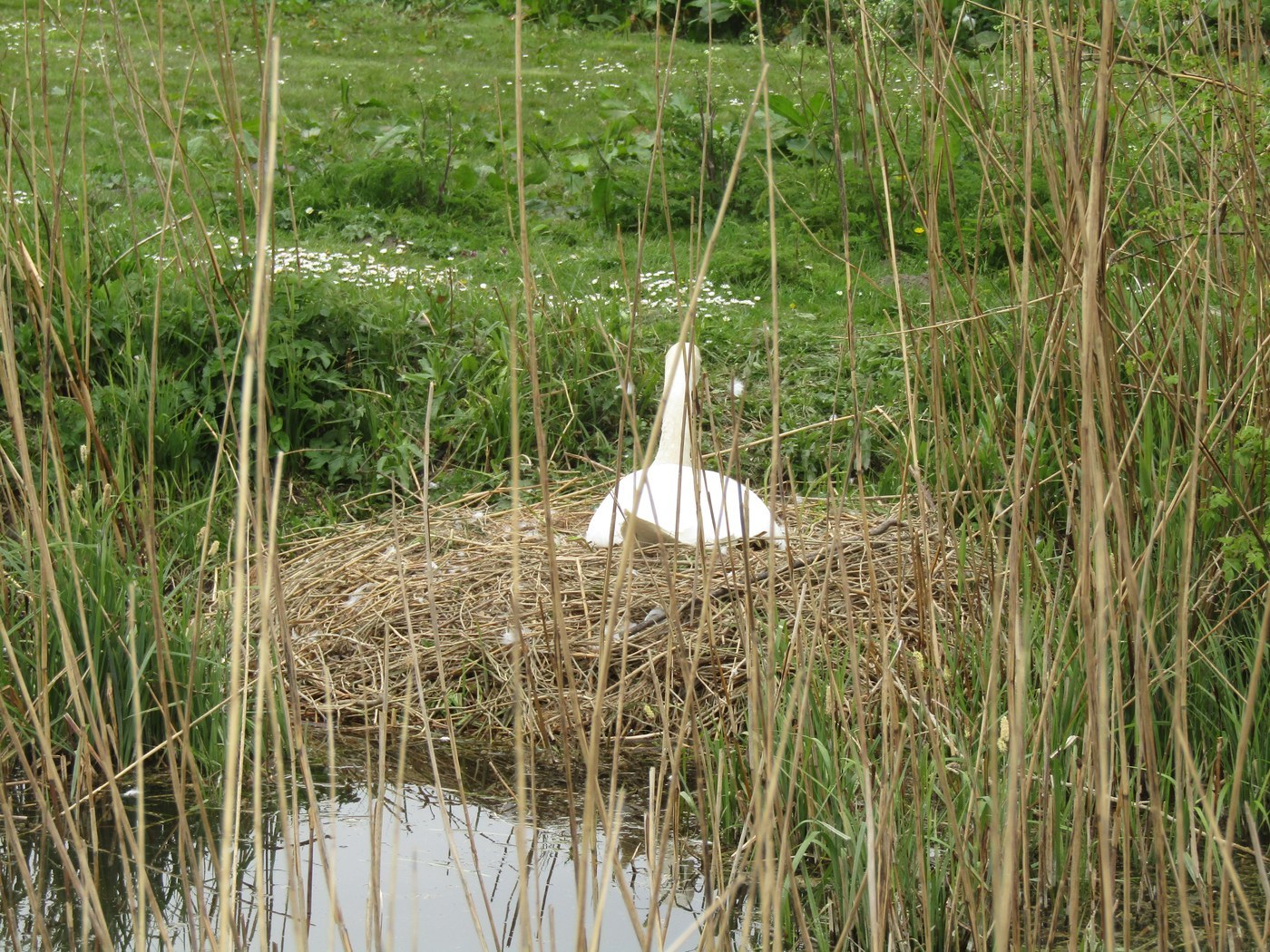
Mute Swan
Body (contour) and flight feathers

Wood Duck
Iridescent crest feathers; ornate scapular and flank feathers; white teardrop facial feathers (female)
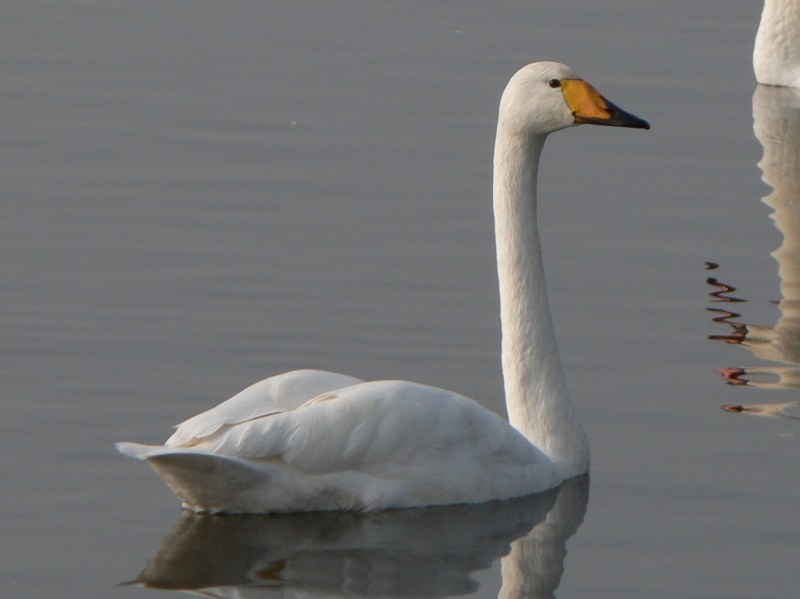
Whooper Swan
Contour and flight feathers

White-winged Scoter
Large sea-duck body feathers with a white wing patch

Ruddy Duck
Stiff tail feathers and compact body plumage

Ross's Goose
Contour and flight feathers

White-cheeked Pintail
Contour and elongated tail feathers

Torrent Duck
Dense, sleek contour feathers; stiff, pointed tail feathers used for bracing against rocks

Tundra Swan
Contour and flight feathers