

Ross's Goose
Anser rossii
The smallest white goose in North America, nearly identical in color to the Snow Goose but noticeably more compact, with a short neck and stubby bill.
- Feather type
- Contour and flight feathers
- Colours
- White with black wingtips
- Bird size
- Small goose, ~60 cm
Found a feather like this?
Identify any feather from a photo, free.
Overview
Ross's Goose is a diminutive relative of the Snow Goose, breeding in scattered central Arctic Canadian colonies and wintering mainly in California and along the Gulf Coast, often mixed into much larger Snow Goose flocks. Its small size and proportionally short bill are the most reliable field distinctions from its larger cousin.
Identifying the Feather
Feathers are essentially identical in color and pattern to the Snow Goose—white body with black-tipped primaries—but noticeably smaller and shorter overall, matching this goose's more compact frame. There is no reliable feather-only way to separate the two species by pattern alone; size and, in the living bird, bill shape (short and stubby, lacking the Snow Goose's dark "grinning patch" along the bill edge) are the best clues. A rare dark morph exists but is far less common than in Snow Goose.
Plumage & Molt
Sexes are alike. Juveniles show a grayish wash rather than pure white, whitening within their first year. Molt patterns mirror those of the Snow Goose, with a flightless period following breeding.
Habitat & Range
Breeds in a limited number of Arctic tundra colonies in central Canada, often alongside Snow Geese. Winters primarily in California's Central Valley and along the western Gulf Coast, using flooded fields and marshes.
Behavior & Field Notes
Grazes on grasses, grain stubble, and marsh plants, frequently in large mixed flocks with Snow Geese where their smaller size becomes apparent. Nests on the ground in tundra colonies. Calls are similar to the Snow Goose but higher-pitched and given less frequently.
Frequently asked questions
How is Ross's Goose different from a Snow Goose?
It is considerably smaller with a shorter neck and a stubby bill lacking the dark serrated edge ("grinning patch") of the Snow Goose.
Can you tell Ross's Goose feathers apart from Snow Goose feathers?
Not reliably by color alone since both are white with black wingtips; size is the main clue, with Ross's Goose feathers averaging smaller.
Does Ross's Goose have a dark color morph?
Yes, though it is much rarer than the well-known blue morph of the Snow Goose.
Where does Ross's Goose spend the winter?
Mainly in California's Central Valley and along the Gulf Coast, typically in flocks alongside Snow Geese.
Ross's Goose guides
In-depth guides for identifying and understanding Ross's Goose.

Other feathers you may enjoy

Mallard
Wing (speculum), body, and tail feathers

Spectacled Eider
Large sea-duck body feathers with distinctive eye-ring patches

Canada Goose
Body and flight feathers
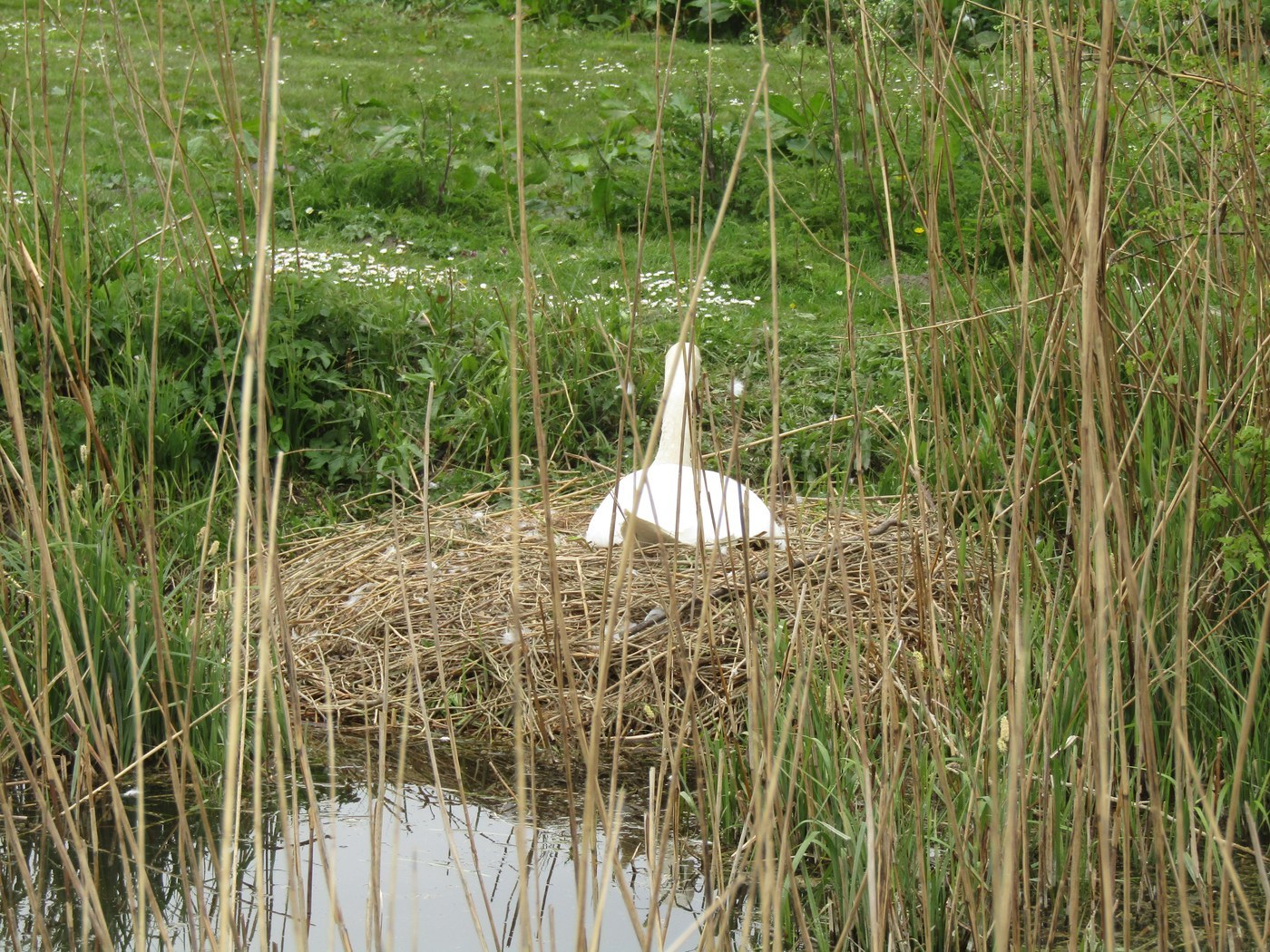
Mute Swan
Body (contour) and flight feathers

Wood Duck
Iridescent crest feathers; ornate scapular and flank feathers; white teardrop facial feathers (female)
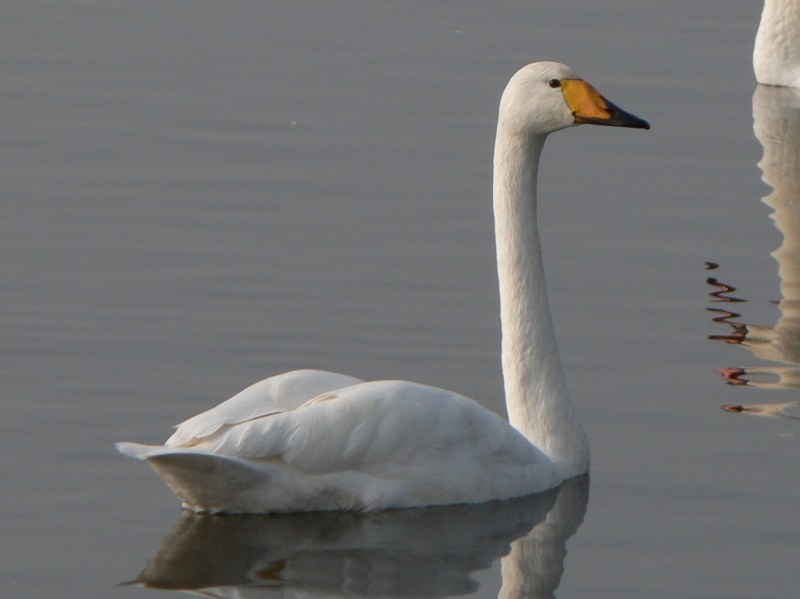
Whooper Swan
Contour and flight feathers

White-winged Scoter
Large sea-duck body feathers with a white wing patch

Ruddy Duck
Stiff tail feathers and compact body plumage

White-cheeked Pintail
Contour and elongated tail feathers

Torrent Duck
Dense, sleek contour feathers; stiff, pointed tail feathers used for bracing against rocks

Tundra Swan
Contour and flight feathers
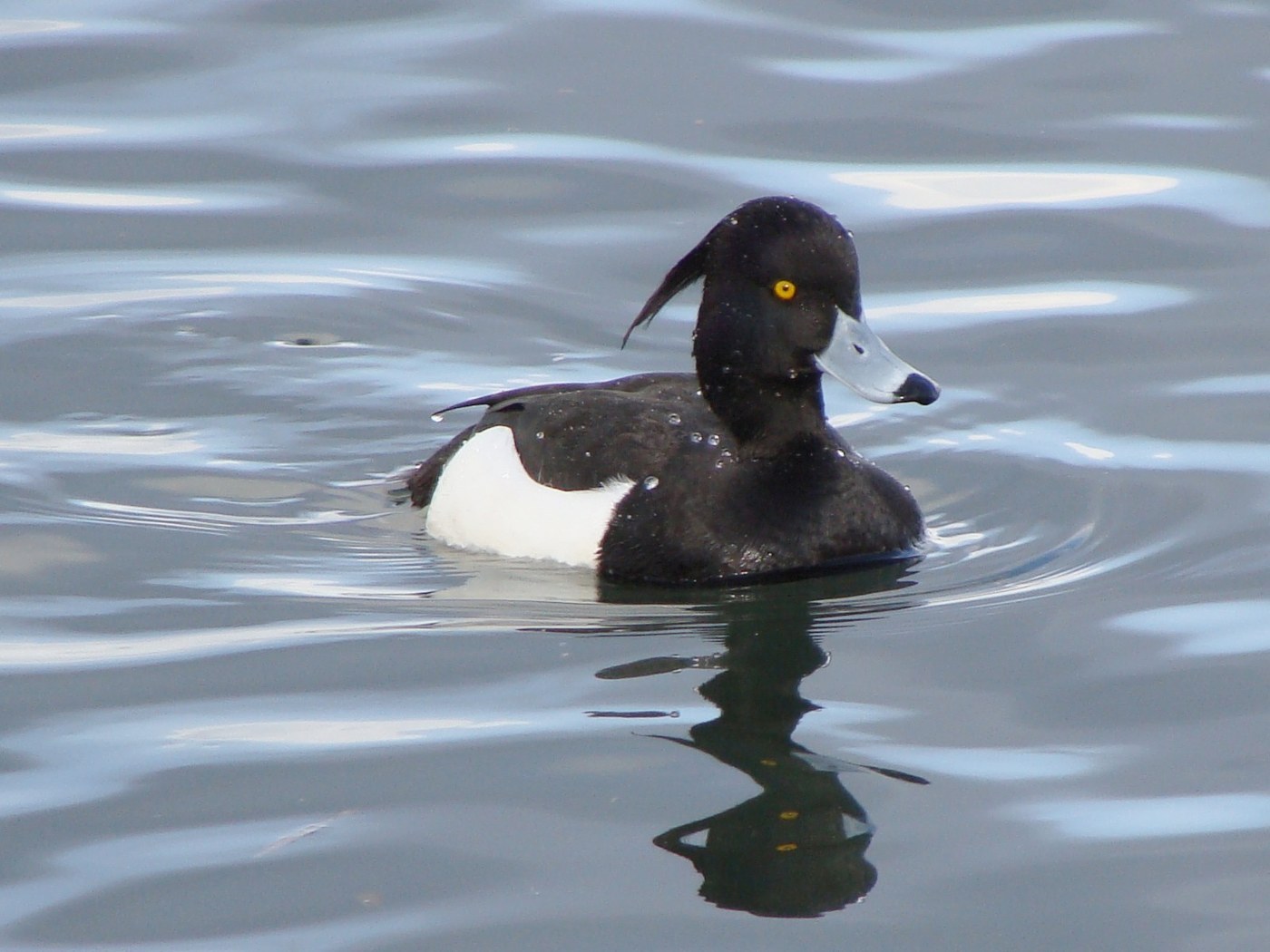
Tufted Duck
Diving-duck body feathers with an elongated crest