
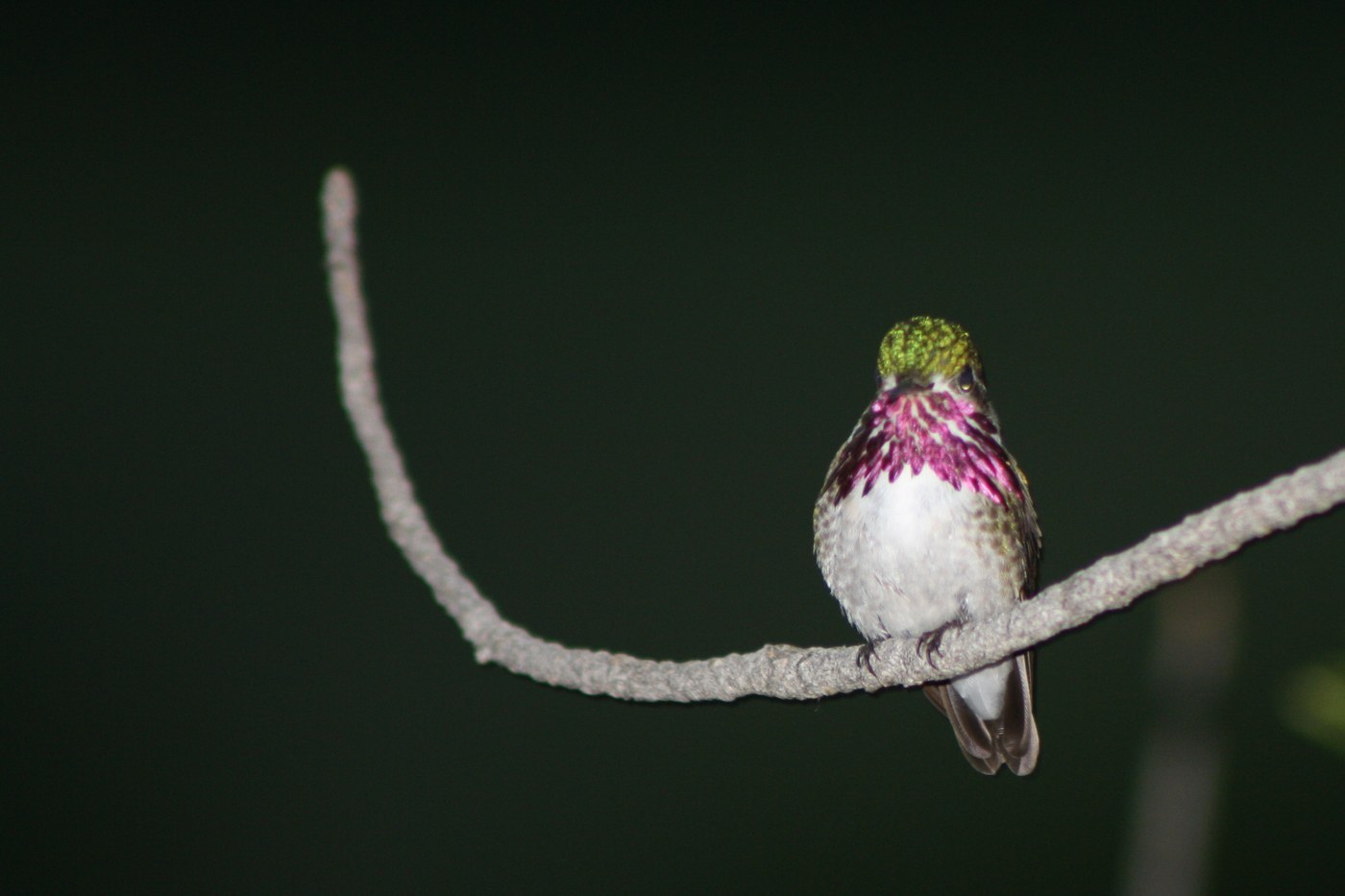
Calliope Hummingbird
Selasphorus calliope
The smallest breeding bird in North America, notable for the male's streaked, wine-red gorget that splays outward like tiny rays rather than forming a solid patch.
- Feather type
- Iridescent gorget feathers, very short tail
- Colours
- Metallic green upperparts, magenta-streaked throat, whitish underparts
- Bird size
- Tiny, ~8 cm - smallest breeding bird in North America
Found a feather like this?
Identify any feather from a photo, free.
Overview
Overview
The Calliope Hummingbird is the smallest bird species that breeds in North America, nesting at higher elevations in the mountains of the western United States and Canada before migrating to Mexico for the winter. Despite its diminutive size, it is a pugnacious defender of feeding territories and can be seen chasing off much larger hummingbirds from favored flower patches.
Males are best known for a gorget unlike that of most other hummingbirds: instead of a solid glittering throat patch, the magenta feathers are elongated and streaked, radiating outward from the throat in a starburst pattern that flares during display flights.
Identifying the Feather
Feather ID Notes
The male's throat feathers are the standout feature - individual magenta to wine-colored plumes that are narrow and streaked rather than fused into a solid gorget, giving a striped or "whiskered" look against the white throat base. Upperpart feathers are a clean iridescent green, and the tail is notably short, so at rest the folded wingtips often extend beyond the tail tip.
- Gorget feathers: magenta/wine, elongated and streak-like, not solid
- Crown and back feathers: iridescent green
- Underparts: whitish with light green or buffy wash on the flanks
- Tail: short and dark, wingtips project past it at rest This streaked gorget pattern separates males from Rufous and Broad-tailed Hummingbirds, which show solid-colored throat patches.
Plumage & Molt
Plumage Details
Adult males show the diagnostic streaked magenta gorget along with green upperparts and pale underparts. Females and immatures lack the colorful throat, instead showing a plain whitish throat sometimes with fine dusky spotting, green upperparts, and buffy-washed flanks. There is no separate seasonal plumage; birds retain essentially the same look year-round, with a complete molt occurring on the wintering grounds after the breeding season.
Habitat & Range
Habitat & Range
Calliope Hummingbirds breed in mountain meadows, open coniferous forest, and streamside thickets at moderate to high elevations across the western United States and southwestern Canada. They are long-distance migrants, wintering primarily in the highlands of Mexico, and their breeding range shifts to lower valley habitats briefly during migration stopovers.
Behavior & Field Notes
Behavior & Field Notes
Despite their small size, males are highly territorial, performing steep U-shaped display dives accompanied by a buzzy sound near the bottom of the arc. Diet consists of nectar from a variety of wildflowers and tiny insects taken in flight or gleaned from foliage. Nests are tiny cups of plant down and spider silk, often saddled on a slim conifer branch and sometimes reused or built atop old nests in following years. Calls include soft chips and a high-pitched twittering during chases.
Frequently asked questions
How can you tell a male Calliope Hummingbird's feathers apart from other hummingbirds?
Its magenta gorget feathers are streaked and elongated rather than forming a solid patch, giving a distinctive striped throat pattern.
How big is a Calliope Hummingbird?
It is the smallest bird species breeding in North America, at roughly 8 centimeters in length.
Do females have colorful throats too?
No, females and immatures have plain whitish throats without the male's magenta streaking.
Where do Calliope Hummingbirds live?
They breed in mountain meadows and open forest in the western US and Canada, wintering in highland Mexico.
Calliope Hummingbird guides
In-depth guides for identifying and understanding Calliope Hummingbird.
Other feathers you may enjoy

Speckled Hummingbird
Small contour feathers with fine speckled underpart markings
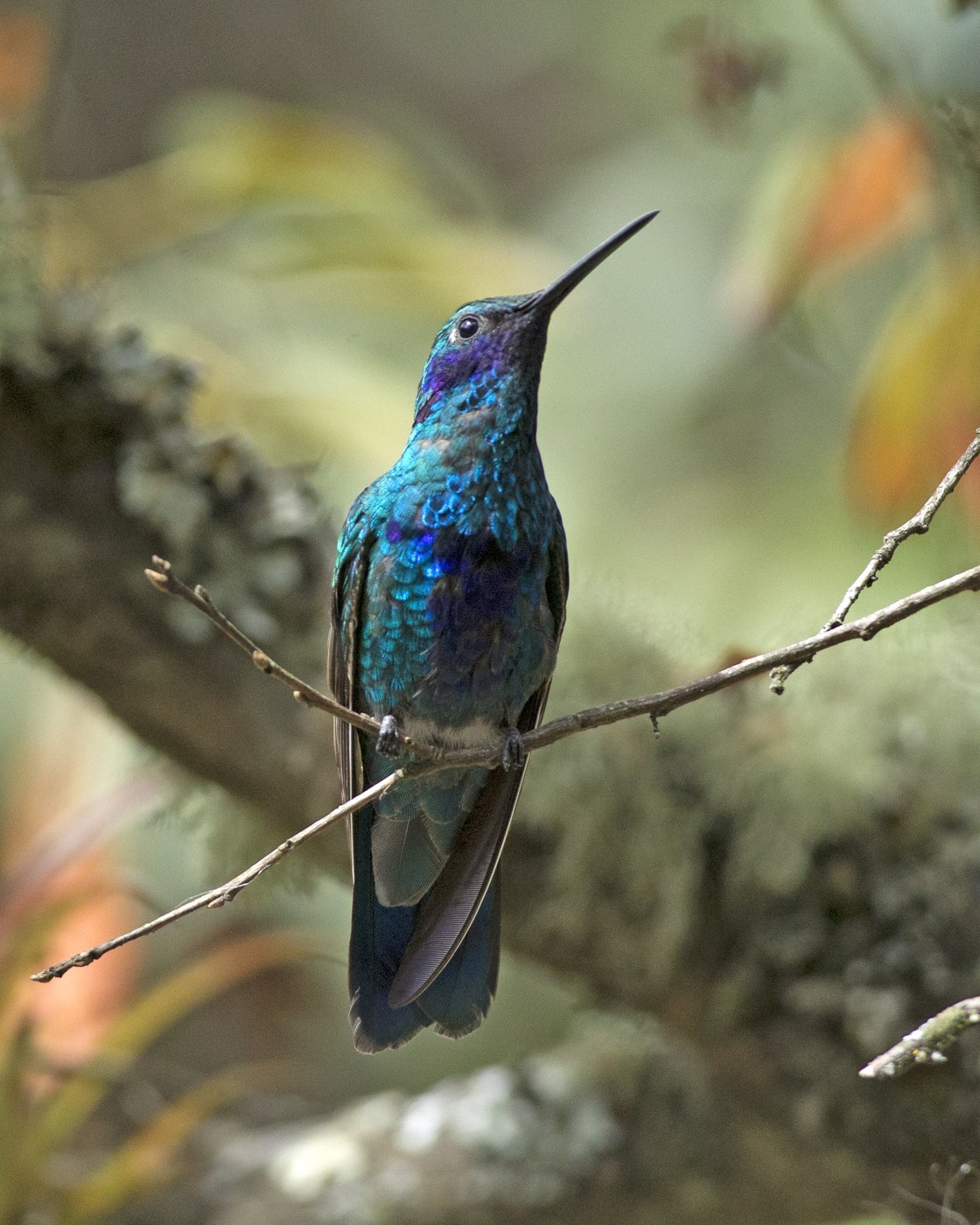
Sparkling Violetear
Iridescent body feathers, large violet ear and chest patches
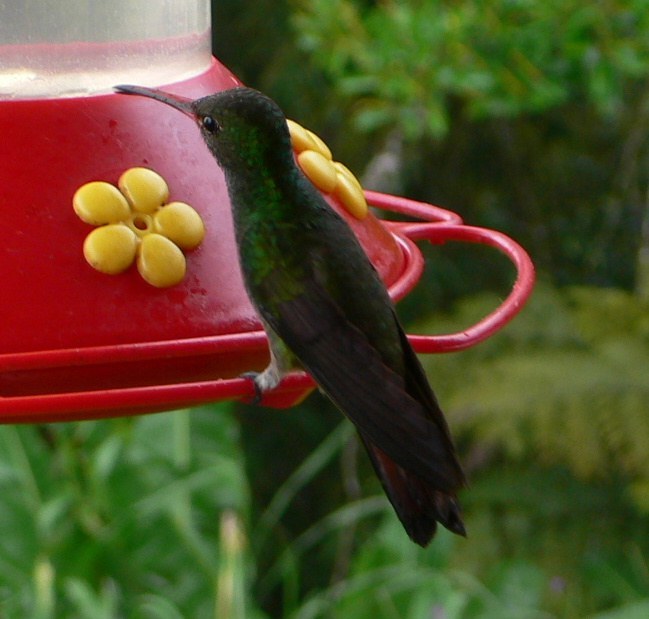
Rufous-tailed Hummingbird
Iridescent throat and breast feathers, rufous tail feathers

Rufous-breasted Hermit
Slightly decurved bill with rufous-washed contour feathers
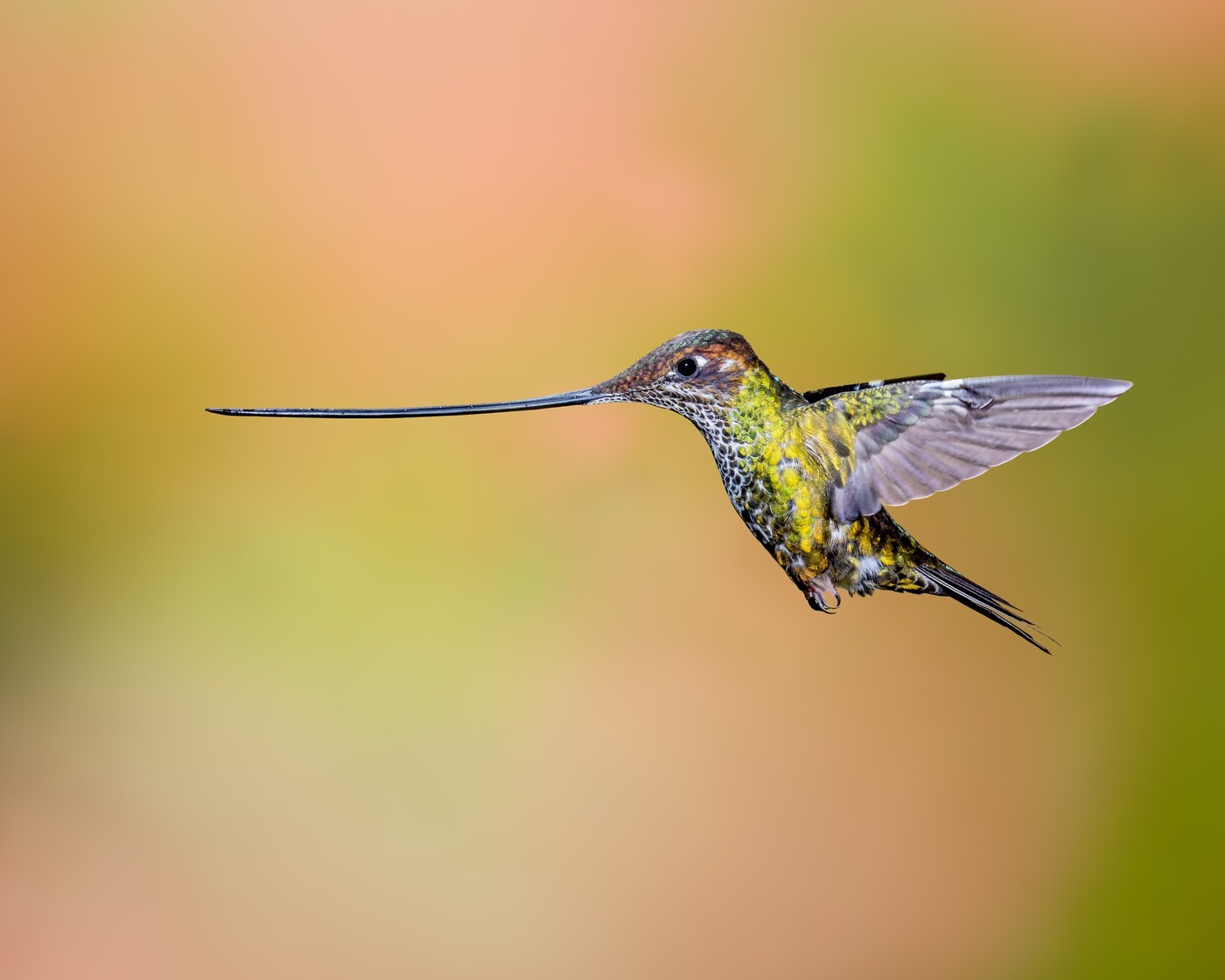
Sword-billed Hummingbird
Iridescent body feathers, extraordinarily long bill (non-feather feature)
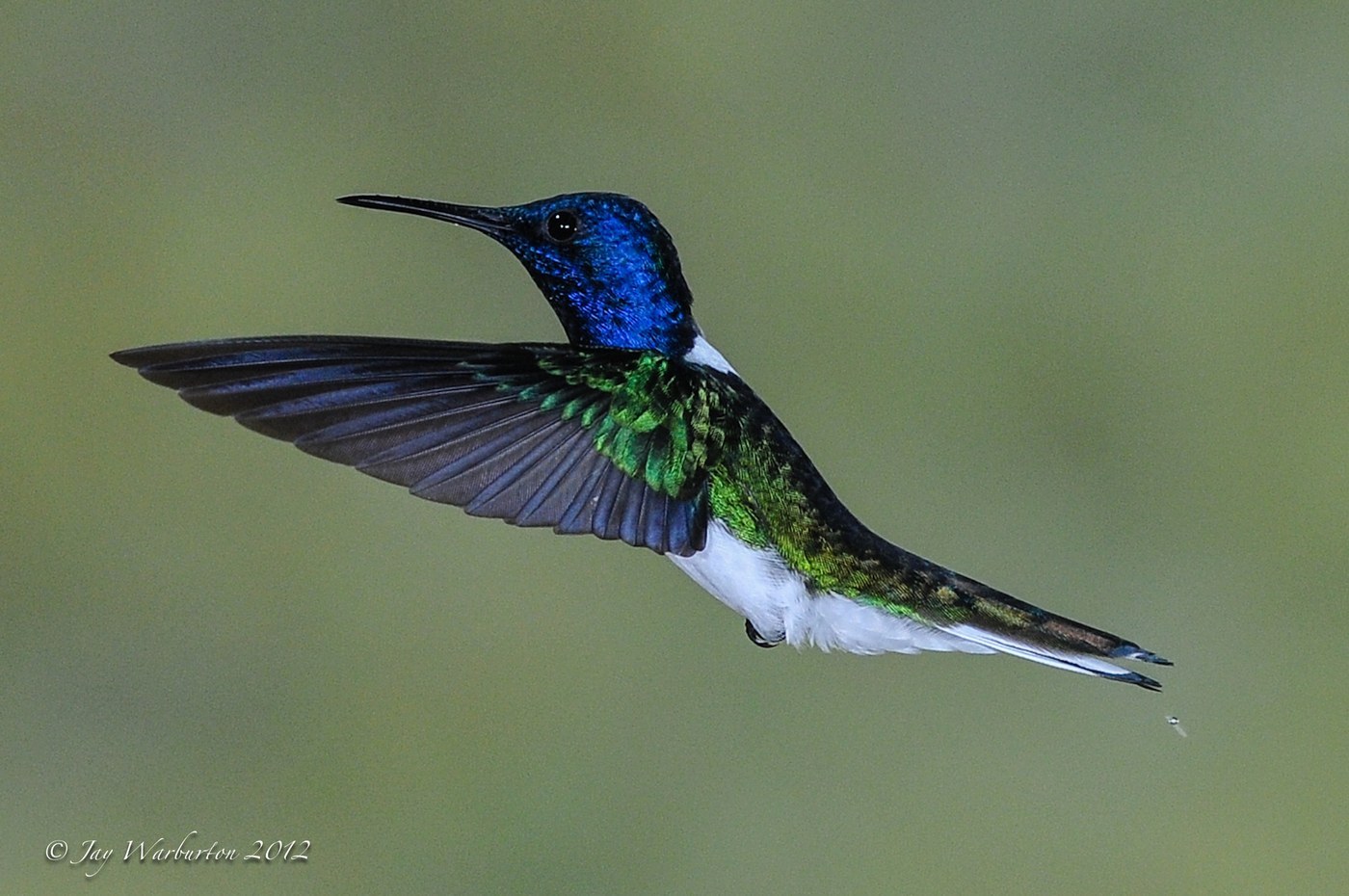
White-necked Jacobin
Iridescent head feathers, contrasting white nape and belly

White-eared Hummingbird
Iridescent gorget feathers, bold facial stripe
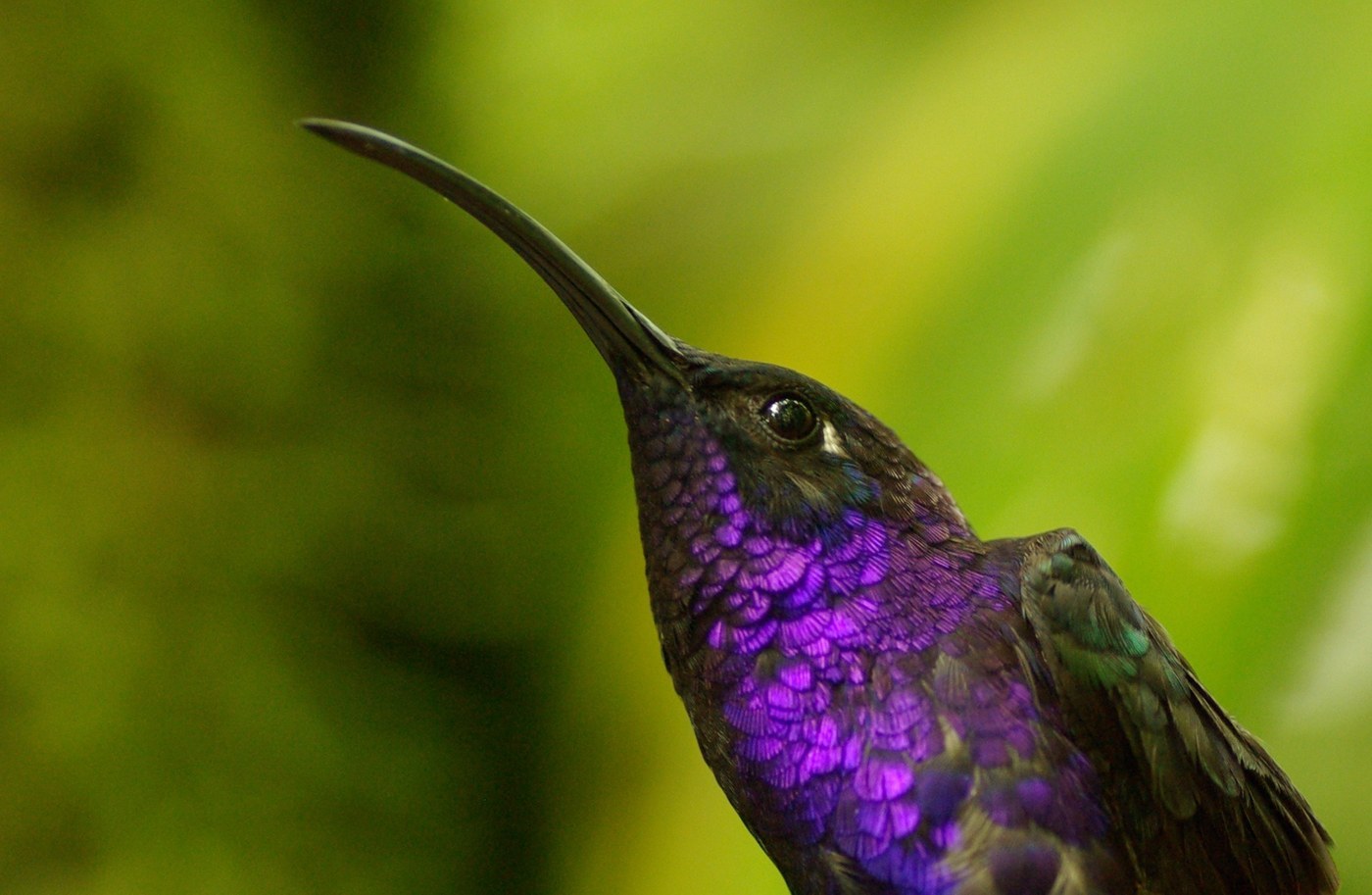
Violet Sabrewing
Iridescent body feathers, thickened curved primary shafts

Velvet-purple Coronet
Dense, velvety contour feathers with iridescent crown patch

Violet-crowned Hummingbird
Iridescent crown feathers, clean white underparts

Shining Sunbeam
Iridescent contour feathers with coppery-bronze wing sheen

Rufous Hummingbird
Tiny contour, gorget, and narrow flight feathers