
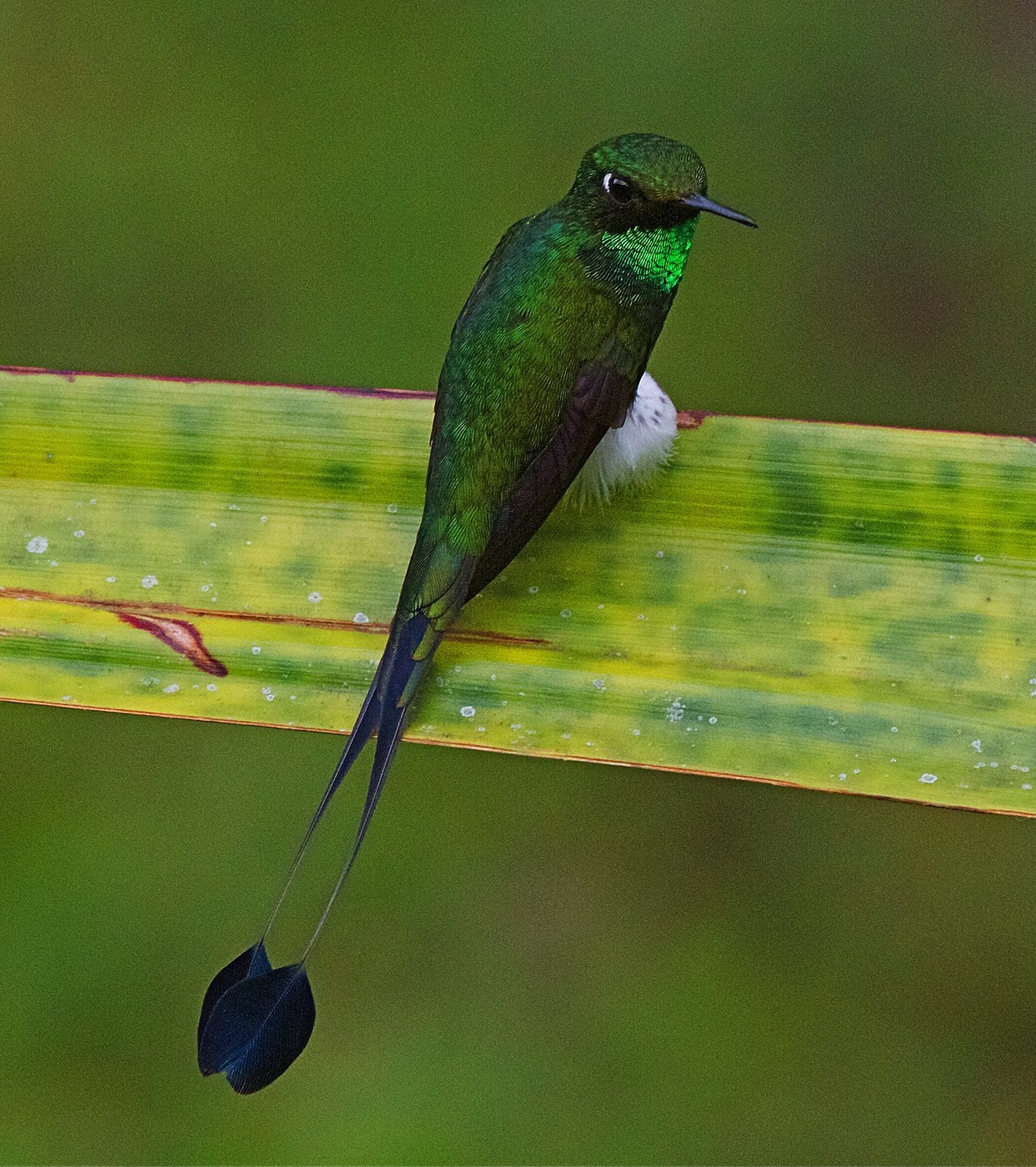
Booted Racket-tail
Ocreatus underwoodii
A tiny Andean hummingbird best known for its puffy white leg feathers and, in males, a pair of long bare tail shafts ending in small dark paddle-shaped tips.
- Feather type
- Fluffy leg-puff feathers, wire-like tail feathers with racket tips
- Colours
- Green body, white fluffy leg puffs, blue-black tail wires with paddle-shaped tips
- Bird size
- Small, ~6.5-8 cm body, with tail wires adding extra length in males
Found a feather like this?
Identify any feather from a photo, free.
Overview
Overview
The Booted Racket-tail is a small hummingbird of Andean foothill and montane forest in South America, notable for two unusual feather features: fluffy, boot-like white feather tufts on the legs, and, in males, a pair of elongated, wire-thin tail feathers that end in small, expanded racket-shaped tips.
These features make the species relatively easy to identify despite its small overall size, particularly when the male's distinctive tail wires and paddle tips are visible in flight or at rest.
Identifying the Feather
Feather ID Notes
The leg feathers form conspicuous white, puffy tufts around the lower legs in both sexes, a feature not commonly seen in other similarly sized hummingbirds. In males, the two outermost tail feathers are reduced to thin, wire-like shafts that extend well beyond the rest of the tail, each tipped with a small, dark, paddle- or racket-shaped web.
- Leg feathers: white, fluffy, boot-like tufts
- Tail feathers (male): elongated wire-thin shafts ending in small racket-shaped tips
- Body feathers: green, glossy
- Throat: variable, sometimes with light iridescent flecking The combination of white leg puffs and wire-and-racket tail feathers is essentially unique among hummingbirds and makes males unmistakable when seen clearly.
Plumage & Molt
Plumage Details
Adult males show the racket tail and white leg puffs described above along with green body plumage. Females lack the elongated tail wires, instead showing a more typically shaped short tail, though they retain the white leg puffs. Juveniles resemble females, with young males developing the tail wires as they mature. There is no strong seasonal plumage variation.
Habitat & Range
Habitat & Range
This species inhabits humid foothill and montane forest, forest edge, and adjacent second growth along the Andes and nearby ranges in South America, from Venezuela and Colombia south through Ecuador, Peru, and into Bolivia. Populations are generally resident, with limited local elevational movement.
Behavior & Field Notes
Behavior & Field Notes
Booted Racket-tails feed on nectar from a variety of forest flowers, often visiting flowering shrubs at low to middle forest levels, and also take small insects. Males may display their tail wires during interactions with other hummingbirds. Nests are small, cup-shaped structures built in dense vegetation. Calls include soft chips and thin twittering notes.
Frequently asked questions
What feather features identify a male Booted Racket-tail?
Fluffy white leg puffs combined with elongated, wire-thin outer tail feathers tipped with small dark racket-shaped webs.
Do females have the racket tail too?
No, females have a shorter, more typical tail shape, though they share the white leg puffs with males.
Where does the Booted Racket-tail live?
In humid foothill and montane forest along the Andes in South America.
What are the white leg puffs for?
They are simply a distinctive plumage feature of the species; both sexes show them regardless of tail shape.
Booted Racket-tail guides
In-depth guides for identifying and understanding Booted Racket-tail.
Other feathers you may enjoy

Speckled Hummingbird
Small contour feathers with fine speckled underpart markings
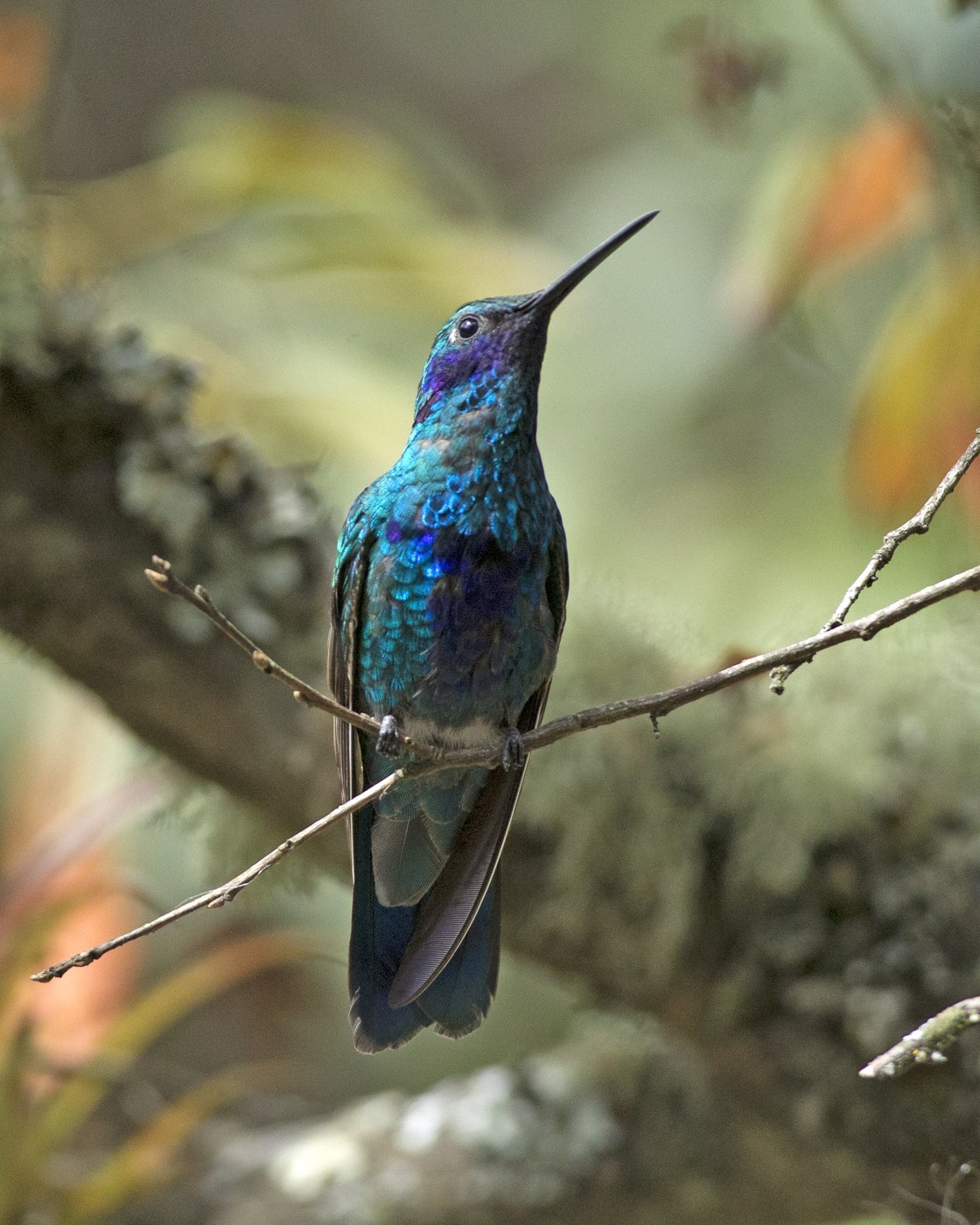
Sparkling Violetear
Iridescent body feathers, large violet ear and chest patches
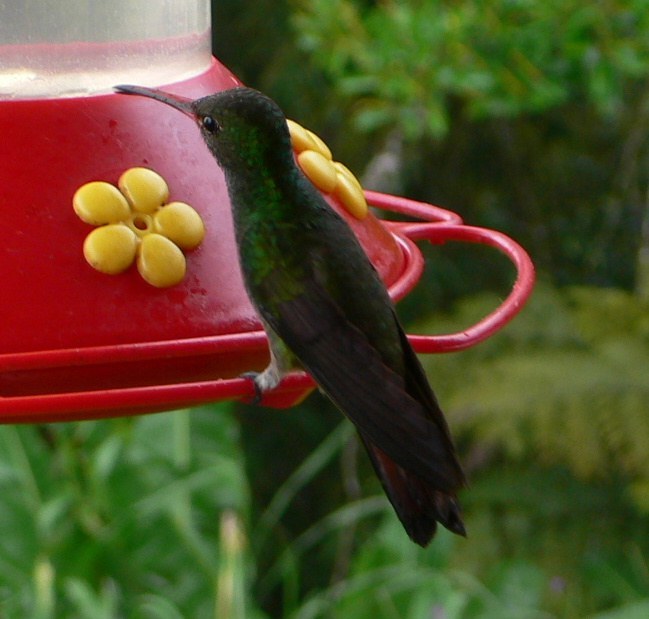
Rufous-tailed Hummingbird
Iridescent throat and breast feathers, rufous tail feathers

Rufous-breasted Hermit
Slightly decurved bill with rufous-washed contour feathers
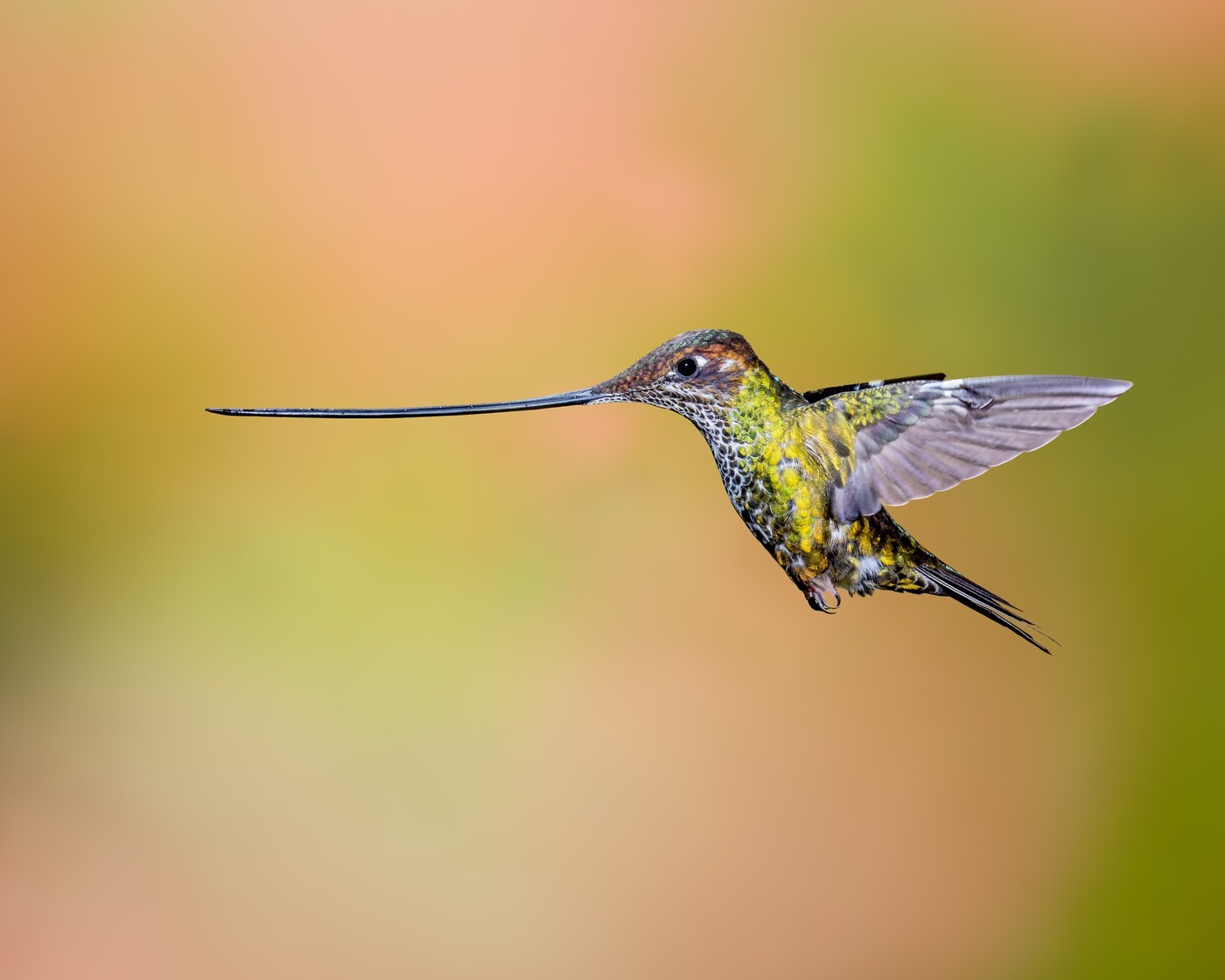
Sword-billed Hummingbird
Iridescent body feathers, extraordinarily long bill (non-feather feature)
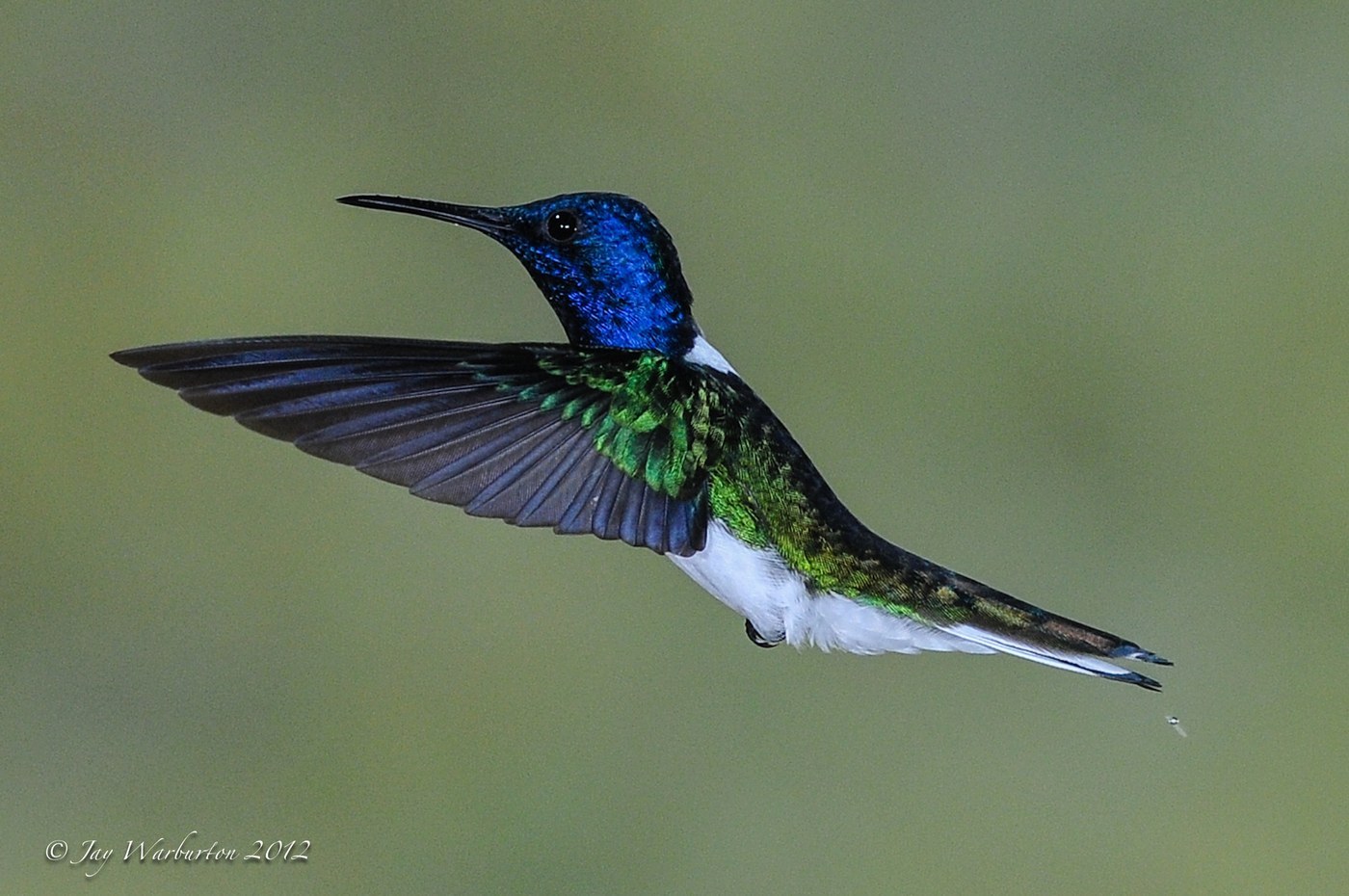
White-necked Jacobin
Iridescent head feathers, contrasting white nape and belly

White-eared Hummingbird
Iridescent gorget feathers, bold facial stripe
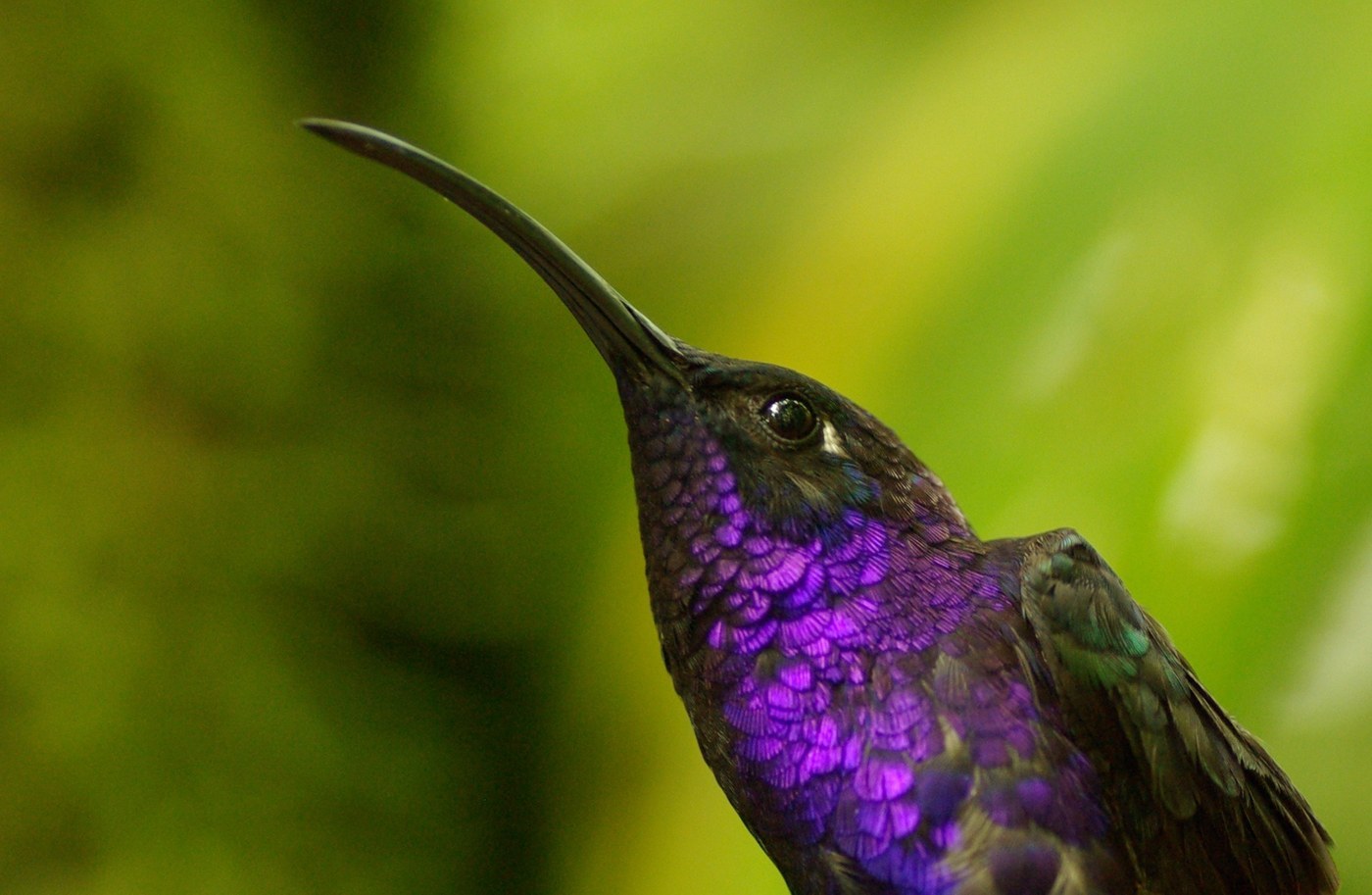
Violet Sabrewing
Iridescent body feathers, thickened curved primary shafts

Velvet-purple Coronet
Dense, velvety contour feathers with iridescent crown patch

Violet-crowned Hummingbird
Iridescent crown feathers, clean white underparts

Shining Sunbeam
Iridescent contour feathers with coppery-bronze wing sheen

Rufous Hummingbird
Tiny contour, gorget, and narrow flight feathers