

Blue-tailed Bee-eater
Merops philippinus
A slender green bee-eater with a distinctive blue tail and rump, common across South and Southeast Asian lowlands.
- Feather type
- Slender, pointed contour feathers; elongated central tail streamers
- Colours
- Green body, blue tail and rump, chestnut throat patch
- Bird size
- Robin-sized, ~26-31 cm including tail streamers
Found a feather like this?
Identify any feather from a photo, free.
Overview
Overview
The Blue-tailed Bee-eater is a widespread species across South and Southeast Asia, frequenting open country and wetland edges. It is a partial migrant, with some populations moving seasonally within the region.
- Common across much of South and Southeast Asia
- Named for its distinctive blue tail
- Some populations undertake regional migratory movements
Identifying the Feather
Feather Identification
Blue-tailed Bee-eater feathers combine green body plumage with a contrasting blue tail.
- Body: bright green feathers over the back, wings, and underparts
- Throat: chestnut-brown, grading into a yellow patch near the bill
- Tail and rump: blue, distinctly contrasting with the green body
- Eye-stripe: black, bordered by pale blue lines
The blue tail and rump against an otherwise green body separate this species from similar green bee-eaters that show green tails instead.
Plumage & Molt
Plumage Details
Sexes are alike, both showing the green body and blue tail pattern. Juveniles are duller, with a shorter tail lacking the elongated central streamers and a less defined throat pattern. A single annual molt maintains adult plumage.
Habitat & Range
Habitat & Range
Found across South and Southeast Asia, including India, Southeast Asian countries, and parts of China, inhabiting open country, farmland, and areas near wetlands and rivers. Some populations are resident while others move seasonally within the region, particularly in response to monsoon patterns.
Behavior & Field Notes
Behavior & Field Notes
This species forages for flying insects in graceful aerial sallies, often near water where insect abundance is high, striking prey against a perch before eating. It nests in burrows dug into sandy banks, sometimes in loose colonies. Its call is a musical, rolling note given in flight. The blue tail and rump contrasting with green body plumage are the primary field marks for this species.
Frequently asked questions
What makes the Blue-tailed Bee-eater's tail distinctive?
Its tail and rump are blue, contrasting noticeably with the otherwise green body plumage.
Where is this species commonly found?
Across open country and wetland edges throughout South and Southeast Asia.
Does the Blue-tailed Bee-eater migrate?
Some populations are resident while others move seasonally within the region, often linked to monsoon patterns.
How does its throat pattern look?
Chestnut-brown grading into a yellow patch near the bill, bordered by a black eye-stripe with pale blue lines.
Blue-tailed Bee-eater guides
In-depth guides for identifying and understanding Blue-tailed Bee-eater.

Other feathers you may enjoy

Common Cuckoo
Flight and body feathers
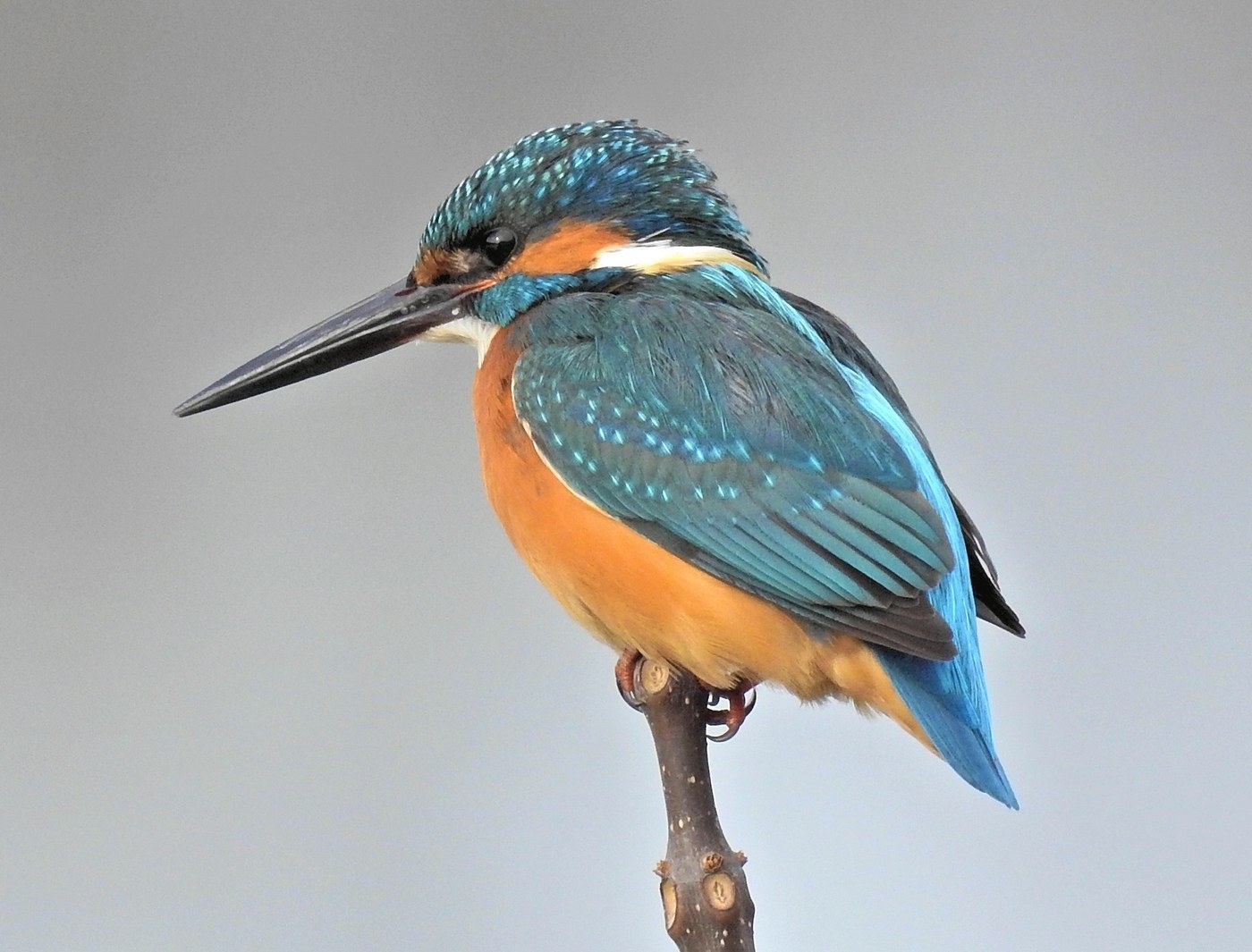
Common Kingfisher
Body (contour) and wing feathers
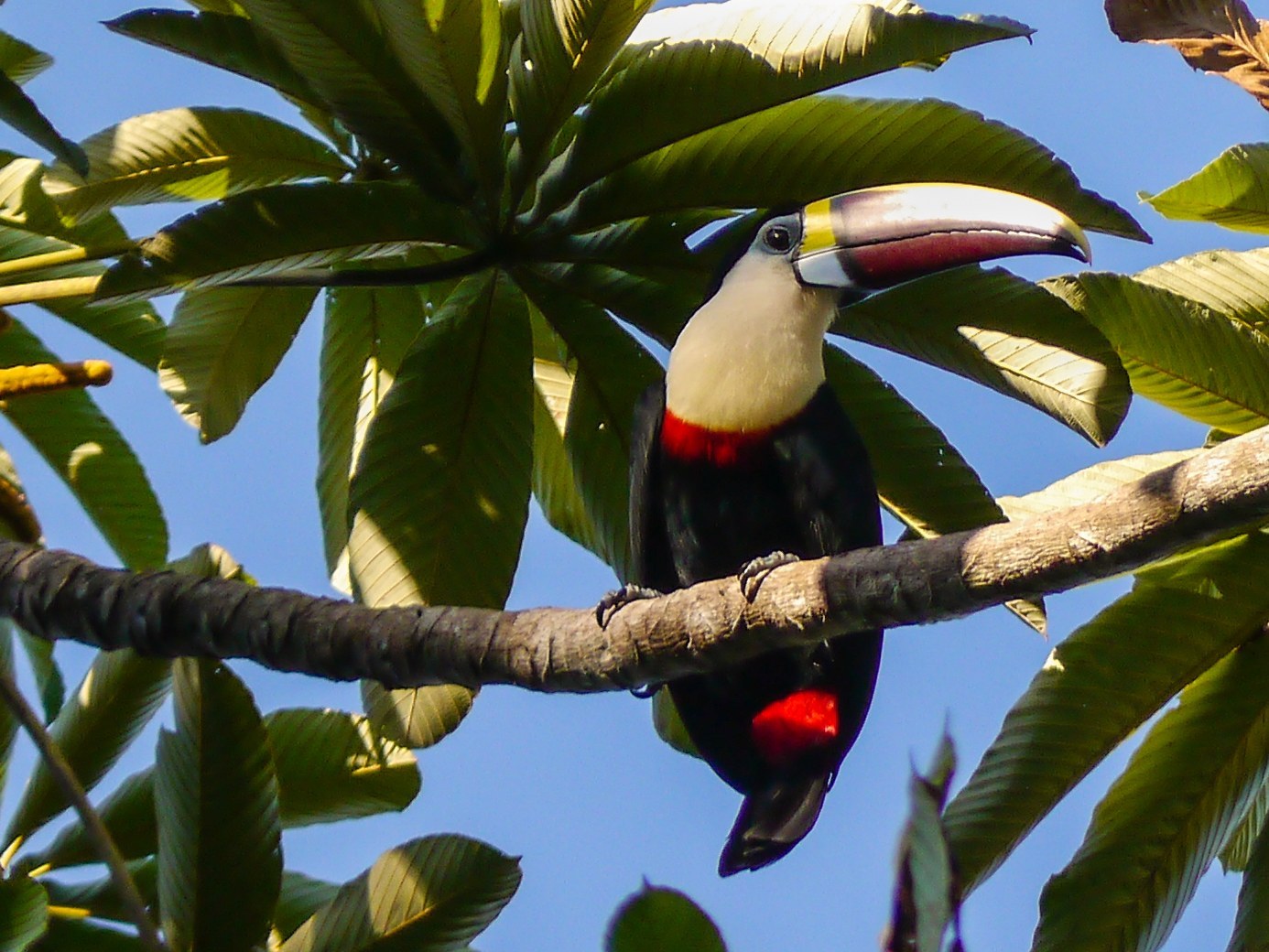
White-throated Toucan
Short rounded contour feathers, short broad wings
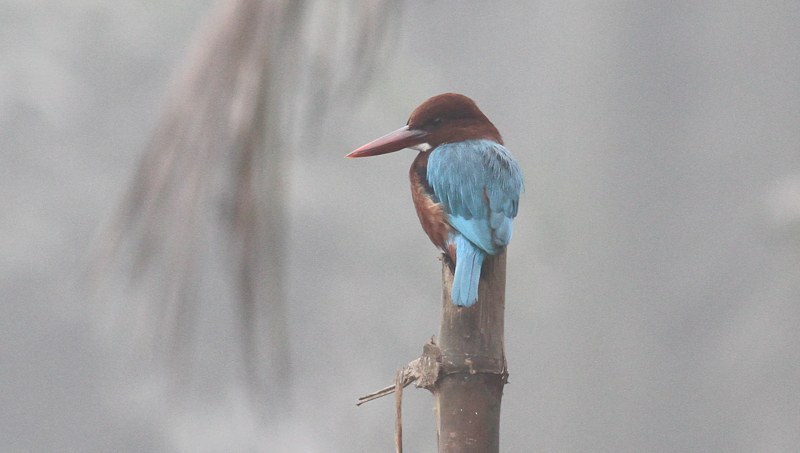
White-throated Kingfisher
Dense contour feathers; broad rounded wings

White-throated Bee-eater
Sleek, aerodynamic contour feathers; elongated central tail streamers
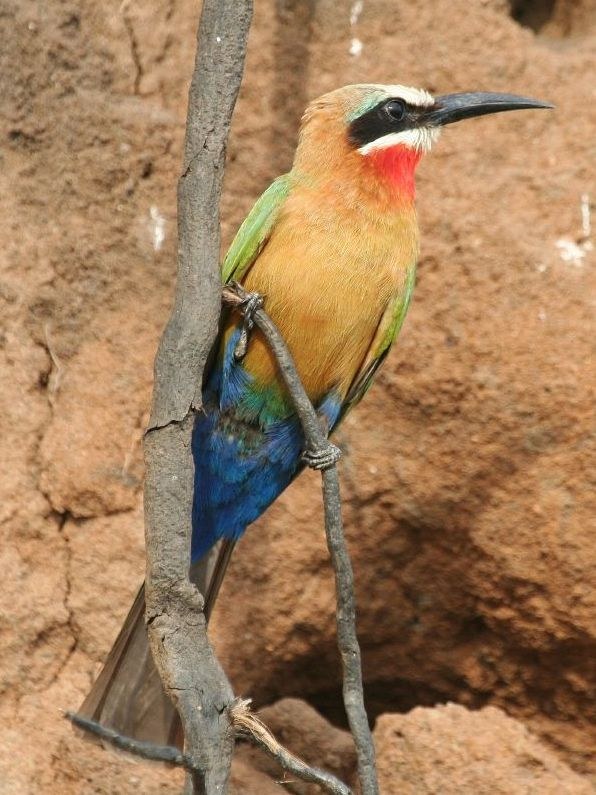
White-fronted Bee-eater
Sleek contour feathers; short tail with slight point

Southern Yellow-billed Hornbill
Slender contour feathers, moderate flight feathers
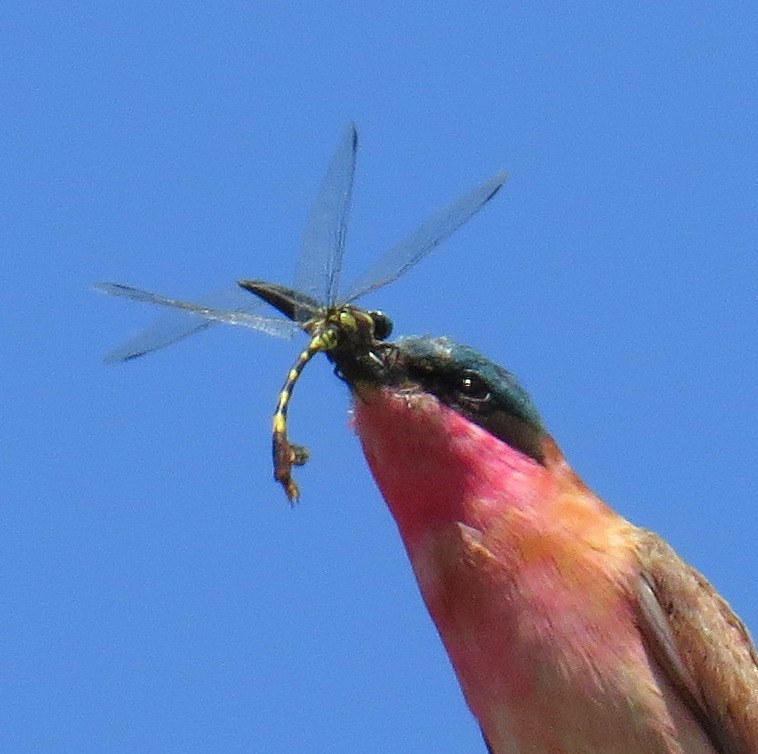
Southern Carmine Bee-eater
Sleek, pointed contour feathers; elongated central tail streamers
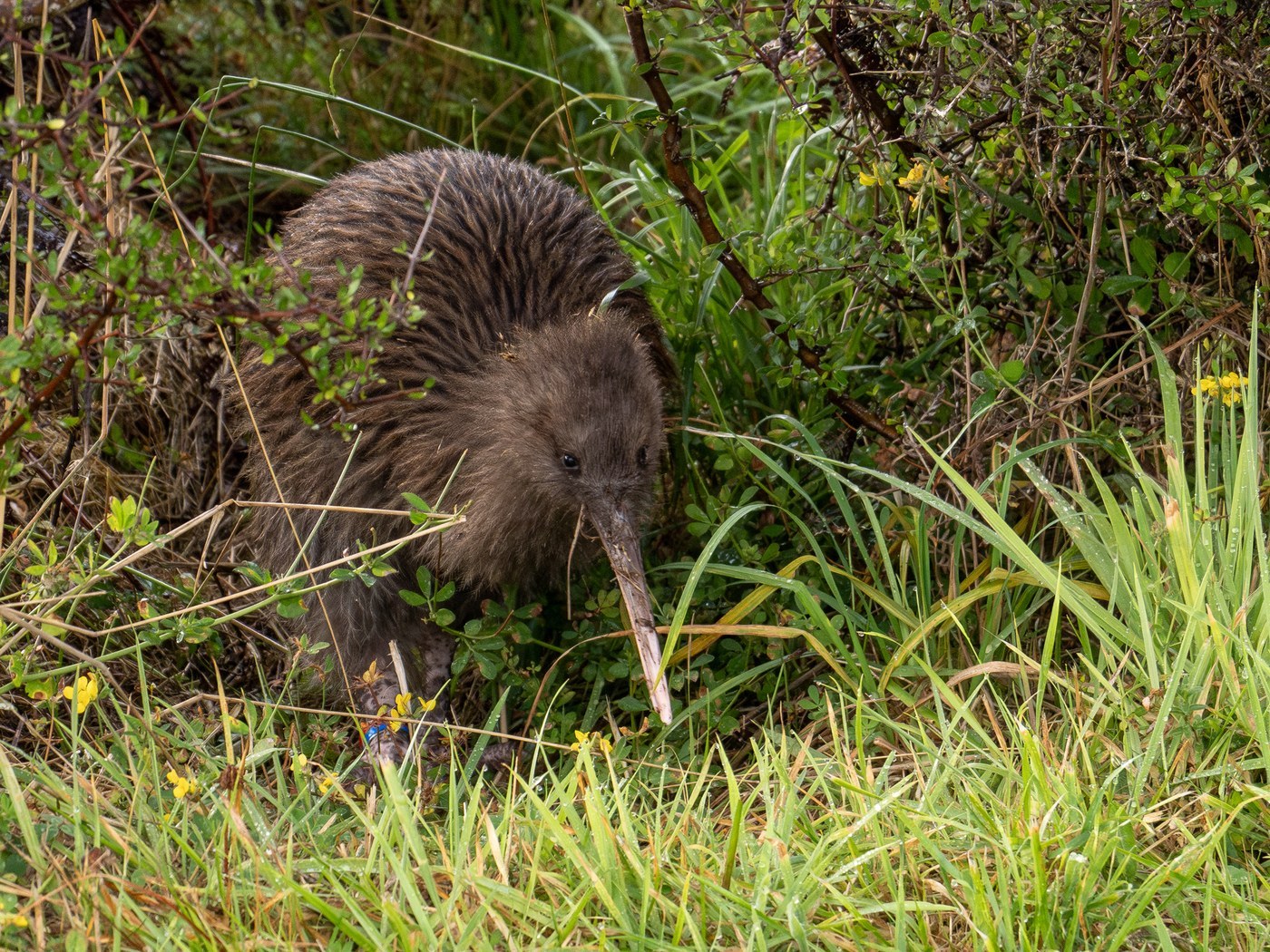
Southern Brown Kiwi
Shaggy, hair-like plumage with loose barbs lacking barbules; flightless, vestigial wings hidden beneath body feathers

Somali Ostrich
Loose, soft plumes lacking interlocking barbules

Wreathed Hornbill
Dense contour feathers, broad flight feathers

Woodland Kingfisher
Firm contour feathers; broad wing feathers