
Black-browed Albatross
Thalassarche melanophris
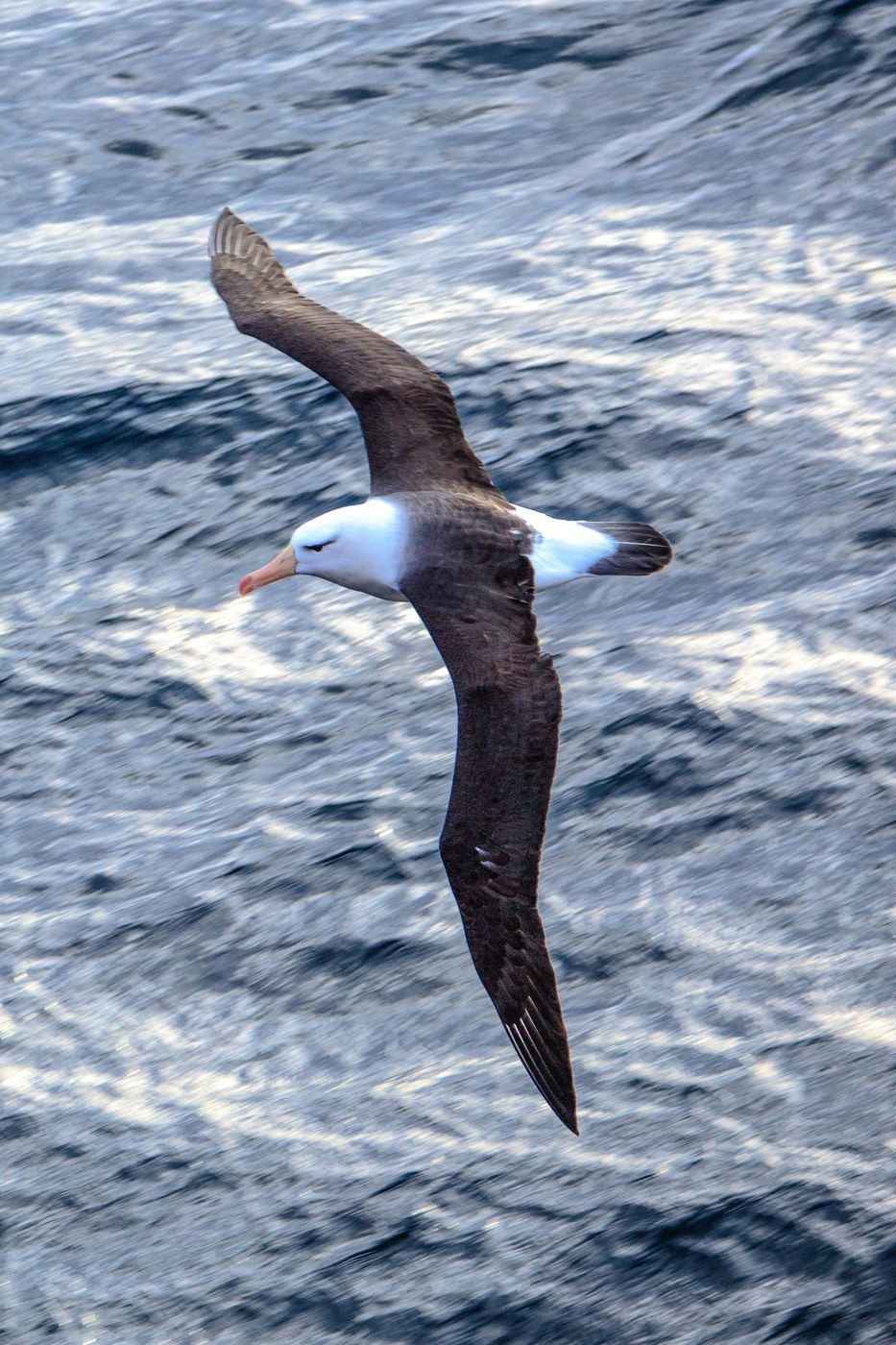
One of the most widespread and abundant albatrosses, readily identified by a bold dark stripe through the eye that gives it a permanently stern, 'browed' expression.
- Feather type
- Contour, flight, and tail feathers
- Colours
- White head and body, dark eyebrow stripe, gray upperwing with black margins
- Bird size
- Large, ~80-95 cm
Found a feather like this?
Identify any feather from a photo, free.
Overview
The Black-browed Albatross is among the most numerous and frequently encountered albatrosses, breeding across a range of subantarctic and temperate southern islands. Its combination of white body, gray upperwing, and a distinctive dark eyebrow mark makes it one of the more readily identified smaller albatrosses.
Identifying the Feather
- Head and body feathers are white, with a bold blackish stripe of feathers running through and behind the eye, giving a stern, browed appearance
- Upperwing feathers are uniformly dark gray to blackish, contrasting sharply with the white body and underwing
- Underwing feathers are mostly white with a broad blackish leading edge and narrower dark trailing edge, forming a distinctive dark-bordered white underwing
- Tail feathers are white with a dark tip band
- Flight feathers are long and narrow, adapted for efficient dynamic soaring, though shorter overall than those of the great albatrosses
Plumage & Molt
- Adults show a white head and body, gray upperwing, and a broadly dark-margined white underwing, with the dark eyebrow stripe present year-round
- Juveniles have a grayish wash on the head and neck, a dark collar, and a more extensively dark underwing than adults, gradually acquiring the adult pattern over several years
- Sexes are similar in plumage
- Molt is gradual and protracted, spread across the non-breeding period between long breeding cycles
Habitat & Range
Black-browed Albatrosses breed colonially on subantarctic and temperate islands in the Southern Ocean, including the Falkland Islands, South Georgia, and various islands off Chile and New Zealand, nesting on tussock-covered slopes and cliffs. Outside the breeding season they range widely over southern oceans and can reach temperate coastal waters at the edges of their range, including occasional wanderers well outside their usual range.
Behavior & Field Notes
This albatross forages by seizing fish, squid, and crustaceans from the surface, often scavenging behind fishing vessels and around trawlers. It breeds annually in dense colonies, building a raised pedestal-shaped nest of mud and vegetation, and pairs perform mutual bill-touching and vocal displays during courtship. Calls include harsh braying and croaking notes given mainly around the colony.
Frequently asked questions
What feather feature identifies a Black-browed Albatross?
A dark stripe of feathers through and behind the eye against an otherwise white head is a strong indicator, along with a white underwing broadly bordered in black along the leading edge.
How does the underwing pattern change with age?
Juveniles show a more extensively dark, mottled underwing that gradually becomes cleaner white with a defined dark border as the bird matures over several years.
Where does the Black-browed Albatross nest?
It nests in dense colonies on subantarctic and temperate southern islands, building a raised pedestal nest of mud and vegetation on tussock slopes or cliffs.
Black-browed Albatross guides
In-depth guides for identifying and understanding Black-browed Albatross.
Other feathers you may enjoy

Western Gull
Body, flight, and tail feathers
Glaucous Gull
Body, flight, and tail feathers

American Herring Gull
Body, flight, and tail feathers

Great Black-backed Gull
Body, flight, and tail feathers

Common Gull
Body, flight, and tail feathers
Iceland Gull
Body, flight, and tail feathers

Ring-billed Gull
Body, flight, and tail feathers

Glaucous-winged Gull
Body, flight, and tail feathers

Herring Gull
Body, flight, and tail feathers

Lesser Black-backed Gull
Body, flight, and tail feathers

California Gull
Body, flight, and tail feathers
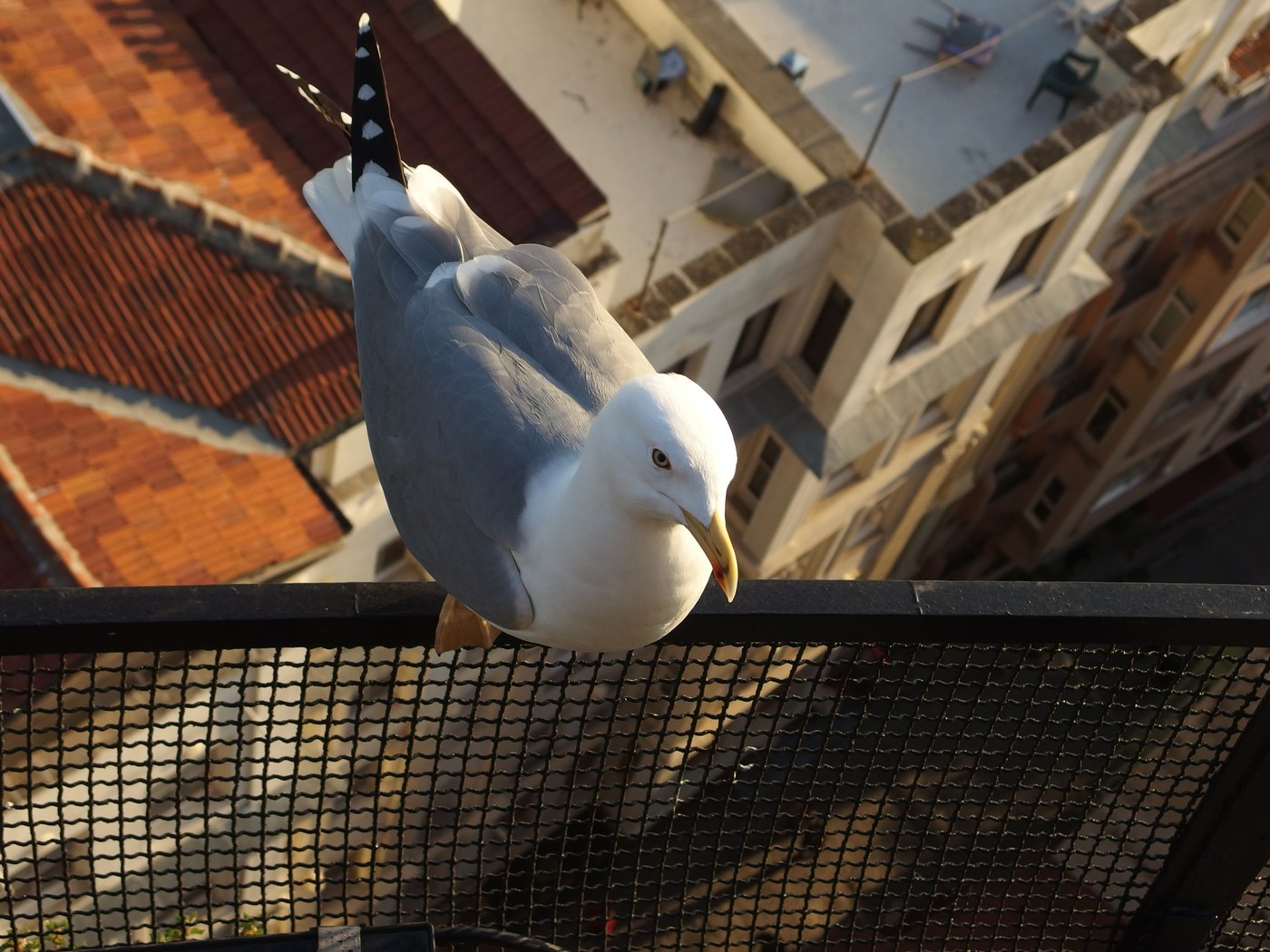
Yellow-legged Gull
Body, wing covert, and flight feathers