
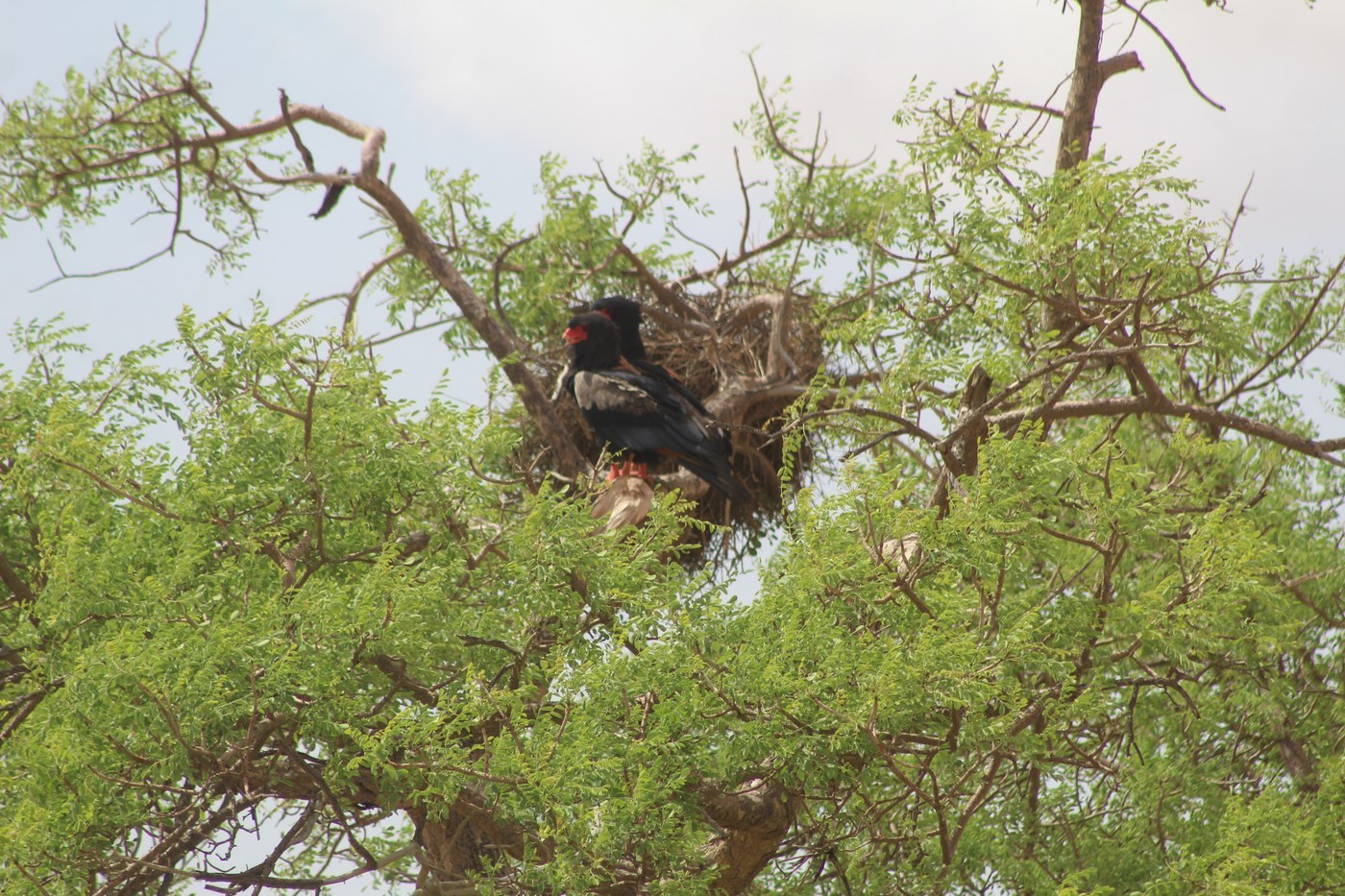
Bateleur
Terathopius ecaudatus
A striking African eagle relative known for its extremely short tail and rocking, tightrope-walker flight style, with black body plumage, a chestnut back, and pale flight feathers.
- Feather type
- Broad flight feathers; unusually short tail feathers; dense body feathers
- Colours
- Black body plumage with a chestnut back and mantle, and pale gray to white underwing flight feathers
- Bird size
- Medium raptor with a very short tail, body length ~55-70 cm
Found a feather like this?
Identify any feather from a photo, free.
Overview
The Bateleur is a distinctive raptor of the African savanna, named for the French word for a tightrope walker or acrobat, describing its characteristic rocking flight as it balances on long wings with an unusually short tail.
Its plumage combines black body feathers with a rich chestnut back and mantle, and pale gray to whitish flight feathers visible from below in flight, creating a bold, high-contrast pattern.
The extremely short tail, barely extending beyond the wingtips at rest, is one of the most unusual proportions among African raptors and makes its tail feathers noticeably different in shape from most other birds of prey.
Identifying the Feather
Shape and Size
Flight feathers are broad and long relative to the very short tail feathers, which are unusually stubby compared to almost any other raptor of similar body size.
Color and Pattern
- Body feathers: black
- Back and mantle feathers: rich chestnut brown
- Underwing flight feathers: pale gray to whitish, contrasting with black wing linings and body
- Tail feathers: black, notably short
- Shafts: dark on black feathers, pale on the whitish flight feathers
Distinguishing from Similar Species
The extremely short tail feathers relative to overall wing and flight feather size are essentially unique among African raptors, and combined with the chestnut back feathers and black body, make this species distinguishable from other savanna eagles and buzzards.
Plumage & Molt
Adults show black body plumage, a chestnut back, and pale underwing flight feathers; females show slightly broader pale trailing edges to the wing than males. Juveniles are largely brown overall with a longer tail than adults, achieving the short-tailed, chestnut-backed adult plumage only after several years.
Molt is gradual, and the marked change in tail proportions from juvenile to adult reflects a multi-year maturation process.
Habitat & Range
Found across sub-Saharan African savanna and open woodland, generally avoiding dense forest and very arid desert.
The species is largely resident, though immature birds may wander over large distances before settling into a breeding territory.
Behavior & Field Notes
Spends much of the day in low, fast flight over savanna searching for carrion, snakes, and small vertebrates, with a rocking, tilting flight style that gives the species its name. Covers very large daily distances.
Builds a stick nest in the canopy of a savanna tree. Generally quiet apart from occasional barking calls.
A short, stubby black tail feather paired with a chestnut back feather and pale grayish flight feather, found on African savanna, is a strong indicator of this species.
Frequently asked questions
What is the most unusual feather feature of this species?
Its tail feathers are remarkably short relative to its wings and body, a proportion not shared by other African raptors of similar size.
How does the chestnut back feather help with identification?
The rich chestnut coloring of the back and mantle feathers, combined with black body feathers, is a distinctive pattern within its savanna range.
Do juveniles have the same short tail as adults?
No, juveniles have a proportionally longer tail than adults, with the very short tail developing as the bird matures over several years.
Why is it called the Bateleur?
The name comes from the French word for a tightrope walker, describing the bird's characteristic rocking, balancing flight style, though this refers to flight behavior rather than feather appearance directly.
Bateleur guides
In-depth guides for identifying and understanding Bateleur.
Other feathers you may enjoy

Australian Hobby
Long, narrow pointed flight feathers; slender tail feathers

California Condor
Massive flight feathers; long broad primaries; large tail feathers

Brown Falcon
Broad, rounded flight feathers; variable-toned contour feathers
Secretarybird
Long crest feathers; broad flight feathers; elongated central tail feathers

Orange-breasted Falcon
Broad-based pointed flight feathers; bold breast and belly feathers
African Fish Eagle
Flight, tail, and body feathers

Amur Falcon
Slender pointed flight feathers; soft slate or orange-buff contour feathers
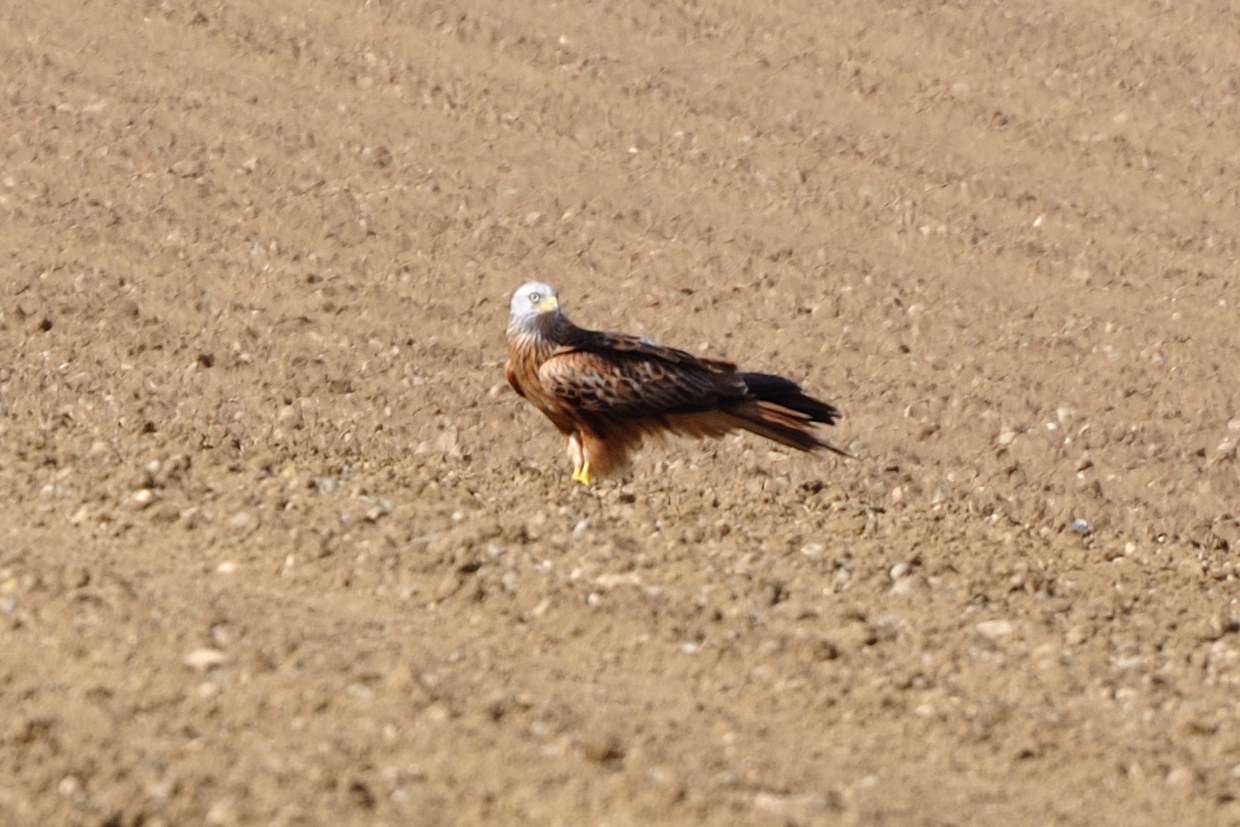
Red Kite
Flight (wing) and tail feathers
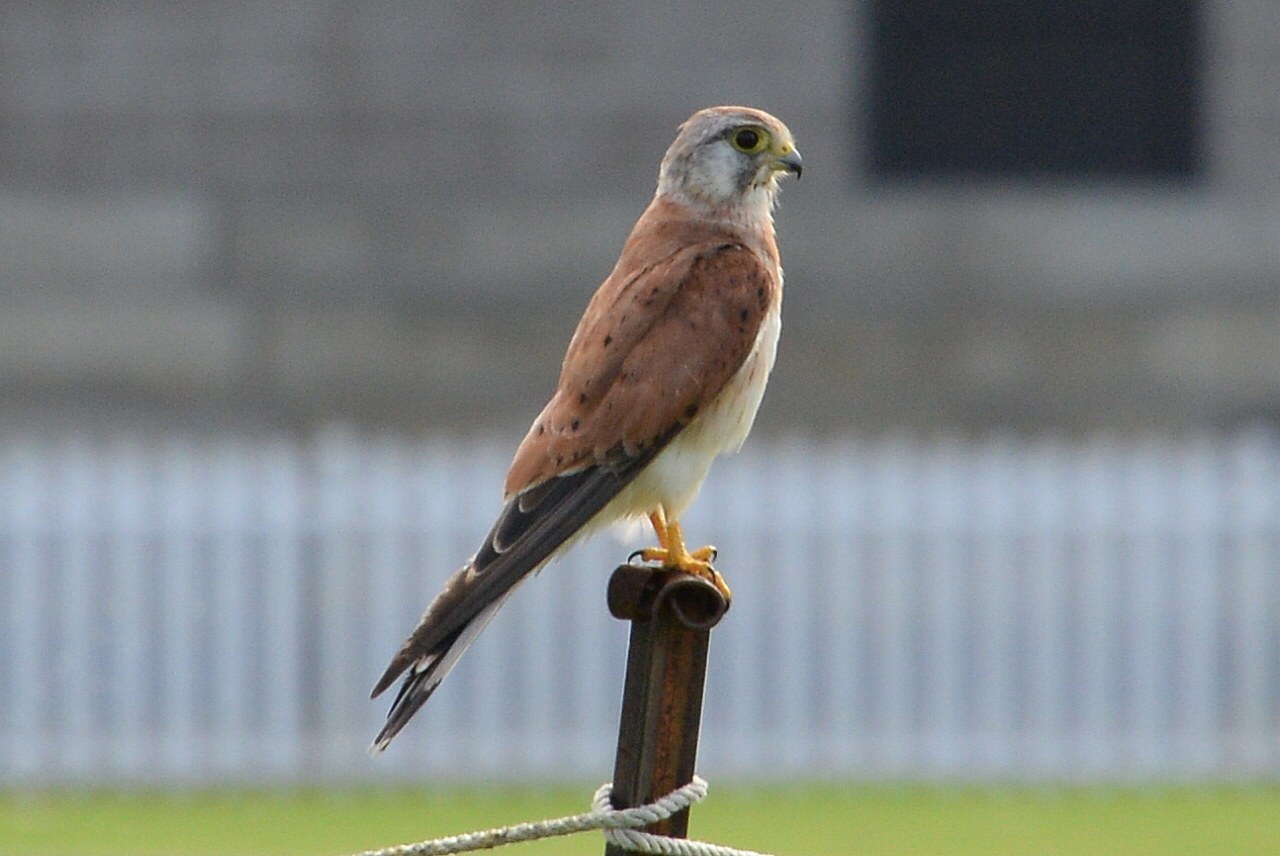
Nankeen Kestrel
Slim pointed flight feathers; lightly marked contour feathers

Andean Condor
Massive flight feathers; broad primaries and secondaries; sturdy tail feathers

Plumbeous Forest Falcon
Short rounded flight feathers; finely barred tail feathers

Sooty Falcon
Long pointed flight feathers; slim tail feathers